







Introduction:Want to brew a well-balanced cup of coffee with the simplest equipment? The French press is your perfect choice. This article dives deep into the types of coffee beans suited for the French press, the ideal grind size and steeping time, and shows you how to avoid over-extraction or under-extraction by adjusting water temperature and coffee-to-water ratio—so you can easily enjoy a rich, full-bodied French press coffee at home.
If you love coffee but don’t want to invest in complicated pour over gear, the French press is definitely the best entry-level option. This simple brewing tool, originating from the 19th century, is known for its intuitive operation and minimal equipment—no advanced skills needed to consistently brew flavorful coffee. However, to avoid common issues like bitterness or flat taste, the key lies in choosing the right coffee beans and mastering grind size and steeping time.
Take the classic Ethiopian Huila Kochere coffee beans as an example. These beans are processed using the natural (sun-dried) method and come from the Buku Abel washing station in the Guji Hambela zone. Their flavor profile is distinct, often showcasing intense notes of berries, cream, and citrus—making them especially suitable for medium-to-high water temperature and a slightly coarser grind, which allows the French press to fully highlight their layered complexity.
The structure of the French press is simple, using a metal filter and plunger to separate coffee grounds from the liquid. As a result, more oils and fine particles are released during extraction, delivering a richer and fuller mouthfeel. But precisely because of this, if the grind is too fine or the steeping time too long, unpleasant over-extracted bitterness can easily occur. Master the following core parameters, and you can easily replicate café-quality French press coffee at home.
First, set the water temperature to around 90°C. This temperature effectively highlights the aroma and fruity acidity of medium-to-light roasted beans, without causing over-extraction due to excessive heat. As for coffee-to-water ratio, 1:15 is recommended—for example, 15 grams of coffee grounds with 225 milliliters of water—to maintain just the right strength.
Regarding grind size,it is recommended to use a coarseness that allows about 70% of the particles to pass through a Chinese standard No. 20 sieve—this is slightly coarser than a typical pour over grind. It helps extend the extraction time, reduces the chance of fine particles clogging, and avoids the astringency caused by over-extraction. If your grinder doesn’t have sieve references, you can simply think of it as ‘slightly coarser than a regular pour over grind, but a bit finer than a coarse grind used for espresso pre-infusion’.
As for steeping time, usefour minutes as the baseline. Place the coffee grounds into a preheated French press, pour in hot water, stir evenly, then cover with the lid (without pressing down), and wait for four minutes. When the time is up,slowly and steadily press the plunger down to about one-quarter of the depth, then pour out the coffee. This helps prevent sedimented fine particles from affecting the taste and ensures a more even overall extraction.
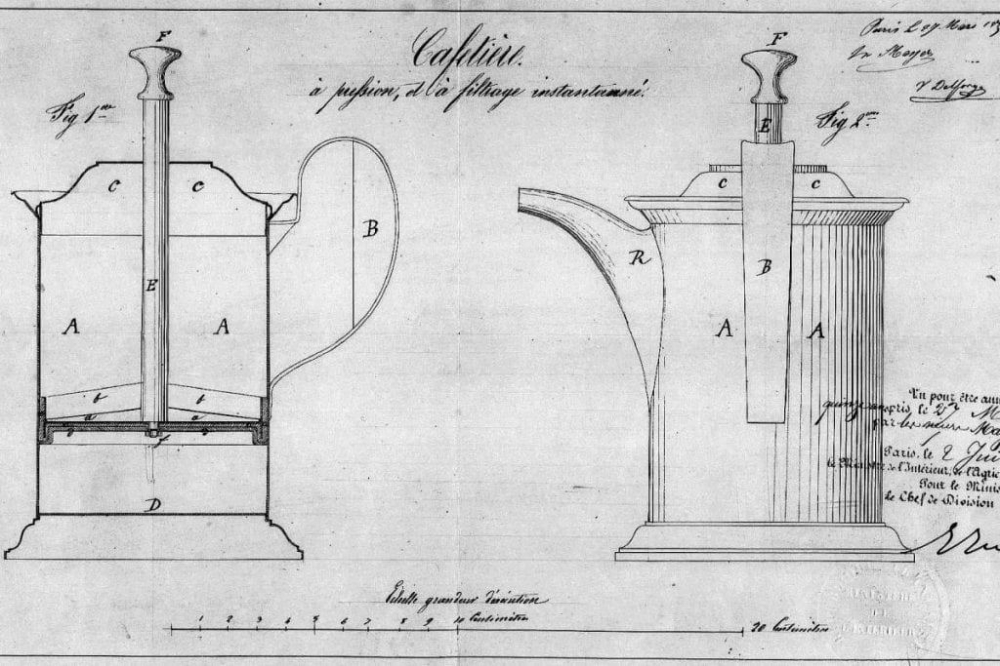
Why are sun-dried beans like Huila Kochere well-suited for the French press? Because their processing method gives the beans more sweetness and fruity aromas, and the prolonged steeping in a French press allows these complex flavors to fully develop while retaining an appropriate level of body and oiliness. If you try coffee beans from other regions or with different processing methods, you can also fine-tune the grind and water temperature based on roast level and flavor profile: for dark roasts, slightly lower the water temperature to 88°C to avoid burnt bitterness; for light roasts, maintain 90–92°C to bring out bright acidity and floral-fruity notes.
In summary, the French press is a flexible choice for home brewing—not only suitable for everyday quick use, but also capable of approaching professional-level results through detailed adjustments. As long as you stick to the basic principles of ‘coarse grind, moderate water temperature, four-minute steeping’, and make small adjustments based on the bean’s characteristics, you can easily enjoy a rich and balanced cup of French press coffee at home.
The above content is compiled by CoffeeHunters, a coffee news website.


