








Introduction:As an important branch of the Arabica species, Bourbon coffee features multiple variant cultivars including red, yellow, pink, and the rare peaberry types, each with unique flavor profiles and cultivation characteristics. This article delves into the origins of the Bourbon family, its global dissemination, the sensory traits and planting essentials of each variety, helping coffee enthusiasts fully understand the differences among these classic cultivars and gain practical advice on selection and brewing.
Bourbon is one of the historically significant classic varieties within the Arabica species, standing alongside Typica, and has given rise to several branches such as Red Bourbon, Yellow Bourbon, Pink Bourbon, and the extremely rare Peaberry Bourbon. These varieties not only differ in appearance and yield but also exhibit distinct flavor characteristics, making them key cultivars in many specialty coffee regions.
The naming of Bourbon varieties is generally related to the color of the coffee cherries when ripe, commonly seen in red, yellow, and pink hues. These visual traits are also directly reflected in their flavor profiles. For example,Red Bourbontypically offers a rich sweetness and dark chocolate notes, whileYellow Bourbonis renowned for its high acidity, brightness, and citrusy profile.Pink Bourbonhas drawn attention due to its rare pink-colored cherries and relatively high acidity. As forPeaberry Bourbon, it is celebrated for its low caffeine content and delicate flavors, but it has an extremely low yield, making it a highly rare variety.

Bourbon coffee originated in Yemen and is a natural mutation, named after its initial cultivation site—Bourbon Island, now known as Réunion Island. During the French colonial period, this coffee was extensively transported to Europe and the Americas. Bourbon coffee cherries are usually smaller and rounder, with denser flesh and seeds, generally exhibiting pronounced sweetness and bright acidity. Compared to Typica, Bourbon yields about 20–30% more, yet it remains a low-yield variety and is similarly susceptible to leaf rust.
Bourbon cherries are mostly red, but there are also naturally occurring orange and yellow variants. Among them, orange Bourbons usually have a richer sweetness, whereas yellow Bourbons display higher acidity brightness and aromatic complexity. These subtle differences make the Bourbon family a highly valuable group for both coffee tasting and cultivation research.
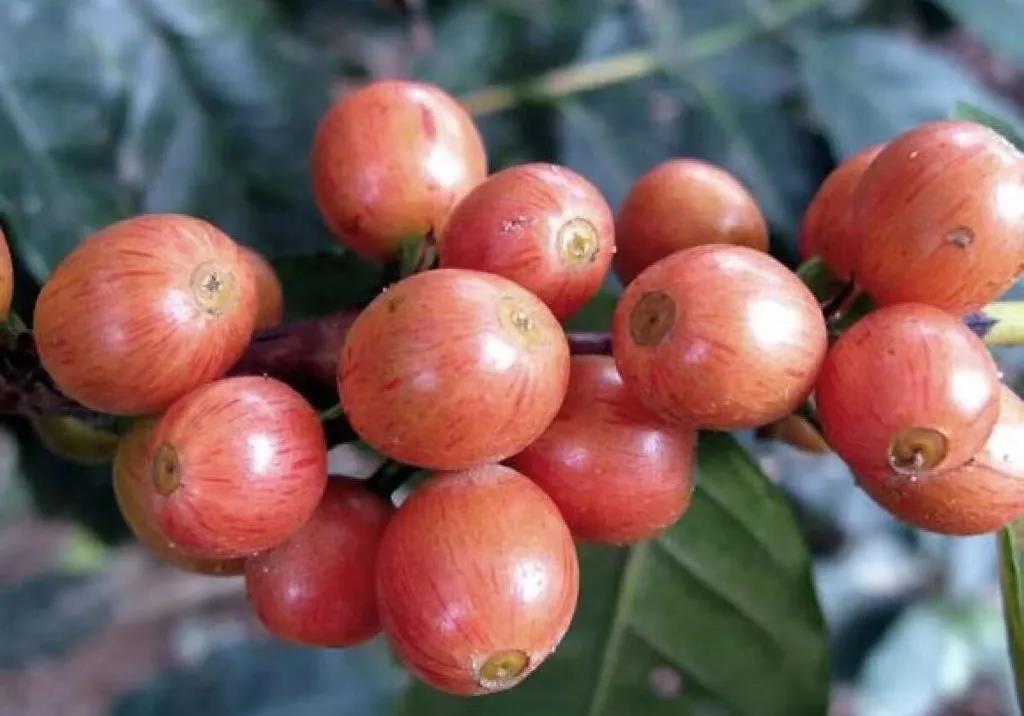
Bourbon and Typica are among the oldest varieties of Arabica, where green cherries ripen into bright red. Compared to Typica, Bourbon has broader leaves and a denser growth habit, with a higher fruit set. However, its harvesting cycle also requires two years, and overall yield remains low. Bourbon beans are relatively round, uniformly sized, and have a distinctly glossy appearance. To facilitate harvesting, farmers typically keep the tree height under 150 cm.
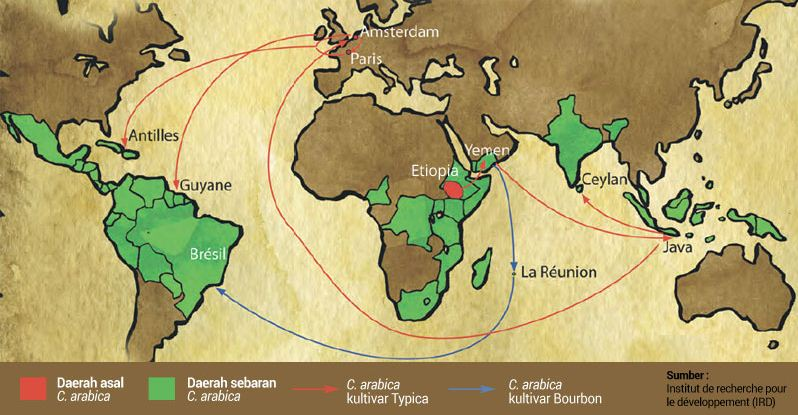
The spread of Bourbon is quite remarkable. In 1727, the French introduced Yemen’s Typica beans to Brazil and Central and South America, where some of the seeds developed a unique rounded mutation on Réunion Island (then called Bourbon Island), later officially named Bourbon. Around 1860, the Bourbon variety was introduced from Brazil’s Campinas region and rapidly expanded to multiple countries in South and Central America, including El Salvador, Guatemala, Costa Rica, and Peru, remaining a key variety in many specialty coffee regions to this day.
In Africa, French missionaries played a pivotal role in promoting Bourbon. Starting in 1841, the first mission was established on Réunion Island, followed by branches in Zanzibar, Tanzania, Kenya, and other locations, each bringing coffee seeds originating from Réunion. In 1899, seedlings from the Bura region were taken to Kenya’s Santa Cruz and further introduced into the Kilimanjaro region, marking the origin of “Mission Bourbon.” Later, the Kent variety was introduced in 1920, establishing Bourbon and Kent as the dominant coffee varieties in Tanzania.
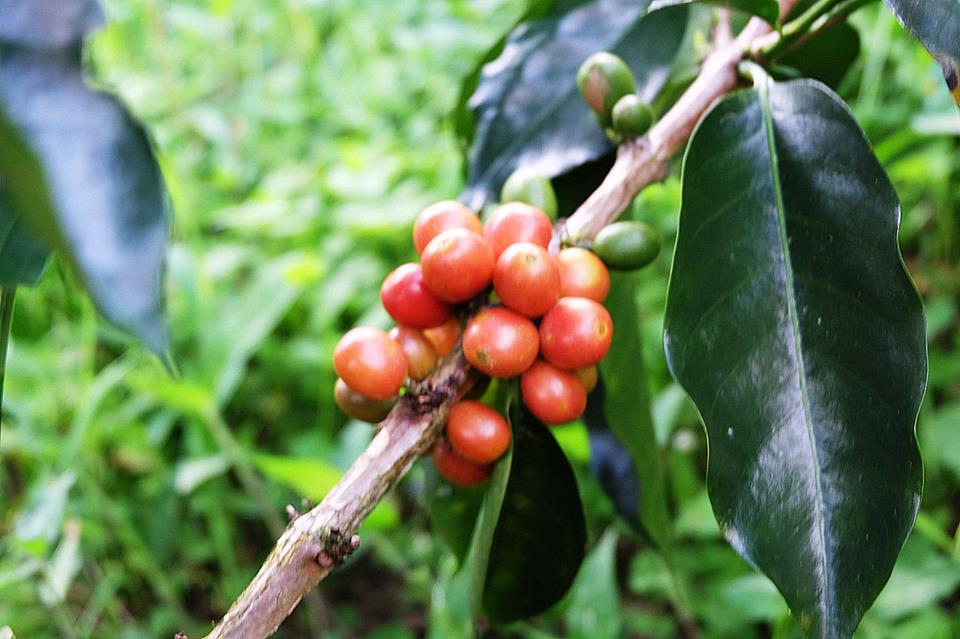
Red Bourbonis the most common Bourbon variant, with cherry ripening progressing from green, to light yellow, light orange, and finally to bright or even dark red. Red Bourbons grown at high altitudes often exhibit superior aroma profiles, clear acidity, and sometimes even complex wine-like flavors.Brazil Red Fruitis one example—a heritage Bourbon coffee from the Serra do Salitre region in Minas Gerais, where large diurnal temperature variations and diverse microclimates contribute to its elegant flavor characteristics.
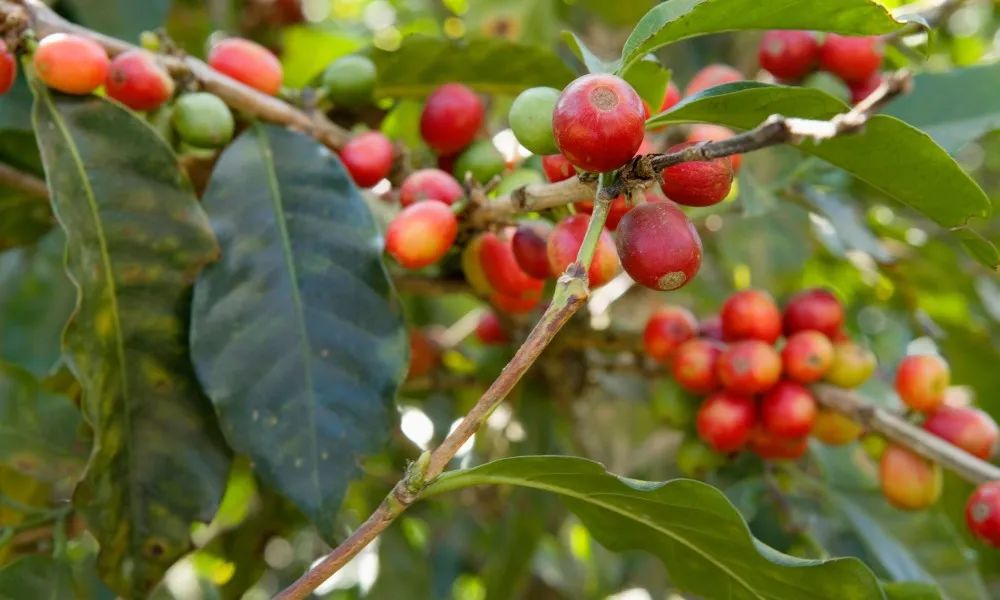
Yellow Bourbonis the result of hybridization between Bourbon and other varieties, with mature cherries appearing bright yellow. It is generally believed that Yellow Bourbon may have originated from a mutation involving red-fruited Bourbon and a yellow-fruited Typica variant (such as Amerelo de Botocatu). Due to its low yield and high environmental requirements, Yellow Bourbon is not widely cultivated, but it can demonstrate exceptional flavor potential at high altitudes. Brazil’s Fazenda Rainha (Queen Estate) is renowned for growing high-quality Yellow Bourbon, having won multiple Brazilian COE awards since 1999, showcasing the pinnacle of Yellow Bourbon’s expression.
Pink Bourbonis a relatively rare variety resulting from the hybridization of Red Bourbon and Yellow Bourbon, with coffee cherries maturing into a romantic pink hue. Due to the recessive genetic traits in pollen genes, consistently producing pure pink fruits is highly challenging, and orange fruits sometimes appear mixed in. Small-scale farms in Colombia and other regions still cultivate it, making it a niche variety with significant collection and tasting value.
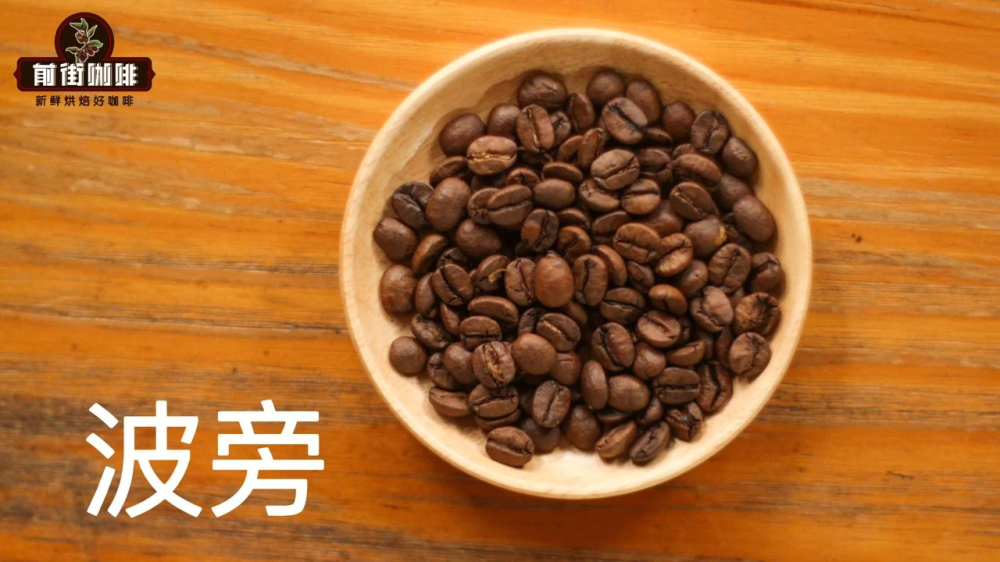
As forPeaberry Bourbon (Bourbon Pointu), it is an exceptionally unique member of the Bourbon family. Discovered in 1810 on Bourbon Island, its beans are noticeably more elongated and pointed, with caffeine content only half that of regular Bourbon. The flavor is delicate and non-irritating, which made it highly favored by European royalty and literary figures of the past. However, due to its fragile plants, scarce yield, as well as disease and natural disaster impacts, Peaberry Bourbon nearly disappeared by the mid-20th century. It has only seen limited revival in recent years on Réunion Island and in Colombia, with current global annual production of just a few tons and extremely high market prices.
Another noteworthy natural mutation of Bourbon isPacas, first discovered in El Salvador in 1949. Pacas is a single-gene mutation variety with denser plant structure, which can increase yield per unit area while retaining the excellent flavor qualities of traditional Bourbon. The discovery of Pacas has had a profound impact on coffee cultivation in Central America and serves as one of the foundational breeds for many modern varieties.
In summary, Red Bourbon and Yellow Bourbon within the Bourbon family share relatively similar flavor profiles, often showcasing notes of dark chocolate, cocoa, nuts, and caramel, with soft acidity and low bitterness. Pink Bourbon, on the other hand, exhibits brighter acidity, appealing to those who enjoy fresh and vibrant acidic notes. To explore the diversity of the Bourbon family, one might start with the classic Red Bourbon and progressively experience the unique charm of its various mutations.
The above content is compiled by CoffeeHunters, a coffee news website.


