







Introduction:Many pour over beginners often confuse the brew ratio (powder-to-water ratio) with the extraction ratio (powder-to-liquid ratio), leading to extraction results that fall short of expectations. Though these two key ratios differ by just one character, they represent entirely different brewing parameters and cannot be directly converted. This article delves into the definitional differences between the two, the impact of coffee grounds absorbing water on the final liquid weight, and provides practical conversion logic to help you precisely control your pour over parameters and consistently brew coffee with your desired flavors.
In the world of pour over coffee, the powder-to-water ratio and the powder-to-liquid ratio are two extremely important yet easily confused concepts. Many newcomers, not understanding the difference between the two, often make errors when adjusting parameters, ultimately affecting the overall flavor profile of the coffee. In reality, although these two ratios may seem similar, they actually signify completely different things and cannot be directly equated in calculations. Understanding their differences and conversion methods will help you make more accurate adjustments when brewing pour over coffee.
First, let’s clarify the basic concept of “ratio.” In mathematics, a ratio is used to describe the comparative relationship between two quantities. Applying this concept to coffee preparation helps us clearly understand the distinction between the powder-to-water ratio and the powder-to-liquid ratio. The powder-to-water ratio refers to the proportional relationship between the weight of the coffee grounds used for extraction and the actual volume of water poured in. For example, the commonly used 1:15 powder-to-water ratio means 1 gram of coffee grounds is brewed with 15 milliliters of water. This ratio method is widely used in various pour over techniques primarily because it is not only easy to calculate but also allows the brewer to more precisely control the total amount of water poured, thereby effectively extracting the desired flavor compounds while also reducing uncertainties caused by variations in the water absorption properties of different coffee beans.
In contrast, the powder-to-liquid ratio refers to the proportional relationship between the weight of the coffee grounds and the final volume of extracted coffee liquid. For instance, a 1:12 powder-to-liquid ratio means that 1 gram of coffee grounds will yield 12 milliliters of coffee liquid. At first glance, this may seem similar to the powder-to-water ratio, but in reality, there is a fundamental difference between the two, and these ratios cannot be directly converted. This is also a common point of misunderstanding for many beginners.
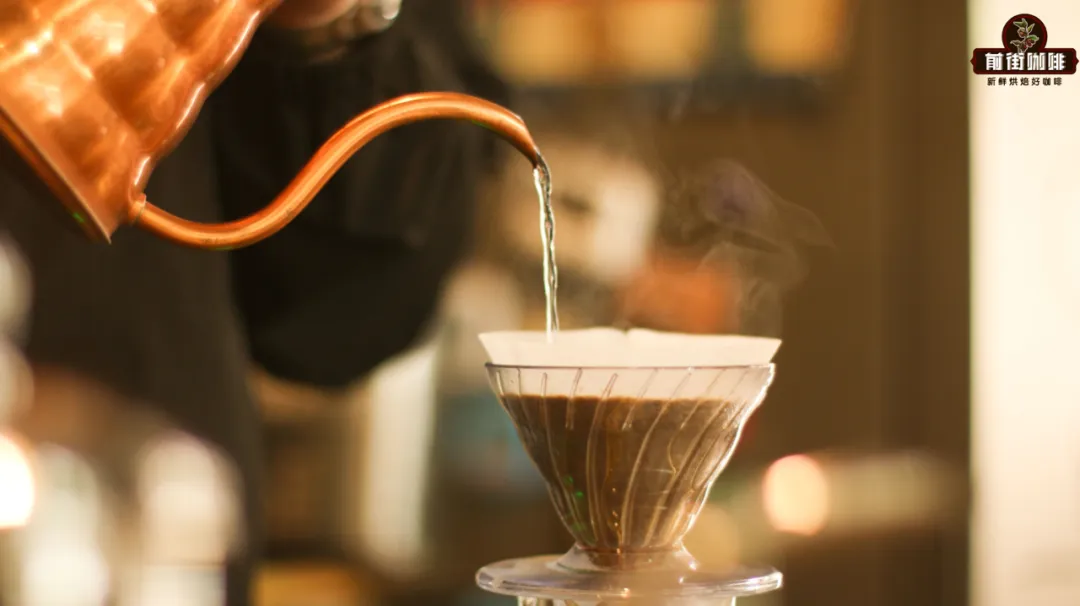
Why can’t the powder-to-water ratio and powder-to-liquid ratio be directly converted? The key lies in the fact that coffee grounds absorb a certain amount of water during the brewing process. When you pour hot water onto the coffee bed, the coffee grounds do not release all of the water back into the server; instead, they retain some of it, which means the final amount of coffee liquid is always less than the initial volume of water poured. Generally speaking, coffee grounds absorb approximately twice their own weight in water. This is an empirical value and also an important basis for converting between the powder-to-water ratio and the powder-to-liquid ratio.
For example, if you use 225 milliliters of hot water to brew 15 grams of coffee grounds, those coffee grounds will absorb roughly 30 milliliters of water (i.e., 15 grams × 2). Therefore, subtracting this 30 milliliters of absorbed water from the total 225 milliliters of poured water leaves about 195 milliliters of coffee liquid that can actually be collected in the server. Of course, these values are for reference only, as different origins and roast levels of coffee beans may have slightly varying absorption rates, but they generally fall within the range of twice the bean weight.
Once you understand this principle, we can further explore how to calculate the powder-to-liquid ratio based on the powder-to-water ratio, or vice versa. Suppose you want to maintain a specific powder-to-water ratio, such as 1:15, and you use 15 grams of coffee grounds with 225 milliliters of water. Based on the above calculation, you can estimate that the final yield of coffee liquid will be about 195 milliliters, making the powder-to-liquid ratio approximately 1:13 (15 grams to 195 milliliters). Conversely, if you already know your desired powder-to-liquid ratio, you can work backward to determine the required water volume and then adjust according to the water absorption characteristics of the coffee grounds.
Mastering the conversion logic between the powder-to-water ratio and the powder-to-liquid ratio is a highly practical skill for any coffee enthusiast aiming to consistently replicate a delicious pour over cup. It not only helps guide your parameter adjustments with more direction but also enables you to make more appropriate choices when dealing with different bean varieties, roast levels, or brewing styles. Whether you’re a beginner just starting out or an experienced coffee lover, gaining a deeper understanding of these foundational concepts will make your pour over journey much smoother.
The above content is compiled by CoffeeHunters, a coffee news website.


