







Introduction:Mandheling coffee has long been renowned for its rich and multi-layered flavor profile, but the commonly seen market terms such as "Golden Mandheling" and "Golden Golden Crown Superior Mandheling" often leave many consumers confused. This article delves into the origins and differences of these products, explores the background of the "Golden Mandheling" trademark and the role of PWN Company, and provides a detailed guide on recommended pour over parameters, three-stage pouring techniques, and actual cupping flavor notes — helping you make precise purchasing and brewing decisions to enjoy a premium Sumatran coffee that is bold, clean, and boasts a long-lasting finish.
Mandheling coffee from Indonesia’s Sumatra region, with its strong character and complex layers, holds a solid position among global coffee enthusiasts. However, when faced with numerous similarly named Mandheling products on the market — such as "Golden Mandheling" and "Golden Golden Crown Superior Mandheling" — many people often find it difficult to tell them apart. This article will help clarify the actual meanings behind these terms and provide professional pour over recommendations, enabling you to easily master the optimal extraction method for Golden Mandheling.
The so-called "Golden Mandheling" was originally a concept driven by the Japanese coffee market.Japanese consumers have long favored the bold and varied flavor profile of Mandheling, but they also frequently encountered inconsistencies in quality — some batches exhibited captivating aromas like cream and herbs, while others might carry undesirable earthy or moldy notes. To improve stability and overall quality, Japanese industry players began over a decade ago to rigorously screen Mandheling green beans through multiple stages, classifying them based on bean size, shape, color, and density, while using both machines and human labor to remove defective beans. This ensured each bean was large, uniform, and had a bright, intact appearance. This high-standard selected Mandheling is said to emit a faint golden sheen under sunlight, hence the name "Golden Mandheling."
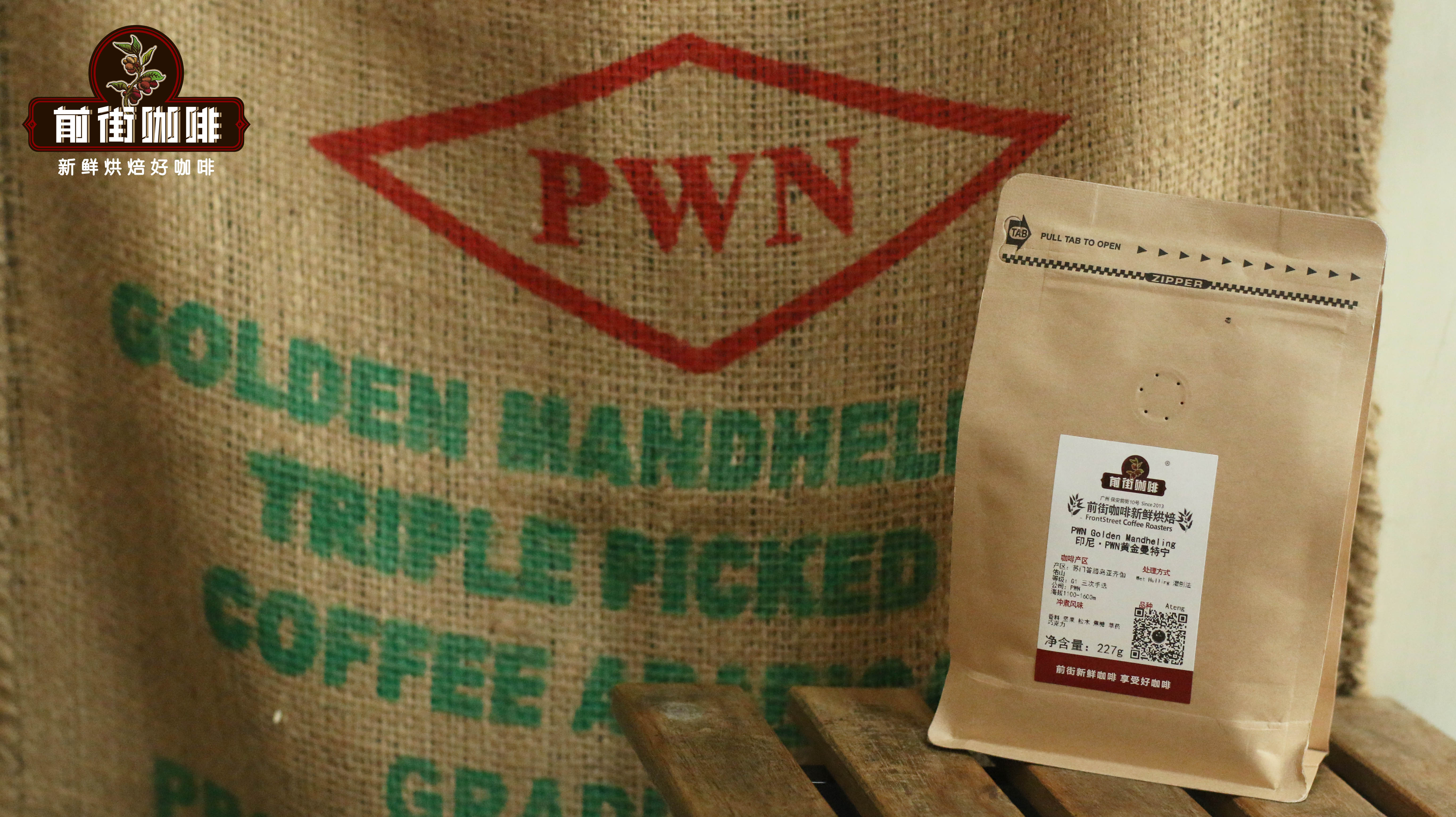
However, it is worth noting that the English trademark name "Golden Mandheling" has already been registered by Indonesia’s PWN Company (short for Prahu Wirama Nusantara). Therefore, while other brands also offer high-quality Mandheling, they can only use alternative names such as "Golden Crown Superior Mandheling," andthe legally certified and brand-guaranteed "Golden Mandheling" is exclusively produced by PWN Company.To verify authenticity, check for the PWN logo on the green bean sack and confirm the presence of an origin certificate issued by PWN Company.
PWN Company’s screening process for Mandheling green beans is far more stringent than standard market criteria. They employ one mechanical sorting stage followed by three rounds of manual selection, with standards including a bean size of 18 to 19 mesh or above, no more than 3 defective beans per 300g sample, and the beans must be of Indonesia’s highest grade, G1. Additionally, the beans must exhibit a dark green color, consistent size, and regular shape. These rigorous requirements ensure that PWN’s Golden Mandheling significantly surpasses the local Indonesian G1 standard.
In terms of actual cupping performance, this Golden Mandheling exhibits rich aromas of dark chocolate, nuts, and caramel, alongside natural undertones of herbal spices and pine. In the cup, it not only delivers a bold and full-bodied body with pronounced sweetness, but also remains exceptionally clean with minimal off-flavors. As the temperature slightly drops, one may even detect a gentle fruity acidity, making it highly layered and long-finishing.
Next, we further explorerecommended pour over parameters and practical tips for Golden Mandheling,helping you consistently extract the best flavors of this classic bean at home.
The recommended water temperature range is87~88°C.Use approximately15 grams of coffee grounds,with a1:15 coffee-to-water ratio,for a total water volume of 225 grams. You may choose a KONO dripper, and the grind size is recommended to bemedium-coarse (equivalent to 70% passing rate through a Chinese standard No. 20 sieve),or if using an EK43 grinder, adjust to setting 11. This grind size is suitable for dark roasted beans, effectively preventing over-extraction caused by too-rapid water absorption, which could otherwise release excessive bitter compounds.
The pour over process is recommended to usea three-stage pouring method,which helps achieve even extraction while highlighting its full body and caramel sweetness, as well as improving operational stability and control.
First is the bloom stage: pre-wet the dripper with hot water to secure the filter paper, then discard the pre-wetting water, add 15 grams of coffee grounds, and pour30 grams of hot water for a 30-second bloom.This step helps the coffee grounds degas adequately, laying the foundation for subsequent flavor release.It’s important to note that dark roasted beans are not recommended to bloom for too long, to avoid releasing excessive woody or off-flavors,so 30 seconds is the optimal balance point.
The second stage involves slowly pouring with a steady small stream of water, starting from the center of the coffee bed and spiraling outward, until the total water volume reaches 125 grams for the first pour. Maintain a smooth water flow to avoid vigorous agitation that may unevenly disturb the coffee bed. Once the coffee bed has settled to about half the height of the dripper and the grounds are clearly visible, continue pouring with the same technique until the total water volume reaches 225 grams. The total extraction time should be controlled around2 minutes, allowing a ±10 second margin.。
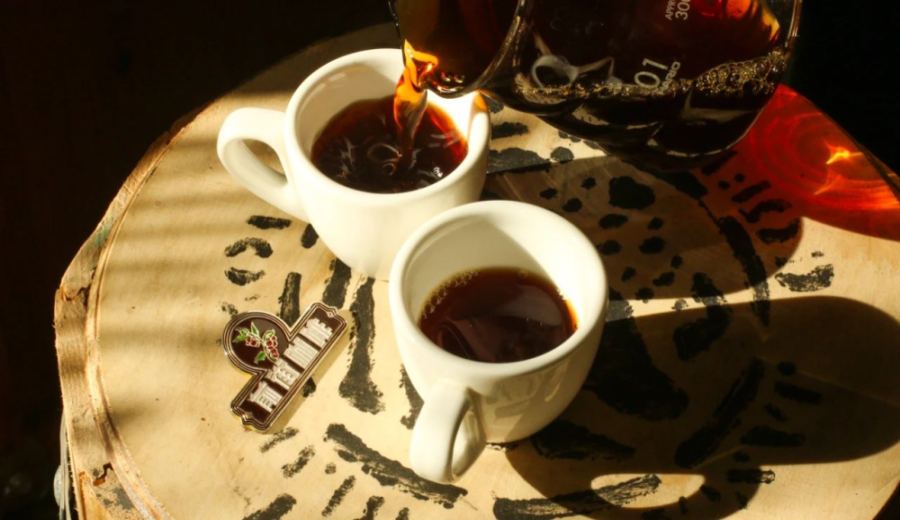
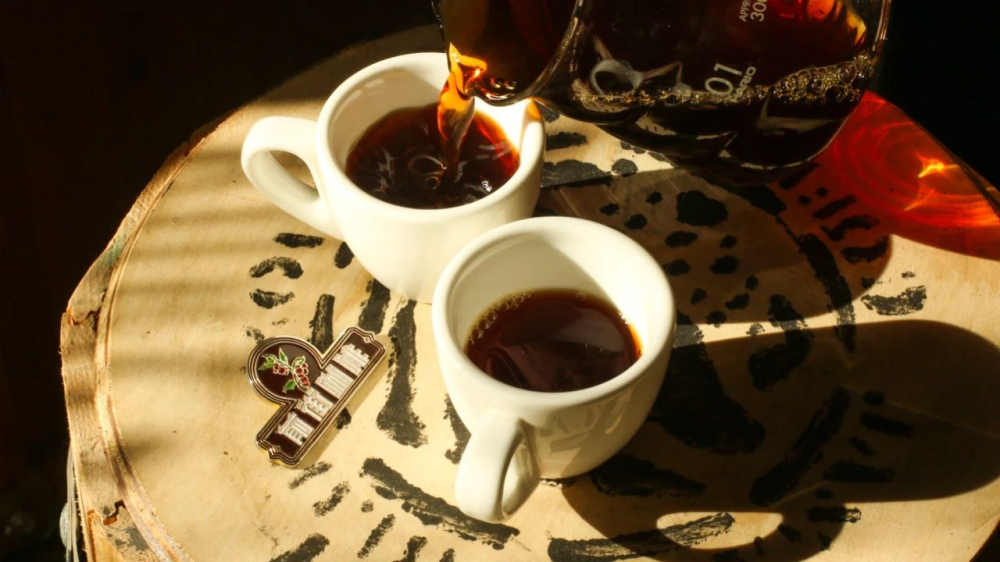
Finally, remove the dripper, gently swirl the coffee in the server, and enjoy your pour over Golden Mandheling. Upon tasting, you’ll experience a complex aroma of spices, dark chocolate, nuts, caramel, and pine, with a full-bodied yet clean mouthfeel, long-lasting sweetness, and a lingering finish — making it a distinctive representation of classic Sumatran flavors.
In summary, whether you aim to deeply understand the background and market distinction of Golden Mandheling, or wish to refine your pour over skills to fully express its potential, mastering the right bean selection and extraction knowledge is key to elevating your coffee experience. From the screening process to actual cupping results, and down to fine-tuning pour over parameters, every step influences the final flavor outcome.
The above content is compiled by CoffeeHunters, a coffee news website.


