







Introduction:Espresso is the soul foundation of many coffee beverages and also an important metric for evaluating a barista’s skills. This article delves into the historical evolution of espresso, its extraction principles, key parameter settings, and how to brew a qualified espresso with a rich taste and thick crema through correct steps and techniques. It also provides common powder-to-water ratios, grind sizes, and pressure setting recommendations used by professional shops to help coffee enthusiasts improve their extraction skills.
In the world of specialty coffee, espresso plays a pivotal role. It is not only the base for many classic coffee drinks such as lattes and cappuccinos, but also a key benchmark for testing a barista’s technical abilities. From the perspective of actual production, this article will guide you through the historical origins of espresso, its extraction principles, and the important parameters that influence flavor, while breaking down step-by-step how to make an ideal shot of espresso.
You might have wondered why some baristas drink several espressos as soon as the shop opens in the morning. Is this the correct way to enjoy it? In fact, this hides an important quality control step for baristas. But before discussing how to properly taste espresso, we must first start with the core device for making espresso—the espresso machine.
History of Espresso
As early as 1884, Italy’s Angelo Moriondo created the world’s first espresso machine, which was unveiled at the Turin Expo that year. This machine was called Espresso, which in Italian means “coffee pressed out quickly.” However, the extraction pressure of this first-generation machine was only 1.5 bar, with a dual brewing head, and the entire process took 40 seconds. The resulting liquid was light and thin, even close to today’s American-style drip coffee.
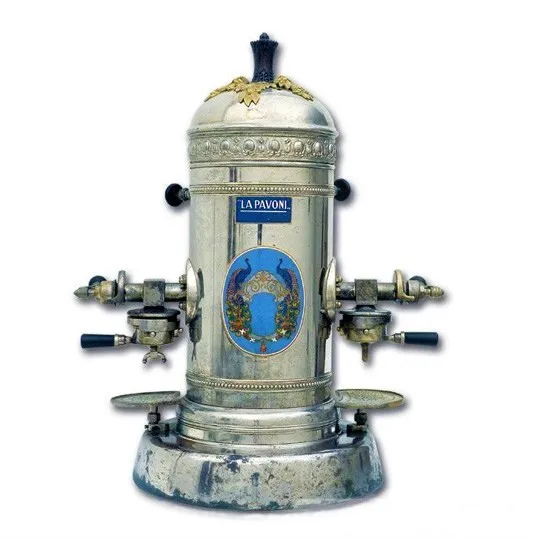
It wasn’t until 1901 that Milan engineer Luigi Bezzera proposed a prototype of a commercial espresso machine and applied for a patent. In 1905, it was mass-produced by La Pavoni, marking the first true espresso machine. The early models still relied on steam pressure, but the high water temperature and insufficient pressure resulted in coffee lacking fine crema, with a bitter taste and lack of smoothness.
In the 1930s, with the widespread use of electricity, the power source for coffee machines gradually shifted from steam to electric pumps. In 1948, Milan barista Achille Gaggia invented a design with a piston lever, significantly increasing the pressure. Then in 1961, the Faema company launched the revolutionary Faema E61, achieving stable 9 bar water pressure extraction for the first time. Since then, espresso has had its iconic golden crema, and the taste has become richer and smoother.

What is the extraction principle of espresso?
Modern espresso extraction involves passing hot water at over 90°C through a tightly compacted puck of finely ground coffee under high pressure of 9 to 11 bar within an extremely short time (usually 20 to 30 seconds). This high-pressure environment extracts both water-soluble and non-water-soluble compounds from the coffee, forming a rich crema, giving the coffee a body and layered complexity distinct from other brewing methods.
What are some considerations for drinking espresso?
In professional coffee shops, when you order an espresso, the staff may serve it with a glass of ice water and a small spoon. Many beginners wonder if they should pour the espresso into the ice water to make an iced americano. In fact, the ice water is meant to cleanse the palate and reset the taste buds, allowing you to more keenly perceive the subtle flavors and layered changes of the espresso.
The spoon is used for stirring, as freshly extracted espresso often shows clear layering: the top layer is the fine crema, and the bottom layer is the concentrated liquid. If you want to evenly experience all the flavors, you can gently stir; if you want to experience the different layers, you can also choose to sip directly and enjoy the transition from the first taste to the aftertaste.
What are the key parameters for espresso extraction?
A successful espresso relies on the precise control of multiple key variables, including dose, yield, grind size, and pressure. Improper settings of these parameters can, at best, affect flavor balance, or at worst, lead to over-extraction or under-extraction, making the coffee unpleasant to drink.
Doseis usually determined based on the capacity of the portafilter basket. Too much can make it difficult to tamp properly or attach the portafilter, while too little can lead to uneven extraction. The commonly used basket capacity in shops is about 20 grams.
Yieldtypically follows the international standard of a 1:2 powder-to-water ratio, meaning about 2 grams of espresso liquid is extracted per 1 gram of coffee powder.
Grind Sizerequires fine adjustment: too fine a grind can restrict water flow, leading to over-extraction and bitterness; too coarse a grind leads to under-extraction and bland flavors. Finding the right level of fineness is key.
Pressureideally should be 9 bar. Too low a pressure will result in incomplete release of crema and aroma, while too high a pressure may damage the coffee structure, releasing too many undesirable substances, making the coffee sharp and bitter.
Recommended Practical Extraction Parameters
Below are common espresso extraction reference values used by professional shops:
- Machine: Commercial-grade espresso machine (e.g., Faema E98 series)
- Pressure: 9 bar ± 2
- Water Temperature: 90.5~96°C
- Extraction Time: 20~30 seconds
- Powder-to-Water Ratio: 1:1.7 to 1:2
- Dose: About 12 grams for a single shot, about 20 grams for a double shot
- Yield: About 20 ml for a single shot, about 40 ml for a double shot
Blend Selection and Flavor Profile
The final flavor of espresso is closely related to the coffee beans selected. A common strategy is to use blends that combine beans from different regions and processing methods to create a richly layered taste. For example, a common blend might consist of 70% Honduran sherry-aged beans and 30% Ethiopian natural red cherry beans.
Honduran sherry beans, having undergone wine barrel fermentation, carry strong notes of wine, vanilla, and cream; while Ethiopian natural beans bring bright berry acidity and fruity aromas. The two complement each other to create a balanced and layered espresso flavor.
Such blends often exhibit rich fruit acidity, soft berry aromas, deep chocolate and wine notes, along with a long and comforting aftertaste, making them a classic choice for many coffee shops.
The above content is compiled by CoffeeHunters, a coffee news website.


