







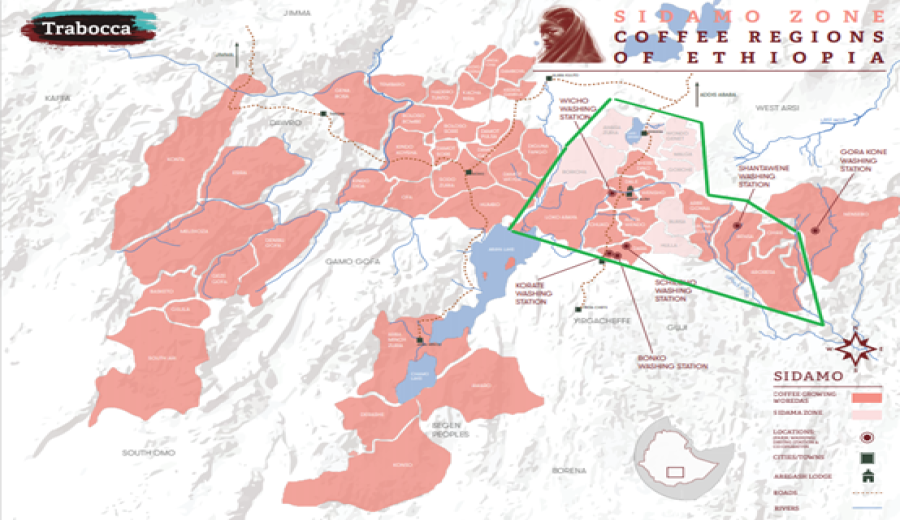
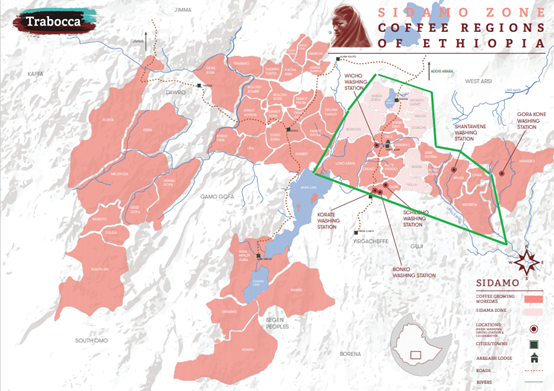
Introduction:This article delves into the geographical characteristics and eight sub-regions of Ethiopia’s Sidamo specialty coffee zone, focusing on the unique terroirs of sub-regions such as Guji, Hambella, and Arsi. It explores the cultivation background and processing methods of local heirloom coffee varieties. Additionally, it introduces the origins, naming logic, and brewing parameters of the Huakui (Hua Kui) coffee, along with a comparative flavor analysis of natural-processed beans such as Arsi and Huakui 8.0 to help you grasp the essence of Sidamo coffee and guide your selection.
Sidamo is one of Ethiopia’s most representative specialty coffee regions, located in the highland areas along the East African Rift Valley. It boasts fertile soil, abundant rainfall, and significant diurnal temperature variations. These natural conditions together produce coffees with floral, citrus, and complex layered flavors. Most coffees from this region are washed processed, accounting for about 60%, and due to the large elevation differences, the flavor profiles are diverse. It is one of the highest-altitude coffee-growing regions in the world, highly favored by coffee enthusiasts who pursue fruity aromas and aromatic complexity.
Overview of Ethiopian Coffee Regions
Ethiopia is a global coffee genetic treasure trove. Its coffee is primarily grown at elevations between 1,100 and 2,300 meters above sea level, with a single harvest season per year, concentrated from September to December. The new crop typically enters the export phase between November and December. The region still maintains traditional farming methods, relying on manual care, without the use of chemical pesticides or herbicides, and nurtures the soil with organic compost (such as fallen leaves and animal manure). As a result, it is renowned as one of the world’s few nearly pollution-free, green organic coffee producing areas.
The country can be broadly divided into eight major coffee-growing regions: Lekempti, Limu, Illubabor, Djimmah, Harar, Bebeka/Teppi, Sidamo, and Yirgacheffe.
Guji, a Sub-Region of Sidamo: An Emerging Hub for Specialty Coffee
Sidamo is located in southern Ethiopia, adjacent to the East African Rift Valley, with elevations ranging between 1,500 and 2,200 meters. The terrain is varied and the microclimates are rich. Guji was originally under the jurisdiction of Sidamo, but due to its remote location and late start in the coffee industry, it was only independently designated as a new region after its flavor potential was discovered. Administratively, Guji falls under the Guji Zone of the Oromia Region, with elevations generally exceeding 1,800 meters. The fertile black soil and significant day-night temperature differences allow coffee cherries to ripen slowly, accumulating richer flavor compounds, often exhibiting bright acidity and profound layers.
Many coffees from Guji come from local cooperative systems, such as the Shilcho Cooperative, which is part of the SCFCU (Sidama Coffee Farmers Cooperative Union)—Ethiopia’s second-largest coffee cooperative union, comprising as many as 46 member units representing the collective interests of numerous smallholder farmers.
Hambella Sub-Region: The Birthplace of Huakui Coffee
Hambella belongs to the Shakisso Woreda (Shakiso District) within the Guji region and is a Kebele (grassroots administrative unit). Though relatively small in area, it has gained widespread fame due to Huakui coffee. Many coffee enthusiasts immediately associate Hambella with this globally popular natural-processed bean.
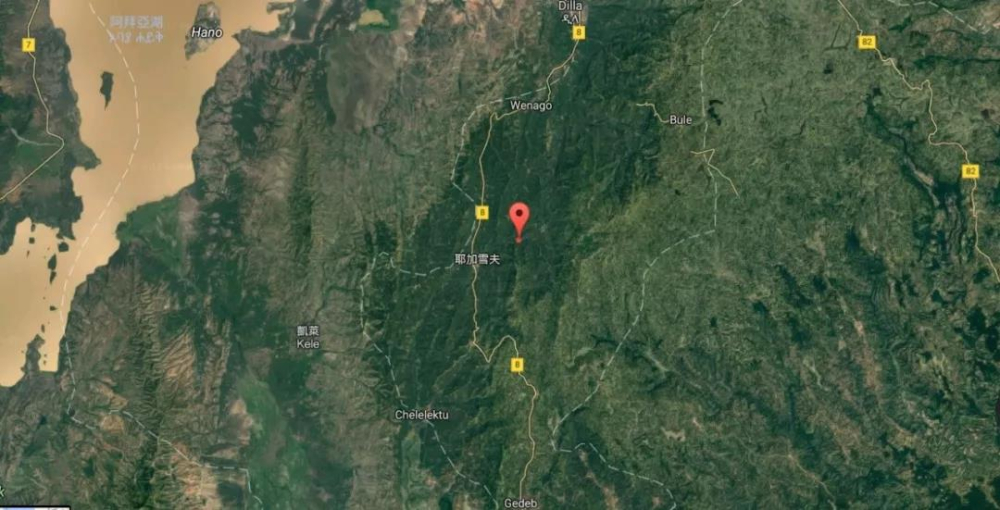
The beans for Huakui coffee come from the Buku processing station, located in Buku Abel village at an altitude of 2,200 meters. The surrounding farmers pay special attention to shade management during cultivation, allowing the coffee trees to grow healthily under ample sunlight and moderate protection, thereby enhancing fruit quality. In 2017, DW Company introduced a batch of natural-processed beans from Buku Abel, which won first place in the TOH (Taste of Harvest) competition in Ethiopia with their intense strawberry and cream aroma. Later, in Chinese brewing competitions, it even defeated Geisha to claim national second place, instantly making “Huakui” a household name.
The naming of Huakui uses 2017 as the base year, followed by Huakui 2.0 (2018), Huakui 3.0 (2019), Huakui 5.0 (2021), Huakui 6.0 (2022), Huakui 7.0 (2023), and up to 2024, which is Huakui 8.0. It should be noted that strictly speaking, only the natural-processed batches produced by the Buku Abel processing station qualify to be called “Huakui.”
Arsi Sub-Region: Where Oromo Culture Meets Specialty Coffee
Arsi (also known as West Arsi) is located between Yirgacheffe and the Harrar region, at elevations of approximately 1,900 to 2,200 meters, and is part of the Sidamo region. The area’s name originates from the Oromo people who reside there. They are not only the most populous ethnic group in Ethiopia but also among the earliest to discover and consume coffee. Statistics show that about half of the country’s coffee is produced in Oromo regions.
Arsi consists of three major Woredas: Arsi, Bale, and East Shewa. It is mainly composed of smallholder farms, with an average farming area of about 2 to 3 hectares per household. Although the techniques are still developing, the focus on family-based meticulous farming and high enthusiasm continuously improves coffee quality. Processing stations often incentivize farmers to select ripe red cherries, further enhancing the final bean quality.
Natural Processing and Flavor Development
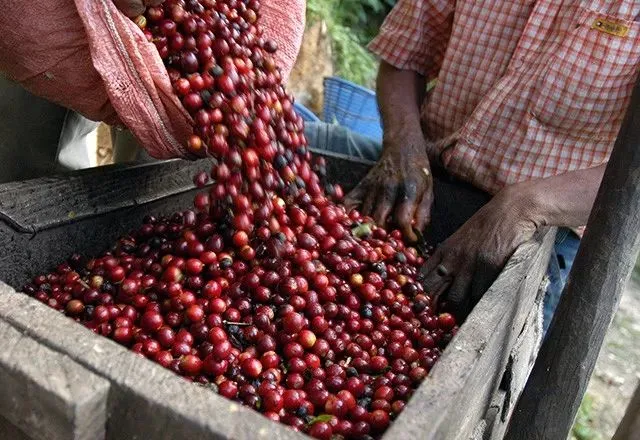
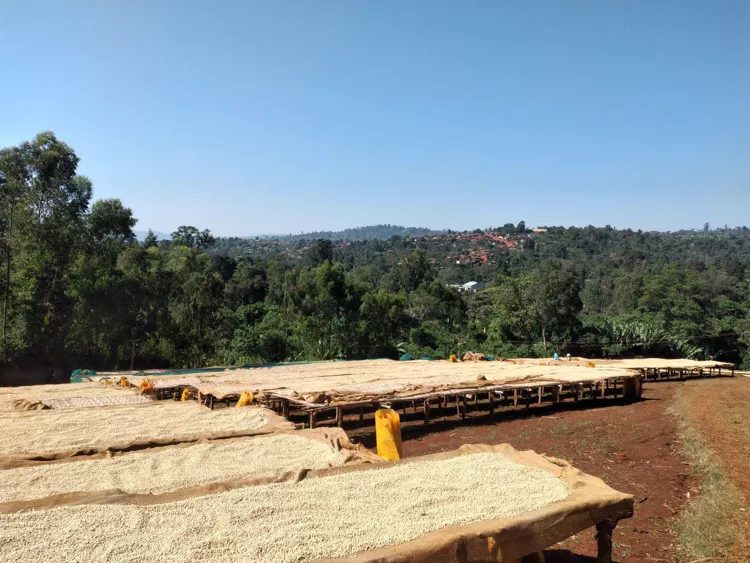
The Sidamo region predominantly uses the natural (dry) processing method, especially in high-altitude areas where it better preserves sugars and fruity aromas. For example, the Buku processing station selects only fully red cherries during the harvest season from December to January, ensuring a sugar content of above 30. The cherries are then placed on African beds for approximately 18 days of sun drying. During the process, farmers provide midday shading to prevent overheating and fermentation, cover the cherries with rainproof tarps at night, and continuously turn them to ensure even drying. Only when the moisture content of the green beans drops to 13% are they packaged.
Practical tests indicate that natural processing imparts richer aroma, sweetness, and fermented complexity to coffee, while washed processing highlights fresher citrus and floral notes. If you prefer a juicy mouthfeel and sweet fragrance, natural-processed beans are the better choice.
Coffee Varieties and Brewing Recommendations
Ethiopia possesses the world’s richest coffee genetic resources, with many varieties yet to be classified, hence officially referred to as Heirloom (原生种). These beans vary in size but often carry distinctive floral and fruity aromas, a hallmark feature of Sidamo coffee.
For brewing, it is recommended that lightly roasted Sidamo beans be brewed using a V60 dripper, with a water temperature of about 90°C, a brew ratio of 1:15, 15 grams of coffee, and a grind size that allows 80% of the particles to pass through a 20-mesh Chinese sieve. Begin with a 30-second bloom using double the coffee weight in water (about 30 grams) to release CO₂, followed by two pours at 125 grams and 225 grams respectively, keeping the total extraction time around 2 minutes to fully showcase its brightness and complexity.
Practical Flavor Comparison: Natural Arsi vs Huakui 8.0
Natural-processed Arsi exhibits pronounced berry and honey aromas, with a prominent jammy sweetness on the palate and a finish of nectarine and juice-like notes. When cooled, it reveals refreshing juice flavors reminiscent of plum and nectarine. Huakui 8.0, on the other hand, showcases distinct tropical fruit characteristics such as berries, passionfruit, strawberries, and oolong tea notes, with interplaying sweetness and acidity, strong fermentation tones, and an immersive orchard-like experience. In comparison, Arsi charms with its fruity sweetness and honey notes when hot, maintaining excellent juice-like qualities when cooled, while Huakui stands out with its intense fruit aromas and layered fermentation, ideal for coffee lovers who enjoy tropical flavors and bold sweetness.
The above content is compiled by CoffeeHunters, a coffee news website.


