







Introduction:Want to uncover the secrets of high-quality Ethiopian sun-dried coffee? This article delves into the origins and operations of the Yirgacheffe Red Cherry Project, comparing the green bean characteristics, roasting profiles, and cupping flavor profiles of two G1-grade beans—Red Cherry Yirgacheffe and Sun-Dried Aricha. It also provides practical pour over parameters and techniques to help you master the unique flavor expressions of these two classic sun-dried beans.
Yirgacheffe has long been regarded as a classic representative in the specialty coffee world, renowned for its distinctive floral and fruity aromas and clean taste. Among them, the Red Cherry Project is a symbol of high-quality sun-dried coffee from Ethiopia. This article will detail the background and operational model of the Red Cherry Project, analyze the key aspects of the natural sun-dried processing method, and provide an in-depth comparison of two G1-grade coffee beans launched by a certain brand—Red Cherry Yirgacheffe and Sun-Dried Aricha. From green bean appearance and roasting curves to cupping flavors, we break down their characteristics one by one, while also offering practical pour over suggestions to help you more comprehensively grasp the flavor profiles and tasting points of these two coffees.
 As a globally renowned specialty coffee producing region, Yirgacheffe is known for its bright acidity, delicate floral notes, and tea-like mouthfeel. The Arabica coffee produced here generally has a high moisture content and hard bean texture, suitable for various roast levels, especially excelling in light to medium roasts where it can display highly recognizable fresh floral and fruity tones. Both professional cuppers and coffee enthusiasts speak highly of its layered flavor complexity.
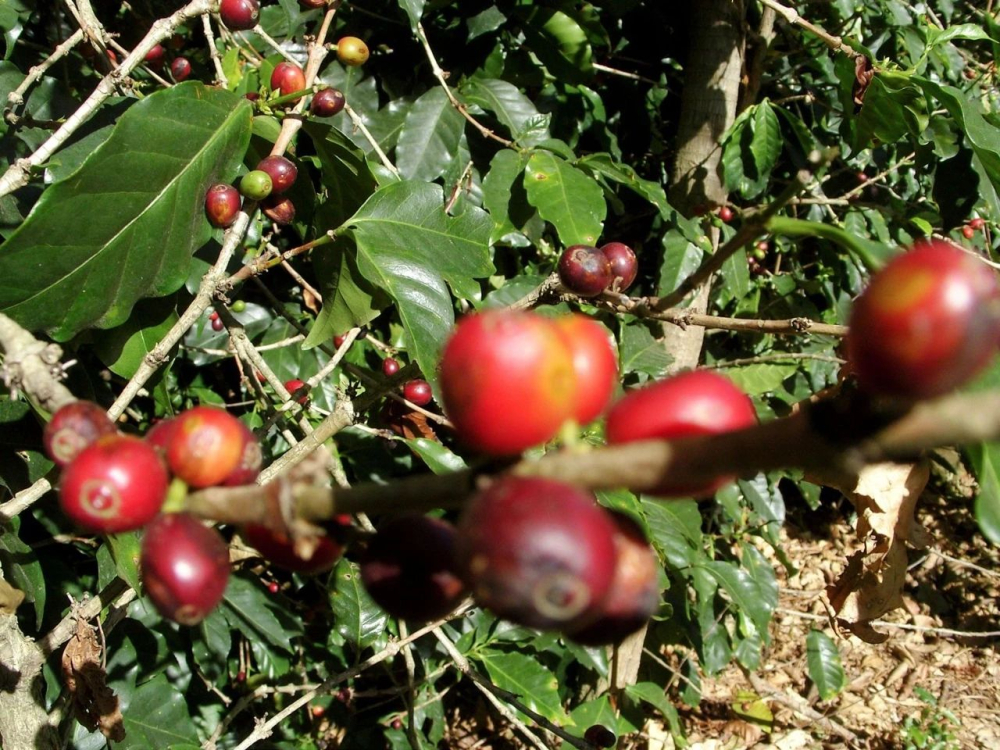
Speaking of the Red Cherry Project (OPERATION CHERRY RED PROJECT), it is an initiative launched in 2007 by the major Dutch green coffee trading company Trabocca, with the goal of improving the quality and income of smallholder coffee farmers in Ethiopia. The core of the project lies in encouraging farmers to harvest only fully ripe red coffee cherries and to uphold manual picking exclusively. This is not only to ensure flavor quality but also to increase farmer income. Trabocca formulates precise harvesting plans based on the characteristics of different microclimatic zones and provides loans, equipment, and technical support. As long as the final coffee achieves a score of 88 or above in cuppings held in Addis Ababa and Amsterdam, it will be purchased at premium prices.
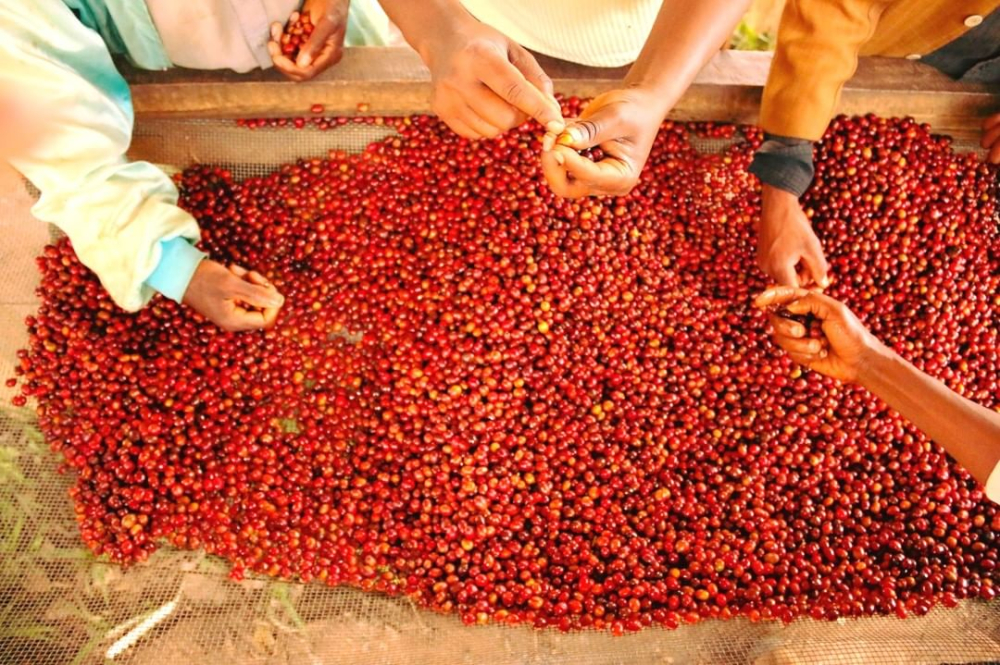
 The natural sun-dried method (Natural / Dried-in-the-Fruit) is the most common processing approach in the Red Cherry Project and is also one of the oldest coffee processing techniques. This method involves drying the entire coffee fruit with its pulp still intact on sun-drying beds for about four weeks after harvesting, without removing the pulp. This process requires strict control of temperature and turning frequency to prevent over-fermentation or mold, and demands a high degree of climatic dryness. For this reason, there are relatively few regions capable of stably producing high-quality coffee using this method.
In addition to the Red Cherry Project, Ethiopia is home to many other excellent sun-dried processing facilities, such as the Kebel Aricha washing station. Located about 4 kilometers west of Yirgacheffe town and managed by Surafel Birhanu, it is surrounded by approximately 650 to 700 smallholder farms. The coffee grown by these farmers is harvested when ripe, then collected and sent to the Kebel Aricha washing station for sorting and sun-drying. During the initial stages of sun-drying, the coffee must be turned every 2 to 3 hours to prevent uneven fermentation or mold. The entire drying process takes about 4 to 6 weeks depending on weather conditions, after which the parchment coffee is sent to Addis Ababa for further processing and export, traded via the ECX (Ethiopian Commodity Exchange) system. A certain brand’s Sun-Dried Aricha beans are rated as G1 grade and are hailed as the “King of Fruits.”
In the actual quality control of a certain brand, although both Red Cherry Yirgacheffe and Sun-Dried Aricha are G1 grade, their green beans exhibit the typical yellow-green hue of sun-dried beans, with full beans and low defect rates. However, their roasting strategies differ slightly: Red Cherry Yirgacheffe has a charge temperature of 194°C, while Sun-Dried Aricha is charged at 198.6°C. To highlight their respective flavor characteristics, both beans are roasted lightly, but the curve for Red Cherry Yirgacheffe is relatively smoother, whereas Aricha, due to less uniform bean ripeness, requires a longer drying phase, resulting in a more complex roasting curve to ensure consistent color development and full flavor maturity.
Cupping results show that Red Cherry Yirgacheffe, due to its uniform ripeness, can better preserve bright acidity and delicate floral notes. In contrast, the non–Red Cherry Project Sun-Dried Aricha, while rich in fruity aroma, shows slightly more complex flavor layers due to ripeness variation, requiring more careful extraction to balance the taste.
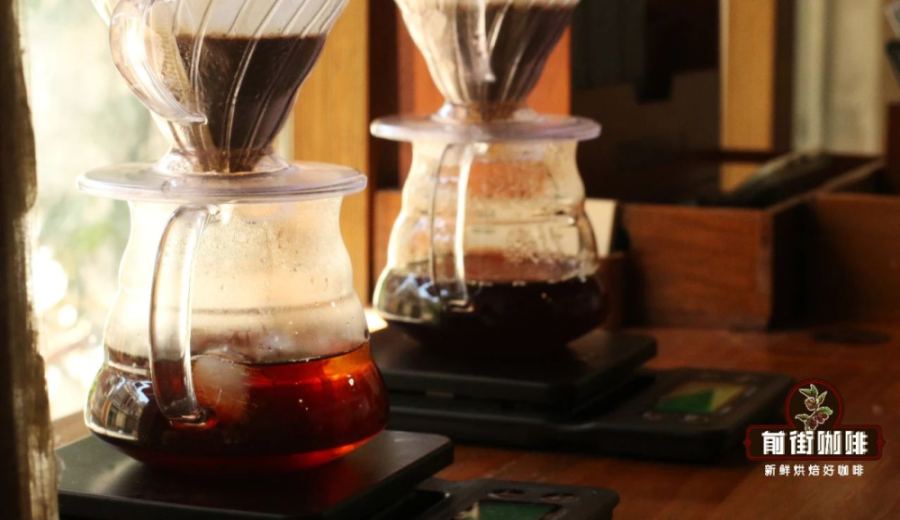
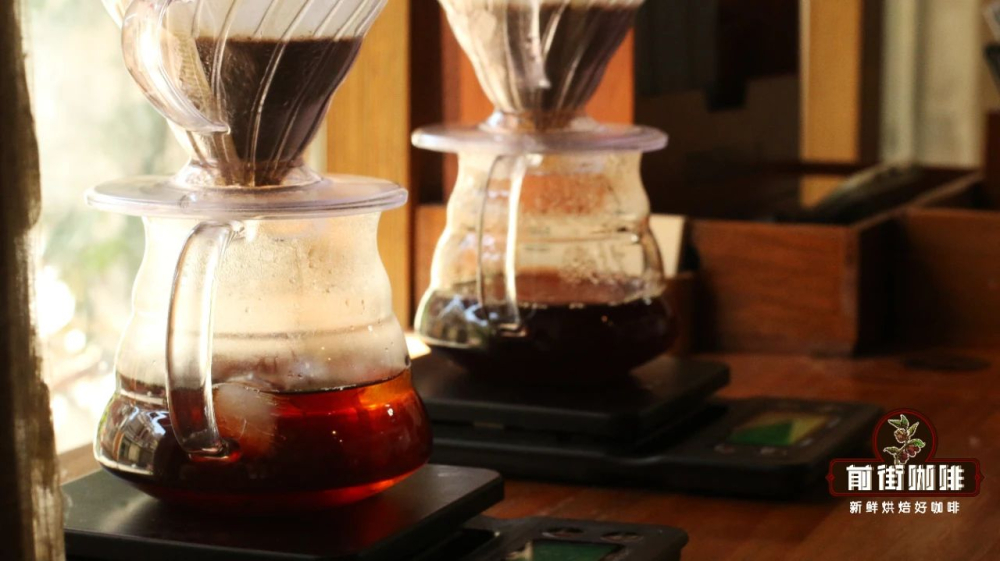
Practical pour over recommendations are as follows: Use 15 grams of coffee, a 1:15 coffee-to-water ratio, a V60 dripper, and water temperature controlled at 90°C, with a grind size around 10 on the EK43s grinder (fine sugar level). Begin with a 30-second bloom using 30 grams of water, then pour in a circular motion up to 125 grams. Once the water level drops by half, continue pouring to 225 grams. Total extraction time should ideally be between 2 minutes and 2 minutes 10 seconds.
In terms of flavor profile, Red Cherry Yirgacheffe showcases bright notes of lemon, licorice, citrus, and berries, with sweet orange aroma running throughout. It has a high sweetness and a caramel and creamy aftertaste, with the finish transitioning into a soft black tea note. In contrast, Sun-Dried Aricha features mature fruit aromas as its main theme, with a pronounced fermentation sensation on the palate, highlighting an interaction between green grape and lemon acidity. As the temperature cools slightly, a creamy texture and grape juice-like finish emerge, delivering a rich and layered flavor experience.
The above content is compiled by CoffeeHunters, a coffee news website.


