







Introduction:Indonesia’s Sumatra PWN Golden Mandheling, renowned for its rigorous manual sorting and G1 grade standards, is a premium representative of the Mandheling category. This article explores its low-acidity, full-bodied flavor profile by examining the growing region, wet-hulling process characteristics, and grading system, and provides pour over brewing parameters for medium-dark roasts to help coffee enthusiasts master the brewing techniques and tasting highlights of this classic bean.
Golden Mandheling is the top-tier Mandheling representative from the Gayo Highlands of Aceh, Sumatra, Indonesia, meticulously selected and produced by Pwani Coffee Company (PWN), established in 1957. This region is considered the golden belt of Indonesian Mandheling coffee, with elevations ranging between 1100–1600 meters. The climate and soil conditions create a unique foundational flavor profile for the coffee beans. PWN has long contracted high-quality coffee farms in this area, and all its green beans meet premium-grade standards.
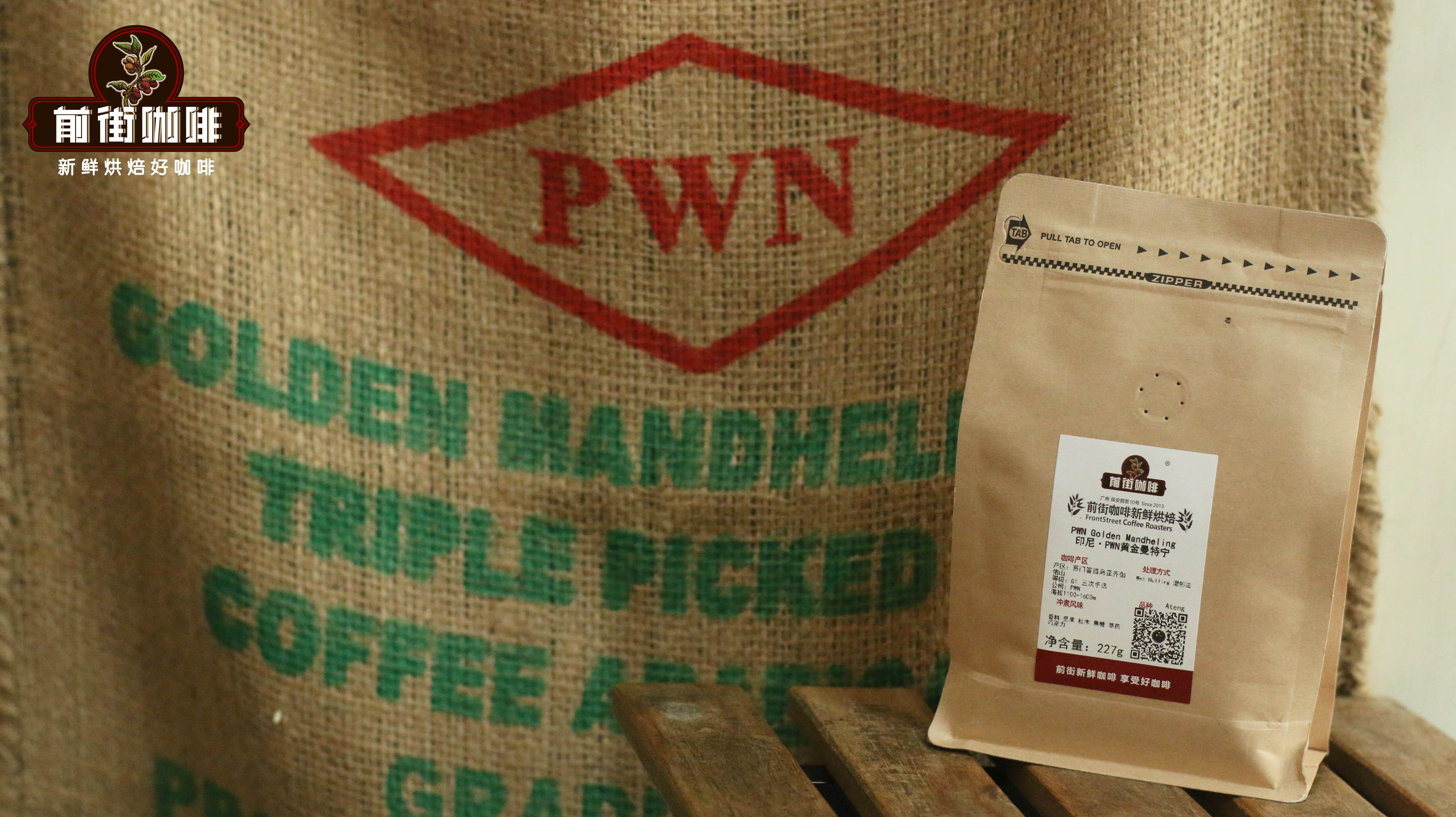
The term “Golden Mandheling” is not a generic term but a registered trademark exclusive to PWN, used solely to denote high-quality Mandheling green beans that have undergone multiple rounds of screening. Each batch comes with an official certificate for authenticity verification and is packaged in 30-kilogram jute sacks printed with independent batch numbers that correspond exactly with the certificate information—these details are key identifiers of genuine products, and the certification documents displayed in physical stores serve as the best proof.
The processing method of Golden Mandheling follows Indonesia’s traditional wet-hulling technique, characterized by a short fermentation stage and long drying period. This process results in relatively mild acidity but yields a richer, fuller body, becoming a hallmark feature of Mandheling flavor. However, wet-hulling also presents challenges: the parchment layer must be removed when the beans are semi-dry (with a moisture content of about 30%–40%), at which point the beans are directly exposed to Indonesia’s high temperature and humidity. If not properly controlled, this can lead to moldy, earthy, or overly herbaceous off-flavors. Therefore, PWN ensures consistent quality through strict manual selection and rigorous post-processing controls.
Indonesian coffee grades are primarily based on the ratio of defective beans, supplemented by bean size evaluation, and are divided into six grades from G1 to G6. Official standards require that generally graded coffee beans must be free of live insects, mold, have a moisture content not exceeding 12.5%, and an impurity rate below 0.5%. Among these, G1 is the highest grade, stipulating no more than 3 defective beans in a 300-gram sample, with all beans being at least 18 mesh (approximately 8 millimeters) in size. PWN Golden Mandheling not only meets the G1 benchmark but also undergoes at least three rounds of manual sorting, along with machine-based density and color sorting, resulting in large, uniform green beans with bright, glossy colors that lay an excellent foundation for subsequent roasting.
To fully showcase the classic flavor profile of Mandheling, one café adopts a medium-dark roasting strategy—this roast level effectively reduces excessive acidity while enhancing the balance between body and flavor complexity. Cupping results show that Golden Mandheling emits fresh aromas of spices, pine, and herbs, with a rich and bold taste of caramel, nuts, and dark chocolate upon entry, followed by a subtle fruity sweetness in the aftertaste. The overall profile is full-bodied, clean, and well-balanced with distinct layers and excellent harmony.
For home brewers looking to explore its flavor potential, the pour over method is recommended. Medium-dark roasted Golden Mandheling suits a medium-coarse grind (similar to white sugar granules), with a brew ratio set between 1:15 and 1:16 (for example, 15 grams of beans to 225–240 milliliters of water). During brewing, a step extraction approach is advised: start with a small amount of hot water (about 93–95°C) for a 30-second bloom to activate aroma release; then pour in a circular motion until two-thirds of the total water volume is reached, waiting approximately 45 seconds; finally, pour the remaining water in one go, keeping the total brew time between 2 minutes 30 seconds and 3 minutes. These parameters balance body and clarity while avoiding bitterness from over-extraction.
In summary, PWN Golden Mandheling, with its strict quality control process, distinctive wet-hulling technique, and G1-grade green bean foundation, stands as a representative premium bean within the Mandheling category. Whether savoring its layers of spice and nuttiness or exploring flavor variations by adjusting pour over parameters, coffee enthusiasts can gain a deeper appreciation of the unique charm of Indonesian coffee.
The above content is compiled by CoffeeHunters, a coffee news website.


