







Introduction:Washed and natural (sun-dried) are two classic coffee processing methods, each imparting distinctly different flavor profiles to the beans. This article takes Jamaica Blue Mountain No.1 and Panama Blue Label Geisha as practical examples to deeply analyze the principles and procedural differences of the two methods, and compares their performance in green bean appearance, roasting curves, and cupping flavors—helping you grasp the key differences in sweetness, cleanliness, and complexity, thereby enhancing your bean selection and brewing appreciation skills.
Washed and natural are the two most representative processing techniques in coffee production and also key factors influencing the final flavor direction of the coffee. The same coffee beans, simply by using different processing methods, can exhibit vastly different aromas, acidity, and sweetness. Using Jamaica Blue Mountain No.1 and Panama Blue Label Geisha as examples, this article explores the differences between these two processing methods in depth—from principles and steps, to green bean appearance, roasting, and cupping flavors—providing a comprehensive analysis of how they shape the individuality of coffee.
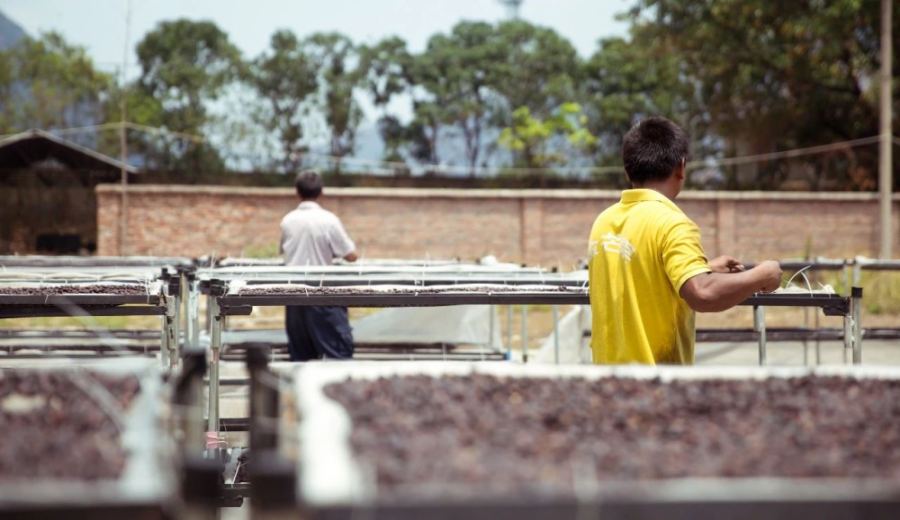
The natural (sun-dried) processing method is the oldest technique in coffee processing, having been used by coffee farmers in the Arab region as early as a thousand years ago. The basic approach involves placing freshly harvested whole coffee cherries directly under the sun to dry for about 27 to 30 days until the moisture content drops to around 12%. Although this method is low-cost, it is highly susceptible to weather and environmental influences, and was historically used mostly for beans of inconsistent quality. However, with advancements in processing techniques, many renowned producing regions have now developed 'refined natural' processes. For example, top estates in the Blue Mountain and Boquete regions will first meticulously select only red cherries, removing unripe or overripe ones, then place the coffee fruit on elevated drying beds for even drying, continuously turning them to ensure consistent fermentation—ultimately delivering richer and more layered flavors.
In contrast, the washed processing method originated in 18th-century Holland and is a procedure that emphasizes precision and hygiene. First, a pulper is used to remove most of the fruit flesh, and the parchment-covered beans are placed in water tanks for fermentation, where water helps remove the remaining pulp while also using buoyancy to screen out less dense defective beans. Next, the mucilage layer is mechanically removed, and the beans still coated with mucilage are left to ferment for 1 to 2 days, after which they are thoroughly rinsed with clean water. Finally, the parchment-covered green beans are evenly dried to a moisture content of 12% before storage and export. The advantage of the washed method lies in the high controllability of the fermentation stage, which effectively reduces variables, thus typically resulting in a cleaner and more balanced flavor profile.
Shifting focus to the two samples tested in this article: Jamaica Blue Mountain No.1 and Panama Blue Label Geisha. The former comes from the historic Clifton Estate in the Blue Mountain region and is one of the representatives of the Blue Mountain producing area. Starting in 2020, it introduced a natural (sun-dried) version for the first time, breaking its long-standing tradition of being exclusively washed; the latter is the Blue Label Geisha from Panama’s Finca Elida, considered the “accessible” grade within the series. After 2020, a natural (sun-dried) processing option was also added, allowing consumers to experience the unique charm of Geisha at a more affordable price.
Observing the green bean appearance, whether Blue Mountain or Geisha, both the washed and natural versions feature plump, uniformly sized beans, exhibiting the slender oval shape characteristic of the Typica and Geisha varieties. However, upon closer inspection of color, naturally processed green beans often show a warmer yellow-green hue, with more intact silver skins; washed beans are usually dark green, with silver skins often appearing fragmented or loosely attached. After roasting, the silver skins of natural beans generally come off more completely, whereas washed beans may retain some light yellowish silver skin along the center cut—a result related to the adhesion strength of the silver skin during roasting.
In designing the roasting curves, to ensure a fair comparison, a certain coffee brand adopted similar roasting strategies for both the natural and washed versions, with fine adjustments based on actual flavor performance. Taking Blue Mountain No.1 as an example, a medium roast was employed to highlight its balanced and full-bodied characteristics. During roasting, heat and air flow were carefully controlled to ensure the beans entered first crack at the right time, finally dropping at 198.5°C; whereas the Blue Label Geisha was given a medium-light roast to preserve its captivating floral and fruity aromas and bright acidity, with a drop temperature controlled at 190°C, emphasizing its unique aromatic layers.
During actual cupping, the flavor profile differences between the natural and washed versions become immediately apparent. The natural Blue Mountain exhibits rich notes of nuts and cocoa as the base, accompanied by the sweet-tartness of berries and a brown sugar finish, delivering a complex and layered overall flavor; in contrast, the washed Blue Mountain presents a more restrained profile, centered around chocolate and nuts, with a clean and balanced mouthfeel, and an exceptionally high level of clarity. Among the Geisha series, the natural Blue Label exudes pronounced fermented wine-like aromas, sweet tropical fruit notes, and the juicy scent of melon, resulting in a vibrant and intense flavor; the washed Blue Label showcases elegant jasmine floral notes and citrus acidity, with a bright and transparent mouthfeel, and a honey-like finish that adds a touch of smoothness.
In summary, the natural processing method, involving the fermentation of the entire coffee fruit, is able to bring out richer fruit tones, sweetness, and complex layers—making it ideal for drinkers who prefer bold and distinctive flavors; whereas the washed method excels in stability, cleanliness, and clear acidity, with a relatively simple flavor profile—especially well-suited for highlighting aroma and delicate acid-sweet balance under light roasting. Whether selecting coffee beans or adjusting brewing parameters, understanding the fundamental differences between these two processing methods can help you more accurately capture the potential and charm of each bean.
The above content is compiled by CoffeeHunters, a coffee news website.


