








Introduction:Want to enjoy a refreshing iced coffee in the summer but can’t tell the difference between Americano Iced, Pour Over Iced, Cold Brew, and Ice Drip? These four common types of iced coffee each have unique characteristics in terms of brewing method, time required, and flavor profile. This article delves into their similarities and differences—from extraction methods, time needed, difficulty level to taste characteristics—and offers practical parameter suggestions and step-by-step instructions to help you find the iced coffee that best suits your palate, and even recreate it easily at home.
As temperatures rise, iced coffee becomes a top choice for many coffee lovers. However, there is a wide variety of iced coffee available on the market, among which Americano Iced, Pour Over Iced, Cold Brew, and Ice Drip are the four most common types. Although their names all contain the word “ice,” they actually differ significantly in production techniques, extraction methods, time required, and final flavor. Understanding these differences not only helps you make choices based on occasion and taste preference, but also allows you to try replicating these classic iced coffees at home.
First, from theextraction methodperspective, Americano Iced and Pour Over Iced follow a “brew hot then cool” logic—meaning hot water is used to extract the coffee first, and then ice or cooling is applied to lower the temperature; whereas Cold Brew and Ice Drip use cold water throughout the entire extraction process, belonging to the “cold extraction” method. This fundamental difference directly affects the final flavor expression and mouthfeel structure of the coffee.
Americano Icedis one of the most common types of iced coffee, and is relatively simple and quick to make. Typically, an espresso shot is extracted using an espresso machine, and then poured directly into a cup containing ice cubes and cold water (or sometimes partially with iced milk) to quickly cool and dilute it. Using a common recipe as an example, about 20 grams of coffee grounds are used, extracted at a 1:2 coffee-to-water ratio within 25–33 seconds to yield 40 grams of espresso, which is then poured into a cup pre-filled with 90 grams of ice cubes and 180 grams of water, and gently stirred. This method retains the basic flavors of the coffee, with a refreshing mouthfeel and quick preparation, making it ideal for everyday enjoyment.

If you want to try it at home, you can use medium or medium-dark roasted blends, which bring out caramel and nutty notes and still maintain layers after being mixed with ice. However, be mindful that due to the large amount of ice water added, it’s recommended to adjust the coffee concentration appropriately to avoid over-dilution and flavor loss.
Pour Over Icedapplies pour over techniques to iced coffee, usually adopting a “high concentration, high extraction” strategy—first extracting a concentrated hot coffee, then cooling and diluting it with ice cubes. For example, using 15 grams of coffee grounds, about 150 grams of water heated to 92°C is used for extraction, with a coffee-to-water ratio controlled around 1:10, along with 75 grams of ice cubes serving as the cooling medium. It’s recommended to use medium-light roasted coffee beans to highlight fruity and floral notes, and a refined brewing technique such as a three-stage pour can make the coffee flavors clearer.
The key to this method lies in controlling the extraction time and water temperature, with the total extraction time generally ranging between 1 minute 50 seconds and 2 minutes. Going too long may lead to over-extraction, while too short may result in under-extraction. The resulting Pour Over Iced coffee has a clean and bright mouthfeel, clearly expressing the original characteristics of the coffee beans, making it suitable for coffee lovers who enjoy delicate flavors.

As forCold Brew Coffee, it follows a completely different production approach. It involves steeping coarsely ground coffee powder in cold water, usually for 8 to 12 hours, left to sit in the refrigerator, and then filtering out the coffee grounds for drinking. Taking a 1-liter Cold Brew pitcher as an example, 60 grams of coffee beans (recommended to be ground to a coarseness similar to fine sugar, roughly passing 80% through a #20 sieve) are mixed with 600 grams of cold water and refrigerated for prolonged steeping.
The coffee produced by this method usually has lower bitterness, a noticeable sweetness, balanced and smooth flavors, and a thicker mouthfeel compared to other types of iced coffee. Cold Brew has low equipment requirements—just a sealed container is enough to get started—making it a popular choice for many novice coffee drinkers. However, it’s worth noting that due to the long steeping time, it’s recommended to use freshly roasted coffee beans with rich and layered flavors to fully bring out their potential.
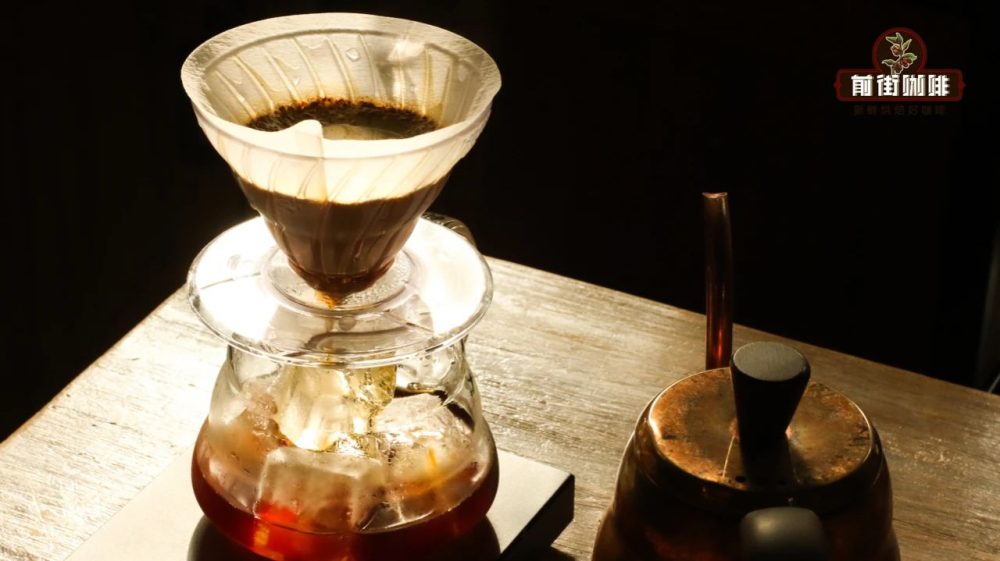
Finally, there’sIce Drip Coffee, an extraction method that requires great patience. It involves slowly dripping ice water through a bed of coffee grounds drop by drop, gradually extracting the coffee substances. The dripping speed of Ice Drip is typically measured by the number of drops per 10 seconds, and it’s generally recommended to control it at around 7 drops per 10 seconds—going too fast may cause uneven extraction or over-extraction.
During the brewing process, the common coffee-to-water ratio is 1:10, but if considering subsequent dilution with ice, it can be increased to 1:12 to 1:14. The coffee grounds should be ground to a medium-coarse level, and filter paper should be used to prevent fine particles from passing through the filter layer. The whole process takes approximately 6 to 8 hours, and after extraction, it still needs to be refrigerated to stabilize the flavors. Ice Drip Coffee often features higher acidity and unique fermented notes, such as subtle wine-like aromas, with a delicate and multi-layered mouthfeel. It’s the ultimate favorite of flavor enthusiasts seeking the utmost in taste, but it also requires the most equipment and time investment.

In terms ofpreparation time, Americano Iced and Pour Over Iced usually take just a few minutes to complete, making them ideal for quick enjoyment during daily routines or when out; whereas Cold Brew and Ice Drip require longer waiting times, with Cold Brew taking about 8 to 12 hours and Ice Drip even 6 to 8 hours, making them better suited for advance planning or batch preparation.
Regardingease of operation at home, Pour Over Iced and Cold Brew have relatively low requirements for equipment and skills—having a pour over setup or a sealed bottle is enough to get started easily; Americano Iced requires an espresso machine, while Ice Drip needs specialized drip equipment, posing a higher cost and preparation threshold for general households.
As forflavor expression, although it’s largely dominated by the inherent flavors of the coffee beans themselves, different extraction methods still bring noticeable differences. Americano Iced usually has a lighter flavor and a refreshing mouthfeel, suitable for consumers who prefer simple and direct tastes; Pour Over Iced is clean and bright, clearly showcasing the original characteristics of the coffee beans; Cold Brew has low bitterness and high sweetness, with a thicker mouthfeel; Ice Drip offers more complex fermented and acidic flavors, with diverse layers, making it the ultimate choice for flavor enthusiasts.
The above content is compiled by CoffeeHunters, a coffee news website.


