







Introduction:Rwandan coffee has been making waves in international competitions in recent years, with its high-altitude volcanic soil and washed processing methods producing clean, bright profiles of berry and citrus notes. This article takes an in-depth look at the characteristics of Rwanda’s major coffee-growing regions, the development of the industry from the colonial era to today, the traits of the Bourbon variety, and the washed processing workflow. It also provides practical roasting and pour over recommendations for the Gasharu coffee beans, helping you master this well-balanced specialty bean.
In the landscape of African specialty coffee, although Rwanda may not have the same long-standing history as Ethiopia or Kenya, it has risen rapidly, thanks to numerous accolades in the COE (Cup of Excellence). This inland country, known as the “Land of a Thousand Hills,” boasts high altitudes and fertile volcanic soils. Coupled with the Bourbon variety and washed processing, it crafts coffees with bright acidity and clear fruity notes. This article will comprehensively break down the key elements of Rwandan coffee—from regional environments and historical contexts, to varietal traits and processing techniques—along with practical pour over and roasting parameters for Gasharu-grown beans.
 The most distinctive feature of Rwanda’s coffee-growing regions is its “Land of a Thousand Hills” terrain and tropical highland climate. The country is characterized by mountains and plateaus, with a tropical highland and savanna-type climate, complemented by fertile volcanic soils, providing ideal growing conditions for Arabica coffee. These natural advantages endow Rwandan coffee with distinct clarity and rich flavor complexity.
It is worth noting that coffee is Rwanda’s most important export commodity, accounting for over 70% of the nation’s total exports. Around 33,000 hectares of land across the country are dedicated to coffee cultivation, supporting the livelihoods of more than 500,000 people, mostly smallholder farmers. Local farmers rarely use chemical fertilizers or pesticides, relying instead on natural mulch and traditional fertilization, which helps preserve the pure and natural flavor characteristics of Rwandan coffee cherries.
The development of Rwanda’s coffee industry has been anything but smooth. As early as the German and Belgian colonial periods, coffee was introduced by missionaries, but it was primarily produced as a raw material for the colonial powers—high in volume but low in quality. After independence, the government-established body OCIR gradually began to prioritize coffee production, which peaked in 1986. However, political instability in the early 1990s, including the genocide, disrupted the industry. It wasn’t until after 2001, when the political situation stabilized and the NAEB (National Agricultural Export Development Board) was established to boost coffee exports, that the industry recovered—a key reason behind Rwanda’s recent international acclaim.

In 2017, the NAEB partnered with Japan’s International Cooperation Agency (JICA) to launch the “Rwanda Coffee Upgrading and Promotion (CUP Rwanda)” program. Through three years of technical assistance, the initiative helped coffee farmers improve cultivation and processing quality. These efforts transformed Rwanda’s coffee from a volume-driven to a quality-driven industry in just over two decades, leading to numerous international awards.
Over 97% of the coffee grown in Rwanda is Arabica, with the Bourbon variety accounting for up to 95%. Bourbon coffee was first cultivated on Réunion Island and spread northward after being introduced to Brazil in 1860. Its cherries change color with ripeness—from green and pale yellow to dark red—earning it the nickname “Red Bourbon.” Bourbon grown at high altitudes typically exhibits superior aroma and brighter acidity.
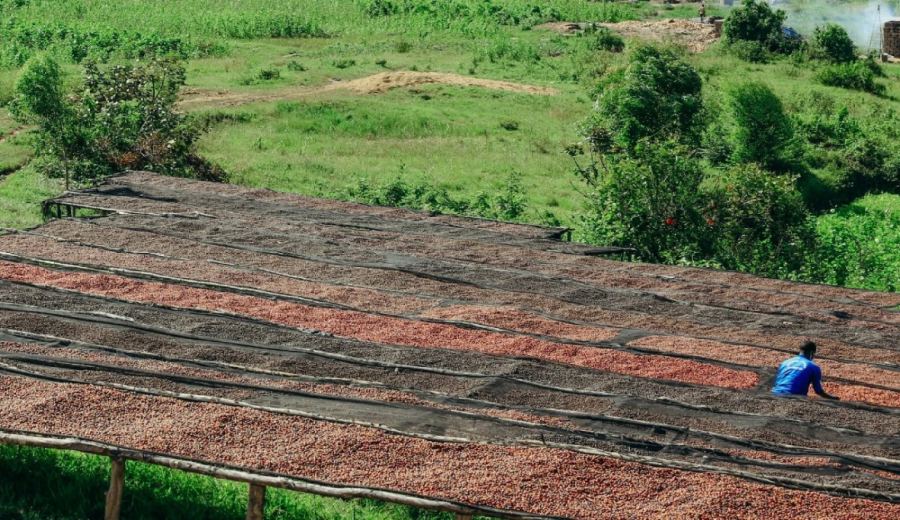
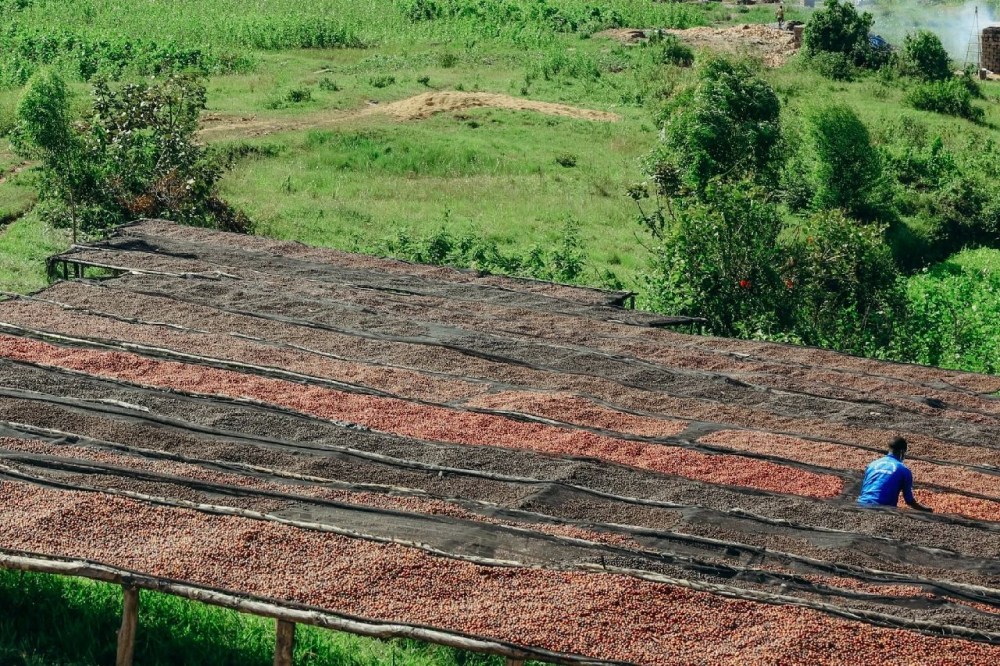
Currently, most coffee in Rwanda is processed using the washed method, which highlights the coffee’s intrinsic flavors, resulting in clean and bright profiles. During harvest season, farmers deliver ripe cherries to washing stations, where they are hand-sorted and then subjected to floatation to remove defective beans. The beans then undergo pulping, fermentation, washing, and drying. It’s worth noting that the washed process is water-intensive, requiring approximately 40 to 50 kilograms of water per kilogram of coffee beans, which is why it’s not feasible in some regions.
The number of washing stations in Rwanda has grown rapidly from just 2 in the early days to 220 today, all operated by private exporters or farmer cooperatives. Given the small scale of farmland (averaging fewer than 200 coffee trees per household), each washing station serves roughly 50 to 100 farms. The NAEB also dispatches 200 botanists and cuppers to conduct regular inspections, guiding farmers on soil management, organic farming, and harvesting techniques to ensure consistent coffee quality.
Take the Gasharu growing region in Rwanda’s western Nyamasheke District as an example. Situated at altitudes between 1,700 and 2,000 meters, it cultivates varieties including Bourbon, Catuula, and Catuai, also employing the washed method. Its flavor profile is dominated by plum, citrus, berries, and nuts, with bright acidity and a honey-like sweetness in the aftertaste—making it a typical representative of Rwandan coffee character.
For home brewing of Gasharu coffee beans, a medium-light roast is recommended to preserve its bright acidity. Roasting can follow these parameters: using a Yangjia 800N roaster, charge 550 grams of beans at 175°C with 120 power and 3 fan speed; turning point at 1 minute 36 seconds, adjust fan speed to 4 and increase power to 140 when temperature reaches 112°C; once the beans turn yellow (approx. 151°C), enter the drying phase; at 8 minutes 30 seconds, look for tiger-striping and toast aromas; first crack begins at 9 minutes 45 seconds, set fan speed to 5, develop for 1 minute 30 seconds post-first crack, and drop at 190.6°C.
For pour over, use a V60 dripper with water at 90°C, 15 grams of coffee, a 1:15 coffee-to-water ratio, and grind size approximately 80% through a Chinese standard #20 sieve. Start with a 30-gram bloom for 30 seconds, then pour in a circular motion to reach 125 grams, then continue pouring to 225 grams as the water level drops, stopping there. Total brew time is around 2 minutes. These parameters enhance the coffee’s layered body and mouthfeel, ideal for highlighting the fruity acidity and nutty tones of Gasharu.
Although not as brightly fruity as Kenyan beans, Rwandan coffee stands out with its balanced, smooth mouthfeel and unique terroir characteristics, showcasing great potential. For coffee enthusiasts eager to explore new origins, Rwanda is definitely worth adding to your pour over lineup—experience how this “Land of a Thousand Hills” crafts stunning coffee flavors through high altitudes and meticulous washed processing.
The above content is compiled by CoffeeHunters, a coffee news website.


