








Introduction:Have you ever wondered why the same coffee beans can taste so different when brewed as cold brew versus iced pour over? This article dives deep into the key differences between the two in terms of brewing water temperature, method, time, and concentration, revealing why cold brew delivers soft acidity, rich body, and unique fermented aromas, while iced pour over highlights bright fruity notes and a layered, vibrant flavor profile. From practical parameters to sensory experience, it helps you truly understand the fundamental distinctions between these two brewing methods.
Many coffee enthusiasts have had this question: if using the exact same coffee beans, why do cold brew and iced pour over taste so different? Take the popular Huakui 8.0 as an example—many people are surprised to find after trying it that not only do the aroma profiles differ, but also the balance of acidity and sweetness, as well as the body and mouthfeel. Behind this lies the deeper principles of water temperature, brewing method, and time control.

To clarify this phenomenon, we can analyze it through several core elements: brewing water temperature, brewing method type, duration, and final coffee concentration. These factors combined determine the direction of the coffee’s flavor. Even with the same beans, they will exhibit completely different personalities under varying brewing conditions.
First, the most obvious difference—water temperature. Whether prepared via hot drip or cold drip, iced pour over relies on high-temperature water (usually around 90°C to 96°C) to quickly extract aromatic compounds and flavor substances from the coffee. This high-temperature environment effectively dissolves the acids, sweetness, and aroma molecules in the coffee, but because high heat accelerates volatility, the aroma can dissipate quickly after brewing, so it is recommended to drink it as soon as possible for the best flavor.
In contrast, cold brew uses ambient or low-temperature cold water (around 4°C to 10°C) throughout the process. Due to the low-temperature environment significantly reducing the efficiency of material dissolution, the extraction time must be extended to compensate. Typically, cold brew is steeped for8 to 12 hours,
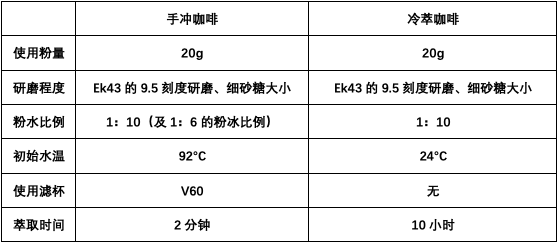
and some go even longer, up to 24 hours, to ensure sufficient extraction. This long-duration, low-temperature steeping process also gives cold brew extraction characteristics that are distinctly different from drip methods. Beyond time and water temperature, the two brewing methods also differ greatly in terms of concentration changes and storage properties. Cold brew is usually recommended to be served with ice cubes to adjust temperature and mouthfeel, and because it can be preserved in a low-temperature environment for aboutfive days,
its flavors may gradually diminish over time, but at the same time, certain fermented aromas will accumulate—this is also part of its unique charm.

Looking deeper into the efficiency of material extraction, coffee contains various key components such as quinic acid, amino acids, caffeine, oils, and tannins, which together shape the coffee’s acidity, sweetness, bitterness, and body. Water temperature directly affects the solubility of these components: in a low-temperature environment, substances that are harder to dissolve, such as caffeine, are less likely to be released, so cold brew generally has lower overall bitterness, a relatively higher ratio of acidity and sweetness, and a smoother, more palatable mouthfeel.
Additionally, the brewing method is another major reason for the flavor difference. Iced pour over mostly falls under drip-style extraction, where hot water passes through the coffee grounds layer, relying on gravity and water pressure to extract the flavors. This dynamic process means each coffee particle is in contact for varying amounts of time, resulting in a more layered and distinct flavor profile.
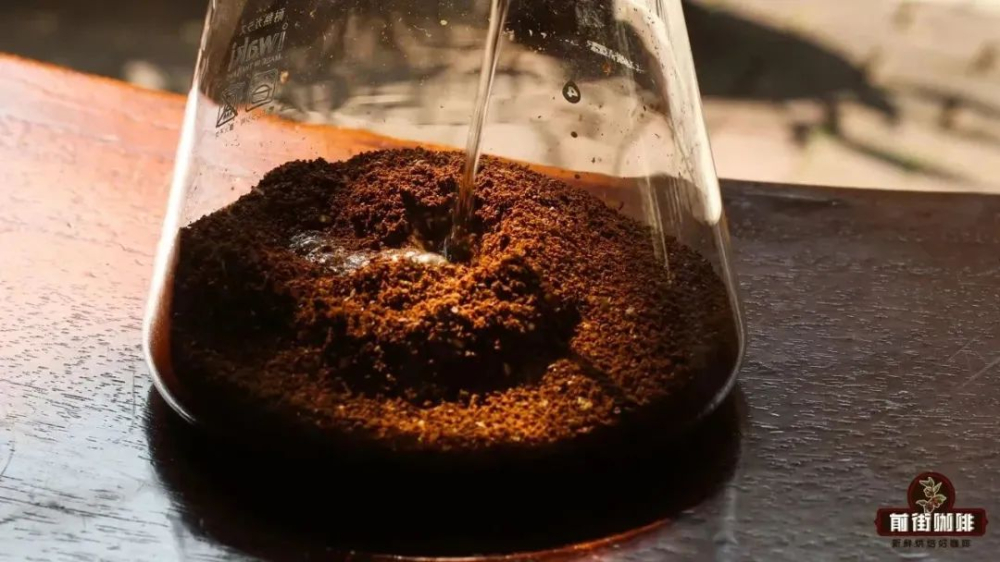
Cold brew, on the other hand, is an immersion-style extraction, where coffee grounds are mixed with cold water and left to steep for a long time, allowing the extractable substances to naturally diffuse until the concentration between the liquid and grounds reaches equilibrium. While this method lacks the layering variation seen in drip extraction, because all the coffee grounds are uniformly soaked in the same concentration environment, the final coffee usually has a smoother, more balanced mouthfeel, a thicker body, and softer, rounder acidity.
Another noteworthy detail is the purpose of using ice cubes. In iced pour over, ice cubes are primarily used for cooling down the hot-brewed coffee liquid quickly. However, due to the large temperature difference when ice meets hot liquid, significant melting can occur, thereby diluting the overall concentration of the coffee. As a result, even with the same coffee-to-water ratio (e.g., 1:10), the final concentration of iced pour over might end up lower than expected.

In contrast, for cold brew, ice cubes are mostly used to maintain the low-temperature environment during the steeping process. Since the cold brew liquid is already in a cold setting, the ice melts slowly, having relatively little impact on overall concentration, which helps preserve a stable and richly flavored coffee experience.
The above content is compiled by CoffeeHunters, a coffee news website.


