







Introduction:When specialty coffee enthusiasts shop, they often see labels such as G1, AA, or auction grades on packaging, yet many are unclear about the grading logic behind them. Mandheling is graded based on the number of defective beans, while Gesha is categorized by origin and cupping scores. This article delves into the coffee bean grading standards of regions like Indonesia and Ethiopia, comparing their processing methods and flavor profiles to help you choose the right beans based on your preferences.
Many consumers new to specialty coffee often feel puzzled when faced with symbols like G1, AA, Red Label, or Green Label on packaging. These markings actually reflect each origin’s unique coffee bean grading system, which is not globally standardized. Some countries grade beans by size, others by defect rate or altitude. Understanding these grading methods can help you more accurately select coffee with the flavors you expect.
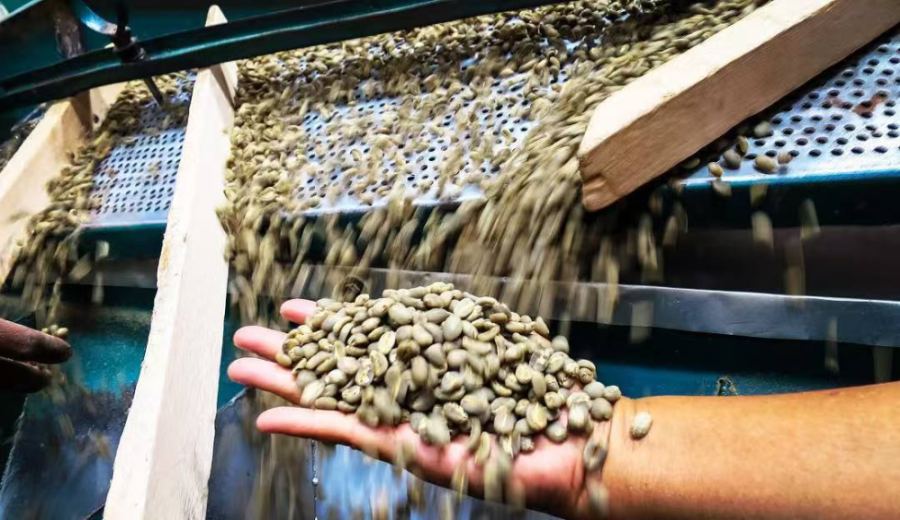
Take Mandheling from Sumatra, Indonesia, for example. Its grading is primarily based on the number of defective beans in every 300 grams of green coffee, divided into six grades from G1 to G6. The fewer the defective beans, the higher the quality of the beans. Specifically, during inspection, 300 grams of green beans are placed against a black background to facilitate examination by professionals. If there are no more than 3 defective beans, it falls under the highest grade, G1; 4 to 12 beans is G2; 13 to 25 beans is G3; 26 to 45 beans is G4; 46 to 100 beans is G5; and 101 to 153 beans is classified as G6. It’s worth noting that defective beans can noticeably affect the final taste and aroma of the brewed coffee.
The reason Mandheling has a strong herbal character, low acidity, and a full body is closely related to its unique wet-hulling (Giling Basah) processing method. This method effectively shortens the drying time of green beans in Indonesia’s hot and humid environment, while also enhancing bean density and body. However, because the wet-hulling process involves faster steps, it is relatively more prone to a higher defect rate, making the grading system even more important. Generally speaking, the higher the grade of Mandheling, the more uniform and harder the roasted beans are, resulting in a brew with more aroma and a smoother mouthfeel.
On the other hand, Gesha coffee from Ethiopia is renowned for its grading system by the Green Estate (Hacienda Esmeralda). This system categorizes Gesha into Red Label, Green Label, and Blue Label based on growing altitude, cupping scores, and supply volume. Red Label Gesha is auction-grade, typically sourced from the Harrar Jima and Ghimbi regions at altitudes of 1600 to 1800 meters, and must achieve a cupping score of 90 or above. Green Label is a micro-lot, grown at similar altitudes but not entered into auctions, yet it still delivers excellent flavor performance. Blue Label, also known as Geisha 1500, is grown at slightly lower altitudes between 1400 and 1500 meters, mainly from the Harrar Jima, Ghimbi Wetted, and Wush Wush regions. It is relatively more affordable but still offers a high standard of flavor.
Gesha coffee is known for its distinctive citrus, floral, and tea-like flavor profile, which is closely linked to its high-altitude growing environment. The large diurnal temperature variation in high-altitude regions helps coffee cherries ripen slowly, accumulating richer flavor compounds. Additionally, the Green Estate’s strict cupping selection process ensures that only the highest-performing batches earn top-tier ratings like Red Label.
Beyond the grading methods mentioned above, some Central American countries such as Guatemala and Costa Rica grade coffee beans based on the altitude of the growing region. Generally, the higher the altitude, the greater the bean density, the brighter the acidity, and the more complex the flavor layers. This altitude-based grading emphasizes the direct influence of geographical environment on coffee flavor.
In summary, the grading logics of Mandheling and Gesha are distinctly different: the former uses the number of defective beans as the main evaluation criterion, emphasizing quality control during processing; the latter combines altitude, origin, and cupping performance to highlight flavor potential and rarity. When purchasing, consumers can better understand the grade labels on packaging—based on their preferences for flavor (such as bright acidity or herbal body) and processing methods—to make more suitable choices.
The above content is compiled by CoffeeHunters, a coffee news website.


