







Introduction:The Geisha coffee from Panama's Hacienda La Esmeralda has long been renowned for its rich floral and fruity aromas, as well as its bright acidity. Among them, the Blue Label Geisha is a highly sought-after, more accessible high-end choice for many coffee enthusiasts. This article delves into the microclimatic differences among the three main growing areas of La Esmeralda, explaining the grading criteria for Red Label, Green Label, and Blue Label. It also provides a complete breakdown of the natural (sun-dried) Blue Label processing method and the Guardiola drying technique. Practical pour over recommendations and flavor profiles for all three grades are included to help you find your ideal Geisha experience.
In 2021, many coffee fans noticed that Hacienda La Esmeralda did not release the Blue Label Geisha as scheduled, sparking considerable discussion. In fact, the farm that year continued to supply a similar grade of coffee under the Las Rocas brand, allowing consumers who love the Blue Label profile to still enjoy a comparable experience. This article will take you through a comprehensive understanding of this classic Geisha, from the growing plots and grading system to the actual processing and brewing methods.
Detailed Breakdown of La Esmeralda’s Three Growing Areas and Their Microclimates
La Esmeralda strictly divides its Geisha cultivation into three core plots: Jaramillo, Canas Verdes, and El Velo. Each plot is further subdivided into multiple small sections based on altitude, temperature, and rainfall, creating microclimatic variations that further influence the flavor expression of the coffee.
Jaramillo is at a higher elevation, with an annual rainfall of about 4,000 mm and significant day-night temperature differences (daytime 19–25°C, nighttime 11–15°C). Its altitude ranges between 1,600–1,700 meters and includes five smaller subplots such as Mario, Noria, and Reina. Canas Verdes is slightly higher in altitude, ranging from 1,600–1,800 meters, with an annual rainfall of about 3,500 mm and temperatures between 16–23°C (nighttime 10–15°C), comprising nine subplots including Lino, Coronado, and Fundador. As for the El Velo plot, it is a more recently acquired area with even higher elevation (1,700–1,900 meters). In addition to Geisha and Catuaí, it also trials varieties like Laurina and Pacamara, and is divided into seven subplots such as Guabo, Portón, and Durazno.
How Are Red Label, Green Label, and Blue Label Graded?
Hacienda La Esmeralda classifies its Geisha into three main grades based on planting altitude and cupping scores:Esmeralda Special (Red Label), Private Collection (Green Label), and Geisha1500 (Blue Label).
Red Label (Esmeralda Special)Reserved exclusively for auctions, it comes only from Jaramillo and Canas Verdes, at altitudes of 1,600–1,800 meters, with cupping scores above 90. It is available in both washed and natural processing methods. Due to the auction mechanism, it is considered a high-priced, collectible-grade coffee. 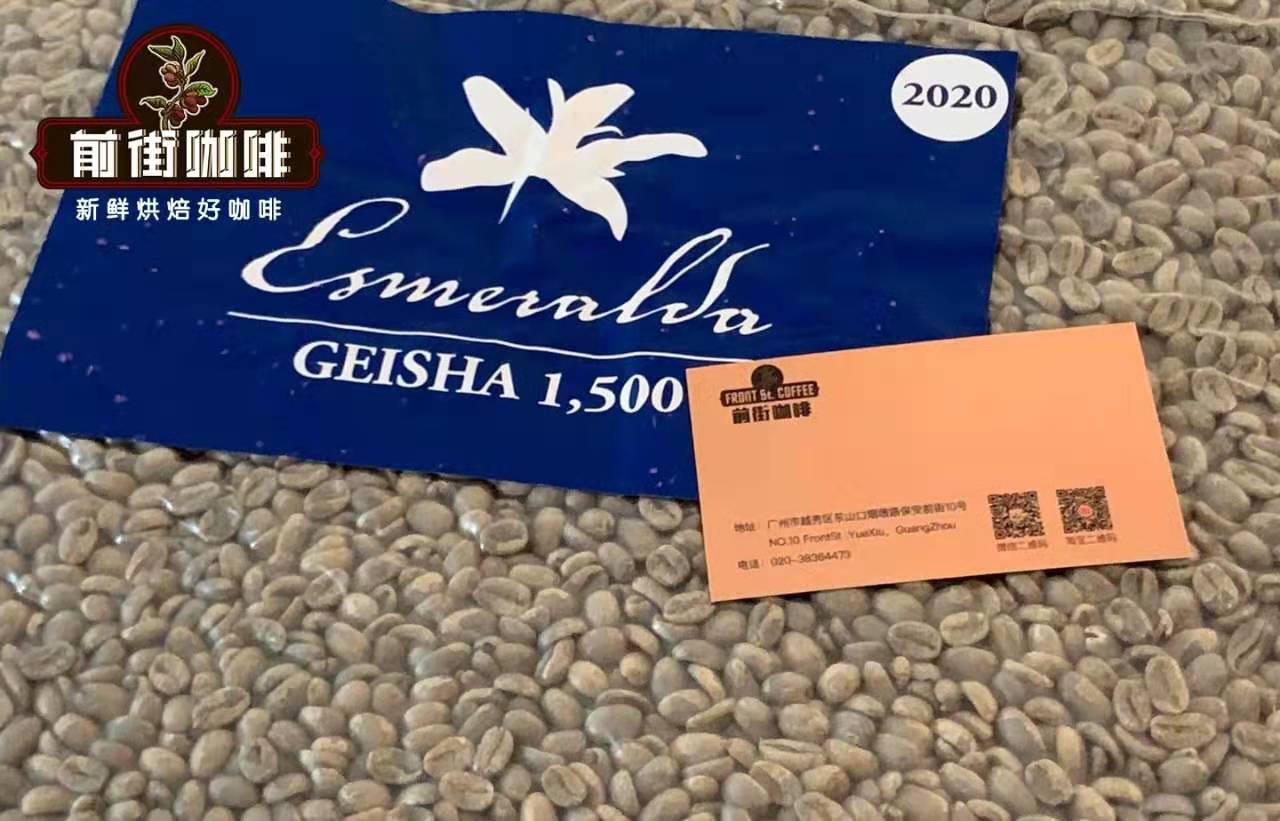
Green Label (Private Collection)Although not part of the auction, it also delivers high-quality performance. It is a blend of beans from multiple sections, with altitudes similar to the Red Label. The flavor showcases classic Geisha characteristics: pronounced floral notes, citrus acidity, and a rich juicy body. Processing methods include both washed and natural.
Blue Label (Geisha1500)Also known as Geisha1500, it is the most accessible of the three. It is grown at altitudes of 1,400–1,500 meters and is a blend of beans from all three growing areas. Previously available only in washed form, a natural version was introduced in 2020, offering a wider range of flavor options.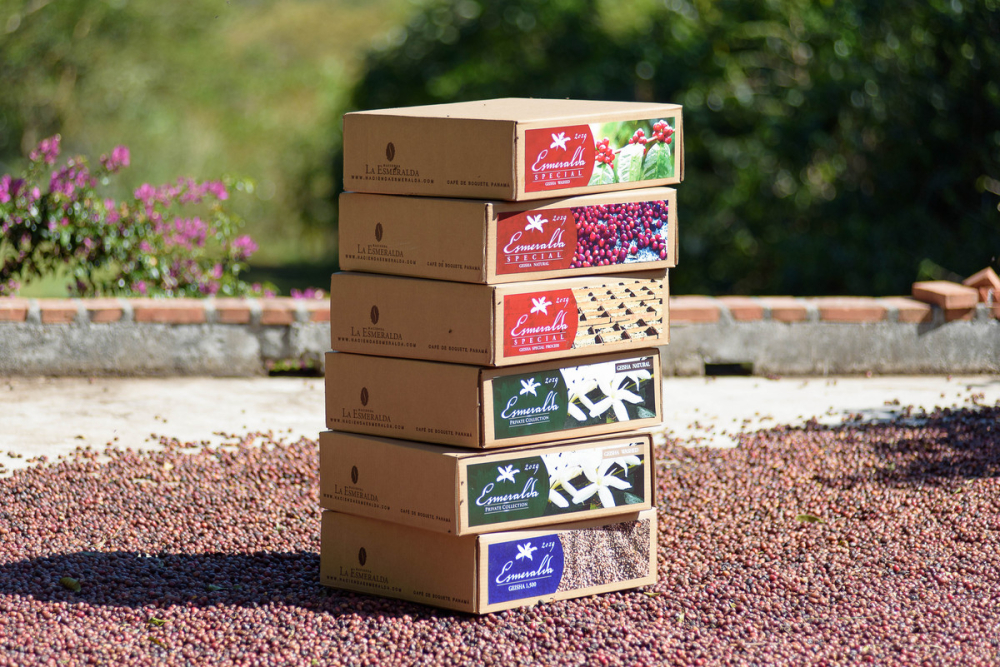
Comparison of Washed and Natural Processing Methods
The washed processing at Hacienda La Esmeralda is meticulous: first, the pulp is removed using a depulper, then the parchment-covered beans are placed in water tanks for fermentation, where buoyancy helps separate unripe and defective beans. After fermentation, the mucilage is removed, followed by washing, and finally the parchment-covered green beans are dried to 12% moisture content before the parchment is removed prior to export.
The natural process pays even more attention to weather and detail: harvested coffee cherries are directly sun-dried in patios for 3 to 5 days (about 8 hours per day), then transferred to a Guardiola dryer and rotated for 72 hours to prevent over-fermentation. The dried beans are then rested for 30 to 45 days (commonly called "reposo"), which helps stabilize the flavor structure. This process effectively controls fermentation levels, ensuring consistent flavor across each batch.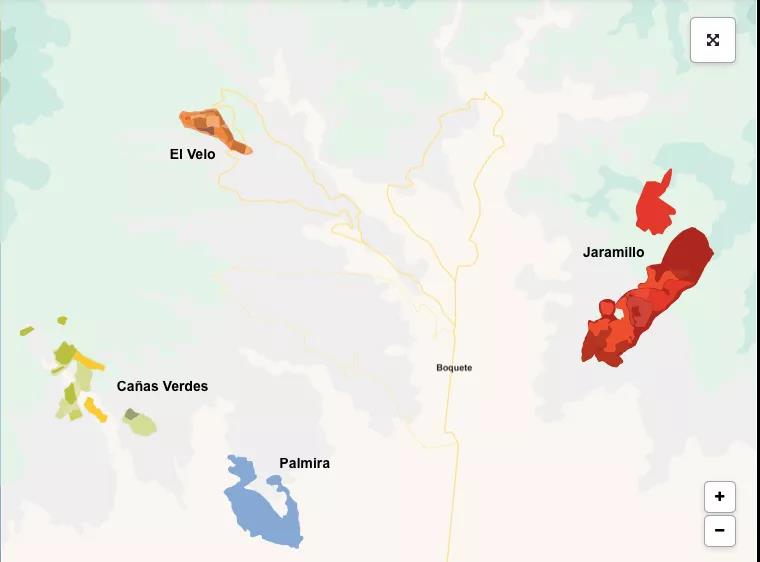
Practical Pour Over Recommendations and Roasting Profiles
For the Blue Label Geisha, a medium-light roast is recommended to enhance its floral and fruity aromas as well as its bright acidity. Tested parameters are as follows: charge temperature 180°C, power 130, air damper 3; turnaround point at 1’32”, damper adjusted to 4 at 104°C; once the bean surface turns yellow (around 151.6°C), enter the drying phase; before first crack (around 7’56”), look for wrinkles and dark spots, pay attention to the start of first crack (around 8’30”), develop for 1’28” after first crack, and drop the beans at a final temperature of 190°C.
Recommended pour over parameters: 15 grams of coffee, 1:15 coffee-to-water ratio, fine grind (80% through a #20 sieve), water temperature controlled at 91°C. Use a three-stage pouring method: first stage, 30g bloom for 30 seconds; second stage, pour in a circular motion up to 100g, pouring slowly to fully extract aroma; third stage, pour in the remaining 95g when the coffee bed is about to be exposed, for a total of 225g, with a total brew time of about 2 minutes.
Flavor Profile Comparison: Red, Green, and Blue Labels
Red Label (Natural): Pronounced notes of rose and citrus, accompanied by berries, apricot, honey, and a hint of roasted rice, with a layered complexity and outstanding sweetness.
Green Label (Washed): Rich jasmine floral aroma, with citrus, berries, cream, green tea, and citrus peel flavors on the palate, and a clean, lingering aftertaste.
Blue Label (Washed): Soft acidity of lemon and grapefruit, developing into oolong tea, honey, and cane sugar sweetness as it cools, with a clean and bright mouthfeel. The natural version offers intense tropical fruit sweetness, with a juice-like smoothness on the palate.

Overall, even though Hacienda La Esmeralda did not officially release the Blue Label Geisha in 2021, the Las Rocas brand still provided a high-quality Geisha with a similar grade and processing style. For coffee lovers eager to experience the Blue Label flavor but unable to access it directly, this remains a welcome alternative.
The above content is compiled by CoffeeHunters, a coffee news website.


