







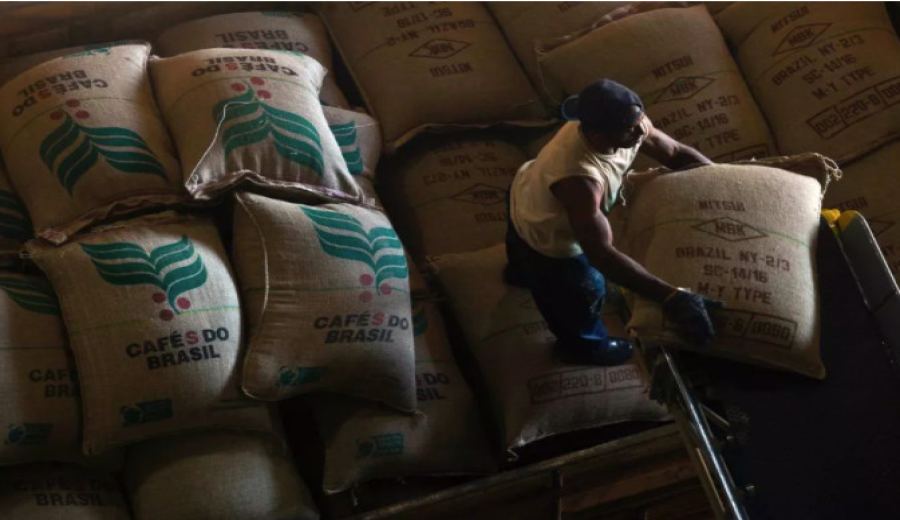
Introduction:The Cerrado coffee region is one of Brazil’s representative specialty coffee producing areas, known for its consistently produced nutty and chocolatey flavor profiles. This article will take you in-depth into Cerrado’s geographical environment, organic farming practices, Brazil’s unique grading system, and the secrets of its semi-washed (pulped natural) processing method. It also provides practical pour over recommendations and parameter settings to help you fully master the brewing essentials of this classic origin.
Brazil has long ranked as the world’s largest coffee producer, and among its regions, the Cerrado (Cerrado) region in Minas Gerais state is a classic choice not to be missed by specialty coffee enthusiasts. This highland area, once referred to as the “Wild West,” has now become a renowned source of coffee with both nutty and chocolatey characteristics, particularly excelling in the semi-washed processing method. Cerrado Red Bourbon coffee beans, with their rich and smooth mouthfeel, serve as the base beans for many coffee blends and are also an ideal choice for many coffee beginners.
As one of Brazil’s four major coffee-producing regions, the Cerrado area in Minas Gerais boasts exceptionally favorable geographical conditions. In fact, coffee is grown in 17 of Brazil’s 21 states, but nearly 90% of the production is concentrated in Paraná, São Paulo, Minas Gerais, and Espírito Santo. Among them, Minas Gerais, located in the central-southern part of Brazil, is not only a major production hub but also one of the important birthplaces of specialty coffee. The Cerrado region lies in the central-western part of the state, at an altitude of about 1,000 meters or more, making it one of the few Brazilian highland areas with the potential for producing specialty coffee.
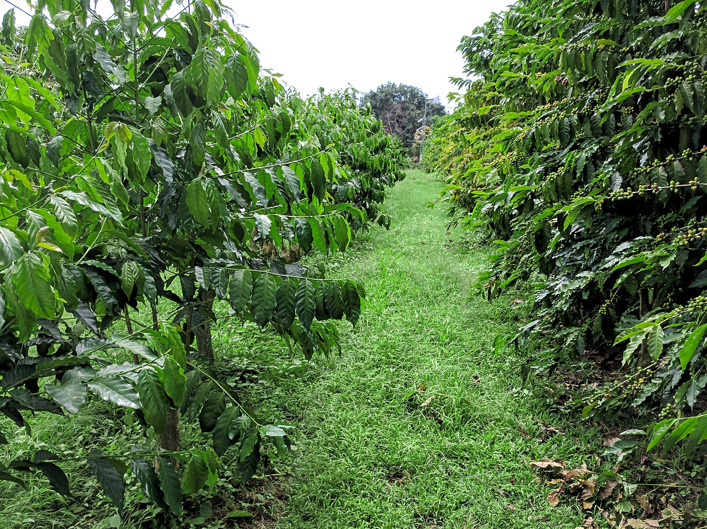
Cerrado is actually a vast tropical savanna ecosystem in Brazil, covering about 22% of the country’s area, but the area truly regarded as a specialty coffee-producing zone is limited to specific sections within Minas Gerais state at elevations exceeding one thousand meters. Here, the climate is stable with moderate day-night temperature differences, and the presence of deep volcanic soil along with abundant groundwater creates an environment suitable for the growth of Arabica varieties. Cerrado coffee is typically planted on flat highland terrain and cultivated through large-scale mechanized farming, which not only improves efficiency but also helps maintain consistent quality. Coffee grown in this environment often exhibits notable sweetness, a full-bodied mouthfeel, and a clean aftertaste.
In Cerrado, many coffee farms coexist alongside livestock ranches, forming a unique ecological cycle model. Weeds under the coffee trees often serve as natural fodder for cattle and sheep, while animal waste returns to the land as premium organic fertilizer for the coffee plants. This mutually beneficial agricultural model not only helps reduce the use of chemical fertilizers but also keeps the soil vibrant and nutritionally balanced in the long term. Precisely because of this, coffee from the Cerrado region not only maintains stable quality but has also gradually become synonymous with high-quality Brazilian coffee. Starting in 2005, the Brazilian government established strict certification standards for coffee from this region. Only coffee that meets criteria in specific altitude, variety, soil, and agronomic management, and scores 75 or above in SCAA evaluation, can be labeled as “Cerrado Coffee.”
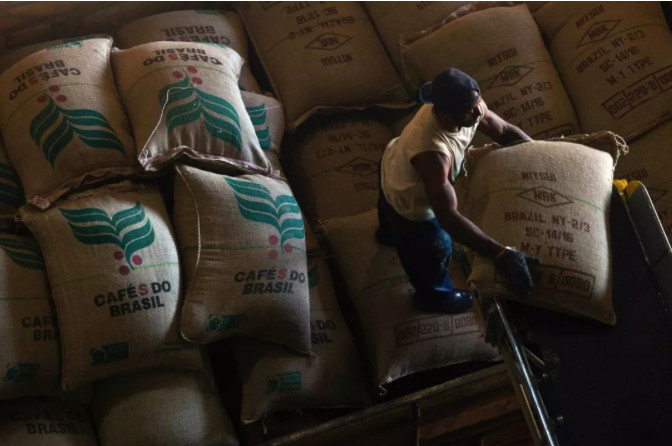
Brazil’s coffee bean grading system is unique. Since most coffee farms are not at high altitudes and planting is mostly done using the natural (sun-dried) method, Brazilian coffee is often considered to have low acidity but prominent sweetness and body. To highlight this characteristic of “soft beans,” Brazil has developed five main grades: Strictly Soft, Soft, Softish, Hardish, and Rioy (which has an iodine-like off-flavor). This grading method emphasizes the balance of flavor and the body’s richness rather than any single standout acidity or fruity note. Coffee from the Cerrado region, due to its stable body expression and mild sweet aroma, is often classified in the higher-grade Soft and Strictly Soft categories, and is highly favored in the European and American markets.
In terms of processing methods, Cerrado coffee often employs the “semi-washed” or “pulped natural” method. This technique is conceptually similar to the “honey process” commonly used in Costa Rica, though there are slight differences in terminology and execution details. The semi-washed method involves removing the outer skin and part of the pulp of the coffee cherry, then leaving a portion of the mucilage layer to dry in the sun, allowing the coffee beans to absorb more sweetness and fruitiness during the drying process. The dried coffee beans usually have a moisture content controlled at 12%, resulting in a rich and full-bodied mouthfeel. Although the term “honey process” is more commonly heard in Central America, semi-washed is actually one of the mainstream methods for processing coffee in Brazil, especially widely applied in the Cerrado region.
For coffee enthusiasts who enjoy pour over brewing, Cerrado Red Bourbon coffee beans are an excellent choice for practice and tasting. It is recommended to use a Kono dripper for brewing. This dripper features ribs concentrated at the bottom, which reduces airflow between the filter paper and the dripper, prolongs the contact time between water and coffee grounds, and helps fully extract body-rich compounds. The suggested water temperature is set at 86–88°C, suitable for medium-fine grind (approximately 70–75% passing through a #20 sieve), and brewing with a 1:15 coffee-to-water ratio.
In practice, you can start with 30 grams of water for a 30-second bloom, then pour water in small circular motions. At 125 grams of water, perform the first pour, then wait until the coffee bed is slightly exposed before continuing to pour up to a total of 225 grams. The overall extraction time should be controlled to around 2 minutes. These parameters can highlight the nutty, chocolatey, and creamy aromas of Cerrado coffee, while also bringing out subtle peanut and caramel notes. On the palate, sweetness is pronounced with a gentle lemony acidity, the mid-palate reveals rich nutty flavors, and the finish transitions into a deep dark chocolate aftertaste. The overall profile is round and balanced, making it highly suitable for daily drinking or as a base for blends.
The above content is compiled by CoffeeHunters, a coffee news website.


