







Introduction:Delve into the two renowned specialty coffee regions of Ethiopia—Sidama and Guji—to explore the historical origins and varietal evolution of the Huakui coffee bean. From terroir conditions and processing methods to flavor profiles, paired with practical pour over brewing recommendations, this guide helps you fully grasp the unique charm and brewing essentials of these two popular natural sun-dried beans.
As the birthplace of coffee, Ethiopia is home to the world’s most diverse and abundant coffee gene pool. Among its regions, Sidama and Guji are particularly famed for producing high-quality sun-dried coffee. Sidama, often mentioned alongside the renowned Yirgacheffe region, is especially celebrated for its natural-processed Huakui beans. Since breaking away from Sidama in 2010, Guji has rapidly risen to become a core production hub for Huakui coffee, thanks to its exceptional geographical and climatic advantages. This article details the terroir characteristics of both regions, the naming background and version iterations of Huakui beans, analyzes Sidama’s cultivation model, and shares a coffee brand’s tested pour over parameters and flavor results for their natural Sidama beans—offering an in-depth look at the distinctive features of these two classic beans.
Ethiopia possesses some of the most pristine coffee genetics in the world and is the origin of many modern cultivated varieties. Due to differences in altitude, microclimate, and processing methods, each of its regions exhibits unique flavor profiles. Both Sidama and Yirgacheffe are key regions for specialty coffee in the country, offering both washed and natural processing methods. However, Yirgacheffe is best known for its washed beans, while Sidama is celebrated for its natural-processed Huakui beans. In one coffee brand’s selection, both of their Sidama offerings are naturally processed, showcasing the region’s signature fruity aromas and rich body.
Sidama green coffee beans have a slightly grayish hue and vary in size, with some larger and others smaller. Their acidity ranges broadly—from soft to bright—while their body can vary from light to full, blending sweetness with subtle spicy notes. This represents the typical garden-grown style of Ethiopia’s southern highlands. Compared to other African regions, Sidama offers clearer fruit acidity, smoother mouthfeel, and delicate floral-herbal aromatic notes.
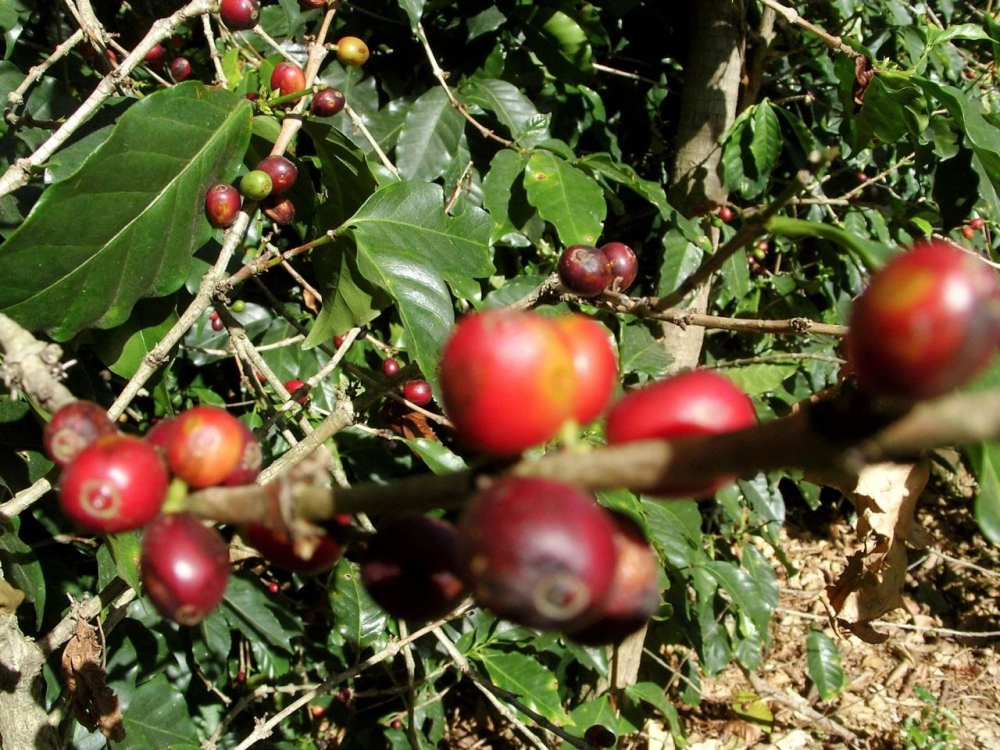
Ethiopia’s climate is distinctly polarized, encompassing humid tropical rainforests and arid deserts and gobi. Coffee cultivation is primarily concentrated in high-altitude rainforest areas. The main rainy season runs from June to August, with annual precipitation in major producing regions ranging between 1,000 and 2,000 millimeters, and average annual temperatures hovering around 15 to 30 degrees Celsius. The country is mountainous, featuring a tropical cloud forest ecosystem, with coffee mostly grown in plateau regions. The high altitude results in cooler temperatures, fewer pests and diseases (almost eliminating the need for pesticides), and slower ripening of coffee cherries—allowing the trees to fully accumulate flavor compounds.
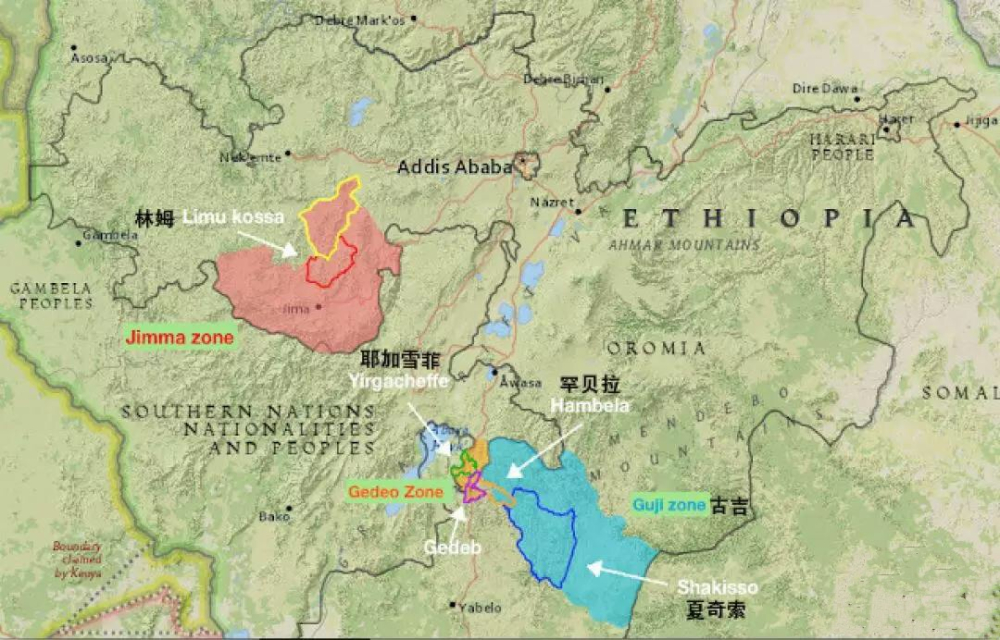
The Sidama region is located in southern Ethiopia, bordering the Arsi and Bale administrative zones to the east and extending westward to the Gamogofa zone. Its cultivation altitudes range from 1,400 to 2,000 meters. Agriculture dominates the area, with coffee-growing regions primarily clustered around the East African Rift Valley. In recent years, Sidama’s coffee exports have grown rapidly, making it a significant distribution hub. The region’s coffee flavors are highly diverse, influenced by soil types, microclimates, and numerous native varieties—each town producing coffee with its own unique profile.
Within Sidama, Guji (GUji) and West Arsi are the most well-known coffee-growing areas. The region predominantly employs the natural processing method, which imparts intense fruity aromas and smooth mouthfeel to the beans. The Guji region was originally part of Sidama but was designated as an independent zone by the Ethiopian Commodity Exchange (ECX) in 2010. Located southeast of Yirgacheffe, it features complex terrain with diverse landforms including mountains, valleys, and plains. Its soils are predominantly nutrient-rich black Vertisols, with depths nearing two meters and average elevations exceeding 1,800 meters. The significant diurnal temperature variation provides ideal conditions for producing high-quality specialty coffee. Among Guji’s sub-regions, Hambella is renowned for producing the famous Huakui coffee.
Huakui coffee beans originally come from the Hambella area, located within Ethiopia’s largest coffee-producing region, Guji, and administratively part of the Oromia State. To the west, Hambella faces the Kochere district of Yirgacheffe, separated by a highland plateau approximately 30 kilometers wide and 3,200 meters above sea level. It borders other sub-regions of Guji to the east, south, and north, making it one of Ethiopia’s highest-altitude coffee-growing areas. The region currently hosts nearly 20 processing facilities of varying scales. In 2017, Ethiopian DW green coffee company submitted a natural-processed lot to the TOH (the Taste Of Harvest) green coffee competition hosted by the African Fine Coffees Association. The lot, produced by the ‘Buku Abel’ processing station, won the Ethiopian regional championship for its intense strawberry and cream aromas. This batch was later introduced to China by Beijing-based green coffee trader Hongshun. Li Jianfei used these beans to win second place in the 2017 China World Brewers Cup, standing out among numerous Geisha entries—leading to the name ‘Huakui.’ In Japanese, Geisha means ‘geisha,’ while Huakui refers to the most outstanding geisha, highlighting the bean’s exceptional quality.
In the strictest sense, only the 2017 TOH natural champion lot that entered the Chinese market can be called Huakui coffee. However, to continue the legacy of this prestigious name, Hongshun subsequently imported more beans from the ‘Buku Abel’ processing station in Hambella and named them Huakui 2.0, Huakui 3.0, Huakui 3.1, etc., to distinguish different batches and harvests. These beans retain certain flavor characteristics and are all procured by Hongshun, with production focused on the ‘Buku Abel’ station in Hambella. Later, DW established multiple processing stations in Dimtu, the core area of Hambella—including ‘Buku Abel,’ ‘Buku Saysay,’ ‘Haro Soresa,’ and ‘Tirtiro Goye’—with an annual output of about 1,100 tons. But in terms of growing regions and processing stations, only the area handled by the ‘Buku Abel’ station overlaps with the original small origin where the first Huakui beans were produced. In other words, only the naturally processed beans from this station can be considered authentic ‘Huakui.’
Huakui beans are grown at altitudes exceeding 2,000 meters, surrounded by tropical plants like sugarcane and bananas that provide good shade. Since coffee production is closely tied to climate, flavors may vary slightly each year. The naming of Huakui X.0 follows the year—for example, 2018 was Huakui 2.0, 2019 saw the launch of Huakui 3.0 and 3.1, 2020 was Huakui 4.0, 2021 was Huakui 5.0, 2022 was Huakui 6.0, and as of now, Huakui 8.0 has been released, becoming a daily favorite for many coffee enthusiasts.
The West Arsi region lies between Yirgacheffe and Hararghe, at altitudes between 1,900 and 2,200 meters. Part of western Sidama, its name originates from the Oromo people (a long-standing ethnic group in the area). The region comprises three woredas: Arsi, Bale, and East Sheka, with approximately 88.52% of its population being Oromo—the same ethnic group considered among the first to cultivate and consume coffee. About half of Ethiopia’s coffee is produced in this area.
Coffee cultivation in West Arsi is primarily smallholder-based, with an average farm size of about 2 to 3 hectares—slightly larger than the 1.5 to 2 hectares common in other Ethiopian regions. Although farming techniques are still developing, progress in coffee cultivation here has been rapid. Farmers often rely on family labor to handpick ripe cherries, aiding in better quality control. Processing stations typically offer additional incentives for delivering perfectly red cherries, further motivating farmers to refine their processing skills.
The varieties of Huakui coffee mostly fall under Ethiopia’s common ‘Heirloom’ (原生种) classification. This isn’t a single variety but rather a mix of various coffee trees from smallholder backyards—possibly original to the land, shared among neighbors, or introduced from elsewhere. These plants are often intercropped with other cash crops and only sorted during harvest. Thus, Heirloom represents a blended concept; a single batch may contain dozens to hundreds of uncategorized varieties, with significant variations in bean size, shape, and appearance—akin to a coffee bean “potluck.”
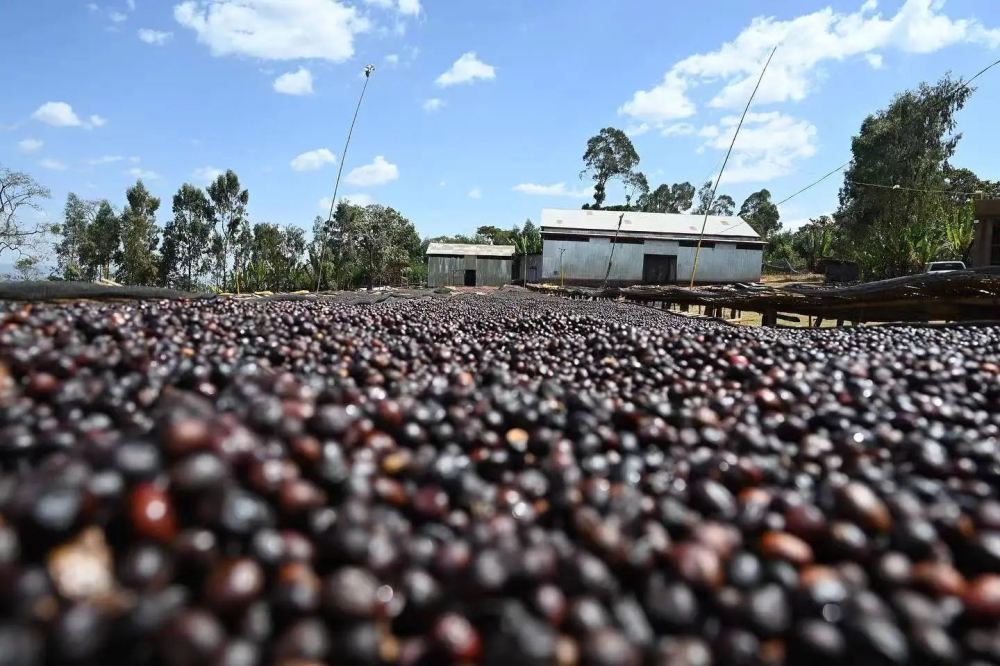
Sidama coffee beans are processed using either washed or natural methods. The washed method involves sorting the cherries, removing pulp and skin, fermenting in water tanks, and then drying to around 12% moisture content. The natural method directly sun-dries the coffee cherries until the target moisture level is reached, followed by removal of the outer layers. The two methods yield distinctly different flavor profiles: washed processing highlights citrus acidity and floral notes, while natural processing adds intense fruitiness. Natural Sidama flavors lean toward floral with hints of earthiness; washed Sidama presents nutty and mild cocoa notes. Both offer smooth mouthfeel and pleasant acidity, suitable for light to medium roasts as single-origin brews, or medium to dark roasts as blends or espresso bases.
Practical pour over recommendations: For lightly roasted Sidama coffee, use a V60 dripper, water temperature at 90°C, coffee-to-water ratio of 1:15, 15 grams of coffee, ground to 80% extraction through a Chinese No. 20 standard sieve. Use a blooming pour with twice the coffee weight (30 grams) for 30 seconds to release CO₂ and ensure stable extraction. Then pour in a slow circular motion until reaching 125 grams for the first pour, continue to 225 grams, then stop. Let the dripper finish dripping before removing it. Total brew time is about 2 minutes. It’s recommended to swirl the brewed coffee before pouring into the cup for drinking.
[Natural Sidama Flavor]: Features berry and honey aromas, with pronounced jam-like sweetness on the palate, a finish of nectarine notes, and an overall juice-like smooth mouthfeel. When cooled, it reveals refreshing plum and nectarine juice sensations.
[Natural Huakui 8.0 Flavor]: Prominent floral and fruity notes, including citrus, passionfruit, strawberry, and oolong tea tones. Sweetness is evident, with sweet-tart interplay creating delightful layered complexity.
Overall comparison: West Arsi’s natural beans excel in fruit sweetness and juice-like mouthfeel, especially the memorable jam and honey notes when hot, with even more pronounced juice sensations when cooled. Huakui, on the other hand, showcases a diverse range of tropical fruit flavors, with striking sweet-tart contrasts and a more pronounced fermentation character—ideal for coffee lovers who enjoy richly layered profiles.
The above content is compiled by CoffeeHunters, a coffee news website.


