







Introduction:Jamaica Blue Mountain coffee is renowned for its well-balanced acidity, sweetness, body, and bitterness, along with a smooth mouthfeel, making it one of the world’s top premium specialty coffees. However, the market is flooded with products labeled “Blue Mountain,” making it hard to distinguish the real from the fake. This article provides an in-depth look at the production regions, the official grading standards (No.1 to No.3, as well as PB), and the differences between Blue Mountain, High Mountain, and Prime coffee. It also offers identification tips based on appearance, freshly ground aroma, and flavor, along with expert pour-over brewing recommendations and flavor profiles, helping you better understand this rare gem of a bean.
When it comes to Jamaica, coffee enthusiasts often think first of the widely famed “Jamaica Blue Mountain coffee.” This coffee, grown on the Caribbean island nation, is celebrated for its balanced and harmonious combination of acidity, sweetness, body, and bitterness, offering a smooth and aromatic cup that is highly regarded by specialty coffee lovers around the globe. However, many products on the market labeled as “Blue Mountain” may not actually come from the core Blue Mountain region. Understanding the classification and characteristics of authentic Blue Mountain is key to selecting and appreciating it properly.
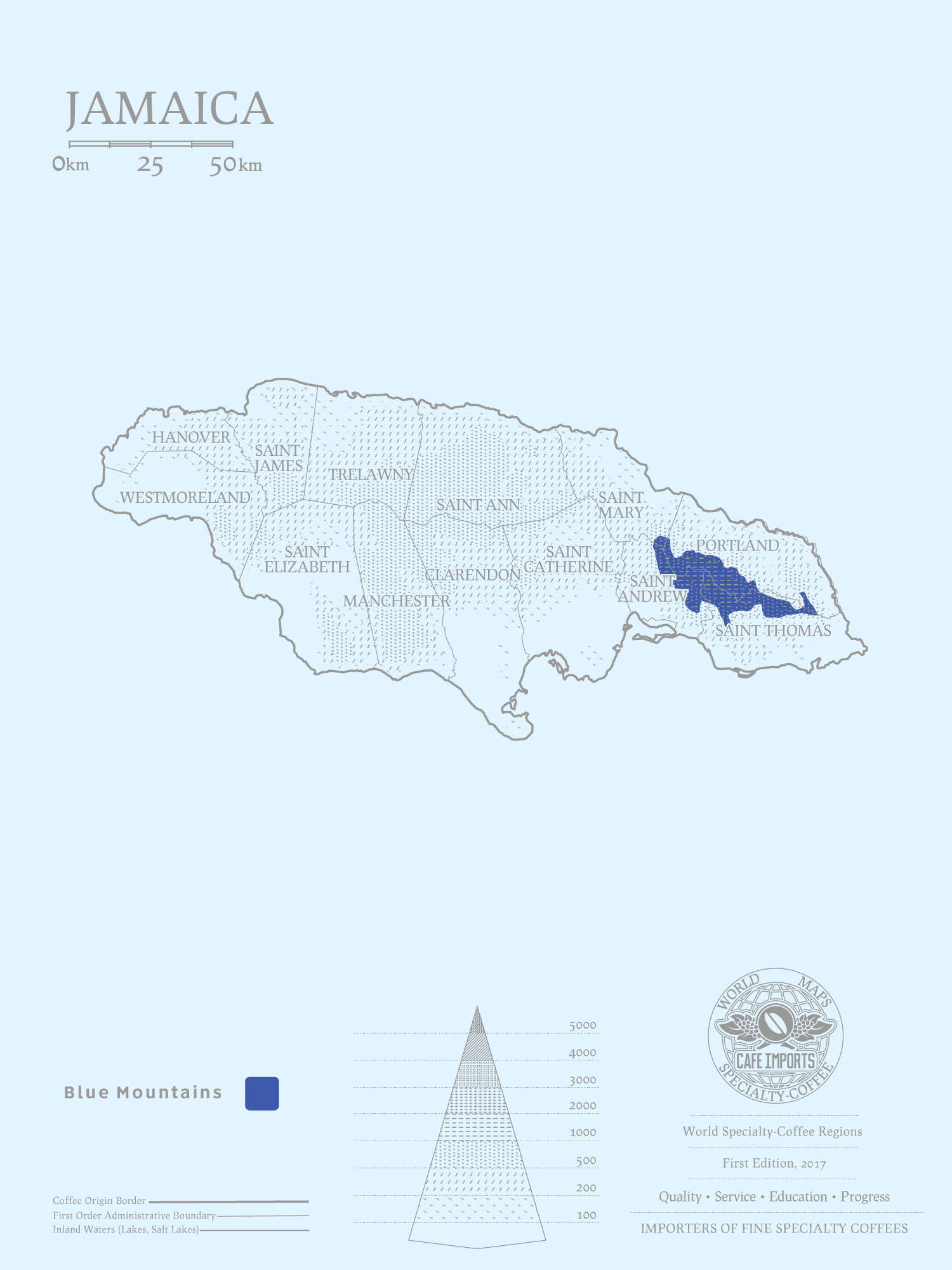
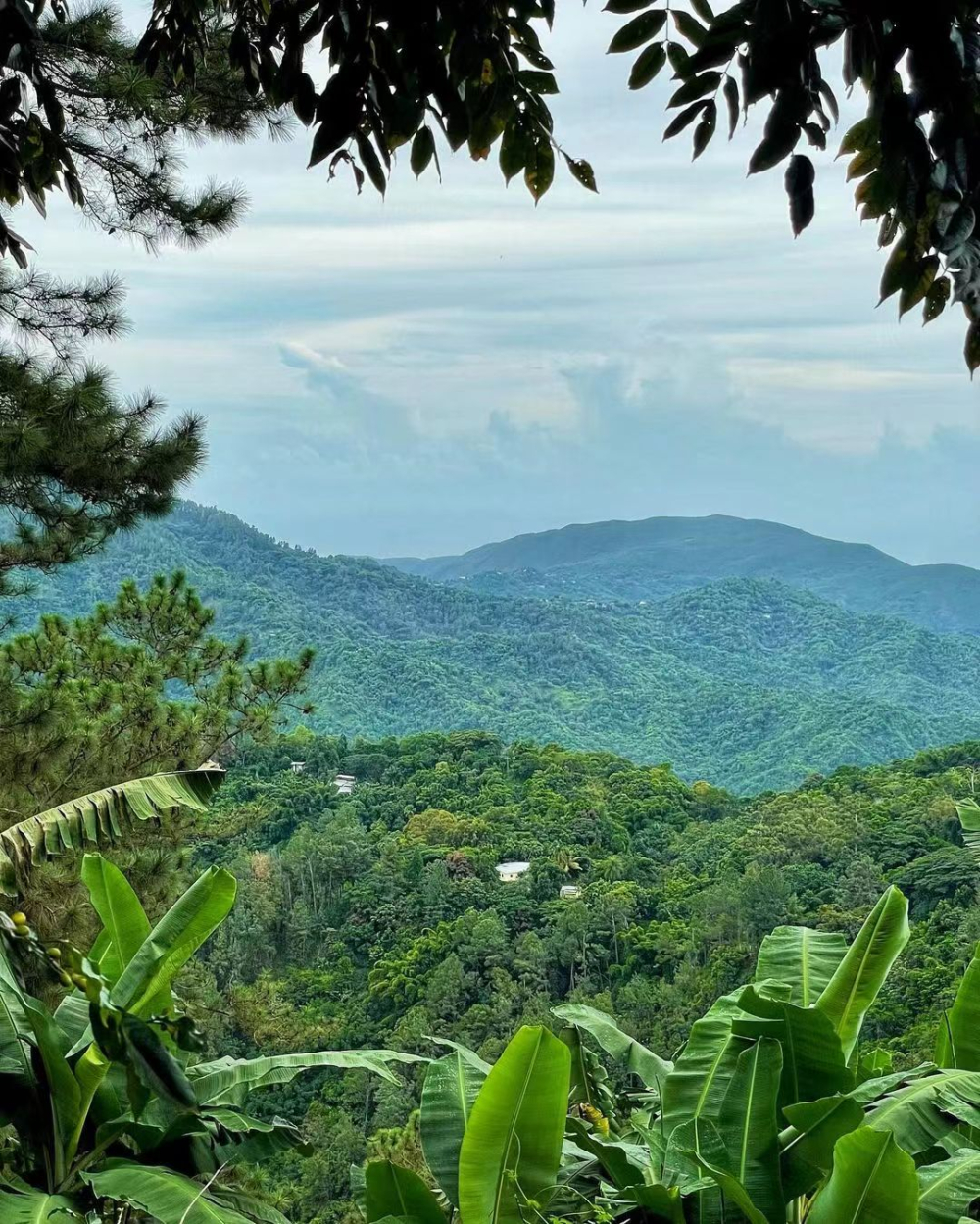
True Jamaica Blue Mountain coffee is grown only in the Blue Mountains region, located east of the capital Kingston and at elevations above 1,000 meters. The total area amounts to just about 6,000 hectares, making it extremely rare. The region enjoys cool, foggy weather with abundant rainfall year-round—averaging 1,980 mm annually—and is blessed with fertile volcanic soil, providing nearly perfect growing conditions for coffee trees. Local farmers often intercrop with shade-providing plants such as bananas and avocados, which help coffee cherries ripen slowly and develop richer flavor compounds.
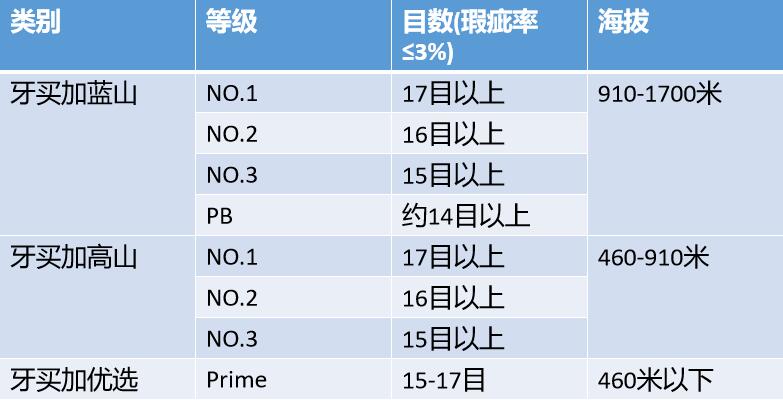
The Jamaican government has a dedicated Coffee Industry Board (CIB) responsible for the certification and management of Blue Mountain coffee. Only coffee grown at altitudes above 910 meters qualifies to be labeled as “Jamaica Blue Mountain coffee.” Based on bean appearance, defect rate, and size, the official grading system divides Blue Mountain coffee into four grades: No.1, No.2, No.3, and PB (Peaberry). Among these, No.1 is the highest grade, featuring uniformly sized beans with minimal defects, and is widely recognized in the market as top-tier quality.
In addition to the Blue Mountain grade, Jamaica produces two other well-known types of coffee: “High Mountain Supreme” and “Prime Washed Jamaican.” High Mountain coffee is generally grown at elevations between 666 and 1,000 meters. Though not as prestigious as Blue Mountain, it still delivers excellent flavor, often showcasing rich notes of nuts and caramel, and offers better value for money—making it a great choice for those who want to experience the taste of Jamaica’s mountainous regions. Prime coffee, on the other hand, is mostly produced outside the Blue Mountain region and is relatively more entry-level in both quality and price.
The production process of Blue Mountain coffee is extremely meticulous. It starts with the manual picking of ripe red cherries, which must be depulped on the same day. Fermentation lasts approximately 12 to 18 hours, after which the beans are washed and sorted to remove defective ones. The beans then undergo a shaded drying process, spread out on concrete floors or thick mats, until their moisture content is steadily reduced to 12% to 14%. Finally, the beans are stored to mature before roasting. Every step requires precise control to achieve the final balanced and refined flavor profile.
Blue Mountain coffee has distinct visual characteristics: green (raw) beans are medium to small in size with slightly curled ends, and they are uniformly sized overall; after roasting, the beans expand noticeably and become plump and firm.When hand grinding, Blue Mountain beans grown at high altitudes have thinner cell walls, resulting in a crisp, smooth texture with almost no resistance.. The freshly ground coffee emits a rich, bold aroma, offering layers of complexity that are hard for many blends to replicate.
In terms of drinking, the most impressive feature of Blue Mountain coffee is its exceptional balance of flavors — acidity is bright yet not sharp, sweetness is mellow and natural, bitterness is barely perceptible, body is rich without being heavy, and the finish often carries a lingering soft fruitiness and chocolatey tone. For professional pour-over brewing, it is recommended to use a KONO filter, with 15 grams of coffee, water temperature around 88°C, grind size equivalent to 75% extraction through a Chinese standard No. 20 sieve, a coffee-to-water ratio of 1:15, and total brew time controlled around 1 minute and 30 seconds. Start with a 30-second bloom using 30 grams of water, followed by a two-stage pour: the first pour up to 120 grams, then a second pour up to 225 grams. Pay attention to controlling water flow and swirling speed to ensure even and smooth extraction.
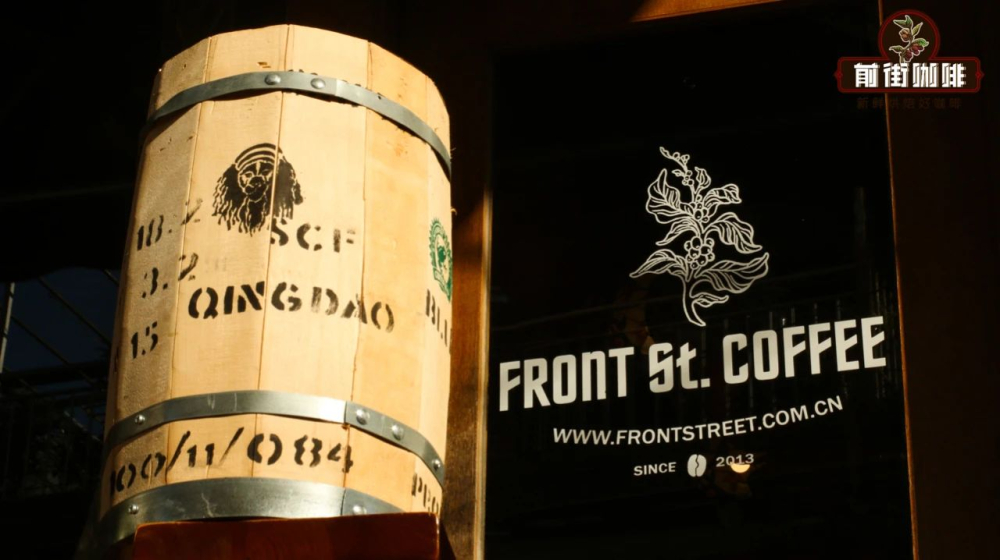
A large proportion of the Blue Mountain coffee available on the market goes to Japan. According to statistics, up to 90% of its production has historically been purchased by Japanese buyers, which means the amount of authentic Blue Mountain coffee accessible in other parts of the world is extremely limited. During transportation, the Jamaican authorities use replica vintage Bonifieur wooden barrels (each with a capacity of 70 kilograms)—barrels originally used for flour—that have now become an iconic packaging for Blue Mountain coffee. Before export, each batch of Blue Mountain coffee is inspected by the Jamaica Coffee Industry Board, and those that pass receive official documentation including quality certificates, certificates of origin, and authorized sales certificates to ensure authenticity and traceable sourcing.
Consumers can make comprehensive judgments by observing the beans’ appearance, smelling the aroma, feeling the texture when hand grinding, and evaluating the final brewed flavor. The aroma of genuine Blue Mountain coffee is rich and layered, and the various flavor elements present in the cup coexist harmoniously without any single note being overly dominant. The overall profile is mellow and deep, often bringing drinkers a sense of indescribable satisfaction and pleasure.
In summary, Jamaica Blue Mountain coffee is more than just a coffee—it is a comprehensive art form combining geography, climate, craftsmanship, and taste. Understanding its grading system, regional characteristics, and correct appreciation methods allows both beginners and seasoned coffee enthusiasts to more deeply experience the unique charm of this world-class coffee.
The above content is compiled by CoffeeHunters, a coffee news website.


