







Introduction:Brazil is the world’s largest coffee producer, and its beans are renowned for their full body, low acidity, and nutty flavor profile. This article delves into the characteristics of Brazil’s major coffee-growing regions, the NY grading system, the traits of the Bourbon variety, and provides practical pour over brewing tips—especially using the Kono dripper—for South Minas Yellow Bourbon coffee beans. It includes recommended water temperature, grind size, and step-by-step brewing instructions to help coffee enthusiasts master the art of brewing Brazilian beans and appreciate their unique flavor characteristics.
Brazil is not only the champion in coffee production, but its Arabica beans also hold a notable place in the global market thanks to their consistently rich body and distinctive low-acid flavor. These flavor traits mainly stem from Brazil’s relatively flat terrain, generally low altitudes, and common use of semi-washed or traditional natural processing methods—resulting in the “soft bean” qualities of smoothness with chocolate and nutty aromas. Understanding the characteristics of Brazil’s various producing regions and its grading system is the first step in selecting and brewing Brazilian coffee.
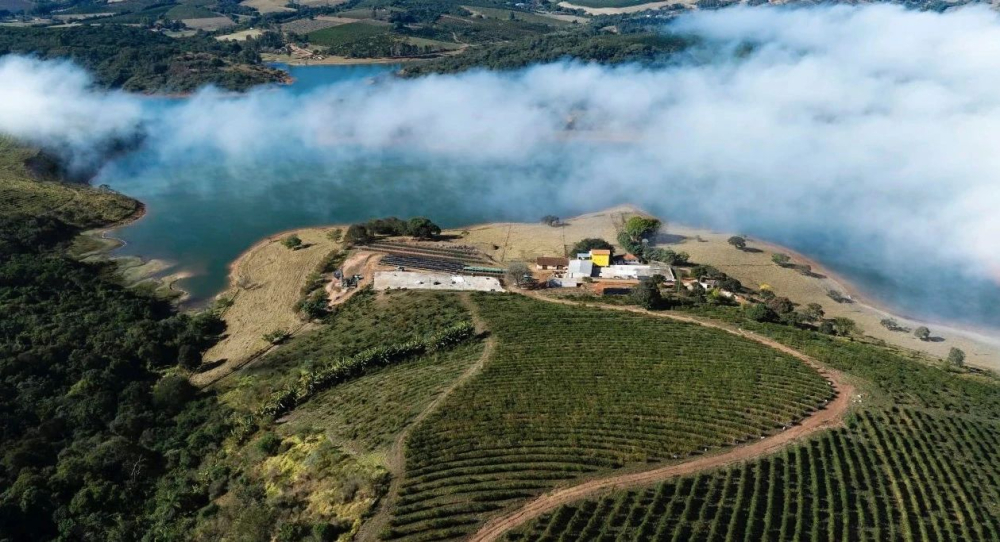
Arabica varieties in Brazil are primarily concentrated in the states of Minas Gerais, São Paulo, and Paraná, with Minas Gerais accounting for the most significant share—about 66.7% of the country’s total Arabica output. This state can be further divided into three key sub-regions: South Minas, Cerrado, and Mogiana. Each of these areas, due to differences in geography and microclimate, produces coffee beans with distinct flavor profiles.
South Minas is located in the southern part of Minas Gerais, mostly at elevations above 1100 meters. With its undulating hills, significant day-night temperature variation, and distinct wet and dry seasons, it provides an ideal environment for growing Bourbon and Yellow Bourbon varieties, and is also a significant source of specialty coffee. In contrast, Cerrado is situated on the Brazilian plateau, and only coffee grown at elevations between 1100 and 1300 meters qualifies to be labeled as Cerrado. The soil here is fertile, and the coffee typically exhibits high body and a sweet taste, with almost no earthy off-flavors—making it suitable for those who prefer bold flavors. Mogiana, which borders the southern part of Minas Gerais, features diverse terrain and vegetation. Many small family farms combine modern techniques to produce high-quality coffee with sugarcane sweetness and delicate aromas.
When discussing the grading of Brazilian coffee, one cannot overlook its unique three criteria: defect rate, bean size, and cup quality. Common Brazilian grade designations such as “NY.2 SC 17/18 FC” are the result of combining these three data points. First is the defect rate, which uses a “deduction system” based on the number of defective beans per 300 grams of green coffee. No. 2 is the highest commercial grade, as No. 1 is virtually nonexistent in large-scale trade. Second, bean size is screened using a 1/64-inch mesh sieve, with common grades being 17/18, which represent large and uniform high-quality beans. Cup quality is classified as Fine Cup (FC), Good Cup (GC), etc., reflecting the overall flavor performance of that particular batch as evaluated by professional cuppers.
Additionally, Brazil categorizes its coffee into five flavor-based classes, ranging from Strictly Soft (very mild) to Rioy (with iodine-like or harsh flavors). Coffees from the Cerrado region often receive the highest rating of Strictly Soft Fine Cup. For example, the label “Brazil NY.2 SC 17/18 FC Cerrado” indicates that this coffee comes from Cerrado, has a defect grade of 2, 17–18 bean size, and an excellent cupping score—a highly noteworthy set of quality indicators.
The main variety planted in Brazil is Bourbon, an Arabica branch originating from the island of Bourbon (now Réunion). It is widely praised for its stable yield and excellent cupping performance. Visually similar to Typica, Bourbon cherries are smaller and rounder, and often turn yellow when ripe—hence also called Yellow Bourbon. Though this variety doesn’t make up a large proportion of Brazil’s exports, its high cultivation difficulty and limited production often result in richer flavor potential. Yellow Bourbon typically offers notes of nuts, cocoa, and caramel sweetness. It benefits from semi-washed processing, which helps preserve more fruity sweetness. There’s also a Red Bourbon variety, whose ripe cherries appear deep red and are commonly grown at higher altitudes, yielding brighter flavors with even some wine-like acidity and aroma.
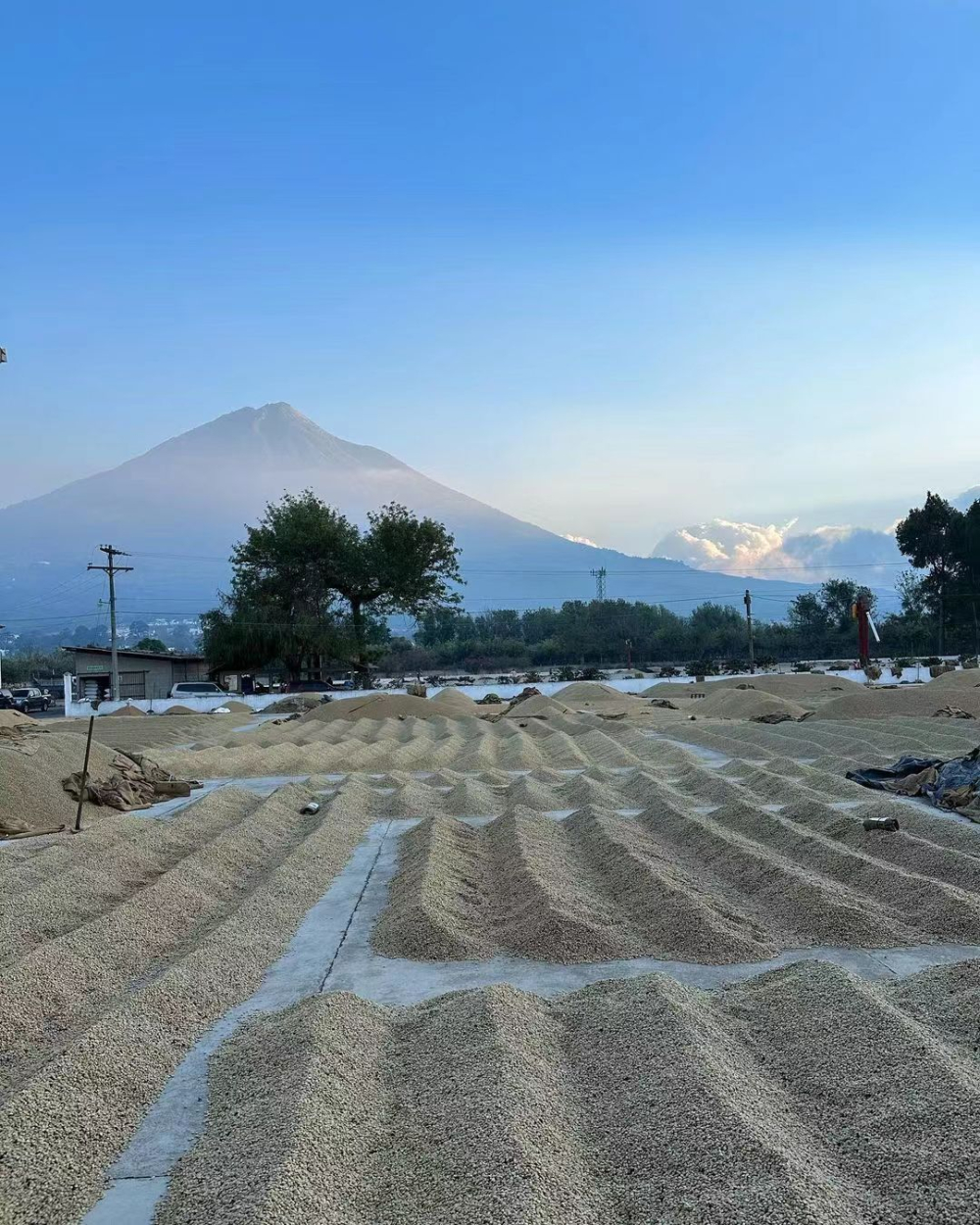
The processing methods for Brazilian coffee have also evolved over time. Traditionally, the natural (dry) process was widely used, but due to the region’s dry and variable climate, it often led to issues like moldy or earthy flavors. Starting in 1990, Brazil developed the pulped natural (semi-washed) method, which involves removing the skin and pulp of the coffee cherry but retaining some of the mucilage before sun-drying. This approach combines characteristics of both natural and washed processes, effectively improving the coffee’s cleanliness and flavor consistency while reducing the risk of undesirable flavors. However, different regions still choose varying processing methods depending on local climate—for example, Cerrado, with its relatively stable weather, still sees many farms adhering to the traditional natural process to highlight deeper earthy notes and body.
Taking the Yellow Bourbon from the South Minas region as an example, many farms opt for the semi-washed process, allowing the coffee to retain a gentle sweetness while developing caramel, nutty, and subtle fruit aromas. Such beans, due to their typically lower moisture content, absorb heat quickly during roasting. It’s recommended to use medium to high heat to swiftly pass through the drying phase, then stabilize the roast to develop the Maillard reaction—bringing out optimal sweetness and body.
For pour over enthusiasts, brewing Brazilian Yellow Bourbon beans is best done using the Kono dripper, with a water temperature of 89°C, a coffee-to-water ratio of 1:15 (approximately 15 grams of coffee to 225 ml of water), and a medium-fine grind (around 75% passing through a 20-mesh Chinese sieve). Specifically, start with a 30-second bloom using 30 grams of water to activate the coffee’s aroma. Then, pour in a slow circular motion until reaching 125 grams for the first pour. After a brief pause, continue pouring until you reach 225 grams in total. The entire extraction should take around two minutes. These parameters balance sweetness, acidity, and body, highlighting layers of nuts, caramel, and subtle tropical fruit—delivering a clean cup with a long-lasting finish.
The above content is compiled by CoffeeHunters, a coffee news website.


