








Introduction:Delve into the captivating allure of Ethiopian Yirgacheffe’s Sidamo region coffee, exploring everything from the region’s geography and processing methods to the unique flavor profile of the Huakui coffee beans. This comprehensive guide breaks down this beloved natural-processed bean in detail. We also provide three practical pour-over methods—Smart Cup, AeroPress, and V60—with detailed parameters and steps to help you easily recreate the berry aroma and oolong tea-like finish of Sidamo Huakui.
Sidamo, a world-renowned specialty coffee region in southern Ethiopia, stands out with its diverse flavor profiles and rich cultivation history, making it a must-try for coffee enthusiasts. This article explores the region’s geography, coffee variety background, and processing techniques to help you deeply understand the unique character of Sidamo coffee. We also take apart the roasting profile and three pour-over brewing methods—including Smart Cup, AeroPress, and V60—for a well-known café’s Huakui coffee beans, helping you accurately reproduce its berry notes and rich aftertaste at home.

When it comes to African coffee, its quality, diversity, and value for money are truly remarkable. Among the many African coffee regions, Sidamo has long secured its place in the international coffee market thanks to its distinctive regional characteristics and cupping performance. A well-known brand’s Sidamo coffee often features bright, clear acidity and a smooth mouthfeel, with delicate floral aromas unfolding layer by layer. The initial sip is gentle and approachable, followed by a noticeable contrast from the lemony acidity, resulting in a full-bodied taste with a sweet finish and a long, lingering aftertaste that leaves a deep impression. Below, we’ll analyze from multiple dimensions what makes Sidamo coffee truly stand out.
Ethiopia is considered the birthplace of Arabica coffee. In the Kaffa region’s virgin forests, wild coffee trees still grow naturally. In the local language, coffee is called “Bun” or “Buna,” and the English word “coffee” is widely believed to have evolved from “Kaffa Bun.” Notably, the Kafa Biosphere Reserve boasts Ethiopia’s most extensive virgin forests and is regarded as a treasure trove of coffee genetics. The birthplace of Gesha is actually located in western Kaffa, where ancient tree coffee naturally thrives under tall shade trees without human intervention, giving rise to unique flavor potential. A coffee brand’s washed lot from the Kafa Forest often showcases clean, bright fruit acidity, with melon seed aromas and citrusy sweetness interwoven in layers.
As the world’s sixth-largest coffee producer, Ethiopia has about 20% of its population engaged in the coffee industry. In 2017, the country produced 470,000 tons of green coffee beans, of which only about 160,000 tons were exported, indicating strong domestic consumption as well. Coffee is deeply embedded in Ethiopian culture and daily life. “Buna tetu” means “to drink coffee,” while “buna dabo naw” translates to “coffee is our bread,” highlighting its significance.
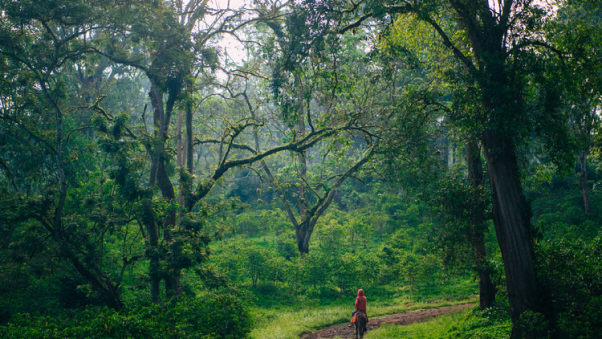
Coffee cultivation in Ethiopia is mainly concentrated in the western and southern regions, with over half being smallholder farms, also known as garden coffee. Approximately 1.2 million households nationwide rely on coffee for their livelihoods, with each farming plot typically spanning more than 4 hectares. Smallholders often intercrop coffee trees with bananas and other crops in their backyards, creating a unique green landscape. Due to limited individual yields, locals process coffee cherries collectively through cooperatives or processing stations. During harvest season, farmers deliver fresh coffee cherries to nearby processing stations with water access for unified processing, then sell the beans under the processing station’s name. For example, the Guji Dingding Cooperative listed in a coffee brand’s offering aggregates coffee cherries from multiple households in Yirgacheffe town. After washed processing, it presents clean, bright fruit tones paired with melon seed aroma and citrusy acidity and sweetness, with a delicate and captivating flavor.
The Sidamo region is located in southern Ethiopia, bordering Kenya, with altitudes ranging between 1,400 and 2,200 meters. It is a renowned origin for specialty coffee. The beans here are often light green and oval-shaped, not very large but plump. After washed processing, they emit aromatic scents, have a long-lasting aftertaste, and carry a hint of wild charm. Due to the diversity in microclimates, soils, and native varieties, the flavor differences among coffees from various areas of Sidamo are significant, contributing to its rich and varied cupping profile. Between 2010 and 2012, Sidamo coffee even received high scores of 92 to 94 from the international authority platform CR, proving the exceptional quality of its green beans.
The region’s terrain is diverse, encompassing mountains, plateaus, valleys, and plains. The soil is volcanic, well-drained, and rich in organic matter, with deep layers and good nutrient cycling. Fallen leaves and plant roots naturally serve as nutrients for coffee trees. Ethiopian coffee cultivation is mostly carried out in environmentally friendly ways, including garden coffee and semi-forest coffee. Garden coffee refers to coffee trees planted around homes, coexisting with other crops. Semi-forest coffee involves managing the vegetation of natural forests to create shaded environments suitable for coffee growth. It’s estimated that only about 5% of coffee is produced on professional coffee farms.
Local coffee production is mostly organized by cooperatives, with smallholders joining voluntarily and equally, without discrimination based on gender, ethnicity, or religion. Cooperatives operate democratically, with members jointly setting policies and actively promoting good agricultural practices such as harvesting ripe cherries and using washed or natural processing methods. Cooperatives with export capabilities can also distribute profits to their members. Additionally, two or more primary cooperatives can form a union responsible for collective processing, grading, packaging, and exporting, ensuring quality meets international standards. For specialty coffee buyers, this is a significant assurance.
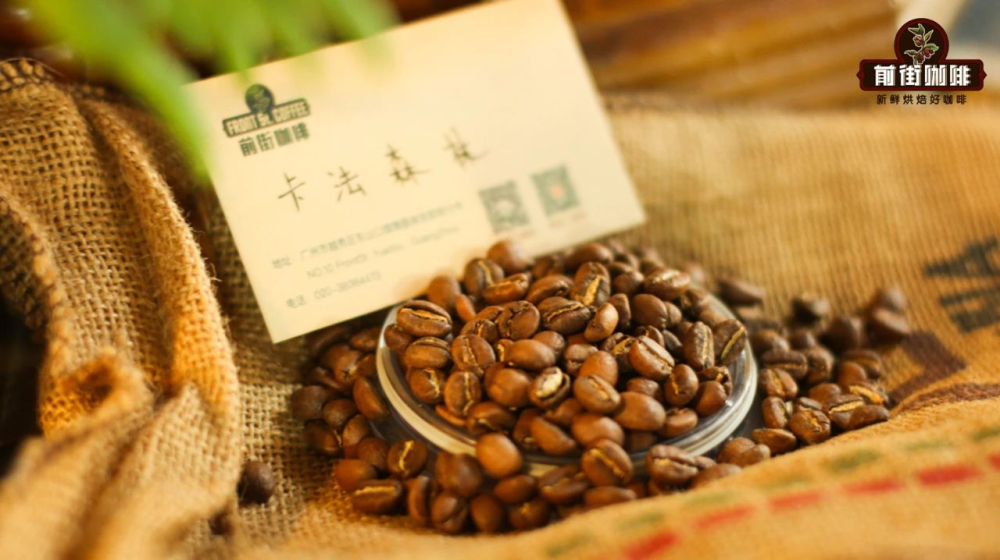
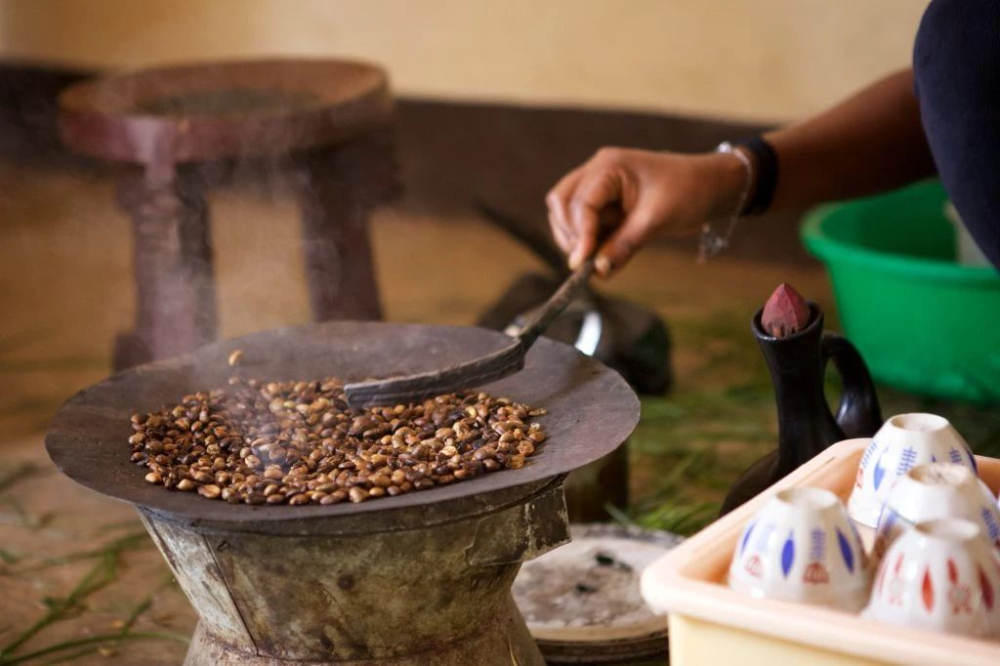
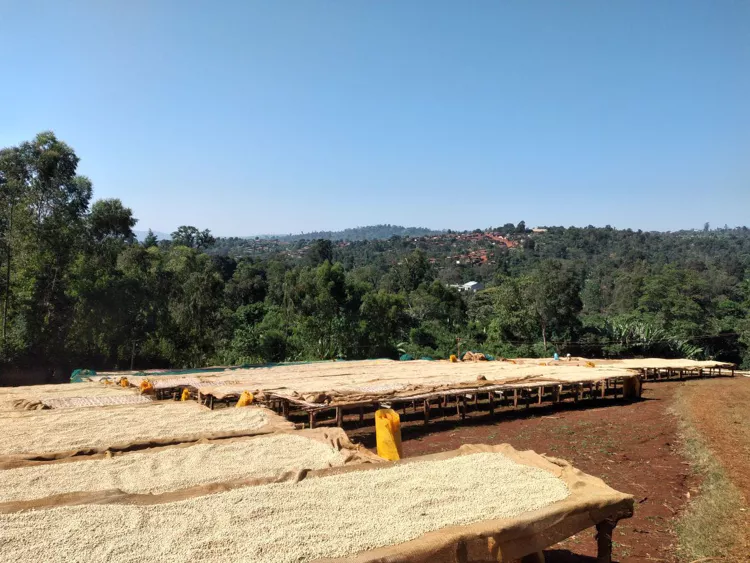
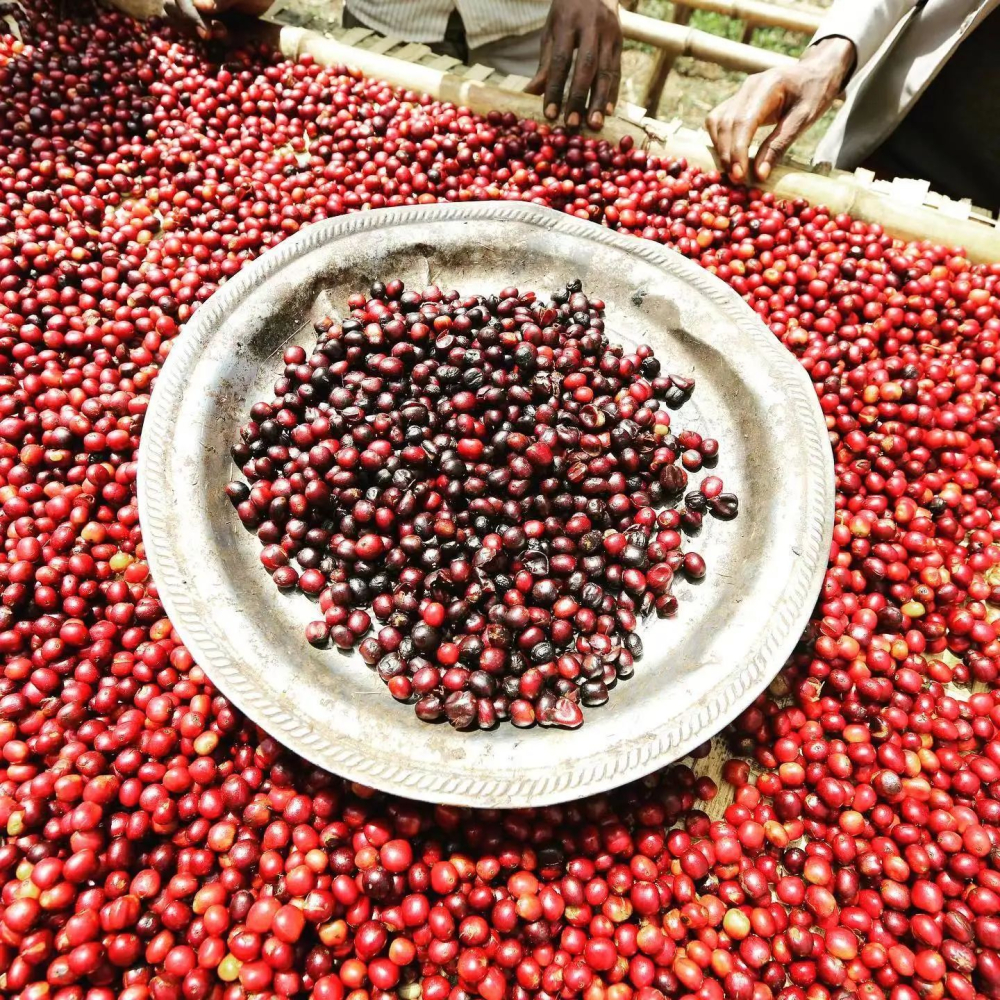
In terms of processing methods, Ethiopia commonly uses both washed and natural (sun-dried) processes. Washed coffee often exhibits elegant floral notes, citrus tones, and a smooth mouthfeel, though flavors vary by region. Natural coffee, on the other hand, tends to have rich, rounded fruit aromas, with premium batches also showcasing clean citrus and floral notes, along with excellent sweetness and body. In recent years, honey processing has also gained popularity, offering more diverse options in the market. Among them, the natural-processed Huakui coffee beans from Sidamo are arguably the region’s most iconic star product.
A certain coffee brand takes the natural Huakui coffee beans from the Buku Abel processing station as an example to comprehensively analyze its charm from roasting to extraction. In 2017, Ethiopia’s DW green coffee company submitted its beans to the TOH (the Taste Of Harvest) green coffee competition. Among them, the natural batch from the Buku Abel processing station won the championship with its intense strawberry and cream aromas. This batch was later introduced by a Beijing trader and named “Huakui.” Subsequently, DW established several processing stations in the core Hambella producing area of Dimtu, including Buku Abel, Buku Saysay, Haro Soresa, and Tirtiro Goye, with an annual output of about 1,100 tons. However, it’s important to note that only the natural beans processed by the Buku Abel station are from the small producing area batch that won the preliminary competition that year. Therefore, when purchasing, be sure to confirm the four key details: “Sidamo region,” “Buku Abel processing station,” “natural processing,” and “Ethiopian native variety” to ensure you’re getting the authentic Huakui.
Huakui coffee beans are made from Ethiopian native varieties, often appearing yellowish-green in color with inconsistent sizes—a natural reflection of the diversity of native varieties. As the Ethiopian government is committed to preserving varietal diversity, most varieties remain unidentified and are therefore collectively referred to as “Ethiopian native varieties.” A certain coffee brand observed that the particles of this natural-processed green bean are slightly irregular, which is one of its distinctive features.
For roasting recommendations, we used the Yangjia 800N roaster. The charge temperature was 200°C, with the damper at 3 and the heat at 160. The turning point occurred around 1’32”, when the bean surface turned yellow and the grassy aroma faded. At that point, the damper was adjusted to 4. By 168°C, the heat was reduced to 140. At 8’56”, the bean surface developed wrinkles and dark spots, and the toast aroma transitioned to coffee aroma, signaling the approach of first crack, requiring close attention to the crack point. At 9’14”, first crack began, the heat was adjusted to 110, the damper to 5, and first crack development lasted 1’45”. The final roast was dropped at 196°C.
Huakui coffee beans are suitable for brewing with Smart Cup, AeroPress, and V60, but different equipment requires adjustments in parameters and techniques to fully showcase its berry aroma and oolong tea-like finish.
Smart Cup: Easy to operate, ideal for beginners. Use 15g of medium-fine grind (80% through a #20 sieve), water temperature 90°C, and a 1:15 coffee-to-water ratio. After wetting the filter paper, pour 30g of water for a 30-second bloom, then add water up to 225g and let it steep for 1’50”. Finally, place it over a server to filter out the coffee, with a total brew time of about 2’05”.
AeroPress: Combines immersion and pressure brewing for balanced flavor. Use 15g of medium grind (75% through a #20 sieve), water temperature 89°C, and a 1:15 coffee-to-water ratio. After preheating, pour 40g of water and stir, then add another 160g after 30 seconds and stir again. At 1’30”, press for 30 seconds, and adjust with an additional 27g of water if desired.
V60: A three-part pour emphasizes flavor layers. Use 15g of medium-fine grind, water temperature 90°C, and a 1:15 coffee-to-water ratio. First pour 30g of water for a 30-second bloom, then pour up to 125g, wait for the water level to drop, and continue to 225g. Total brew time is about 2’00”–2’10”.
No matter which equipment you choose, the key lies in precisely controlling grind size, water temperature, coffee-to-water ratio, and time to fully highlight Huakui’s berry aroma, juiciness, and oolong tea aftertaste. With the analysis and practical parameters in this guide, you can also easily brew a vibrant cup of Sidamo Huakui coffee at home.
The above content is compiled by CoffeeHunters, a coffee news website.


