







Introduction:Do you know how Brazil went from having no coffee at all to becoming the world’s largest coffee-producing country? And do you know why the red Bourbon beans from the Cerrado region have become the classic representation of Brazilian coffee flavor? This article takes an in-depth look at the journey of Brazilian coffee—from the introduction of seeds, regional distribution, grading system, to the unique flavor profile of red Bourbon and pour over brewing recommendations—helping you grasp the essence of Brazilian coffee and practical extraction techniques in one go.
Since the 1960s, Brazil has consistently ranked as the world’s top coffee producer. Even in the face of severe natural disasters, such as once-in-a-century droughts and frost in coffee-growing regions, it still achieved an astonishing output of 46.88 million bags (each bag weighing 60 kilograms) in 2021. However, three hundred years ago, there wasn’t a single coffee tree on this land. So how did coffee make its way across the ocean and take root in Brazil? What kind of captivating flavor characteristics does the famous red Bourbon from the Cerrado region possess? This article will comprehensively outline the key knowledge about Brazilian coffee—from historical background, regional distribution, grading systems, to practical brewing advice—and focus on the classic variety of Cerrado red Bourbon.
Opening the history of Brazilian coffee development, everything began with a Portuguese military officer named Francisco de Melo Palheta. While on a diplomatic mission to French Guiana, he developed a romantic relationship with the wife of the local governor. Upon departure, the governor’s wife secretly hid coffee seeds in the bouquet she gave him. After returning to Brazil, the officer planted these seeds. Thanks to Brazil’s uniquely favorable tropical highland climate, the coffee trees quickly adapted, flourished, and gradually expanded southward. By the 1830s, Brazil’s coffee production accounted for 30% of the global total, rising to 40% in the 1840s, and by the 1920s, it even dominated 80% of the world market. However, with the outbreak of the Great Depression in the United States, coffee demand plummeted, and prices dropped by nearly 90%. Brazil was once forced to burn billions of pounds of stockpiles to stabilize the market.
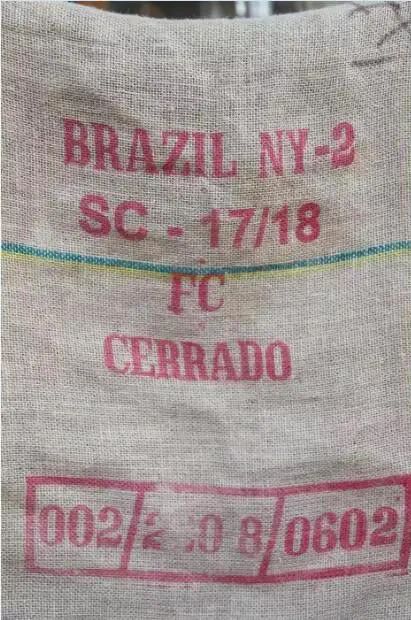
When it comes to Brazilian coffee, its unique grading classification method must be mentioned. Unlike common labels such as Kenya AA or Yirgacheffe G1, Brazil uses a grading system centered around defect rate, bean size, and cup quality. Take a look at markings on sacks such as ‘Brazil NY.2 SC – 17/18 FC’—they actually conceal key information: the first segment reflects the defect rate (divided into eight grades), the second segment indicates the screen size (measured in 1/64-inch units, commonly 14 to 20 mesh), and the last segment represents the cup quality grade, including Fine Cup (FC) and Good Cup (GC), among which FC and GC are common high-quality classifications in the market.
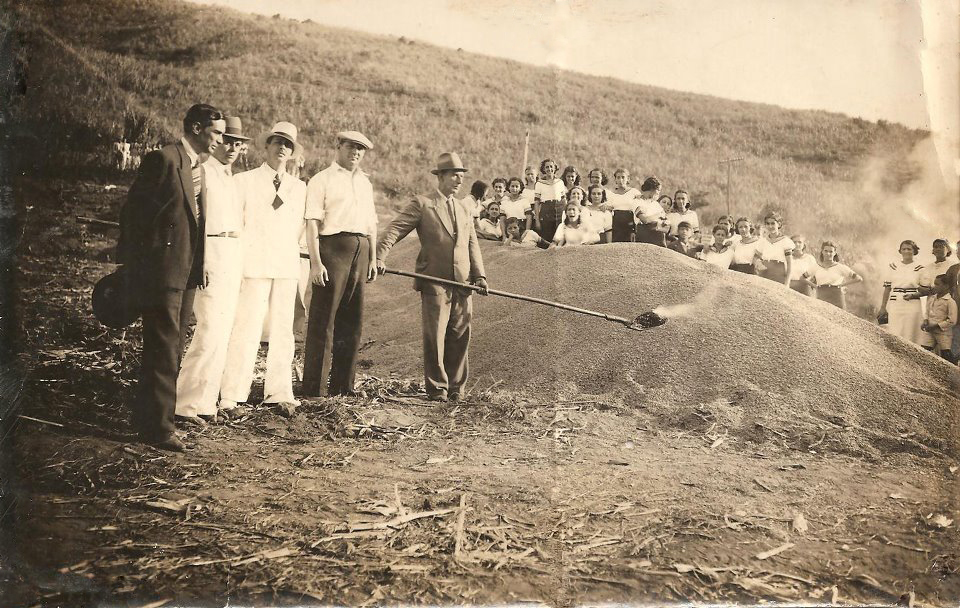
Brazilian coffee growing regions are spread across vast plains and temperate climate zones, mainly located in Minas Gerais, Bahia, São Paulo, Espírito Santo, Mato Grosso, Mato Grosso do Sul, and Paraná. Among them, Minas Gerais is the largest producing region, contributing nearly half of the country’s total output. The Cerrado region within Minas Gerais is a classic representative—boasting moderate altitude and fertile soil, the coffee beans produced here offer balanced flavors, rich aroma, and are suitable for various brewing methods, including pour over, moka pot, AeroPress, and even espresso. The red Bourbon variety from the Cerrado region is often the entry choice for many coffee enthusiasts looking to get to know Brazilian flavors.
The Bahia region began coffee cultivation in the 1970s. Although it lacks the outstanding terrain of Colombia, it has gradually emerged thanks to advanced agricultural technology and premium varieties. Aside from the well-known port of Santos, the Mogiana sub-region in São Paulo also benefits from fertile soil and altitudes of 900 to 1100 meters, yielding many specialty coffees. Mato Grosso and Mato Grosso do Sul, due to their flat terrain and average altitude of only about 600 meters, are more suitable for livestock than Arabica coffee. Espírito Santo is the country’s second-largest producing region, but Robusta accounts for as much as 80% of its coffee, characterized by intense fruity flavors and noticeable acidity. As for Paraná, located in the southernmost part of Brazil, although it only covers 2.5% of the national area, it contributes 25% of the country’s crop yield. Its low altitude and cool climate create a unique flavor profile.
How can you brew out the classic flavors of Brazilian coffee? Most commercially available Brazilian beans are medium to dark roasted, emphasizing aroma and a rich mouthfeel. It is recommended to use a KONO filter cone, whose slow flow rate extends the contact time between coffee grounds and water. Suggested parameters: 15 grams of coffee, a 1:15 coffee-to-water ratio, water temperature at 88°C, grind size around EK43s#10.5 (equivalent to 75% passing rate through a Chinese standard 20-mesh sieve). Use a three-stage pouring method during brewing: the first stage involves pouring 30 grams of water for a 30-second bloom—you’ll notice a beautiful “hamburger” layer; the second stage pours up to 125 grams; when the water level is about to expose the coffee bed, continue pouring up to 225 grams before stopping, with a total extraction time of about 2 minutes. Be mindful of controlling the water level to avoid too high, which may cause edge channeling and result in a “watery” taste, or too low, leading to under-extraction and a flat flavor.
The red Bourbon beans from the Cerrado region showcase the soft bean traits typical of Brazilian coffee. Due to the sun-dried cultivation method, the coffee cherries ripen quickly, and the flavor leans towards sweet and round. During brewing, you can detect distinct peanut and nut aromas, with a smooth and gentle mouthfeel, extremely low acidity, and a finish that carries caramel sweetness and dark chocolate undertones. It’s an easy enjoyment for both beginners and seasoned coffee lovers. This bean is not only a gateway to understanding Brazilian coffee but also an excellent choice for everyday drinking or blending.
The above content is compiled by CoffeeHunters, a coffee news website.


