








Introduction:Delve into the differences between G1 and G2 grade coffee beans from Ethiopia’s Yirgacheffe Kochere micro-region. This article explores their terroir, washed processing methods, and cupping profiles to uncover key distinctions. Practical roasting curves and pour over parameters are also provided to help coffee enthusiasts master brewing this high-altitude washed coffee.
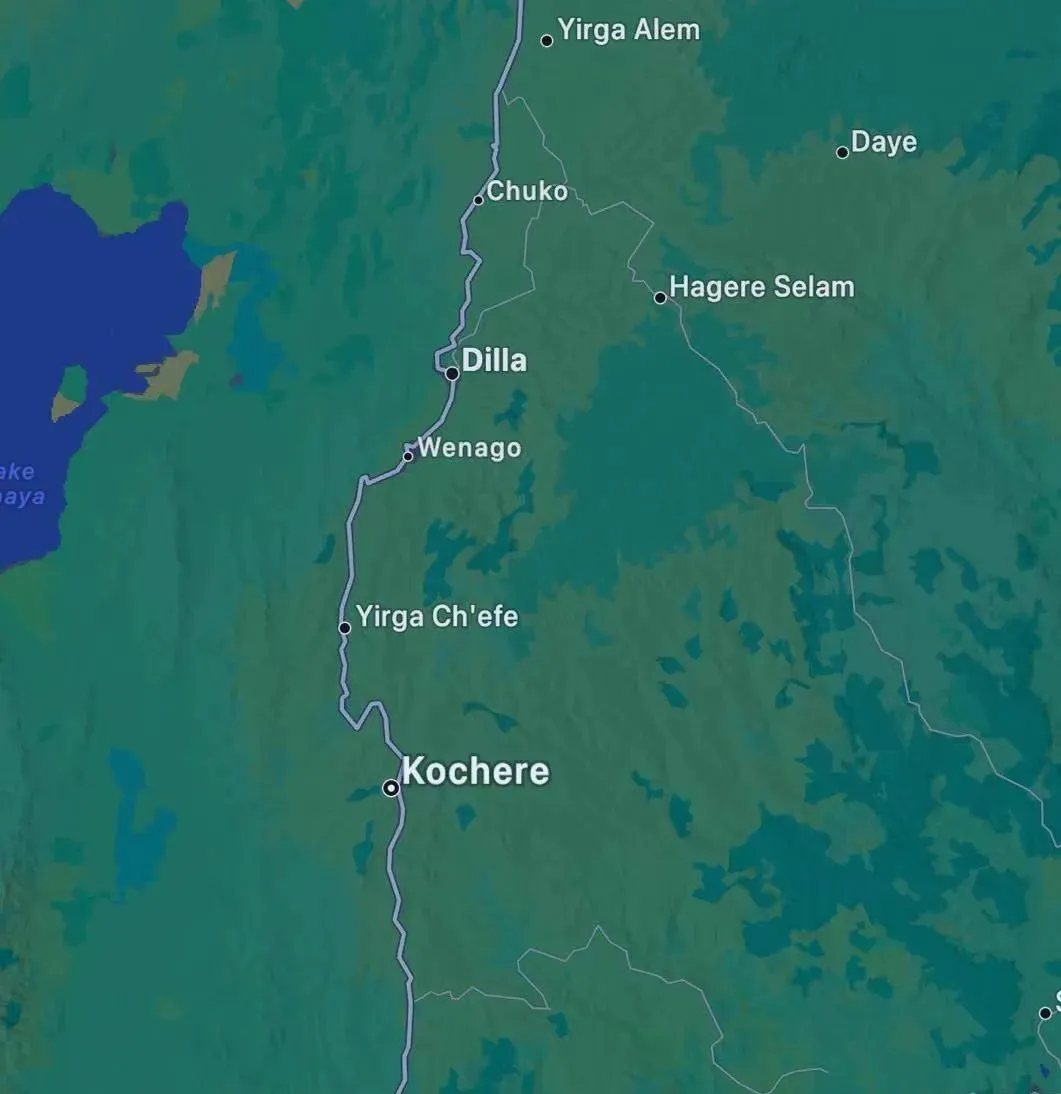
Yirgacheffe Kochere is a renowned micro-region in southern Ethiopia, famous for producing coffee beans with bright citrus notes, vibrant floral aromas, and delicate sweetness. As one of the most representative areas within the Yirgacheffe region, Kochere benefits not only from exceptional terrain and altitude but also from rigorous processing procedures and high grading standards, making it a benchmark for specialty coffee beloved by many enthusiasts.
Located approximately 25 kilometers from the center of Yirgacheffe town, Kochere sits at an elevation ranging from 1,650 to 1,800 meters. Its superior geographical environment provides ideal growing conditions for coffee trees. The area is home to around 100,000 residents, most of whom rely on the coffee industry for their livelihoods. The presence of relatively advanced processing facilities contributes to the consistently high international scores of its washed beans—for instance, Coffee Review once awarded Kochere washed beans a remarkable score of 94.

Although part of the larger Yirgacheffe region, Kochere is classified as an independent production area by the ECX (Ethiopian Commodity Exchange), highlighting the uniqueness of its flavor profile and market positioning. Compared to typical Yirgacheffe coffees, those from Kochere often exhibit clearer fruit tones such as lemon and cantaloupe, along with complex aromas like subtle spice tea and jasmine. The acidity is bright yet non-aggressive, while the sweetness is soft and the aftertaste long-lasting.
When discussing the grades of Kochere coffee, it's essential to understand Ethiopia’s unique grading system. Unlike many countries that classify beans primarily by size, Ethiopian grading is based on physical characteristics of the green beans and cupping quality. In this system, G1 and G2 are the most common high-end grades, with G1 representing the highest quality—typically scoring between 91 and 100 points—and G2 ranging from 81 to 90. Beyond the score difference, G1 and G2 also differ significantly in defect rates, physical consistency, and cupping flavor performance.
It’s worth noting that Ethiopia’s grading system does not strictly categorize beans by size. This is largely due to the country’s abundance of wild coffee varieties. Government conservation policies have prevented full disclosure of varietal information, and there is no systematic manual sorting. As a result, it’s common to find Ethiopian Yirgacheffe beans of varying sizes on the market, but this doesn’t indicate inferior quality—in fact, this diversity is one of the reasons behind the rich flavor profiles of Ethiopian beans.
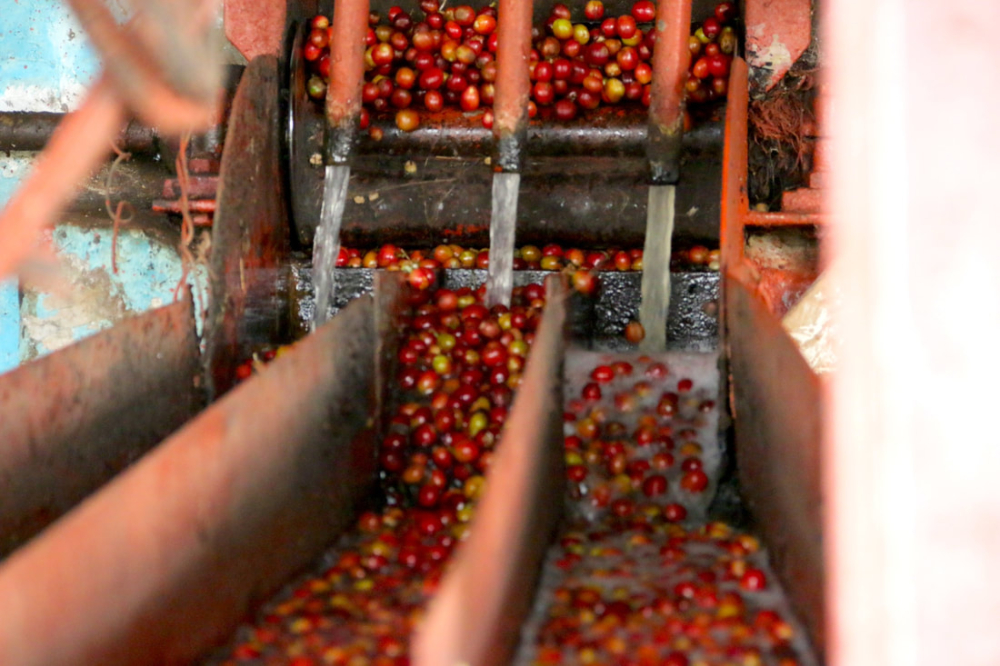
Coffee production in Kochere is predominantly carried out by local smallholder farmers who deliver their harvested coffee cherries to cooperatives for unified processing using the washed method (Washed Process). This technique involves removing unripe cherries via floatation, stripping the pulp mechanically, fermenting to eliminate the mucilage layer, and then washing and drying the beans multiple times until the moisture content drops to around 12%. The parchment is then removed to complete the green bean process. The washed method significantly reduces defect rates and delivers clean, bright acidity with a clear flavor profile—making it the processing method of choice for many high-altitude regions.
The Yirgacheffe Kochere G1 grade washed beans introduced by this coffee brand demonstrate particularly outstanding flavor characteristics: clean, fresh lemon aroma, elegant jasmine notes, and delicate layers of cantaloupe, citrus, ginger, and spice tea. The overall profile exhibits exceptional purity and complexity. These flavor traits make it an excellent choice for pour over enthusiasts looking to explore high-altitude washed beans.
For roasting, to highlight the bright acidity and clean mouthfeel of Kochere washed beans, a medium-light roast is recommended. Taking the Yangjia 800N roaster as an example, the charge temperature is set at 200°C, initial flame power at 160, and air damper at 3. After reaching the turning point, gradually adjust the flame and air damper to allow the beans to fully develop during the drying phase, followed by about 1 minute and 45 seconds of development time after first crack. The beans are dropped at 195°C. This roasting curve helps preserve the bean’s inherent fruit acidity and floral-fruity character while enhancing drinking balance.
Cupping data shows that this G1 washed Kochere performs best when cupped 8 to 24 hours post-roast, using a 200ml ceramic cupping bowl. Water temperature is controlled at 94°C, with grind size standardized to 70%-75% passing through a #20 sieve. The brew ratio is 1:18.18. Cupping results reveal orange blossom dry fragrance, pronounced fruity acidity and sweetness, and a black tea base. The flavors are clear and well-layered, with a good balance between sweetness and acidity.
For actual pour over brewing, it is recommended to use a V60 #01 filter cone, with water temperature between 90-91°C, a coffee dose of 15 grams, and a brew ratio of 1:15. Grind size is approximately 10 clicks on the EK43s (equivalent to the coarseness of fine sugar, or 80% passing through a #20 sieve). The brewing steps are as follows: start with a 30-second bloom using 30 grams of water, then pour 95 grams, and when the water level drops to two-thirds of the coffee bed, add another 100 grams. Total extraction time is controlled to around 2 minutes and 5 seconds. These parameters fully showcase the Kochere washed beans’ lemon, floral, orange, and cane sugar flavors, with a honey-like sweetness and gentle oolong tea aftertaste in the finish. The overall cup is refreshing and layered.
The above content is compiled by CoffeeHunters, a coffee news website.


