







Introduction:Want to practice latte art etching at home but always end up with asymmetrical designs, uneven or overly thick lines? This article addresses common issues with latte art pouring techniques, offering practical solutions and training tips—including cup and pitcher alignment, force control, and milk flow adjustment—to help you build a solid foundation and gradually master smooth and beautiful etched latte art.
Many coffee beginners ask how to practice etched latte art at home, especially mastering the motion of the milk pitcher. This piece dives deep into common problems and how to fix them, serving as an extended tutorial to the previous “How to Pour Beautiful Etched Lines?” If you haven’t read it yet, we recommend getting familiar with the basic concepts first.

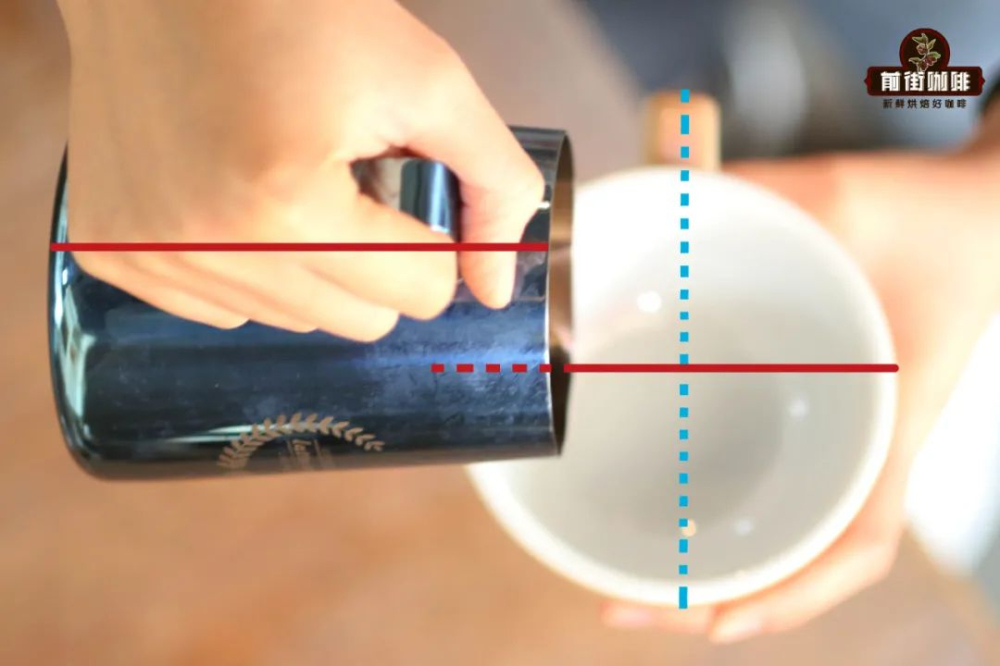
First, if you notice that the design you pour is asymmetrical,the only possible reason is that the milk pitcher and coffee cup are not aligned along the same straight line.The so-called straight line means that, when viewed from the side, the central axis of the milk pitcher and the cup should be parallel. From a top-down view (for right-handed pourers), the coffee cup handle should face inward toward your body to ensure the design appears correctly oriented, keeping the etched lines balanced on both sides.

Now, looking again from a top-down angle,the coffee cup handle should face inward, and the centerline of the milk pitcher should align with that of the cup in a straight line.This ensures that the poured design will naturally be symmetrical without left-right imbalance.
Secondly, many people encounter the issue of uneven line density—some parts dense, others sparse—when practicing etched patterns.This usually stems from two causes: either the pitcher and cup are misaligned, or the force applied during pouring is uneven from left to right.It’s recommended that beginners don’t rush to pour milk just yet, but instead start with “empty pitcher practice” to get familiar with the points of force when moving the pitcher.
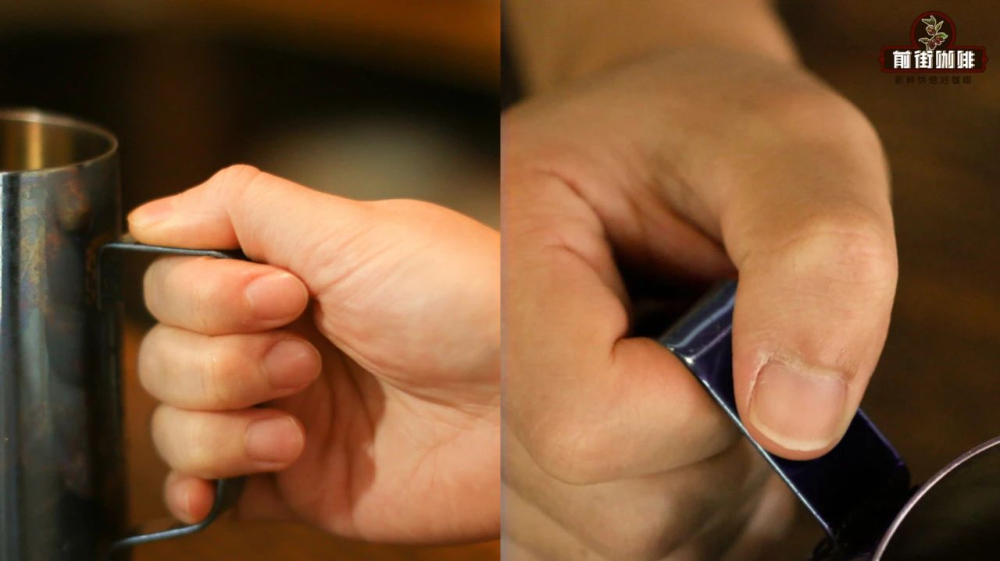
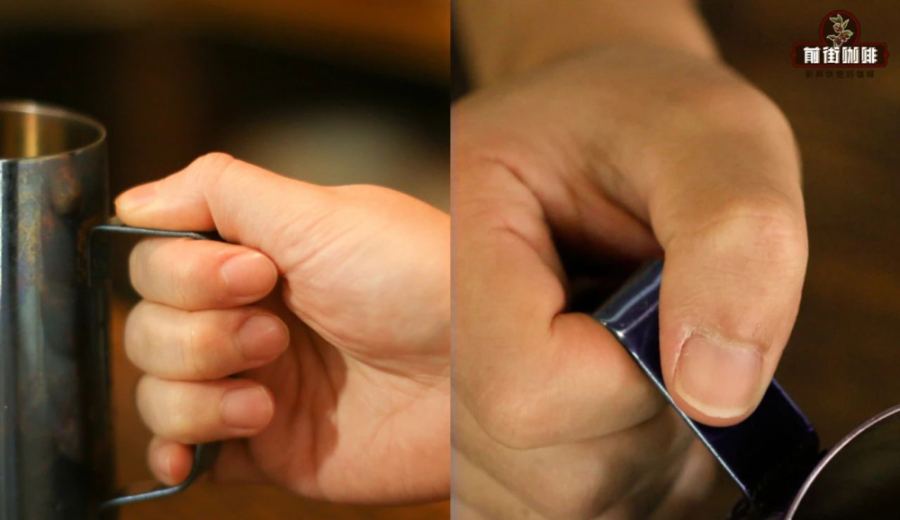
During practice, it’s suggested to use your thumb to stabilize the pitcher body while using the other four fingers as the main force points, letting the pitcher handle serve as the pivot for left-right swinging. This helps you find the center of force and thus control the swing range. Once you’re comfortable, you can further practice with water instead of milk.
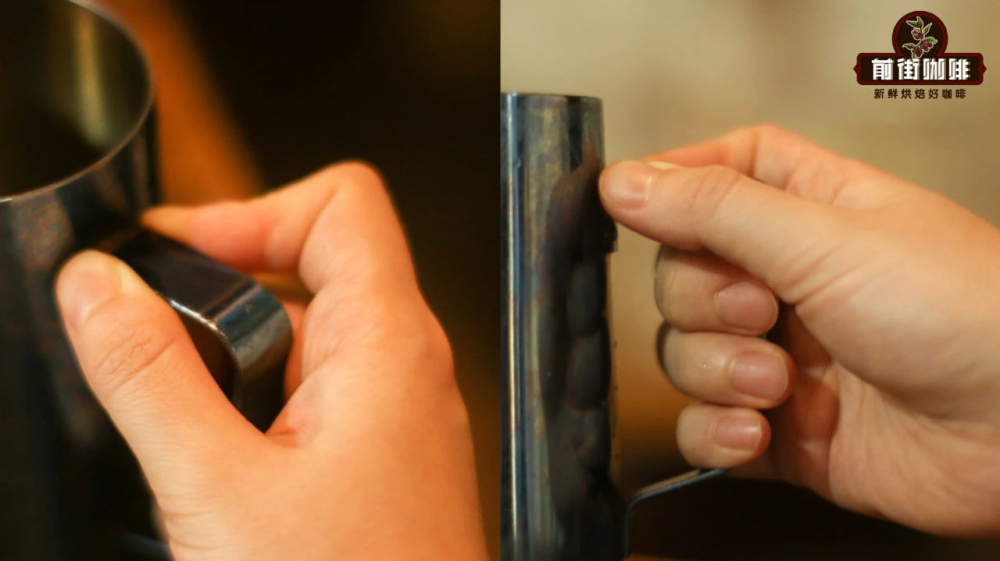
When practicing with water, it’s important to pay special attentionto the consistency between the milk flow and the swing amplitude,because water creates resistance, feeling different from empty pitcher practice. During the exercise, maintain a steady flow of water and observe how the swing becomes easier as the water level decreases. This is an important step in training muscle memory.

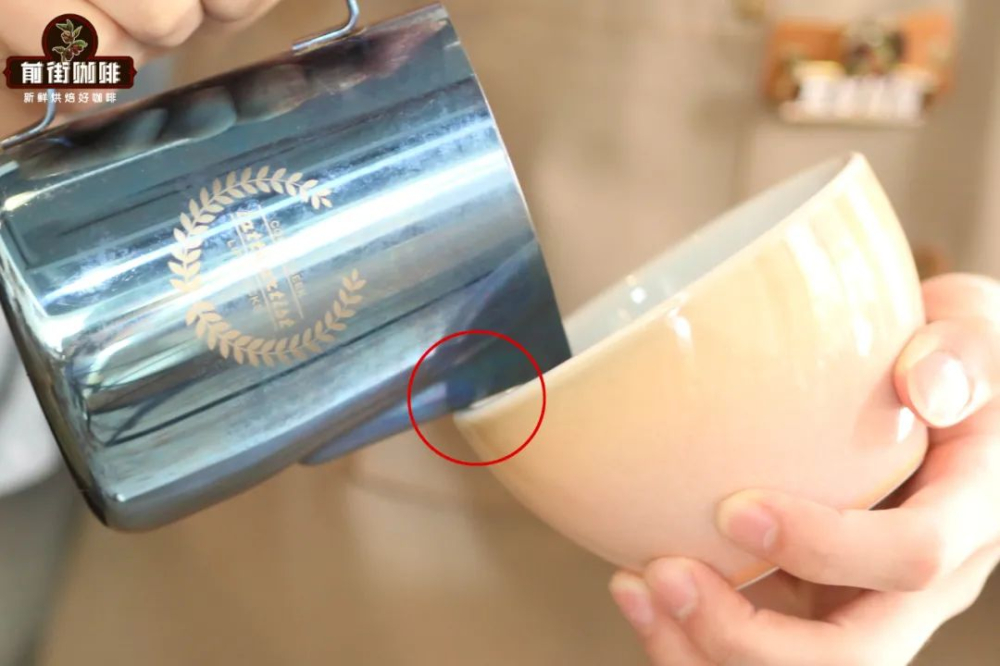
Finally, if you find that the etched lines are too bold, it’s usually due to two factors: first, the milk foam is too thick, making it difficult to create fine patterns; secondly,you habitually pour with the pitcher spout close to the rim of the cup.While pouring close to the cup helps stabilize the pour when creating large hearts or tulip patterns, it restricts the swing space when doing etching, resulting in thicker, less fluid lines. It’s recommended to slightly increase the distance between the pitcher spout and the milk surface during etching to allow freer movement and achieve more delicate patterns.
In summary, the key to successful etched latte art lies inpitcher-cup alignment, even force application, and milk flow control.All of these require extensive practice to build muscle memory. There are no shortcuts—only persistent hands-on practice will gradually improve your pouring skills.
The above content is compiled by CoffeeHunters, a coffee news website.


