







Introduction:Want to brew a great cup of coffee? Grind size is key! Different brewing methods require vastly different coffee grind sizes — from the extremely fine grind used for espresso to the coarse grind for French press. Each brewing device has its own ideal grind range. This article explains in detail what grind sizes 1 to 10 actually mean, teaches you how to determine the ideal grind coarseness for common tools like moka pots and pour over, and offers adjustment tips and practical references to help you easily master the essence of extraction.
A memorable cup of coffee depends not just on the quality of the beans, but more critically on the precision of the grind. Even with top-tier coffee beans, an incorrect grind size can make it difficult to fully bring out their flavors. Although many grinders come with settings marked 1 to 10, the actual fineness of the grounds can vary significantly between different brands and machines. Therefore, understanding the principles and learning to adjust based on your brewing device is the right way to enhance coffee flavor.
Why is grind size so important?Because it directly affects the surface area and contact time between water and coffee grounds, which in turn determines the extraction rate. The finer the grind, the larger the total surface area of the grounds, leading to higher extraction efficiency — but also a higher risk of over-extraction. Conversely, a coarser grind slows down extraction, potentially resulting in underwhelming flavors. Therefore, mastering the appropriate grind sizes for various brewing methods is a fundamental skill every coffee enthusiast should know.
 Let’s start with the basic principle: the finer the grind, the slower the water flows through and the longer the contact time; the coarser the grind, the smoother the water flow and the shorter the contact time. These variables interact with each other — for instance, espresso machines typically complete extraction in just 25 to 30 seconds, so an extremely fine, powder-like grind is required. For drip methods like pour over, extraction takes around 2 minutes, making medium-fine coffee grounds more suitable.
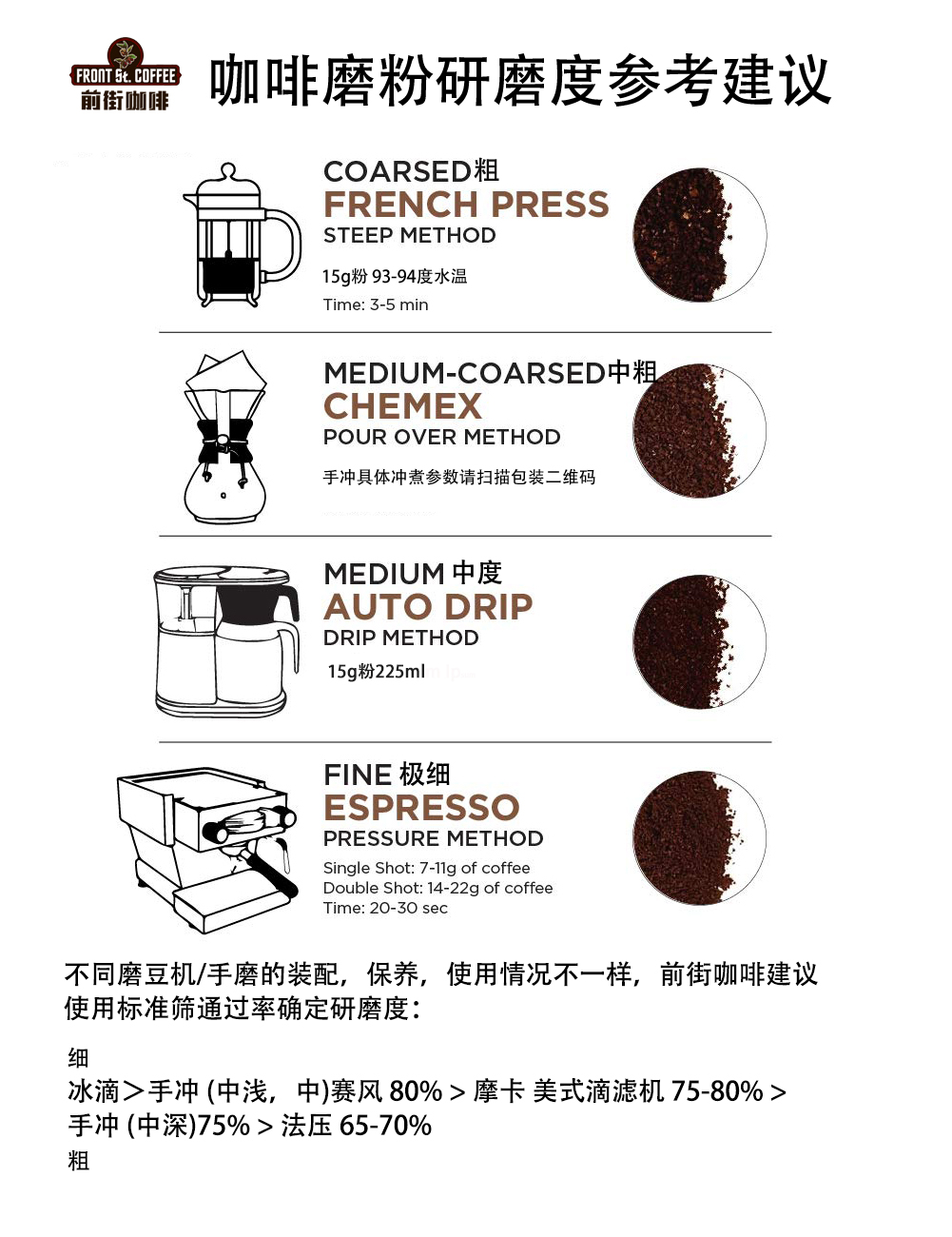 However, you can’t rely solely on “eyeballing” or assume that the same setting on different machines will produce the same grind. In fact, even if two grinders are both set to “5,” the resulting particle sizes may differ noticeably. It’s recommended to use standard sieve tests to check the percentage of particles that pass through — for example, data from well-known shops can serve as a reference: 80%+ for cold drip, around 80% for pour over and siphon, 75–80% for moka pot and American drip, and 65–70% for French press. This helps adjust grind size more scientifically.
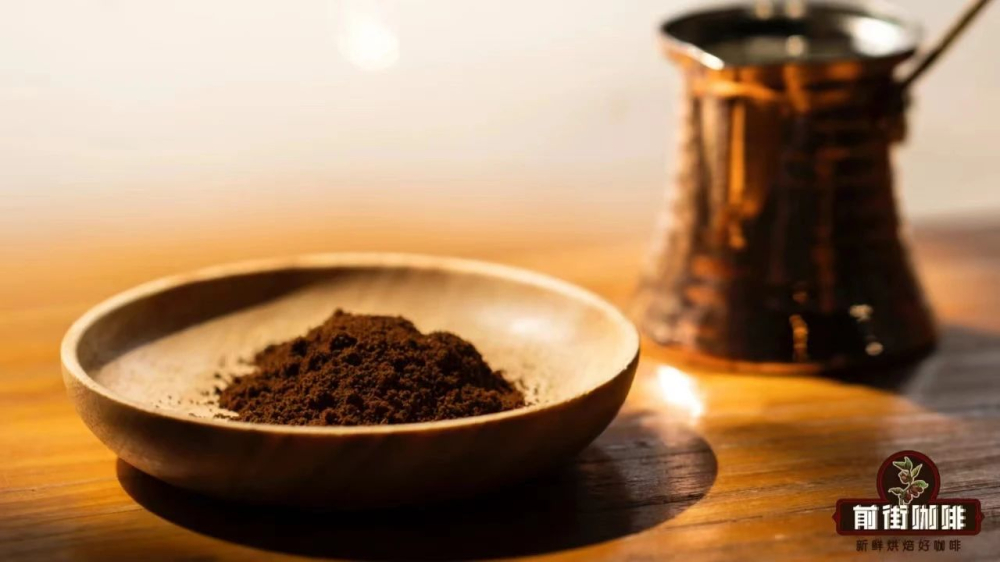
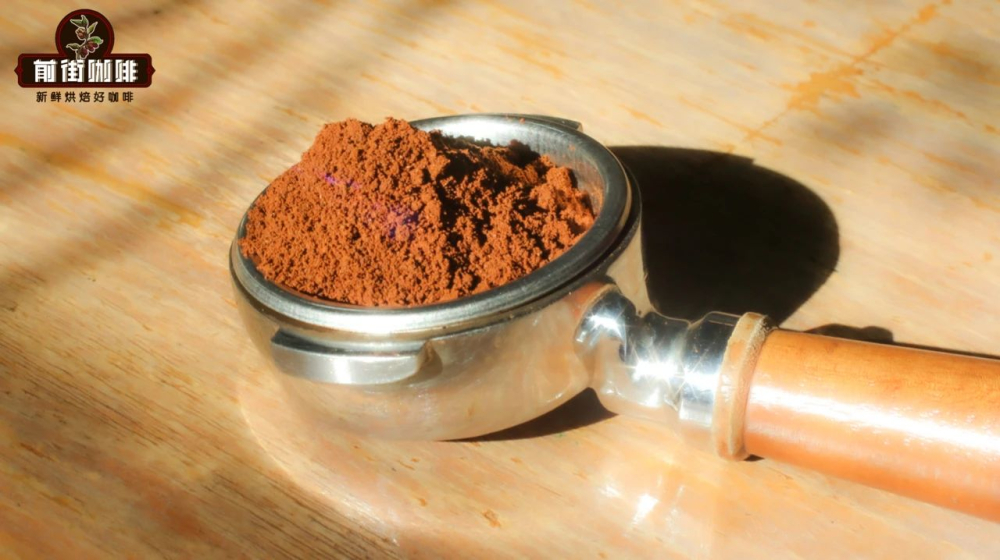
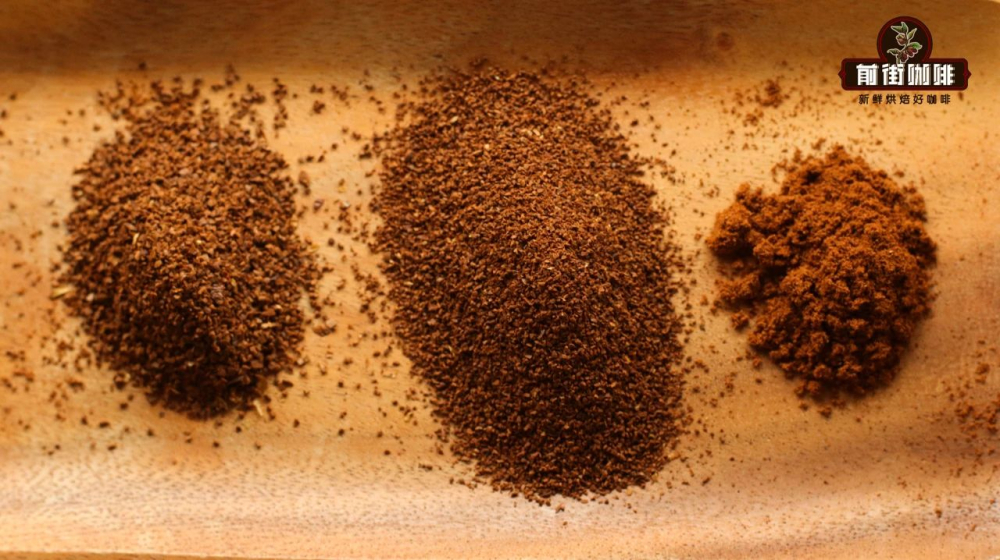 Next, we’ll go from the finest to the coarsest, explaining the suitable grind sizes for each commonly used brewing method. First up:Turkish Coffee, which requires an ultra-fine grind, almost powdery like flour — the finest of all brewing methods and usually the smallest setting on an espresso grinder. Next isEspresso, which is extracted under 9 atmospheres of pressure and must be extremely fine, though not as fine as Turkish coffee — otherwise it can clog the portafilter. It’s generally recommended to use 8–9 grams of coffee for single shots and 18–20 grams for double shots, extracting 25–30 grams (single) or 50–60 grams (double) of coffee liquid within 25–30 seconds.
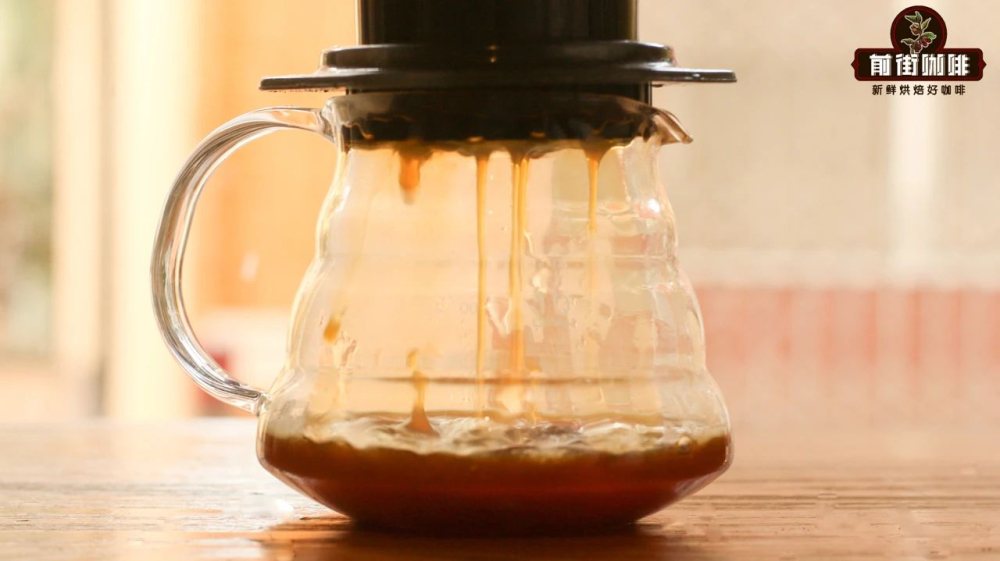
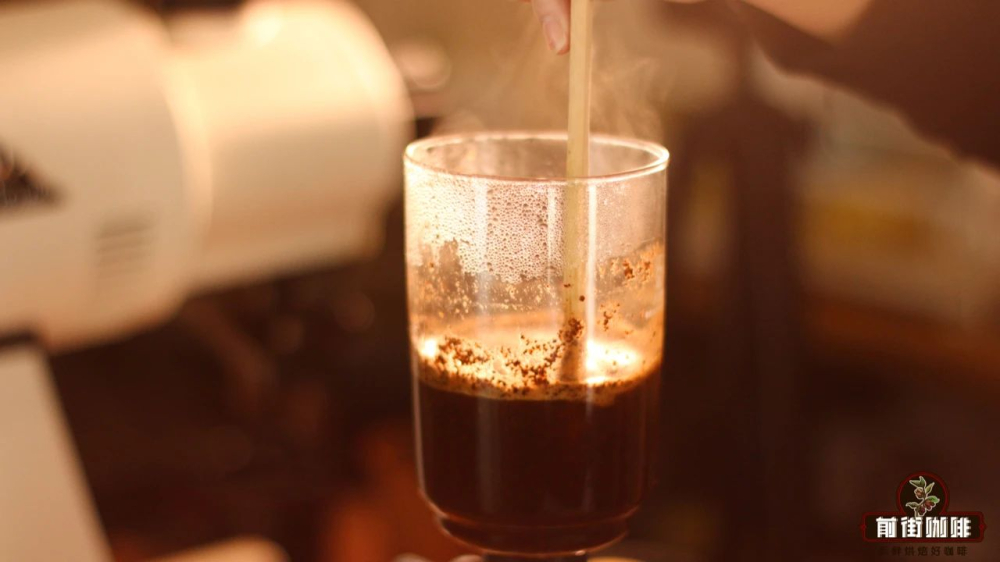
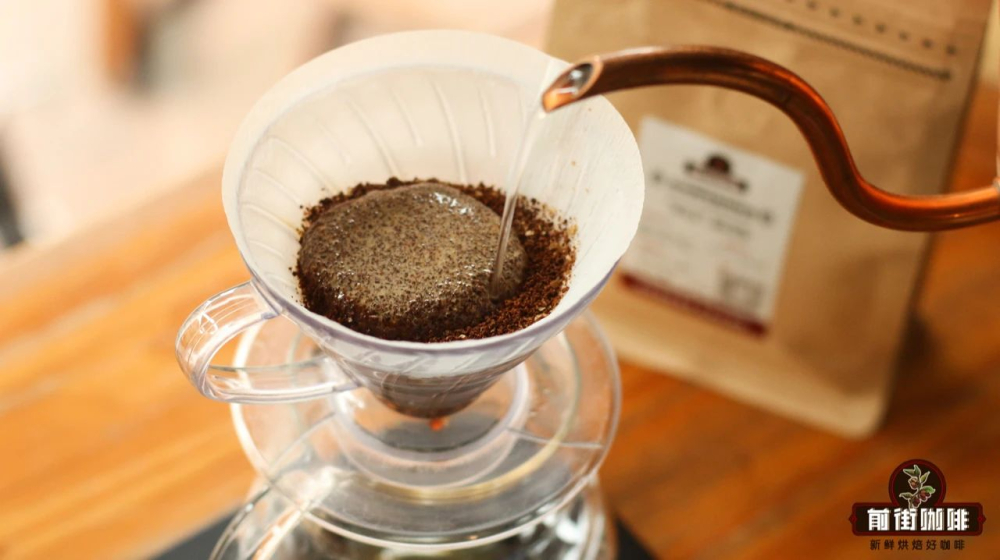
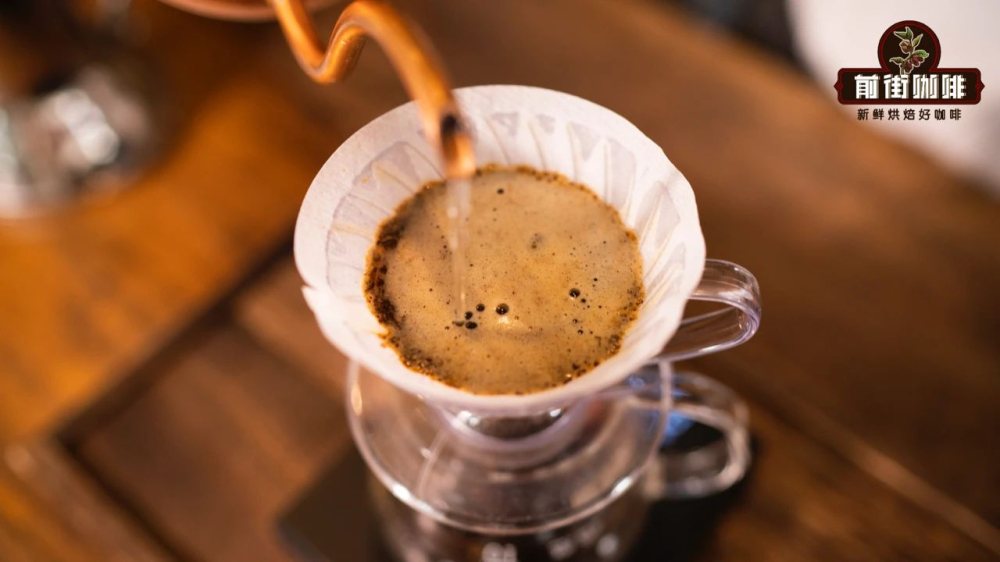
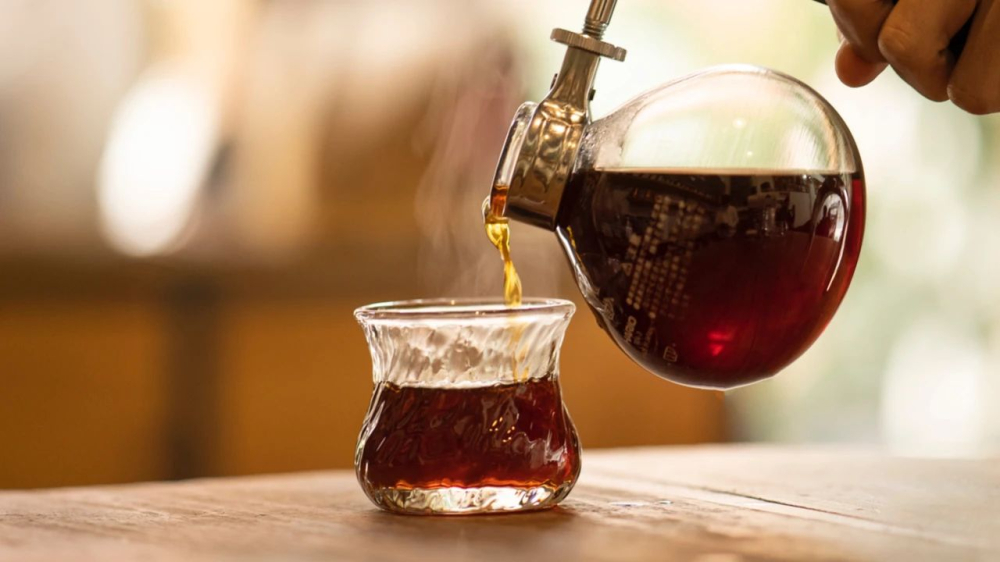 The AeroPressuses immersion brewing, and it’s advised to adjust the grind one to 1.5 settings coarser than pour over, aiming for a medium-fine to slightly finer grind to avoid over-extraction.The Siphon (or Vacuum) Pot, which uses an open flame for heating and stirring, works best with a medium grind — too fine may lead to over-extraction.Pour Over Coffeeis one of the most popular brewing methods today, and the ideal grind size is medium-fine, similar to fine sugar. The SCA recommends a sieve throughput rate of 75–80%, which ensures stable extraction and a balanced flavor profile.
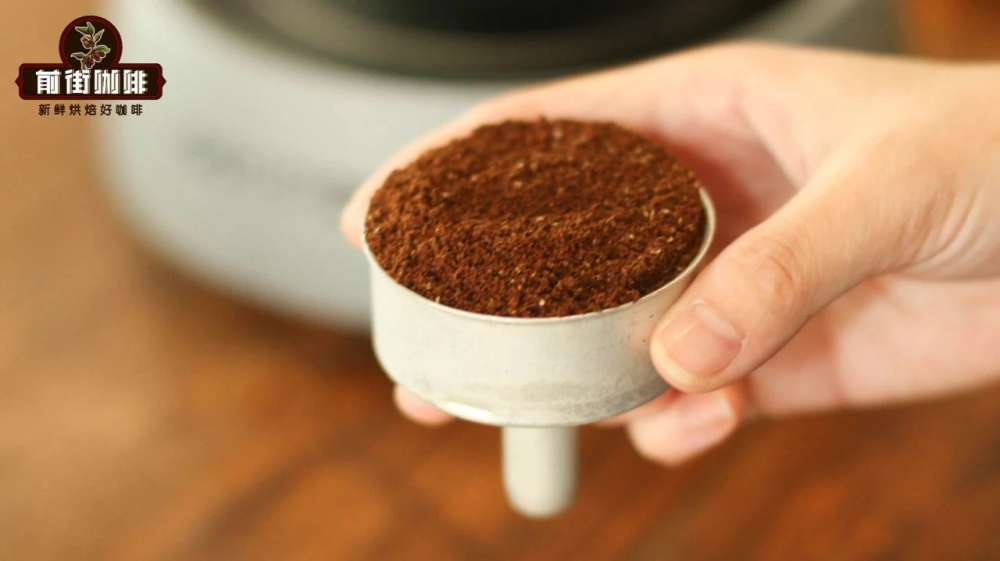
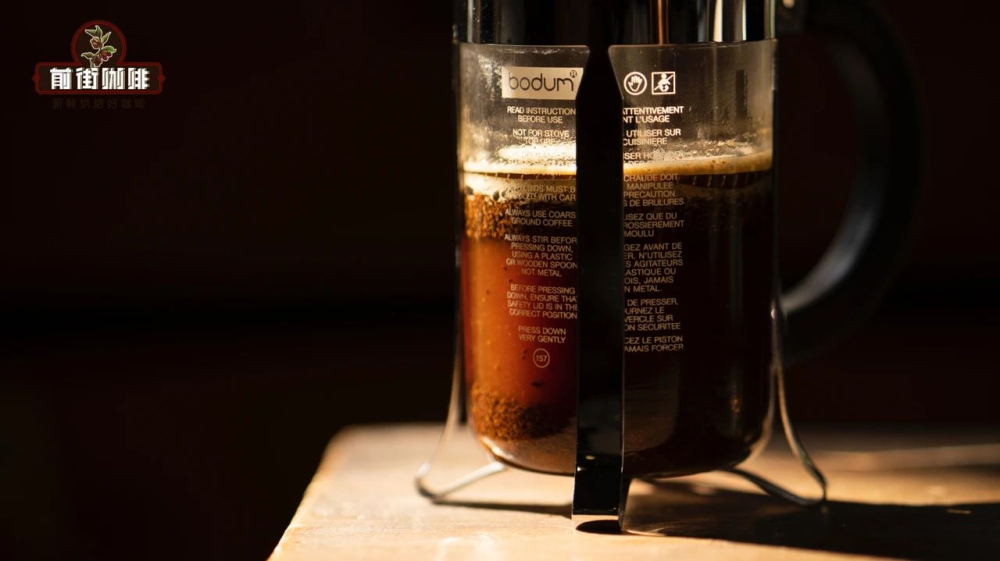
 The Moka Potis a favorite among many households, using about 1.5 bar of pressure for extraction. Its grind should be slightly coarser than espresso but still on the finer side — about one notch coarser than espresso grind. Too coarse will result in under-extraction.Cold Brew and Ice Dripare both long-duration, low-temperature extraction methods. Because of the low water temperature and slow extraction rate, a medium-coarse grind helps avoid over-extraction and clogging, and also aids in filtration.The French Pressis the most coarse-grind method among immersion brewers. It’s recommended to use a grind similar to brown sugar granules to prevent excessive release of bitter substances and maintain a rich, full-bodied taste.
 In summary, choosing the correct grind size not only enhances flavor expression but also helps avoid common extraction mistakes, such as the bitterness from over-extraction or the sourness from under-extraction. In practice, it’s advisable to adjust according to the characteristics of your brewing device, and you can conduct small test brews to observe changes in extraction time, flow rate, and flavor, gradually finding the settings that best suit your taste. Don’t be confined to fixed settings — flexible adjustment is the path to becoming a true coffee expert.
The above content is compiled by CoffeeHunters, a coffee news website.


