








Introduction:As Ethiopia’s most iconic coffee-growing region, Yirgacheffe often confuses coffee enthusiasts with its G1 and G2 grades. This article delves into the evolution of Ethiopia’s coffee grading system—from the traditional defect-based classification to the ECX’s cupping-based comprehensive evaluation—helping you understand the real differences between washed G1 and G2 Yirgacheffe and providing practical brewing tips and flavor profiles for light-roast pour-over, guiding you to choose the best specialty coffee beans.
Coffee grading standards vary widely across the globe. Some are based on bean size, such as in Kenya; others rely on altitude, like Blue Mountain coffee; and some use defect rates, which is the case for Ethiopia. As a genetic treasure trove of Arabica coffee, Ethiopia boasts an extremely rich diversity of coffee varieties. However, due to the sheer variety and difficulty in distinguishing them individually, coupled with the government’s desire to protect these unique varieties from excessive external extraction, most are collectively referred to as "Heirloom" native varieties.
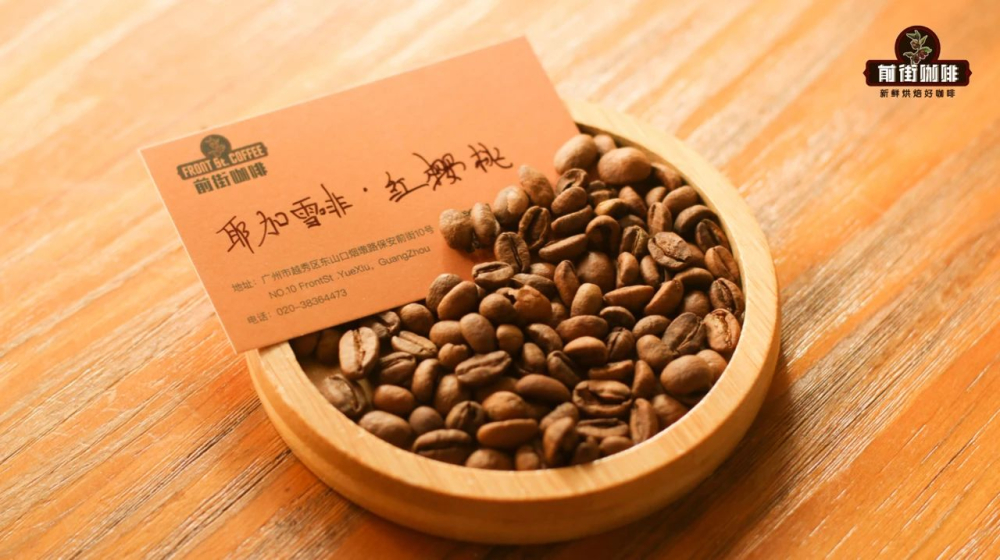
These native variety beans are typically small in size, irregular in shape, and appear more rounded in appearance. For instance, the signature coffee beans launched by a well-known brand belong to this native variety category. After undergoing natural sun-drying processing, they exhibit intense berry, citrus, floral notes, and even a hint of fermented complexity, making them a must-try entry-level option for many coffee enthusiasts.
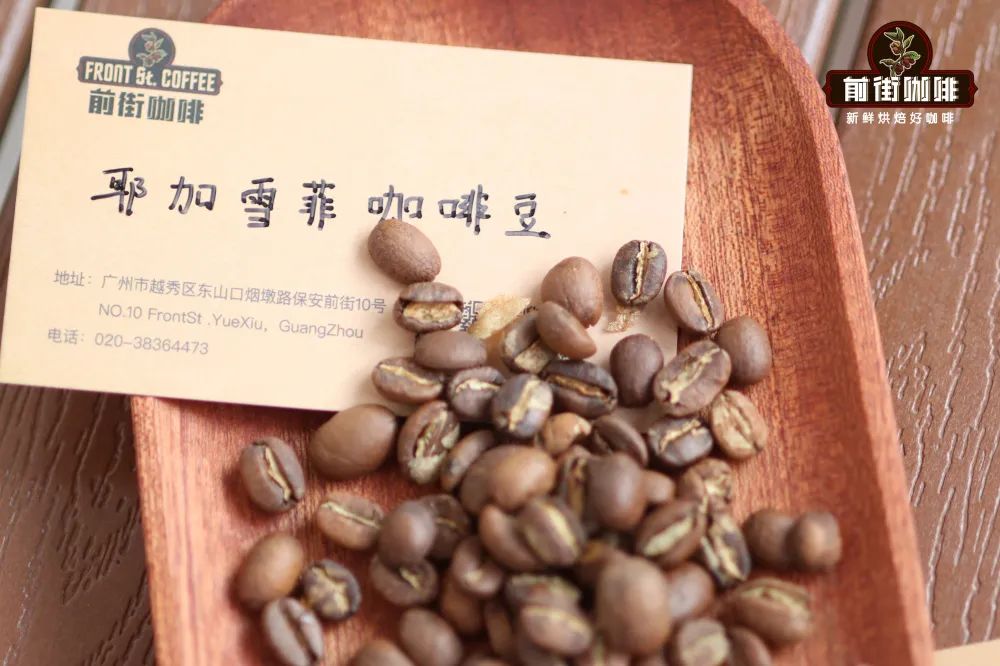
Ethiopian coffee trees mostly grow in wild or semi-wild conditions. During harvest season, coffee cherries are scattered across fields, backyards, and even forests, with different varieties often mixed together in the same grove. Since most farmers do not deliberately separate varieties but instead harvest them uniformly and send them to processing facilities, the green beans often exhibit inconsistent sizes and diverse shapes. This natural harvesting method also means Ethiopian beans, unlike Kenyan ones, cannot be graded solely by size, making defect rate the primary evaluation criterion.
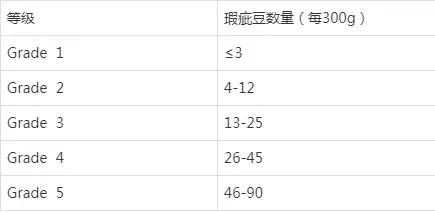
Before 2009, Ethiopia’s coffee grading system was relatively simple, primarily based on defect rates, dividing beans into five grades. At that time, the CLU department under the Ministry of Agriculture was responsible for setting the standards, and only washed beans could be rated as G1 or G2, considered specialty coffee. Notably, G1 washed beans were extremely rare and almost never seen on the market. Back then, washed beans usually only reached G2 grade, while natural processed beans mostly fell below G3.
Early natural processing techniques were relatively crude, often involving sun-drying on farmers’ backyards or rooftops, where impurities like stones and twigs could easily mix in, leading to unstable flavors. It wasn’t until the 1970s that Ethiopia introduced washed processing, using floatation to remove unripe beans and foreign matter, significantly improving coffee stability, and thus washed beans came to be regarded as higher quality. At the time, only washed beans had a chance to reach G1 and G2 grades, while natural beans rarely did.
In 2009, the Ethiopian Commodity Exchange (ECX), with the assistance of international specialty coffee organizations, introduced a new grading system that no longer relied solely on defect rates but also incorporated cupping flavor scores. Under the new system, natural beans also became eligible for G1 and G2 ratings, breaking the previous convention that natural beans couldn’t achieve higher grades. Nowadays, the market sees an increasing number of natural lots labeled G1 and G2, while G3 is gradually becoming less common.
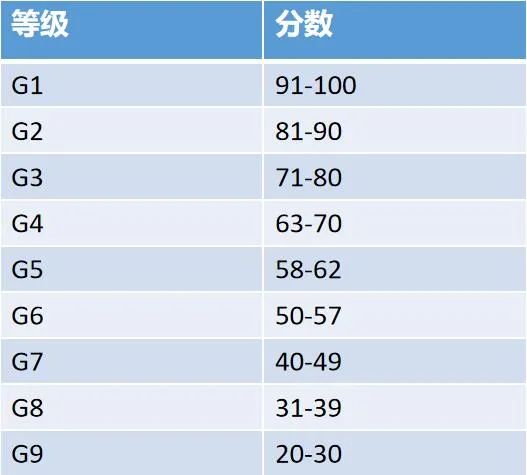
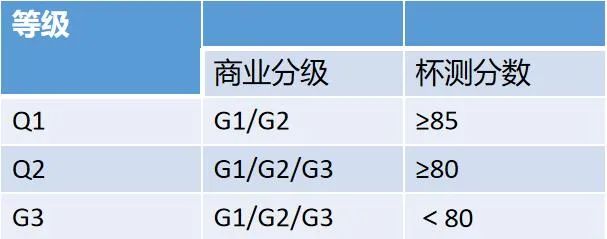
The new system categorizes coffee into three main groups: Specialty Coffee, Commercial Coffee, and Domestic Coffee. The grading process first classifies beans by processing method (natural or washed), then evaluates them into nine grades (G1 to G9) based on physical characteristics and cupping results. Among these, G1 to G3 undergo a second cupping round according to SCAA standards: those scoring above 85 points are classified as Q1, 80–85 points as Q2, and below 80 points as G3. Ultimately, Q1 and Q2 are exported as specialty-grade, while the rest are commercial-grade.
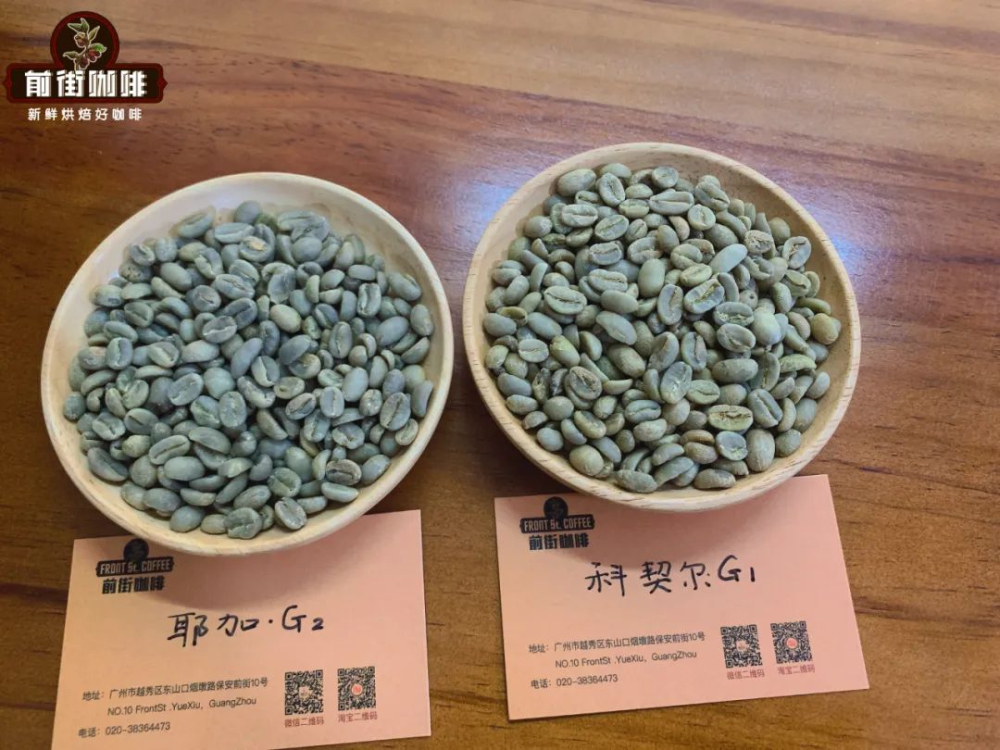
Taking the popular Yirgacheffe as an example, let’s compare the actual differences between G1 and G2 washed beans. Visually, unroasted G1 green beans are usually more uniform in size, consistent in color, and noticeably fewer defects; whereas G2 green beans vary in size and have a higher proportion of defects. This not only affects appearance but also directly impacts the purity and consistency of flavors after brewing. Many baristas note that even with light roasting, G1 beans often exhibit a clearer flavor profile and richer aroma.
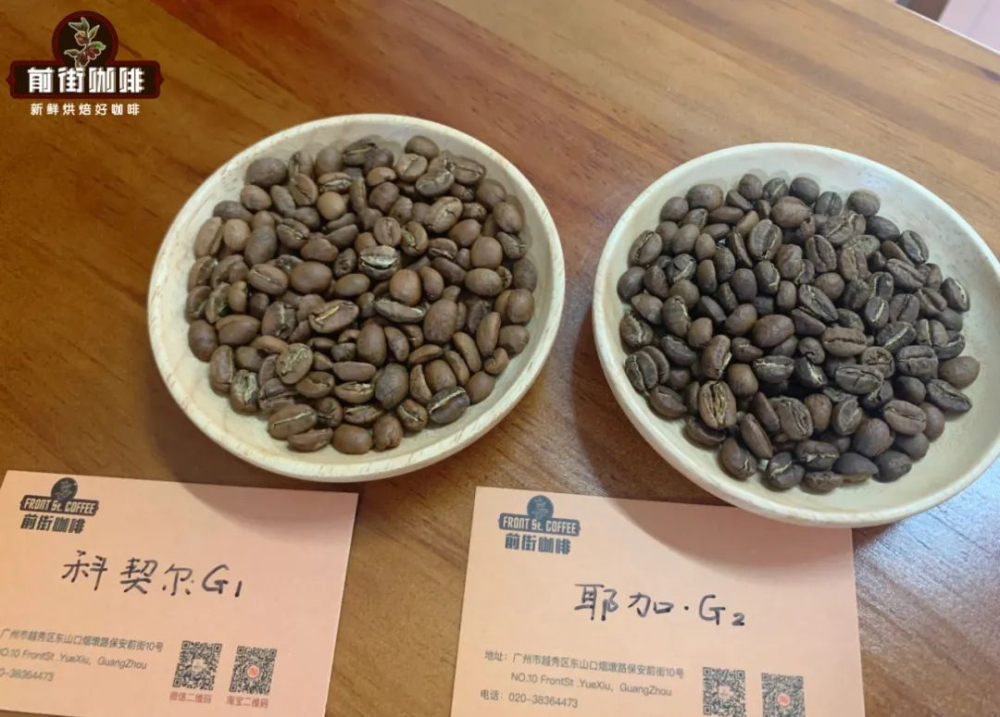
For practical pour-over brewing, light-roast Yirgacheffe is recommended to be brewed at 91°C using a V60 filter, with a grind size of about 80% (medium-fine) and a coffee-to-water ratio of 1:15. These parameters fully highlight its bright lemony acidity and delicate floral notes. Based on tests, G1 washed beans often showcase jasmine, fresh lemon acidity, and a silky black tea-like mouthfeel, with a long, low-bitterness aftertaste. In contrast, G2 beans are dominated by white floral, lemon, and citrus notes. While still bright in flavor, they slightly lag behind G1 in terms of complexity and refinement. Both share Yirgacheffe’s signature sweet-acidic character, but G1 excels in purity and aromatic detail.
The above content is compiled by CoffeeHunters, a coffee news website.


