








Introduction:Although Panama is a small Central American country, it is a major representative of specialty coffee worldwide. This article starts from its historical origins and takes you on a journey to explore the unique geography and climate conditions of key regions such as Boquete, analyzes how the Best of Panama (BOP) competition has driven the development of specialty coffee, and details the fascinating flavor characteristics of the Geisha variety and the intricacies of its washed processing. It also provides practical pour over parameters and steps to help you gain a deeper understanding of this globally popular coffee bean.
Panama, a country located in the narrow isthmus of Central America, may not be large in land area, but it holds a significant place on the global specialty coffee map. The wide price range of Panamanian coffee—from affordable entry-level options to top-tier beans that can cost hundreds of dollars—often piques the curiosity of newcomers. To understand the secrets behind this, one must start with the history of coffee cultivation in the region.
As early as 1742, coffee arrived in Panama aboard a ship from Martinique in the French Caribbean, though it only made a stopover and was not planted at the time. It wasn’t until 1780 that settler Pedro Antonio de Ayarza attempted to plant the first coffee trees in Portobelo, but limited by the local environment, the results were modest. It was not until the 1820s that coffee gradually became widespread in other parts of Panama, eventually replacing chocolate as the dominant beverage and competing with the tea culture popular in Europe.

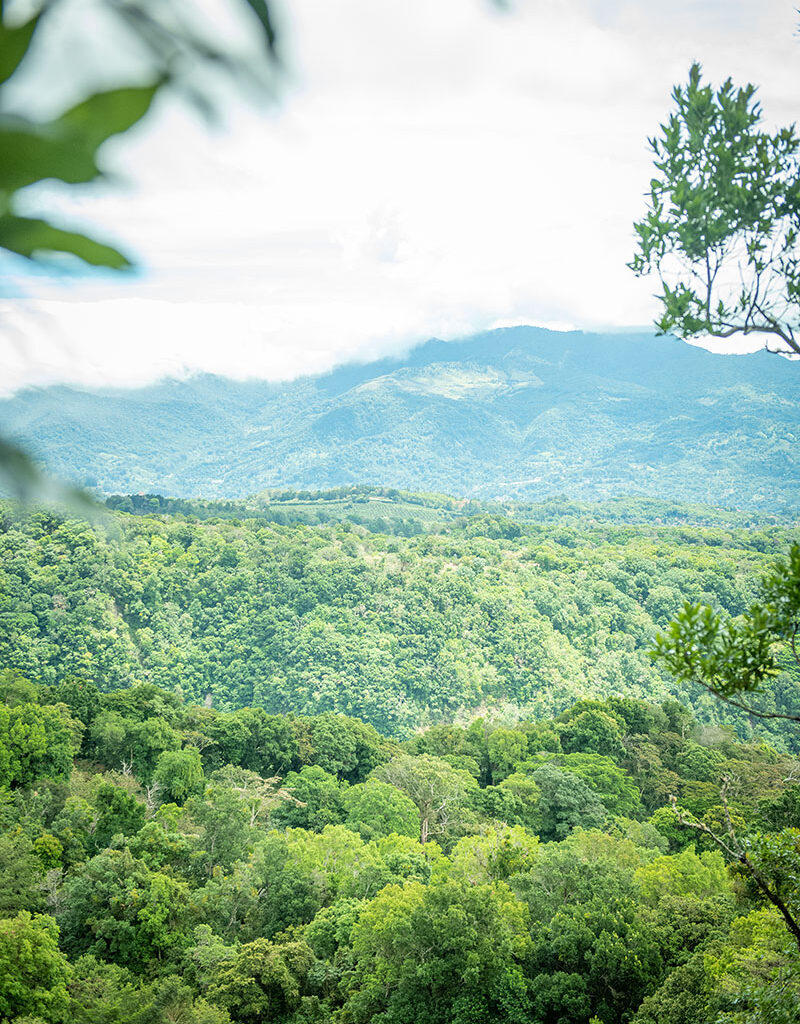
Panama enjoys a uniquely advantageous geographical location, situated between the two major ocean currents of the Caribbean Sea and the Pacific Ocean. Especially in the Boquete Valley, where altitudes exceed 6,500 feet, the convergence of cold and warm air creates a microclimate that is both diverse and moderate in temperature and humidity. Coupled with volcanic soil rich in minerals, these conditions provide an ideal environment for coffee trees, resulting in coffees that often exhibit complex and varied aromatic profiles.
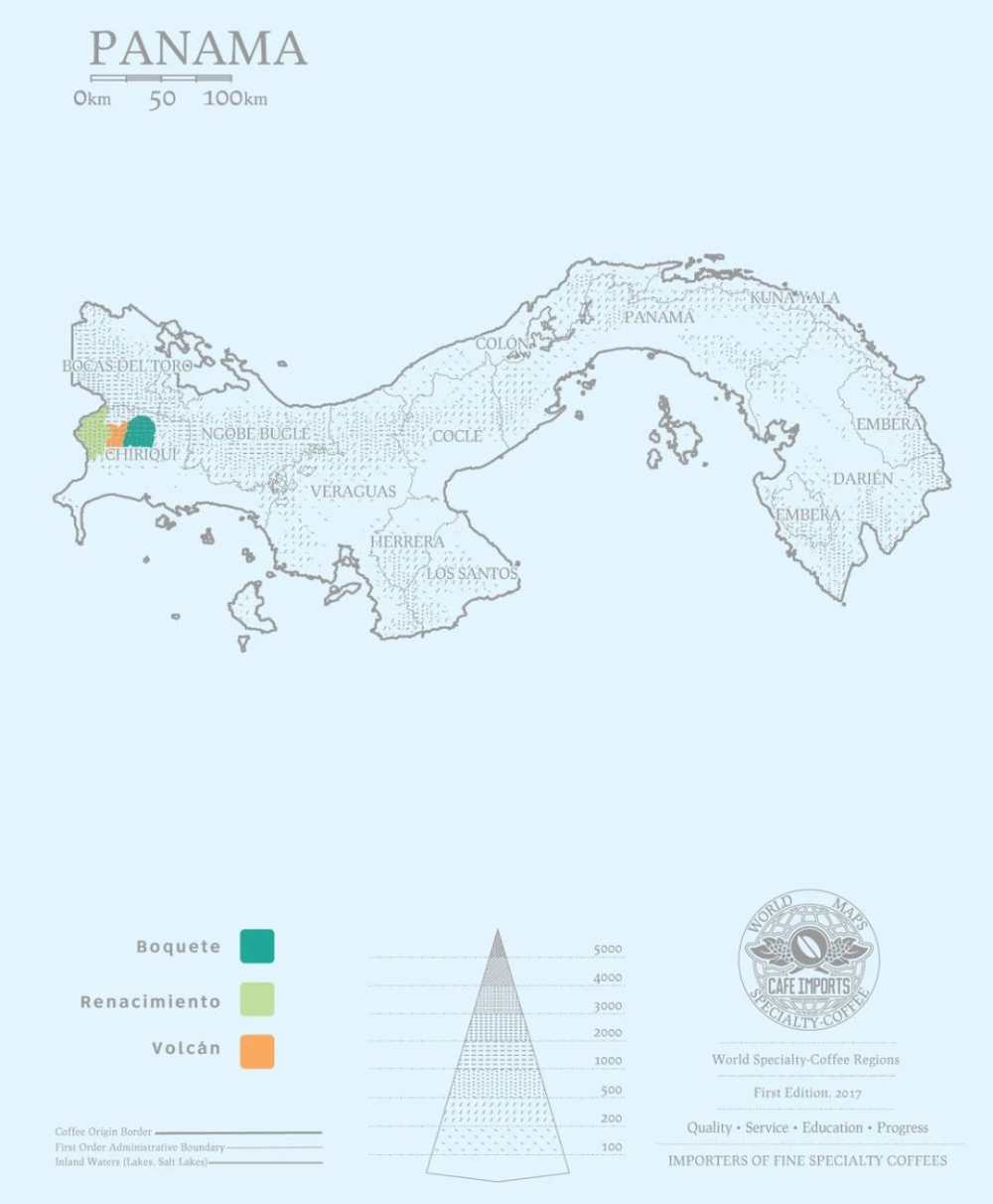
In the late 19th century, with the construction of the Panama Canal, a large influx of European and North American immigrants arrived, including professionals such as bankers and engineers. They established coffee plantations in regions like Boquete, Volcán, and Renacimiento in the Chiriquí Province, introducing refined European agricultural concepts—such as altitude-based zoning, strict manual harvesting, and meticulous processing—which significantly improved coffee quality and laid the foundation for Panama’s high-end coffee industry.
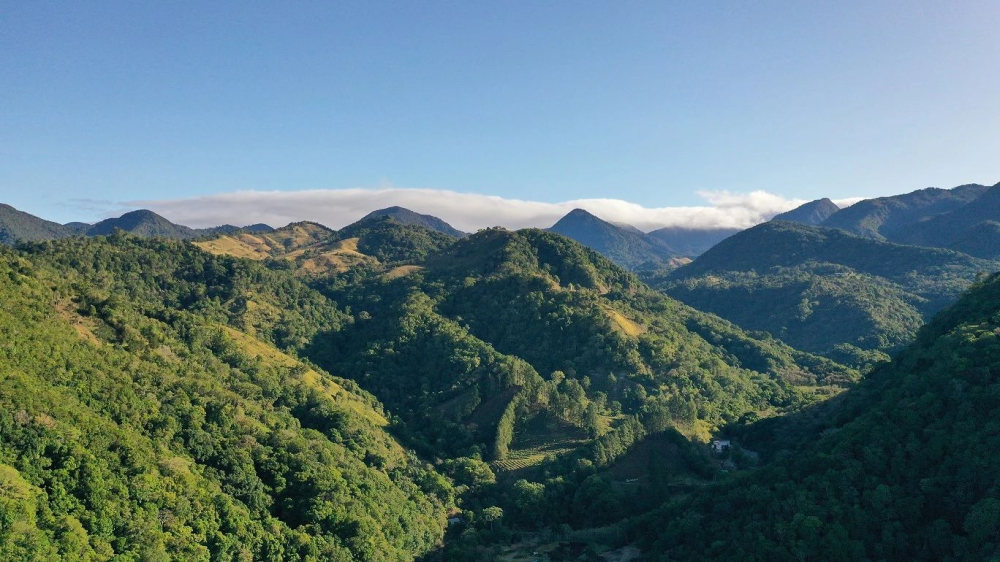
The Boquete Valley can be considered the cradle of Panamanian coffee. It is not only one of the earliest regions where coffee was planted but still retains around 50 to 75 coffee farms and 15 processing facilities. Covering an area of 514 square kilometers with a population of about 15,000, the main crops include coffee, flowers, citrus fruits, and berries. Most coffee farms are located at elevations of around 1,600 meters, where fertile volcanic soil and the unique thin mist effect in summer allow coffee cherries to ripen slowly, yielding coffees with medium to high acidity and layered flavors.
The annual coffee harvest season in Panama runs from September to December. During this time, the indigenous Gnobe Bugle people (commonly known as Guaymíes) are often hired to participate in the harvest. With their wealth of experience and expertise, they command higher wages and also add a unique cultural flair to the region. The traditional baskets and attire they use during picking become a picturesque sight in the fields.
After the collapse of the International Coffee Agreement in 1989, global coffee bean prices plummeted, and Panama faced severe challenges. In response, local coffee professionals established the Specialty Coffee Association of Panama (SCAP) in 1996. Founded by seven plantation owners, SCAP organized the first coffee green bean competition and online auction, dedicated to promoting high-quality specialty coffee. This initiative not only turned around the plight of Panamanian coffee but also laid the groundwork for the later Best of Panama (BOP) competition.
The Best of Panama is regarded as the world’s first specialty coffee bean competition and auction platform. Participating farms submit their finest batches of coffee, which are blindly scored by a professional judging panel. The coffees are then opened for global buyers to bid based on their scores. In recent years, the winning bids for champion beans have repeatedly exceeded $1,000, making it a focal point of the industry. During the evaluation, the Geisha variety competes separately from other varieties and is grouped by processing methods such as natural and washed to ensure fairness. In 2022, the natural Geisha from Guava Farm won with a score of 95.96, while the washed Geisha from Aurora Farm claimed victory with an impressive score of 96.15.
When discussing Panamanian coffee, one cannot overlook the Geisha variety. Originally from Ethiopia, this variety demonstrates unique potential in the high-altitude environment of Boquete. A well-known café’s washed Boquete Geisha highlights the classic clean and bright flavors of Geisha through traditional washed processing.
The washed processing procedure includes: first removing the skin and some pulp of the coffee cherry, then placing the mucilage-covered beans in water to ferment for about 24 hours, followed by rinsing off the remaining fruit mucilage with clean water. Finally, the parchment-covered beans are dried or machine-dried to a moisture content of about 12%, after which the outermost parchment layer is removed. This method stabilizes quality and accentuates the delicate acidity and aroma of Geisha.
Washed Geisha often presents clean floral notes reminiscent of white blossoms, along with bright acidity in the citrus and lemon spectrum, complemented by a subtle green tea-like finish. The overall profile is refreshing and elegant, akin to sipping a cup of Tieguanyin oolong tea. To fully showcase these qualities, some recommend using a medium-light roast and appropriate extraction techniques to highlight its sweet-and-sour layers.
For pour over, it is recommended to use a V60 dripper. Its unique spiral rib design and large hole allow for extended contact time between water and coffee grounds, enhancing extraction efficiency. Suggested parameters are as follows: use 15 grams of coffee grounds, a 1:15 coffee-to-water ratio, and a grind size of about 80% passing through a #20 sieve—similar to the coarseness of granulated sugar. Water temperature should be controlled at 91–92°C. Use a three-pour method: the first pour involves adding 30 grams of water for a 30-second bloom, the second pour adds 120 grams of water to expand the coffee bed, and the third pour uses a slow stream to add 90 grams of water. Total extraction time is approximately 2 minutes and 10 seconds, with a total water volume of 240 grams.
The resulting Panamanian washed Boquete Geisha offers a bright entrance of citrus, lemon, and bergamot acidity, a silky mouthfeel akin to cream, and a finish that blooms with the sweetness of green tea and honey. It is a classic coffee worthy of careful savoring.
The above content is compiled by CoffeeHunters, a coffee news website.


