








Introduction:Delve into the origin of the variety, terroir, and market positioning of Yunnan’s small-grain Catimor coffee. From Baoshan, Pu’er to Lincang, get to know this star bean of China. This article details its flavor profile, cupping characteristics, and recommended pour over brewing parameters, helping you—from beginner to advanced—fully grasp the unique charm and balanced flavors of Yunnan beans.
As an important pillar of China’s coffee industry, Yunnan has grown into a region that cannot be overlooked in the global specialty coffee supply chain. From early introduction trials to today’s stable output of beans with both flavor and quality, Yunnan coffee has undergone over a century of evolution, especially forming distinctive industrial clusters in southwestern areas such as Baoshan, Pu’er, and Lincang. This article provides a comprehensive analysis of the charm of small-grain Catimor coffee—from regional environments and varietal traits, to cupping performance and pour over brewing techniques.

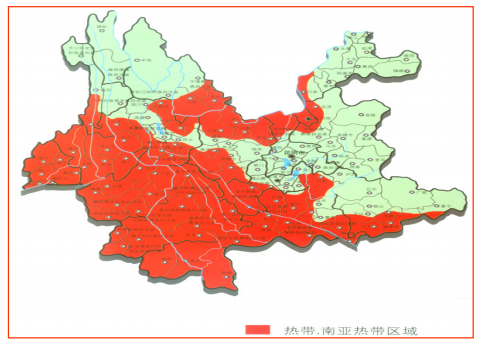
Located in southwestern China, Yunnan enjoys a climate where tropical and subtropical zones converge. With abundant rainfall, ample sunlight, and diverse altitudes, it provides an excellent environment for coffee trees to thrive. Particularly in frost-free highland areas such as Pu’er, Baoshan, and Lincang, these are considered the golden zones for coffee cultivation. Although the general public in China has had relatively short exposure to coffee, the first coffee tree took root in Yunnan as early as the beginning of the 20th century.
Tracing back to its origins, in 1904, French missionary Tien Defeng introduced coffee trees to Yunnan and successfully conducted trial plantings—marking the starting point of coffee cultivation in China. However, true large-scale development only began in 1952, when technicians from the provincial academy of agricultural sciences distributed coffee seeds for trial planting in Ludian, Baoshan, laying the foundation for subsequent expansion. Over time, planting techniques gradually matured, with nearly seventy years of accumulated experience to date. In 1988, Nestlé initiated experimental cultivation in Pu’er and further propelled the modernization of Yunnan’s coffee industry through technical guidance and purchasing mechanisms.
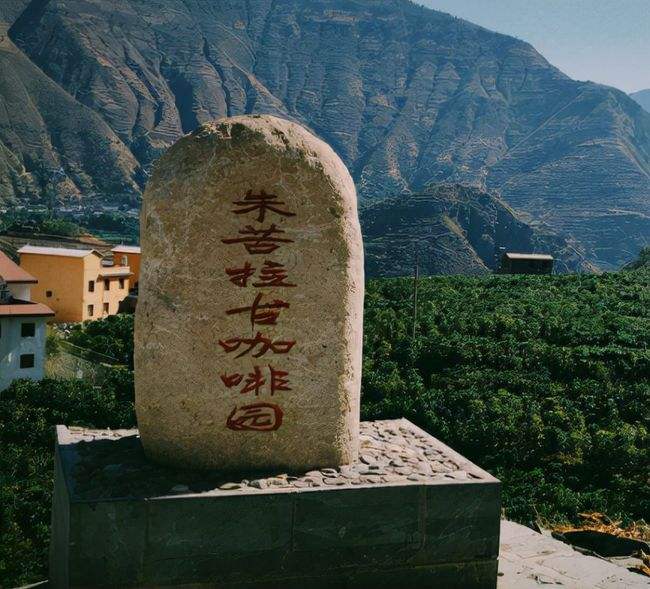
Currently, Yunnan’s coffee plantations are mainly concentrated in the southwestern region, including Baoshan, Pu’er, Lincang, Dehong, and Xishuangbanna. Among them, Pu’er is the country’s largest coffee-growing base. The region features red soil, gentle slopes, significant day-night temperature variations, and a subtropical highland monsoon climate, creating a micro-environment ideal for coffee growth. The locally produced “Simao small-grain coffee” is also known as “Pu’er coffee,” a well-known product on the market.
Baoshan’s Ludian Basin is famed for its dry-hot river valley climate, with an average annual temperature of about 21.3°C and almost no frost, making it highly suitable for cultivating Arabica varieties. The small-grain coffee from here has received praise from experts both domestically and abroad, described as “strong but not bitter, fragrant but not overpowering, with a long-lasting aftertaste.” As for Lincang, due to its proximity to the Lancang River and diverse terrain—with elevations mostly above 1000 meters and distinct dry and rainy seasons along with large day-night temperature differences—it is an ideal location for high-altitude coffee cultivation. The area also hosts coffee estates growing varieties such as Typica.

When discussing Yunnan’s small-grain coffee, one cannot overlook the key variety: Catimor. In the early days, Yunnan mainly planted Typica and Bourbon, but due to their weak disease resistance and limited yields, they were gradually replaced by the more adaptable Catimor. Catimor is a hybrid of Timor and Caturra, first developed in Portugal in 1959. This variety inherits Robusta’s disease-resistant genes, exhibiting high tolerance to leaf rust and berry diseases, while also growing quickly and producing dense fruit clusters, thus becoming the mainstream choice for Yunnan coffee farmers.
However, due to its Robusta lineage, Catimor grown at altitudes below 1200 meters often does not deliver cupping profiles as favorable as other traditional Arabica varieties. But with advancements in local planting management and post-harvest processing techniques in Yunnan, some specialty-grade Catimor produced in high-altitude regions has begun to stand out in the international market, showcasing captivating aromas and layers such as nuts, black tea, and plum acidity.
The launched Yunnan small-grain coffee beans are Catimor grown at 1200 meters in Baoshan and processed using the washed method. Its flavor profile is grounded in nutty and fruity aromas, with brown sugar sweetness and plum acidity. It offers a balanced taste and a refreshing aftertaste, serving as one of the representative beans for getting to know the flavors of Yunnan coffee.
In terms of brewing, to bring out the balanced flavors of Yunnan small-grain coffee, it is recommended to choose freshly roasted beans—the optimal flavor typically peaks within five days post-roast. Using a V60 filter cone with medium-fine grind (approximately 80% through a #20 sieve), a 1:15 coffee-to-water ratio, and water at 90°C helps balance acidity and sweetness, avoiding over-extraction or weak flavors.
In practice, a three-stage extraction can be employed: start with a 30-gram bloom for 30 seconds, then pour 95 grams of water in small circular motions, and once the flow slows, add the final 100 grams. Keep the total extraction time around two minutes. This approach fully highlights the nutty, herbal, chocolatey, and brown sugar aromas of the Catimor beans, while also bringing out the soft acidity reminiscent of plums, resulting in a rounded and layered mouthfeel.
The above content is compiled by CoffeeHunters, a coffee news website.


