







Introduction:As the most representative specialty coffee region in Ethiopia, Yirgacheffe is beloved by coffee enthusiasts worldwide for its unique floral and fruity aromas and bright acidity. This article delves into the region’s geographical conditions and native varietal characteristics, details the processing differences between washed and natural methods, and explores how the Red Cherry Project has enhanced quality. It also provides flavor profiles and V60 pour-over recommendations for three practical bean options, serving as a practical beginner’s guide to understanding and enjoying Yirgacheffe coffee.
Yirgacheffe is an iconic coffee region on Ethiopia’s coffee map, renowned for its fresh floral notes, bright acidity, and rich fruitiness, making it a top choice for many beginners exploring specialty coffee. This article will systematically introduce how to recognize and select a Yirgacheffe coffee that suits you, covering everything from regional environment, coffee varieties, and processing differences to the flavor characteristics of actual beans and pour-over parameters.
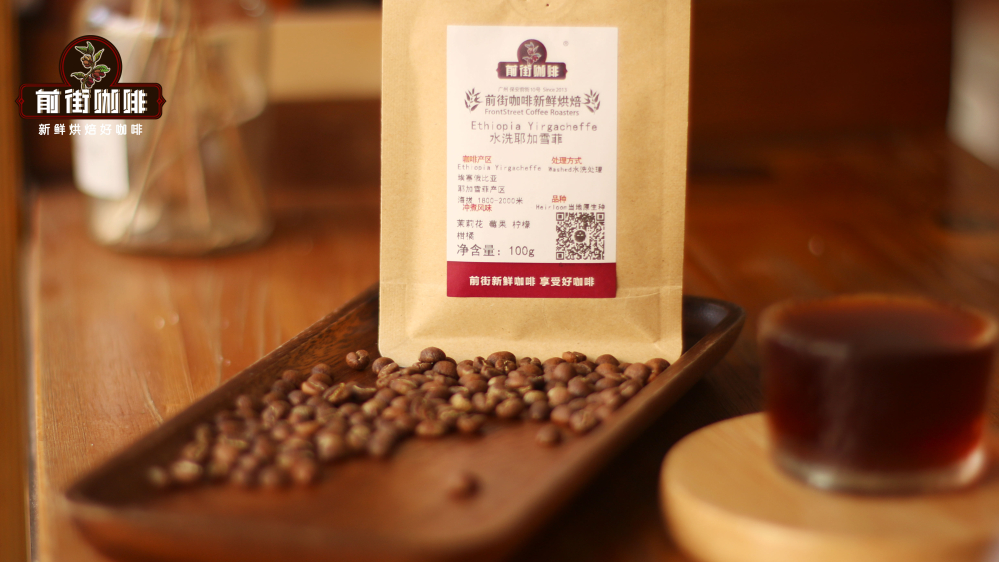
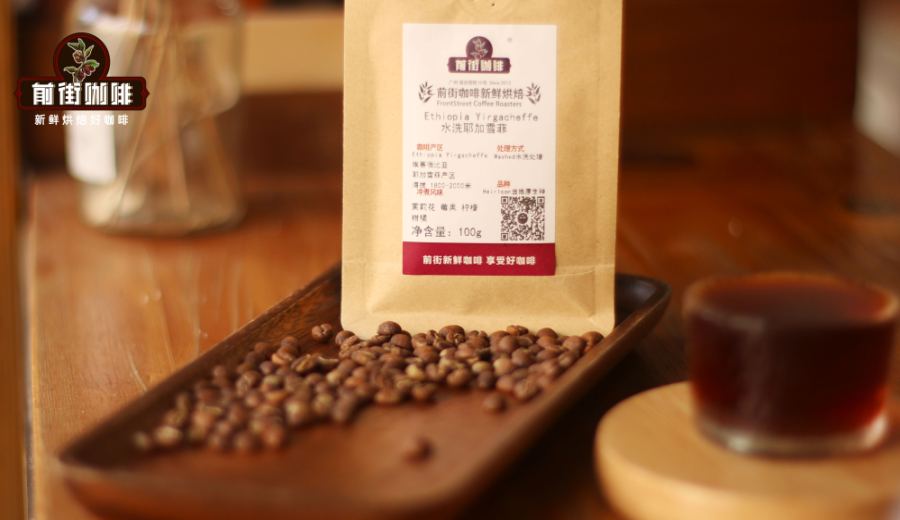
If you’re looking for a high-value, representative entry-level Yirgacheffe bean, consider a certain washed Yirgacheffe. Grown at an altitude of about 2,300 meters in the Yirgacheffe region, it uses native coffee varietals and is meticulously processed via the washed method. This bean delivers clear flavors with distinct lemon and citrus notes, a honey and berry-sweet aftertaste, and a tea-like refreshing mouthfeel, making it suitable for daily drinking and ideal for building a foundational understanding of Yirgacheffe’s flavor profile.
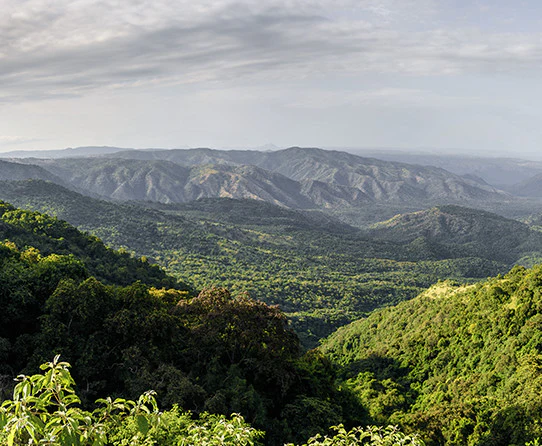
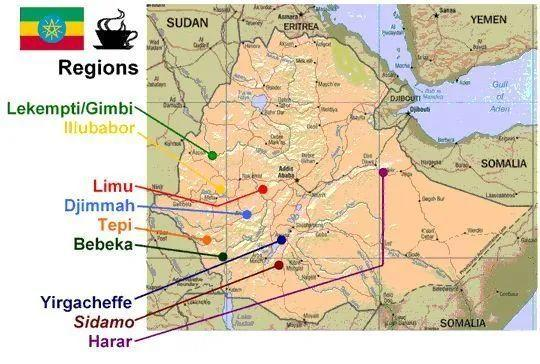
Originally a small town in Ethiopia, Yirgacheffe is now under the administration of the Sidamo region but has been designated as an independent micro-region due to its highly distinctive coffee flavors. The area generally sits at elevations between 1,700 and 2,100 meters, making it one of the highest-altitude coffee-growing belts in the world. With a cool, foggy climate and water sources from lakes such as Lake Turkana, Lake Abaya, and Lake Chew Bahir, it forms a unique microclimate that contributes to Yirgacheffe coffee’s delicate floral and fruity aromas and bright acidity.
The local coffee farming model is typically garden-style, with most farmers intercropping coffee with other crops in their own fields or courtyards. Individual yields are limited, and harvested coffee cherries are collectively sent to cooperatives for processing. Established in 2002, the YCFCU (Yirgacheffe Coffee Farmers Cooperative Union) comprises 28 village-level cooperatives responsible for unified processing and sales. As a result, most commercially available coffee bags indicate origin information based on the cooperative name.
Surrounding Yirgacheffe are smaller regions such as Wenago, Kochere, and Gelena Abaya, whose flavor profiles are similar to Yirgacheffe’s, with Kochere often classified under the same categorization system.
When discussing the leap in Yirgacheffe’s quality, the contributions of the “Red Cherry Project” cannot be overlooked. Launched in 2007 by the Dutch trading company Trabocca BV, this initiative aims to enhance coffee quality and farmers’ incomes in high-altitude regions. The project focuses on refining washed, natural, and semi-washed processing techniques, and strictly selects 100% fully ripe red coffee cherries, with harvest volumes controlled between 1,500 and 3,000 kilograms. Additionally, Trabocca provides funding, equipment, and technical support, enabling multiple regions—including Yirgacheffe—to produce more stable and flavor-rich coffee beans, thereby increasing international market prices and benefiting local coffee farmers. A certain sun-dried Red Cherry bean is one of the representative products of this project.
Ethiopia is home to over 2,000 recorded coffee varietals, 1,927 of which are native. To protect tradition and varietal diversity, the government has not fully disclosed specific varietal information, so commonly available Ethiopian beans are often generically labeled as “Heirloom native varietals,” referring to the traditional varietal groups long cultivated locally. Though these varietals typically yield smaller beans, they often exhibit complex floral and fruity profiles, forming the genetic foundation of Yirgacheffe’s captivating flavors.
Yirgacheffe coffee is primarily divided into two processing categories: washed and natural. The washed method was introduced to Ethiopia from Central and South America in 1972 and is particularly well-suited to the water-rich Yirgacheffe region. It highlights the coffee’s clean acidity and floral characteristics, establishing the region as a benchmark for specialty washed beans.
Entering the 21st century, natural processing techniques have also gradually improved. This is thanks to the efforts of local trader Bagusi, who, unwilling to let traditional natural flavors go unnoticed, dedicated himself to refining the process—reducing defect rates and enhancing sweetness and fermentation complexity—allowing Yirgacheffe naturals to achieve exceptional quality as well.
Take washed processing as an example: a certain GuDingDing cooperative is a representative. Its process includes: first soaking coffee cherries in water to remove floaters and select high-density, high-quality fruits; then removing the outer skin and pulp, using washing to eliminate the sticky mucilage layer—an extended fermentation phase (around 18 hours) with multiple rinses to avoid impurities; finally drying the beans in the sun or using mechanical equipment until moisture content reaches about 11%, followed by storage and export. Though water-intensive, this method clearly showcases the region’s unique flavors and is ideal for coffee lovers who prefer clean, bright profiles.
In contrast, natural processing retains more pulp and mucilage, with a longer fermentation period that imparts richer sweetness, fruity fermentation aromas, and a fuller body. A certain sun-dried Red Cherry employs this method, selecting only fully ripe red cherries, manually sorted, and evenly dried with regular turning over approximately 27 to 30 days, before hulling and removing defective beans. The resulting flavors feature citrus, berries, honey, and a creamy texture, with notable sweetness and a fermented wine-like character.
The key difference between washed and natural lies in: the former highlights the most essential, clear regional characteristics of the coffee—bright acidity and layered complexity—while the latter, through extended fermentation and fruit contact, adds sweetness and complexity, making it ideal for those who prefer fuller-bodied profiles.
If you’d like to experience Yirgacheffe’s charm at home through pour-over, we recommend using a V60 filter, whose steady flow rate fully showcases flavor layers. Suggested parameters: water temperature between 91–93°C, a 1:15 coffee-to-water ratio, about 15 grams of coffee ground to 80% extraction through a #20 Chinese sieve (medium-coarse). Use a pulsed pouring technique: begin with a 30-second bloom using 30 grams of water to release CO₂; then pour in a circular motion with a slow stream to reach 125 grams for the first pour, continue to 225 grams, then stop. Total brew time is about 2 minutes. Once the V60 has finished dripping, enjoy a balanced, layered Yirgacheffe pour-over.
In terms of actual tasting, a certain washed Yirgacheffe GuDingDing bean exhibits intense fruitiness, fresh jasmine, berries, and a lemony acidity, with a silky, tea-like clarity in the mouthfeel and a lingering aftertaste of subtle pineapple and apple notes; the sun-dried Red Cherry, on the other hand, builds on a base of berries and lemon, integrating strawberry, fermented wine aromas, and honey sweetness, delivering an overall rounder and more layered profile—making it an excellent choice for those who enjoy sweet, vinous notes.
The above content is compiled by CoffeeHunters, a coffee news website.


