








Introduction:Civet coffee, commonly known as "cat poop coffee," is highly controversial due to its unique production method and expensive price. This article begins with Indonesia’s major producing regions, delves into the internal fermentation process that occurs after civets consume coffee cherries, explains why its price remains high, and explores how the digestive system actually affects flavor. In addition, we’ve compiled practical roasting records and pour over parameters, paired with detailed flavor descriptions, to help you fully understand the mystery and value of trying this special coffee.
The name "cat poop coffee" may sound off-putting, but it actually has a natural and unique production story behind it. The origins of this coffee can be traced back to Indonesia, particularly in the Aceh region of Sumatra, and later expanded to places like Bali. Not only is the name unique, but its production process is also completely different from that of regular coffee, making many coffee enthusiasts both curious and hesitant.
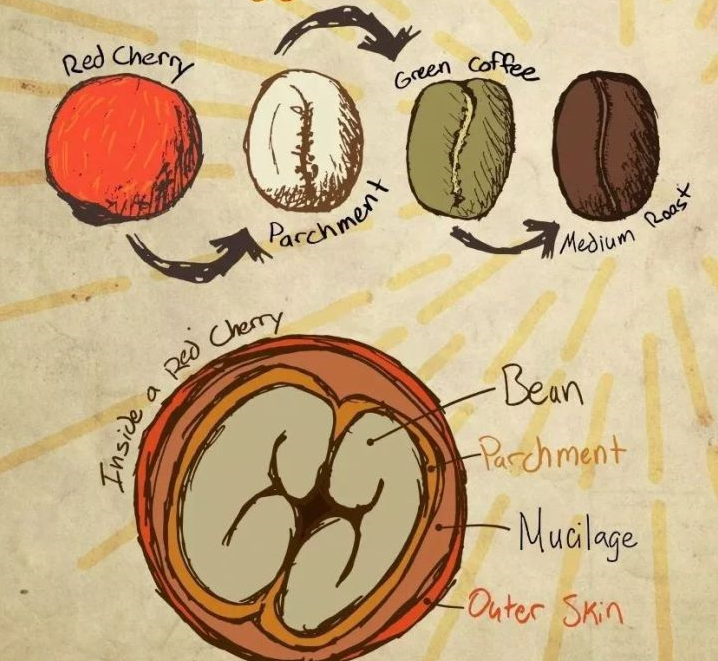
So, is civet coffee really made from "cat feces"? Strictly speaking, that’s not entirely accurate. The raw material for this coffee comes from coffee beans that have been eaten by civets, fermented in their digestive tract, and then excreted. Civets don’t just eat coffee beans—they swallow the whole coffee cherry. These cherries stay in their intestines for about two hours, during which time the sugars and acids from the pulp and mucilage seep into the beans and undergo a certain degree of fermentation.

After the civets excrete these coffee beans along with their waste, people carefully collect, wash, and remove the outer parchment layer, eventually obtaining green coffee beans ready for roasting. It’s worth noting that there is no direct contact between the coffee beans and the feces. With proper processing, their hygiene level is actually no worse than that of regular specialty coffee beans.
So why is this coffee so expensive? The key lies in its "rarity." Civets are wild omnivores that originally only occasionally consumed coffee cherries in the wild. However, as market demand increased, some merchants began to artificially raise civets and control their diet, feeding them only coffee cherries to increase production. Yet such human intervention is not only costly but also raises concerns about animal welfare. Coffee beans produced by wild civets are relatively scarce, which naturally drives up market prices.
Next, the question most people care about might be: does the coffee bean’s flavor really become better after passing through a civet’s digestive tract? In fact, the answer is often no, especially in cases of artificial farming. Civets usually live in low-altitude areas of Indonesia, where the environment is not suitable for growing high-quality Arabica coffee. Therefore, the coffee cherries they consume are mostly Robusta or lower-quality Arabica. Moreover, since the civet’s digestion time is only about two hours, it’s simply not enough for the coffee beans to develop complex fermented flavors. On the contrary, the beans tend to retain earthy and heavy notes from the original fruit.
The so-called "internal fermentation method" refers to the fact that although the coffee beans are not digested in the civet’s digestive tract, they are affected by strong acids and enzymes. Proteolytic enzymes in the digestive fluids can break down the long-chain proteins in the beans into short-chain peptides and amino acids. These substances do have a certain impact on the final flavor of the coffee, but overall, the impact is limited, and in most cases, the quality of the original bean is the determining factor.
If you still want to try this highly talked-about coffee, it’s recommended to choose beans produced by civets foraging naturally in their habitat and selecting ripe berries on their own, rather than those from artificially intensive farming. Such coffee is not only less ethically controversial but may also have a more natural flavor.
Below is specific information about civet coffee from the Aceh region of Indonesia: the producing area is located at an altitude of about 1200 meters, the variety is Tim Tim, and the traditional internal fermentation processing method is used. The roasting record for this coffee is as follows: using a Yangjia 800N roaster, the inlet temperature is set at 160°C, initial firepower at 130, the turnaround point at 1 minute and 28 seconds, then gradually adjusting the firepower and air vent, with first crack starting at 9 minutes and 15 seconds, total roasting time approximately 13 minutes and 40 seconds, drop temperature reaching 203°C, and development time of 4 minutes and 25 seconds.
For brewing recommendations, we use a Kono filter, with water temperature controlled at 86°C, coffee dosage at 15 grams, coffee-to-water ratio at 1:15, and grind size medium-fine (approximately 70% extraction through a #20 sieve). The specific steps are: first, perform a 30-second bloom with 30 grams of water, then pour in a small circular motion until reaching 125 grams for the first pour, wait for the water level to drop and continue pouring until reaching 225 grams before stopping, and remove the filter just before the coffee bed is exposed, with a total extraction time of about 2 minutes and 1 second.
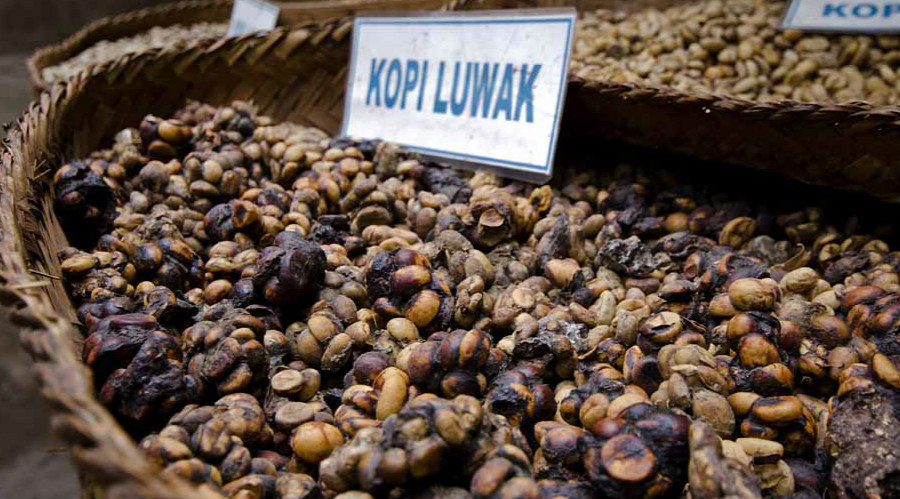
The flavor profile of this civet coffee typically features prominent herbal, nutty, and dark chocolate notes, accompanied by a unique fermented aroma. It has a high body, a smooth mouthfeel, and a thick texture. For coffee lovers who enjoy intense flavors and unique production processes, it’s a worthwhile coffee to experience.
The above content is compiled by CoffeeHunters, a coffee news website.


