







Introduction:Kenyan coffee is renowned worldwide for its vibrant fruit acidity and complex layered flavors. Its allure stems from the SL28/SL34 varieties, high-altitude growing environments, and its unique double-washed processing method. This article delves into the evolution of Kenyan coffee varieties, the double-fermentation washed process, the AA grading standard, as well as practical pour-over brewing parameters and flavor profiles, helping you master the essence of this premium coffee.
Kenyan coffee has long been a standout among specialty coffee enthusiasts, particularly favored by those who appreciate fruity acidity. Its distinctive flavor profile—rich fruit aromas, bright and pleasant acidity, and clear layering—sets it apart among origins. All of this is inseparable from Kenya’s unique geographical environment, the SL28/SL34 coffee varieties, and its celebrated double-washed processing technique.
Many mistakenly assume that Kenya’s coffee development history is similar to that of neighboring Ethiopia, but that’s not the case. The coffee cultivation industry in Kenya was actually gradually established after the 1960s. Historical records indicate that the earliest coffee seedlings were Bourbon varieties introduced from Brazil by missionaries, initially planted on Mount Taita in Bura, and later expanded to Kibwezi around 1900, with further planting in the Kikuyu region in 1904.
Another account suggests that the history of Kenyan coffee cultivation can be traced back to around 1900, during the early period of British colonial rule. To serve commercial interests, the British encouraged and even forced many Kenyan residents to engage in coffee farming. However, the colonial government strictly controlled land use rights, prohibiting locals from owning coffee plantations and even withholding harvest proceeds. It wasn’t until the 1960s, when British colonial rule ended, that the situation gradually improved. Despite the oppression, Kenyan coffee still rose to the ranks of the world’s top coffees thanks to its exceptional quality.
When it comes to the unique acidity of Kenyan coffee, in addition to the advantages of high-altitude cultivation conditions and the innate qualities of the SL28/SL34 varieties, its refined processing technique is also key. SL28 and SL34 are the two most representative native varieties in Kenya, known for their intense berry flavors, subtle wine-like aromas, and rich chocolatey aftertaste. These characteristics have earned them consistent praise in international cuppings and auctions.
However, although SL28/SL34 boast outstanding flavors, they have relatively low yields and weak disease resistance, leading to their gradual replacement in recent years by the more disease-resistant Ruiru variety. Yet, many coffee aficionados find the Ruiru variety overly sharp in acidity, lacking in aroma, and prone to developing a woody taste upon cooling. Its overall performance falls far short of traditional SL28/SL34, especially in showcasing the stunning layering and clarity of Kenyan AA coffee. Currently, the Ruiru variety accounts for only about 10% of Kenya’s total production.
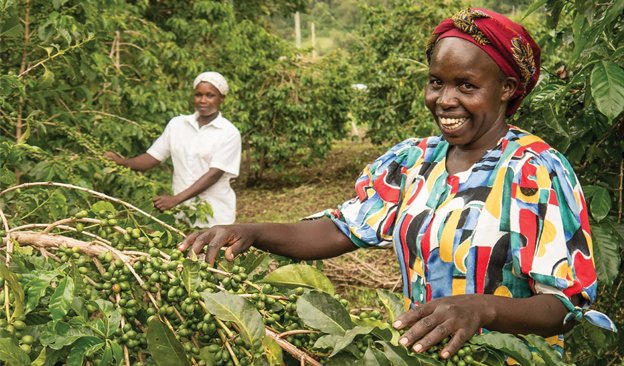
Kenyan coffee generally employs the washed processing method, which preserves the beans’ purest fruit aromas and acidity with fewer off-flavors. What’s even more distinctive is Kenya’s unique “double-washed method,” also known as the double-fermentation washed process. This technique involves two washes and two fermentation steps, further enhancing the coffee’s clarity and acidity.
The processing flow is as follows: first, fresh cherries undergo floatation to remove unripe or overripe defective beans; then the pulp is removed, and the parchment beans are placed in an upper fermentation tank for about one night of initial fermentation; this is followed by the first wash to remove excess mucilage; the beans are then moved to a lower fermentation tank for a 36-hour secondary fermentation; after another wash, they are left to rest in water for about 12 hours; finally, they are sun-dried. The entire process usually takes 48 to 72 hours, with fermentation time carefully controlled—over-fermentation can lead to excessive fatty acids, resulting in overly sour coffee with off-odors. The fermentation tanks are divided into upper and lower levels to ensure precise control over fermentation conditions at different stages.
Kenya’s coffee grading system is clear, with “AA” being one of the most prestigious grades. According to official grading standards, AA grade refers to green beans with a size of 17 or 18 mesh (approximately 7.2mm to 8.2mm), all of which are flat beans (meaning each coffee cherry contains two seeds). This grade of coffee is typically grown at high altitudes, offering more intense flavors and better acidity.
For consumers who love Kenyan coffee, a common question is: how should it be brewed to fully showcase its flavors? Generally, pour-over is recommended. If you prefer bright, acidic aromas, hot pour-over is the top choice; if you want a crisper taste, iced pour-over, cold brew, or ice drip are also great options.
Below is a set of practical hot pour-over parameters suitable for Kenyan AA-grade coffee, such as beans processed by the Asali Honey Factory from the Thika region: Origin is Thika, Kenya, altitude between 1550 and 1750 meters, processing method is Kenya 72-hour washed, varieties include SL28 and SL34, grade is AA TOP. Recommended to use a Hario V60 filter, water temperature controlled at 90-91°C, 15 grams of coffee, a 1:15 coffee-to-water ratio, grind size around EK43s#10.
In terms of specific operation, it is recommended to use a step extraction method: start with 30 grams of water for a 30-second bloom, then pour in small circles until reaching 125 grams for the first pour; once the water level drops and is about to expose the coffee bed, continue pouring to 225 grams and stop, then remove the filter when the water level drops again. The total extraction time is approximately 2 minutes. These parameters effectively highlight the fruit acidity, sweetness, and complex aromas of Kenyan coffee.
In terms of flavor, Kenyan AA coffee often presents wet aromas of ripe tomato and fresh floral notes. Upon tasting, distinct flavors of cherry tomatoes and dark plums emerge, with bright and layered acidity, and a solid, weighty mouthfeel. The mid-palate delivers pronounced sweetness with a juicy sensation, while the finish blooms with berry aromas and brown sugar sweetness, accompanied by a hint of green tea freshness. The overall profile is highly balanced and truly memorable.
The above content is compiled by CoffeeHunters, a coffee news website.


