







Introduction:Jamaica Blue Mountain coffee is world-renowned for its perfectly balanced acidity and sweetness, but its strict grading system and growing conditions are less well known. This article delves into the growing environment of Blue Mountain coffee, the four grade standards from NO.1 to PB, and highlights key identification points such as barrel packaging and the Rainforest Alliance frog seal. It also provides brewing recommendations for a medium-dark roasted Jamaica Blue Mountain No.1 from a renowned café — covering water temperature, grind size, and a three-step pouring method — to help you fully appreciate the characteristics of this king of specialty coffees.
In the world of specialty coffee, Jamaica Blue Mountain coffee has long ranked as the top choice among coffee enthusiasts, thanks to its rich flavor profile with an exquisite balance of acidity, sweetness, and bitterness. However, to truly understand this legendary coffee, every detail — from the altitude standards of the growing region to its rigorous grading system — is worth exploring in depth. This article will take you from the terroir of Blue Mountain coffee, comprehensively analyzing its grading criteria, processing methods, and focusing on the flavor profile and practical brewing parameters of a well-known brand’s Jamaica Blue Mountain No.1, unveiling the mystery of this “King of Coffees.”
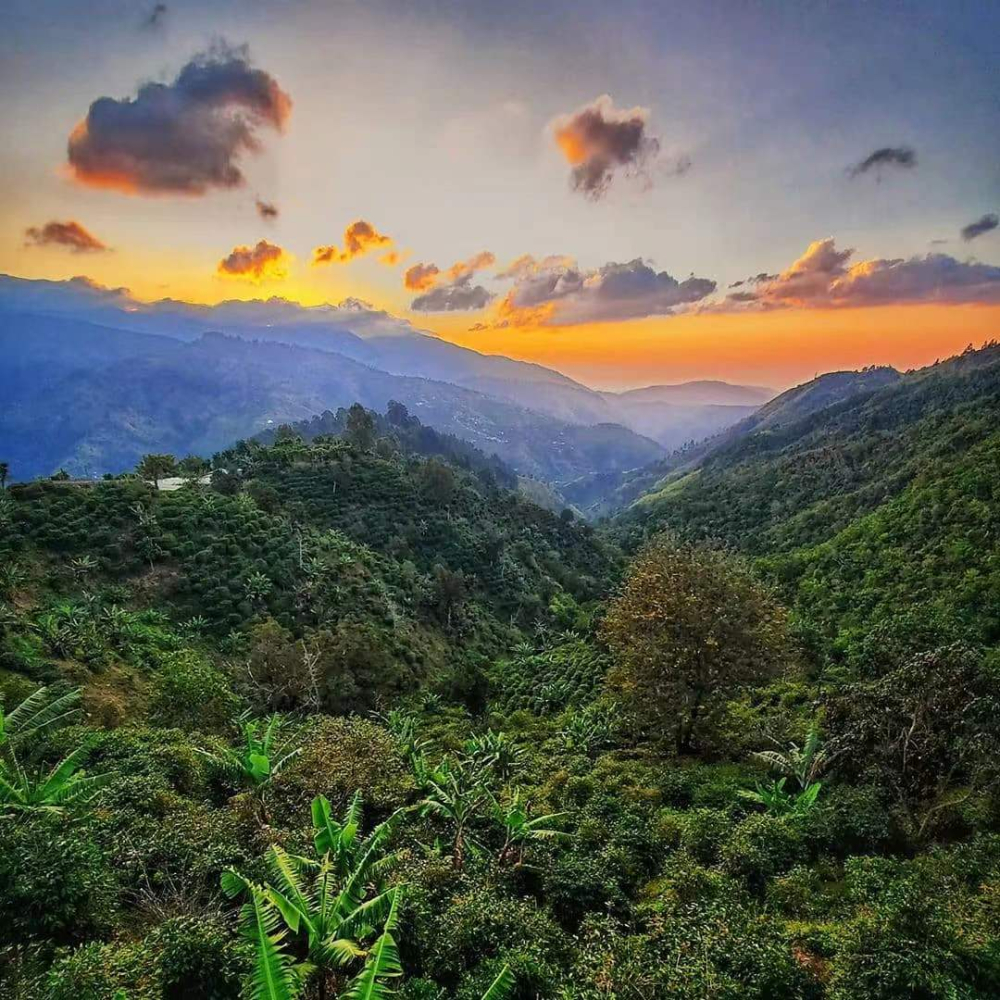
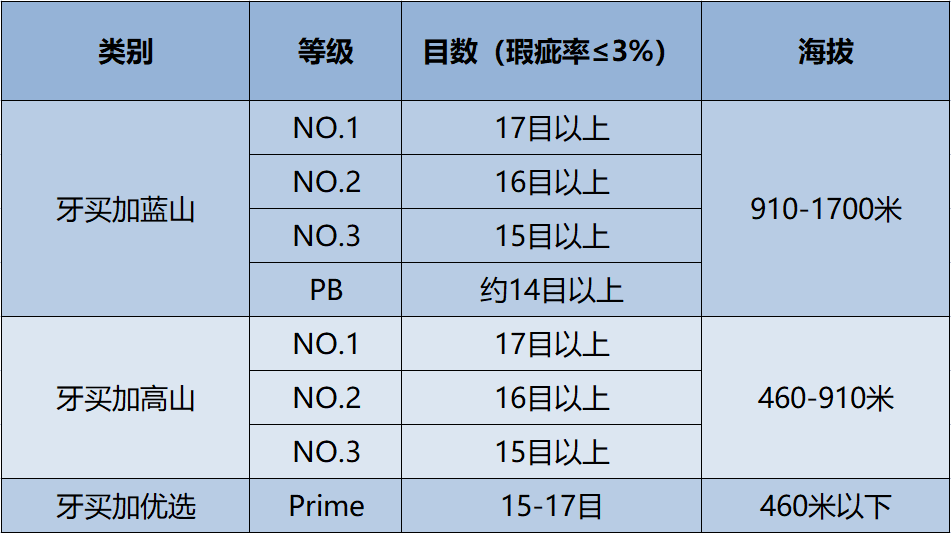
 The Jamaica Blue Mountain coffee-growing region is located in the Blue Mountains of the eastern part of the country. This high-altitude area, characterized by steep terrain and a unique climate, provides an ideal environment for coffee cultivation. The mountains enjoy moderate temperatures year-round, while frequent cloud cover reduces intense sunlight that could harm the coffee trees. Coupled with two major rainy seasons — from May to June and September to November — that bring abundant precipitation, plus steep slopes that ensure natural drainage, the region can produce high-quality coffee without the need for additional irrigation. According to the strict regulations of the Jamaica Coffee Industry Board (CIB), only Arabica coffee beans grown at an altitudeabove 910 metersqualify to be called “Jamaica Blue Mountain coffee”; those grown at other altitudes are classified as Jamaica High Mountain or Prime coffee, which differ significantly in both quality and rarity.
The grading standards for Blue Mountain coffee are equally rigorous. Based on bean size, defect rate, and cupping performance, they are divided intoNO.1, NO.2, NO.3and the hand-selectedPB (Peaberry)grades. Among these, NO.1 is the highest grade and is the classification of the “Jamaica Blue Mountain No.1” offered by a well-known café. To earn this certification, exported green beans must pass multiple inspections by the Jamaican Ministry of Agriculture: including takinga 300-gram sample, of which96% of the beans must be between 17 and 18 mesh size,with a defect rate below 2%, a moisture content of about13%[specific number not provided],
and cupping results that demonstrate a full range of acidity, sweetness, bitterness, body, and aroma layers, in order to be honored as “Blue Mountain No.1.”Clifton Estate has long used the washed process for Blue Mountain green beans, a method that effectively removes unripe or defective fruits and significantly improves the purity of the final beans. The processing begins with mechanical removal of the coffee cherry’s skin, after which the beans are left to ferment overnight in tanks to fully break down the sticky mucilage. The next day, the beans are transferred to clean water tanks and repeatedly rinsed; the friction between the beans and the flow of water ensures a smooth surface free of impurities. Finally, the parchment beans undergo2 to 3 weeks of sun dryinguntil their moisture content is stabilized at12% to 14%
. Since the pulp and mucilage are removed before fermentation, the impact of fermentation acidity is effectively controlled, allowing the natural aroma of the Blue Mountain beans to be presented more purely and cleanly.Top-grade Blue Mountain No.1 green beans are transported in handcraftedwooden barrels, available in capacities of 70 kilograms, 30 kilograms, and 15 kilograms. This packaging format has become an important symbol for identifying authentic Blue Mountain coffee. In contrast, other coffee from Jamaican regions often uses common burlap sacks. On the Blue Mountain wooden barrels displayed at a certain coffee shop, the official Jamaica Blue Mountain coffee logo, the producing estate name, barrel serial number, and net weight of the coffee are clearly marked. Notably, the Blue Mountain No.1 sold by the shop comes from Clifton Estate, which is certified by the Rainforest Alliance, so the barrel also bears the distinctiveRainforest Alliance frog seal
, further ensuring its sustainable and premium lineage.It is recommended to use a three-step pouring method: first pour30 grams of waterfor a30-second bloomto awaken the coffee grounds; then pour up to125 grams, and when the liquid level drops to about half, pour the final225 grams of wateruntil extraction is complete. The entire process should be controlled to take approximately2 minutes and 10 seconds
The above content is compiled by CoffeeHunters, a coffee news website.


