







Introduction:Delve into the unique charm of Indonesian Sumatra Mandheling coffee, from its cultivation background and historical roots to the details of the wet-hulling process, and explore the origins of its rich, low-acid flavor profile. This article also introduces the selection criteria for Golden Mandheling sold by a well-known supplier, along with roasting and brewing recommendations for related versions, helping you more precisely appreciate the layers and characteristics of this classic Southeast Asian bean.
Mandheling coffee is widely loved for its rich, smooth mouthfeel and low acidity, primarily originating from Indonesia’s Sumatra Island. The unique flavor of this coffee is inseparable from the local "wet-hulling" processing technique. This article will take you through Sumatra’s coffee cultivation history, the origin of the Mandheling name, and the relationship between PWN Company and Golden Mandheling, offering an in-depth analysis of the multiple facets of this classic coffee. At the same time, we will also detail the wet-hulling process, revealing how it shapes Mandheling’s distinctive richness and aroma, and provide practical brewing suggestions and cupping references.
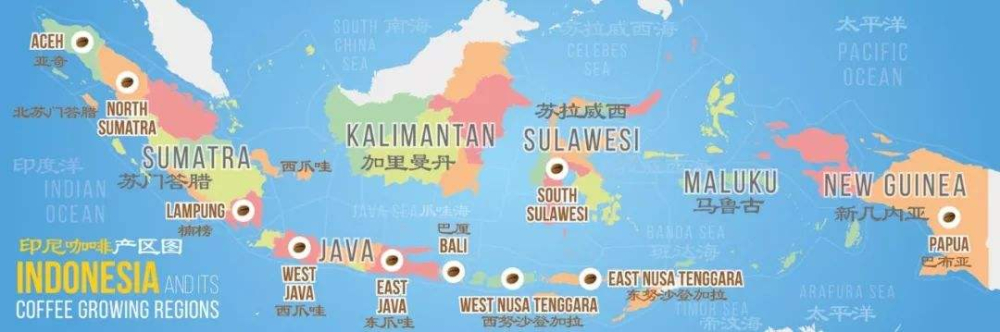
Mandheling coffee boasts a rich, smooth taste with low acidity, making it a top choice for those who prefer less acidic brews. Its production is mainly located on Indonesia’s Sumatra Island. Sumatra is the world’s sixth-largest island, characterized by mountainous terrain, divided in half by the Barisan Mountain Range, which exceeds 3,800 meters in elevation, with its highest peak, Mount Kerinci, nearing 3,800 meters and being an active volcano. The island mostly grows Arabica varieties, predominantly in higher-altitude mountainous regions, with most planters being smallholder farmers.
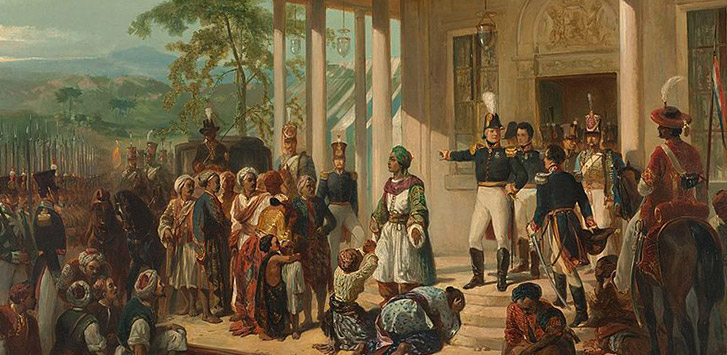
Indonesia’s coffee cultivation history dates back to 1696, when the Dutch introduced coffee seedlings from Malabar, India. After successful trial planting in 1699, coffee gradually spread to islands such as Sumatra. However, coffee exports from the region only began to rise gradually in the early 19th century. As production increased, exports also grew steadily, surpassing 12 million British pounds in export value by 1840. 1860 marked the peak in production, reaching 21 million pounds (before the coffee leaf rust epidemic), but by 1900, most Arabica-growing areas had switched to the more disease-resistant Robusta. Today, Sumatra is one of Indonesia’s primary coffee-producing regions.
Robusta almost entirely replaced Arabica on Java Island, causing Sumatra coffee—still retaining some Arabica varieties—to gradually surpass Java in reputation. At the same time, the name "Mandheling" also began to gain recognition. Interestingly, Mandheling is not actually a coffee variety, but rather the name of an indigenous ethnic group in Indonesia.
How did this ethnic group’s name become associated with coffee? The story begins with World War II. At that time, Japanese soldiers stationed in Sumatra tasted a rich-flavored coffee they greatly enjoyed and asked the shopkeeper for its name. However, the shop owner misunderstood the question as being about his own origin and replied that he was from "Mandailing." Due to the similarity in Japanese pronunciation, the soldiers heard it as "Mandheling" and remembered the flavor of the coffee. After the war, he asked Japanese business associates to find coffee with the same flavor, leading to the coffee’s immense popularity in Japan and eventual international fame.
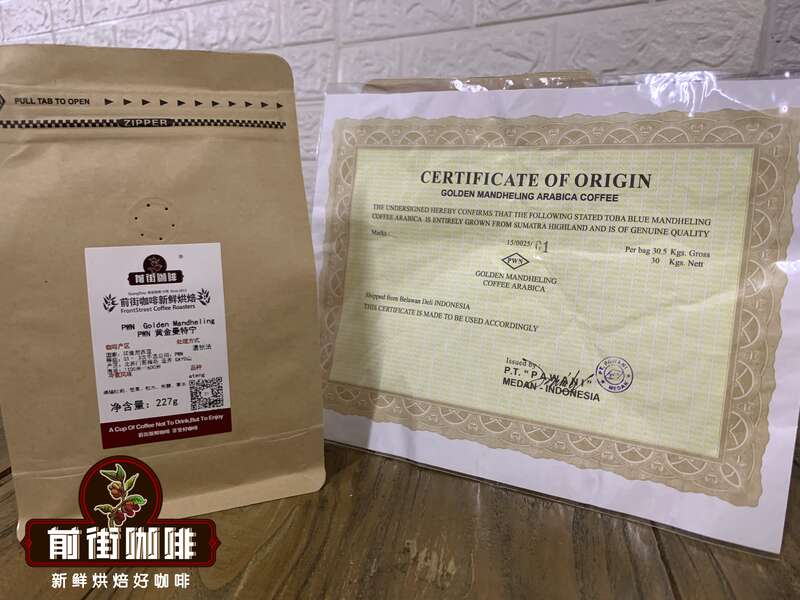
The local merchant who served coffee to the soldier at that time was none other than the now-renowned PWN Company. PWN further registered "Golden Mandheling" as a trademark, though similar trademarks exist in Japan, such as "Dingshang Golden Mandheling." Therefore, only Golden Mandheling produced by PWN Company and accompanied by official factory certification can be considered the officially certified authentic version. As for which is better, it depends on individual taste and preference.
Among the many versions available on the market, the Golden Mandheling sold by a well-known coffee brand comes from PWN Company. These beans belong to the highest-grade G1 classification, with large and uniform green beans, and fewer than 3 defects per 300-gram sample. In the selection process, PWN Company not only uses machinery to pick out large, high-density green beans, but also performs three additional rounds of manual sorting to ensure the removal of defective beans, further enhancing the coffee’s purity and sweetness.
After cupping this PWN Golden Mandheling, a well-known coffee brand found its flavor to be clean and sweet, unmatched by many similar products. To confirm whether the purchased beans are genuine PWN Golden Mandheling, check for the PWN Company logo on the jute sack packaging and request factory certification documents from the supplier. This information is usually available at the brand’s retail stores or in official materials.
Sumatra’s wet-hulling process is a key factor in shaping Mandheling’s unique flavor. Due to the region’s rainy climate, limited sunlight, and economic constraints, traditional washed processing is difficult to implement, leading to the development of this semi-washed, semi-sun-dried method, commonly known as "wet-hulling."
The processing flow is roughly as follows: Farmers harvest ripe coffee cherries, first using a pulper to remove the fruit flesh and skin, leaving parchment-covered beans with mucilage. These are then soaked in water for fermentation to remove part of the mucilage, followed by thorough rinsing with clean water. Next, the still-high-moisture parchment beans are sun-dried until they reach a semi-dry state. At this point, farmers typically sell the beans to local processing mills.
To accelerate the drying process, the mills remove the beans’ parchment layer (i.e., the inner skin) and continue sun-drying, with the overall drying period lasting about 3 to 4 days, reducing moisture content to around 13%. This processing method retains more substances and aromatic precursors, contributing to Mandheling’s distinctive rich mouthfeel and low-acid characteristics.
The wet-hulling process not only influences Mandheling’s flavor profile but also makes it the representative processing technique of Sumatra coffee, with the two complementing each other perfectly. A well-known coffee brand opts for a medium-dark roast when roasting this PWN Golden Mandheling to enhance its rich qualities. For brewing recommendations, the brand suggests using a KONO filter, with water temperature controlled at88°C, coffee dosage of about15 grams, coffee-to-water ratio of1:15, and grind size recommended at70% passing through a 20-mesh sieve, equivalent to a medium-coarse to slightly fine grind.
For specific brewing steps, it is advised to first wet the filter paper with hot water to ensure a tight seal between the filter and dripper. Place 15 grams of coffee grounds into the filter, then pour 30 grams of hot water for a 30-second bloom. Continue pouring with a small, circular motion centered on the grounds up to 125 grams for the first pour, then wait for the water level to drop to the middle of the dripper before pouring the second pour up to 225 grams. Remove the filter once dripping is complete. This three-pour method helps achieve even extraction and highlights the coffee’s layered flavors.
The brewed PWN Golden Mandheling presents a rich, nutty profile. As it cools slightly, delicate herbal and spicy aromas emerge, with a distinct caramel sweetness in the aftertaste. The overall mouthfeel is smooth and clean, making it a classic choice for experiencing Sumatra’s wet-hulling process and the Mandheling flavor.
The above content is compiled by CoffeeHunters, a coffee news website.


