







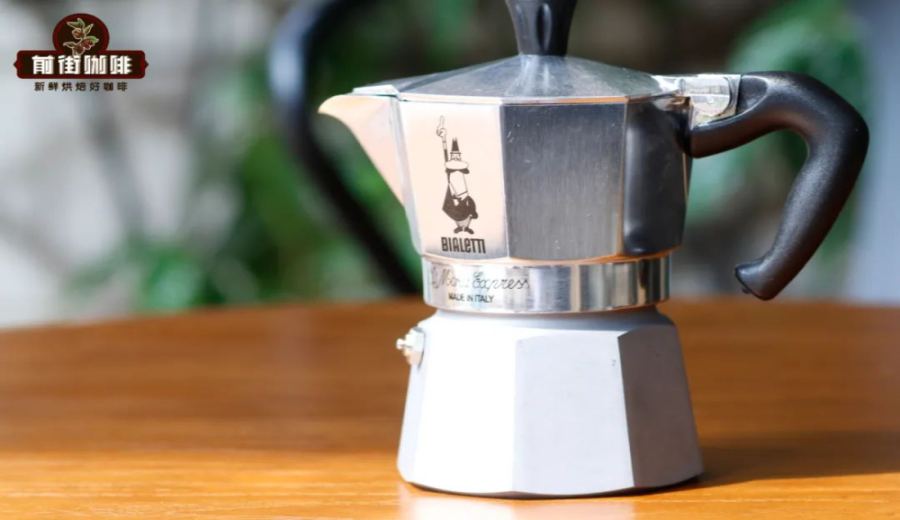
Introduction:The Moka pot is often mistaken for a home version of an espresso machine due to its simple operation and bold flavor. But the truth is, it still differs significantly from true espresso extracted under 9bar of high pressure. This article explains the Moka pot’s structure, extraction principle, and compares pressure, coffee-to-water ratio, and crema performance. It also teaches you how to use the Moka pot correctly and recommends medium to dark roasted beans suitable for home brewing, helping you produce rich, flavorful coffee at home.
Many people are first drawn to the Moka pot by its strong coffee aroma and vintage metal design, and may even initially assume that the coffee it brews is authentic espresso. However, although the Moka pot can produce richly flavored coffee, it cannot be equated with the espresso extracted by professional espresso machines. So, is the coffee brewed in a Moka pot considered espresso? Can it serve as an affordable alternative to home espresso? Below, we’ll delve into the Moka pot’s structure, operating principle, and compare its differences with espresso machines in terms of pressure, coffee-to-water ratio, and crema performance, while also providing practical brewing steps and bean selection tips.
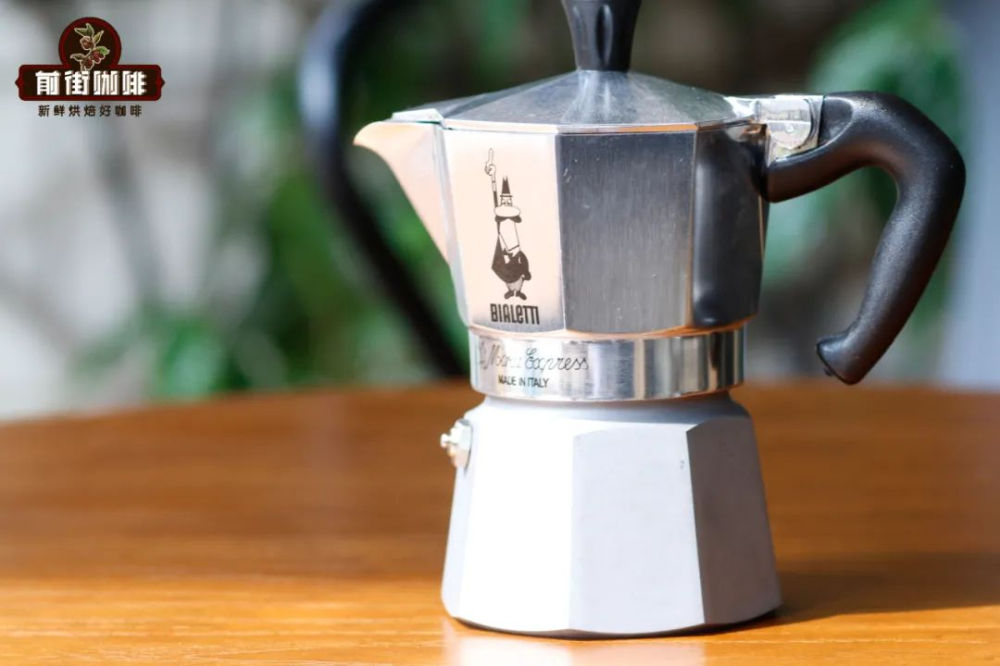
The Moka pot was born in Italy in 1933, designed by an inventor and originally named the Moka Pot. Due to its name being similar to Mocha, many assume this pot was made specifically for brewing Mocha-flavored coffee. In reality, the Moka pot makes highly concentrated coffee and, with its low barrier to use, has become a top choice for making strong coffee at home, often seen as a simple alternative to espresso.
For this reason, many coffee enthusiasts purchase a Moka pot hoping to make an espresso base at home for use in lattes or cappuccinos. But the key question is: can the liquid produced by a Moka pot truly be called “espresso”? The answer isn’t so straightforward.
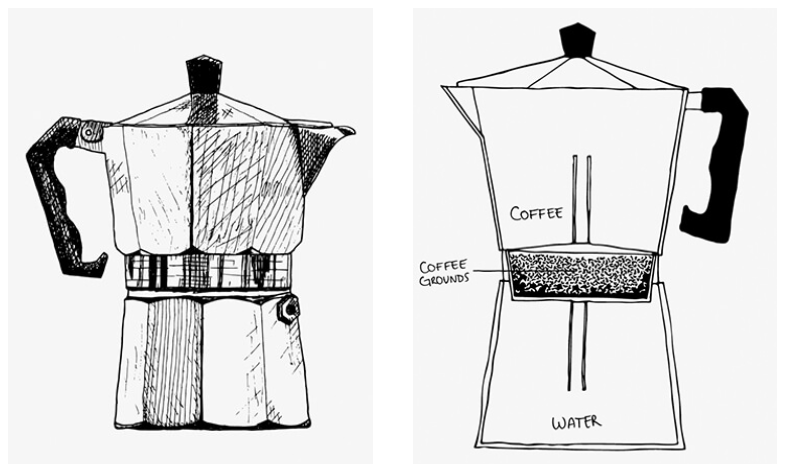
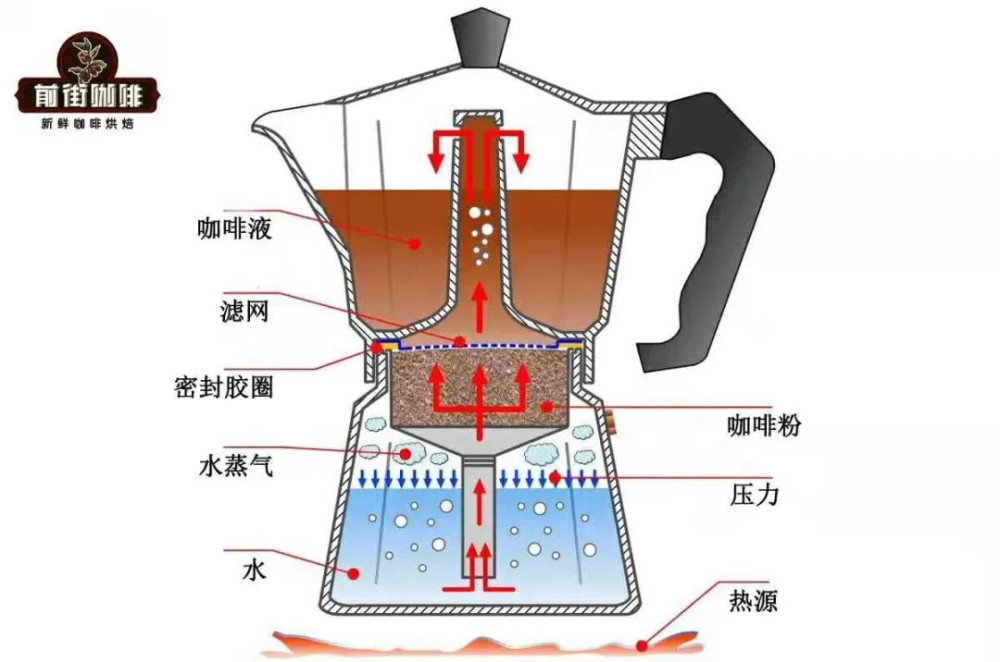
The Moka pot’s popularity stems not only from its classic and varied designs but also from its ease of use, quick heating, compact size, and relatively affordable price. Regardless of its appearance, the Moka pot’s basic structure consists of three main parts: the lower chamber, upper chamber, and the filter basket in between. To use it, fill the lower chamber with hot water, add ground coffee to the filter basket, then assemble the upper and lower chambers and place the pot on a heat source. As the water heats up, steam builds pressure and pushes the water upward through the coffee grounds, eventually collecting in the upper chamber and pouring out as a fragrant, rich coffee.
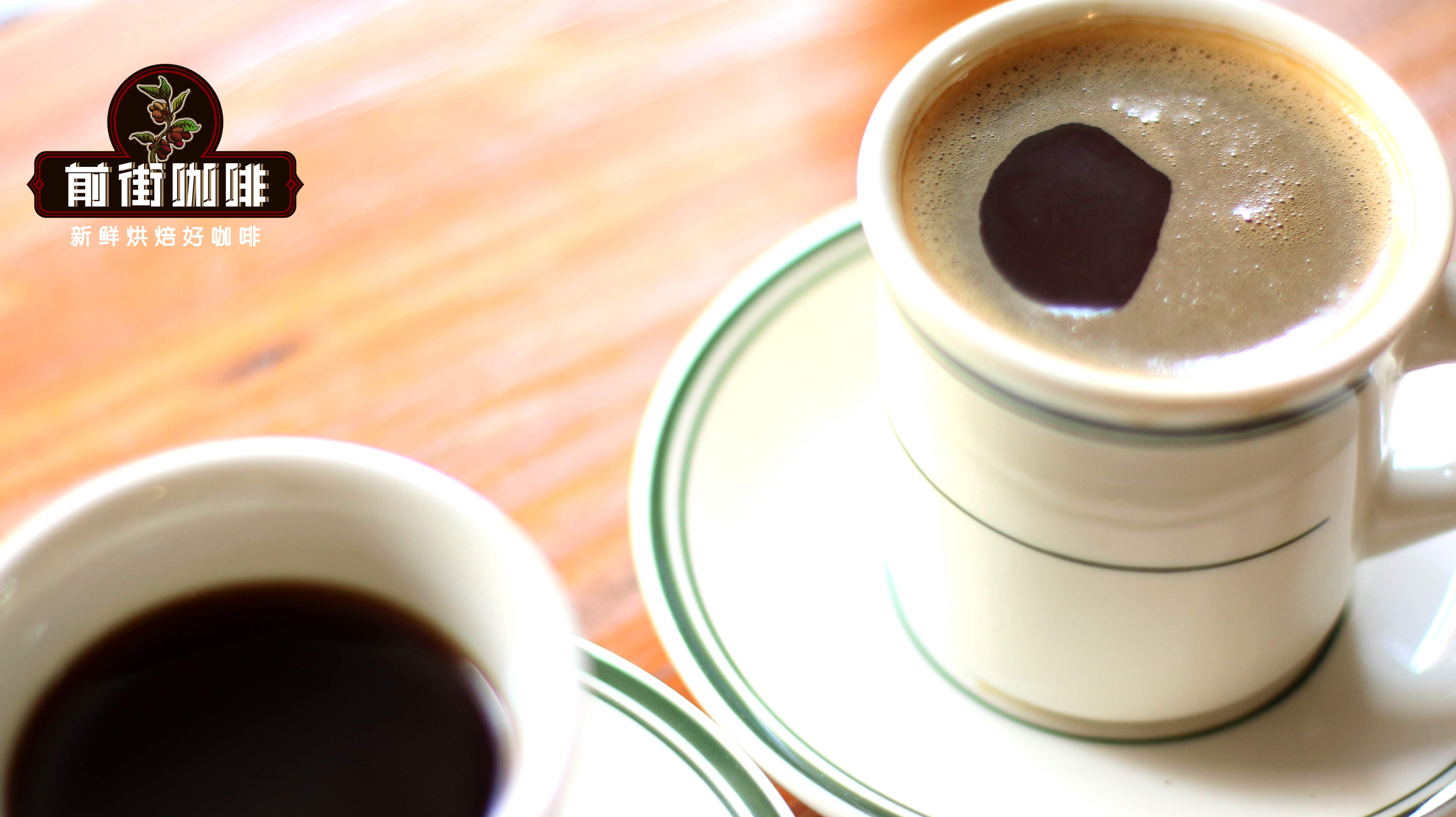
The Moka pot’s extraction principle relies primarily on the steam pressure generated by heating in the lower chamber, which typically ranges between 1.5 to 3.0 atmospheres. When the pressure is sufficient, hot water is forced through the layer of coffee grounds in the middle filter basket, completing extraction in a short contact time. The resulting coffee has a strong taste, with both acidity and bitterness, and overall, its flavor profile is the closest among many home brewing devices to the flavor characteristics of traditional espresso.
So, can the coffee brewed in a Moka pot actually be called espresso? According to current definitions, espresso refers to a small cup of coffee extracted by a professional espresso machine under 9bar of high pressure, characterized by its intense flavor and a thin, golden layer of crema on the surface. Generally, the standard coffee-to-water ratio for espresso machines is about 1:2, with an extraction pressure of 9bar; whereas the Moka pot’s coffee-to-water ratio is usually around 1:5, with a pressure of only about 2bar. From this, it’s clear that although Moka pot coffee is strong, it differs significantly from true espresso in terms of pressure, crema thickness, and stability.
Therefore, if strictly defined, the Moka pot is not a simplified or budget-friendly substitute for an espresso machine, and the coffee it brews should not be directly equated with the espresso we’re familiar with. If we were to give it an appropriate term, it might be called “a strongly flavored pour over-style concentrated coffee,” with a unique home-brewed espresso style.
However, for the average household user, if kitchen space is limited or the budget is insufficient to purchase an expensive espresso machine (professional models can cost tens of thousands, and home models often require several thousand yuan), spending a few hundred yuan on a Moka pot can still achieve about 60–70% of the extraction effect of a professional machine—more than enough for enjoying strong coffee in daily life.
If you decide to use a Moka pot, here are the basic steps: First, pour an appropriate amount of warm water into the lower chamber, which helps speed up the heating process and shorten the overall brewing time. Next, measure about 19 to 20 grams of coffee beans, grind them to a fineness similar to table salt, and add them to the filter basket, filling it to about nine-tenths full. Lightly tap the pot to level and compact the coffee grounds. Then, tightly screw the upper and lower chambers together to prevent leakage during heating. Place the Moka pot on a gas stove or induction cooker. Start with medium heat, and once you hear a distinct hissing sound, reduce to low heat—this is when the coffee begins to slowly flow out. When the sound turns into a subtle bubbling noise, turn off the heat to avoid over-extraction. Your rich and aromatic Moka pot coffee is now ready.
It’s worth noting that because the Moka pot relies on high-temperature, high-pressure steam for extraction, these conditions are not ideal for light to medium roasted single-origin beans. The lighter the roast, the denser the coffee beans, making it difficult for them to fully release their flavors in a short time. This can even result in an unclear crema or under-extraction. Therefore, it’s recommended to use medium to dark roasted beans to fully unlock the potential of the Moka pot and achieve a rich, balanced flavor.
If you’re a beginner just getting started, we recommend trying “.Rich and Aromatic Espresso-Style Moka Pot Coffee Beans—Classic Blended Coffee Beans.” This blend consists of Brazilian semi-washed, Indonesian Mandheling, and Vietnamese washed beans, all dark roasted, with intense roasted aromas and rich crema, making it very suitable for Moka pot use and a popular choice for many new users. If you prefer a more budget-friendly option, consider the “Black Cocoa Blend,” which combines Yunnan washed small beans and Brazilian semi-washed beans, offering a balanced acidity and sweetness of nuts and ripe plums. When ground, it emits aromas of creamy chocolate and cocoa cookies, with crema showing a beautiful golden sheen. Whether for home or café use, it’s a highly regarded choice.
The above content is compiled by CoffeeHunters, a coffee news website.


