








Introduction:The French press, with its simple operation and ability to fully showcase the layered flavors of coffee, has long been favored by coffee enthusiasts worldwide. This immersion brewing tool, originating from 19th-century France, is not only capable of producing rich and full-bodied hot coffee but can also yield bright and refreshing iced coffee by adjusting the coffee-to-water ratio and water temperature. This article will take you through the development background of the French press and share practical steps on how to use specific grind sizes and steeping times to extract iced coffee with vibrant flavors and a smooth mouthfeel — beneficial for both beginners and advanced users.
The French press can be considered one of the most accessible and practical home coffee brewing tools. Its immersion extraction method not only has a low barrier to entry but is also widely loved for its ability to fully preserve the original flavors of coffee beans. With just a simple pressing step, you can enjoy a rich and bold coffee experience without needing complicated techniques.
When it comes to the history of the French press, its prototype can be traced back to France in 1850. The earliest French presses were made of heat-resistant glass bodies fitted with metal filters equipped with plunger rods. Originally designed for brewing tea, they were also referred to as “tea plungers.” By March 1852, a French metalworker and merchant jointly applied for a patent for a device called a “piston-filter coffee device.” The patented device included a metal can connected to a movable rod, with holes at the bottom and flannel cloth layers sandwiched in the upper and lower sections. By manually operating the pull rod, filtration could be completed, leaving behind clear coffee liquid.

It wasn’t until the 1930s that a company in Milan, Italy, improved the French press and successfully registered a patent. They added a spring to the disc-shaped structure at the bottom of the piston to ensure the flat contact between the disc and the container bottom, further enhancing the filtering effect. Although the French press gradually gained popularity in Europe, its acceptance in the U.S. market was initially low. It wasn’t until the early 1980s, influenced by British usage habits, that it became more widely popular, often referred to as a “cafetière” or “French piston coffee maker.”
For users who want to quickly brew a good cup of coffee, the French press is undoubtedly an excellent choice. Its immersion brewing principle has relatively lenient requirements for brewing skills — mastering basic coffee-to-water ratios and steeping times is enough to steadily extract flavorful coffee.
To make a summer-friendly iced coffee using the French press, choosing medium to light roasted beans with noticeable fermentation profiles is key. For example, beans processed via natural, honey, or anaerobic methods often bring livelier acidity and fruity aromas. Take the Geisha variety from Frontier Farm as an example — its flavor profile is particularly outstanding, often featuring grape, passion fruit, and apricot notes that can express a highly layered juiciness during the cold brew process.
Below are practical iced coffee extraction parameters and steps for readers to reference and try out:
Coffee dosage:30 grams
Coffee-to-water ratio:1:10
Grind size:Ek43 grinder setting 9, equivalent to 85% extraction through a #20 sieve, with a fineness similar to granulated sugar
Water temperature:100°C
Steeping time:Total of 9 minutes (done in stages)
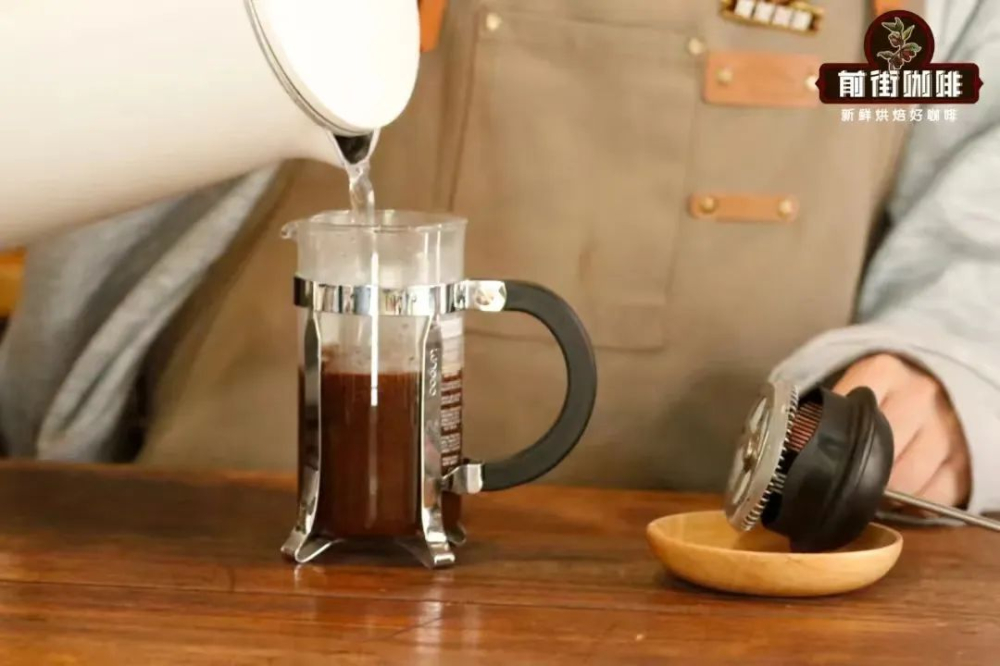
Step 1: Place 30 grams of coffee grounds into the French press, then add a small amount of hot water (about 10% of the total water volume) to wet them. Stir gently about 10 times, then add the remaining hot water up to the total water volume (300 ml). Start the timer immediately and let it sit for four minutes.
Step 2: After four minutes, observe whether the coffee grounds are floating on the surface. Use a spoon or stirring stick to gently press any floating grounds down into the water, then let it steep for another five minutes to allow full extraction.
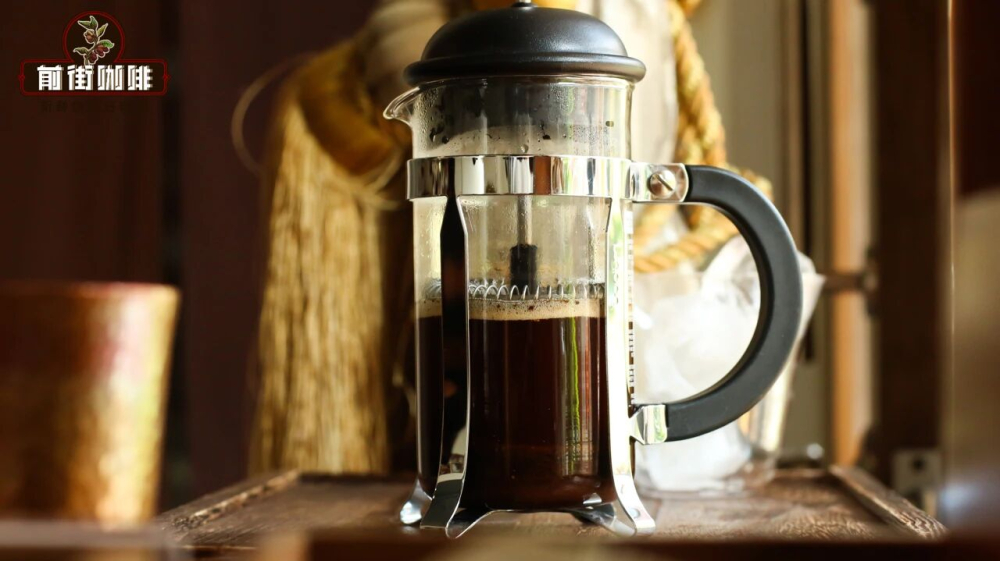
Step 3: Once the total steeping time reaches nine minutes, slowly press the French press filter down to near the surface of the coffee liquid, being careful not to press too hard to avoid fine grounds passing through.
Step 4: Prepare a cup pre-filled with about 120 grams of ice cubes. Slowly and steadily pour the coffee from the French press over the ice to help cool it down and minimize fine particles entering the cup, maintaining a smooth mouthfeel. Give it a gentle stir to mix evenly, and you’re ready to enjoy a cup of iced coffee with vivid flavors and a refreshing sweet-tart balance.
Quick tip: During brewing, it’s recommended to use freshly roasted coffee beans and ensure the ground particles are uniform for stable extraction. If you prefer a stronger taste, you may slightly adjust the coffee-to-water ratio, but it’s not advised to overly extend the steeping time to avoid over-extraction and bitterness.
The French press isn’t only suitable for hot coffee — by adjusting the parameters appropriately, it can also highlight the unique charm of iced coffee. Master the above tips and steps, and you can easily make professional-grade iced coffee at home, enjoying a diverse range of coffee experiences.
The above content is compiled by CoffeeHunters, a coffee news website.


