







Introduction:The success or failure of an espresso often hinges on the precise control of grind size. Unlike immersion brewing methods such as pour over, espresso machines extract coffee under high temperature and pressure in an extremely short time, placing very high demands on the fineness and uniformity of the coffee grounds. This article will delve into the extraction principles of espresso, guiding you to master the logic behind grind size settings, flow rate observation techniques, and practical grinding adjustments. Even when facing new coffee varieties, you’ll be able to quickly adjust to the ideal state.
When it comes to brewing a qualified shot of espresso, the most critical and challenging step is undoubtedly selecting the right grind size. Compared to immersion brewing methods like pour over, espresso machines rely on high temperature and pressure to complete extraction in a very short time, demanding a much higher level of fineness and uniformity in coffee grounds than other brewing methods. Even a slight deviation—grounds that are too fine or too coarse—can easily lead to abnormal flow rates, resulting in over-extraction or under-extraction, which in turn affects the overall flavor profile. This article will start with the fundamentals of extraction principles, help you understand the appropriate range of grind fineness, and provide a set of practical grinding adjustment steps and flavor-tuning suggestions, enabling you to quickly find the right grind setting even when working with unfamiliar coffee beans.
No matter which brewing method you use to make coffee, finding the right grind fineness is an unavoidable and crucial step. The size of the coffee particles directly affects the stability of extraction and the resulting flavor profile. This is especially true for espresso, where the characteristics of high-temperature, high-pressure extraction make the demand for grind precision even stricter.
Before diving deep into espresso, let’s first revisit its origins. Before the invention of espresso, people mostly brewed coffee through immersion methods, a process that was slow and often required waiting several minutes to enjoy a cup. It wasn’t until the early 19th century, when the goal was to brew a strong-flavored coffee in an extremely short time, that espresso was born. Italians utilized steam pressure to allow high-temperature, high-pressure water to rapidly pass through a compacted coffee puck, drastically speeding up the traditionally slow drip filtration process. After years of refinement, it evolved into the semi-automatic and fully automatic espresso machines commonly seen today.
During espresso extraction using an espresso machine, the soluble flavor compounds in coffee must be released into hot water within just a few dozen seconds. This means the contact between water and coffee grounds must be sufficiently thorough, hence the grind size needs to be adjusted to be very fine and uniform. Due to the pressurized, short-duration extraction, any small detail is magnified—desirable flavors become more pronounced, while flaws are also more easily noticed. This is precisely why the requirements for grind precision are so stringent.
So, just how fine should espresso coffee grounds be? If you’ve ever visited a café that serves both espresso and pour over coffee, you’ll likely notice they usually have two different grinders. The coffee grounds produced by an espresso grinder are as fine as powdered sugar, with particle sizes typically ranging between 150 to 300 microns—so fine that the naked eye can hardly discern their coarseness or uniformity. However, we can judge whether the grind size is just right by observing the extraction state of the coffee and water.
If the grind is slightly too fine, water will pass through the coffee bed more slowly, which can easily lead to over-extraction; conversely, if the grind is slightly too coarse, water tends to pass through the coffee bed too quickly, resulting in under-extraction. These differences can sometimes stem from a change as minuscule as 0.1 on the grind setting. Therefore, it’s usually necessary to carefully observe the flow rate of the espresso during actual extraction and judge whether the current grind fineness falls within the ideal range by tasting the flavor, then make fine adjustments accordingly.
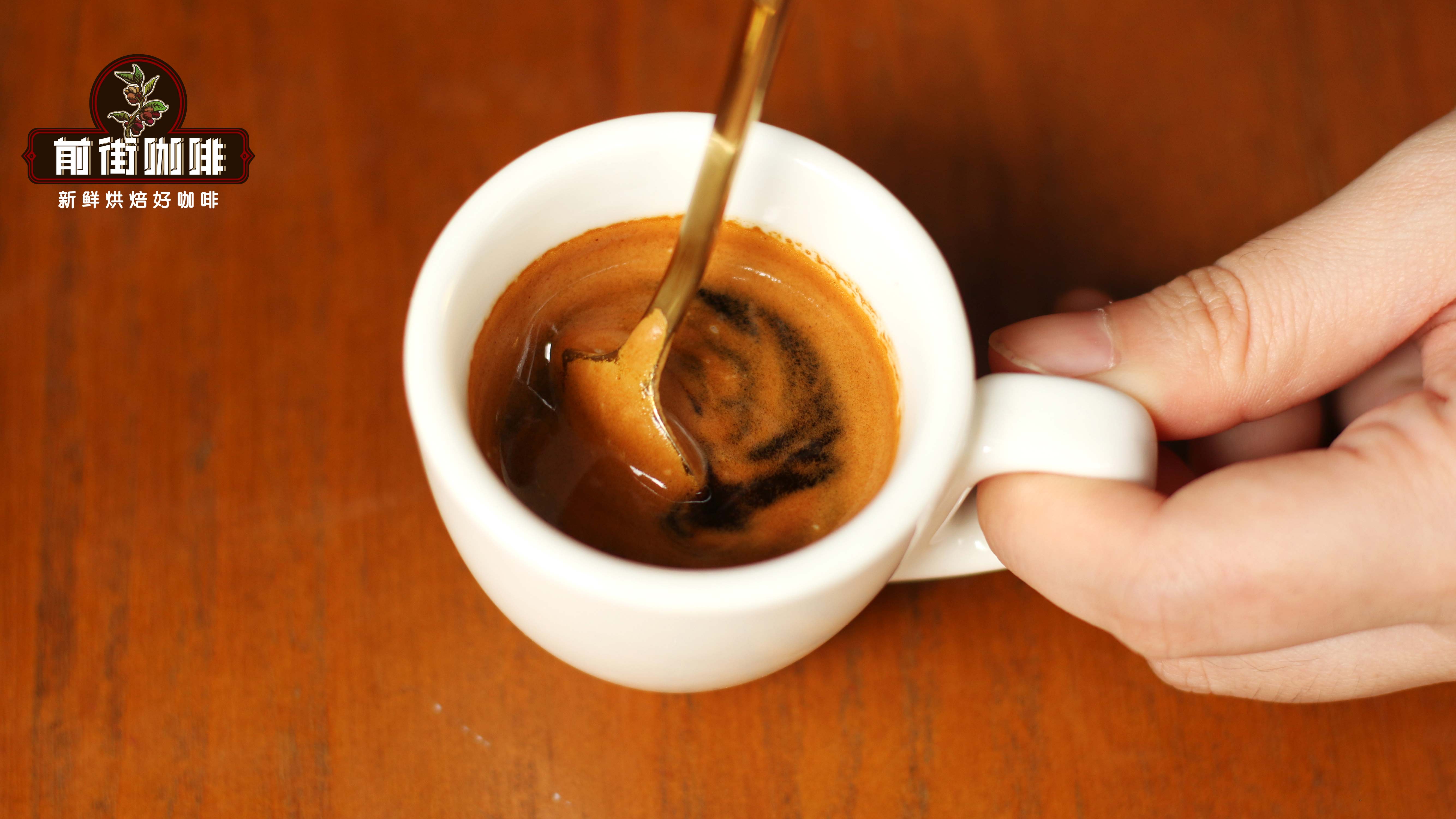
When you get a pack of unfamiliar coffee beans and want to brew a delicious shot of espresso, the first step is to determine the appropriate grind size. If the grinder hasn’t been used yet, or you’re unsure of its suitable grind range, it’s recommended to start by using a small amount of coffee beans and test-grinding at different settings. When the coffee grounds feel as fine and smooth as flour, with no noticeable coarse particles, you can move on to the next stage.
At this point, you can apply the common espresso extraction formula: it’s recommended to use a 1:2 brew ratio, meaning for every 1 gram of coffee grounds, about 2 grams of coffee liquid is extracted, with the total extraction time controlled between 20 to 30 seconds. For example, if using a portafilter basket with a capacity of 20 grams, you would load 20 grams of coffee grounds, aiming to extract 40 grams of coffee liquid. If the extraction time is less than 20 seconds, it indicates the flow rate is too fast, which may result in a weak or overly acidic flavor, and you should adjust the grind to be finer. Conversely, if the flow rate exceeds 30 seconds, it means the grind is too fine, making it difficult for water to pass through the coffee bed smoothly, which can lead to bitterness—so it’s advisable to adjust the grind to be coarser.
When adjusting the grind setting, it usually relies on experience accumulated over time. If the current extraction time differs from the target time by less than 5 seconds, it’s recommended to adjust by 0.2 notches each time; if the time difference is larger, you can confidently adjust by 0.5 to 1 notch. Even when adjusting from a situation where the time is too long to one that’s too short, you can first lock in that grind range and then gradually fine-tune to the ideal value.
The formula mentioned above is only meant to help you quickly find a suitable grind range, and does not guarantee that an espresso brewed with those parameters will necessarily taste great. Ultimately, you still need to combine the inherent characteristics of the coffee beans and the actual flavor profile to judge whether the extraction is successful.
For instance, if the espresso has a noticeable burnt or bitter taste but the concentration is acceptable, it may be due to an overly long extraction time, causing too many bitter compounds to be released—in this case, consider slightly adjusting the grind to be coarser. If the crema is light in color and thin, it may indicate over-extraction in the later stages of brewing; reducing the coffee liquid weight, i.e., lowering the extraction yield, by adjusting the coffee-to-water ratio to between 1:1.5 and 1:1.7 is recommended. If the coffee has a rich flavor but a short aftertaste, you might try increasing the extraction yield by adjusting the ratio to around 1:2.5 to achieve a more complete flavor expression.
The above content is compiled by CoffeeHunters, a coffee news website.


