







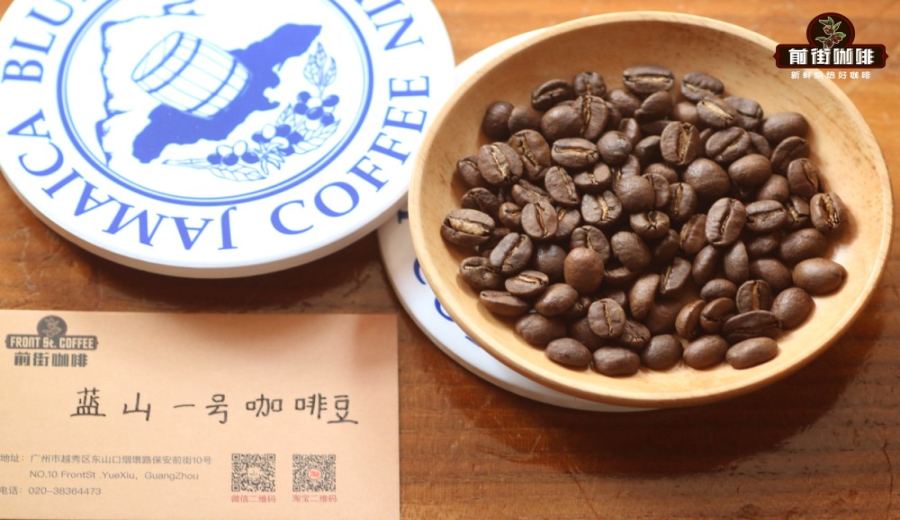
Introduction:Jamaica Blue Mountain coffee is renowned as one of the world’s premier specialty coffees. Its balanced and delicate flavor profile, along with the rare and precious growing conditions, has long been the dream of coffee enthusiasts. This article delves into the growing environment, varietal characteristics, strict grading system of Blue Mountain coffee, and offers professional pour over recommendations and actual flavor profiles to help you fully grasp the essence of this legendary coffee.
Blue Mountain coffee has always been the gold standard in the specialty coffee world. Its charm lies in the perfect harmony of acidity, sweetness, bitterness, and body — a well-balanced taste that is no accident, but rather the result of Jamaica’s unique geography, the Typica variety’s genetics, and rigorous grading and processing protocols. This article will detail the origin characteristics, varietal heritage, grading system, processing technology evolution of Blue Mountain coffee, and share professional pour over parameters and actual flavor experiences to help coffee lovers gain a deeper understanding of this legendary-grade coffee.
In the global specialty coffee market, Blue Mountain coffee has always held an unshakable position. Even for those who have never tasted it firsthand, most are familiar with its name. Some coffees stand out with bright acidity, while others are known for their bold bitterness — yet what makes Blue Mountain coffee most captivating is itsperfect balance— where acidity, bitterness, sweetness, and body are harmoniously unified, exuding an elegant and layered aroma that is difficult for other regions to easily replicate.
Many Blue Mountain enthusiasts describe it as: “a collection of all the qualities of high-quality coffee in one.” Precisely because of its mild and balanced flavor, Blue Mountain coffee is generally recommended to be enjoyed as black coffee. Such top-tier Blue Mountain is highly esteemed in many professional coffee shops.
Why does Blue Mountain stand out among all other coffees? The key lies in its irreplaceable growing environment. Even if Blue Mountain coffee trees were transplanted to other regions such as Hawaii, it would be difficult to reproduce the same flavor. This fully demonstrates that the growing location of Blue Mountain itself possesses extremely special geographical and climatic conditions.
The Growing Environment of Blue Mountain Coffee
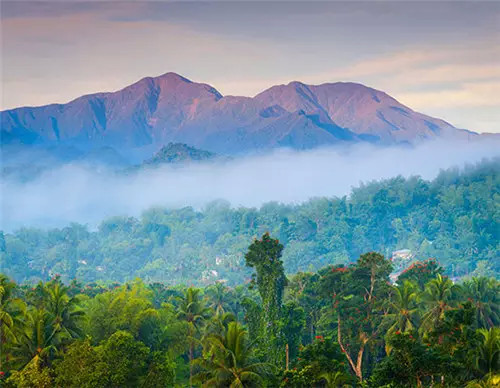
Blue Mountain is located within the coffee belt around 25 degrees north latitude, enjoying uniquely favorable geographical conditions. Jamaica has a tropical rainforest climate with abundant year-round rainfall and high air humidity, and the mountainous areas are often shrouded in clouds and mist. The high elevation of Blue Mountain means coffee trees are mostly planted on sloping terrain, which aids in drainage. The abundant sunlight during the day, combined with the fertile volcanic soil of the region, allows coffee trees to fully absorb nutrients and convert them into rich aromatic compounds.
The Blue Mountain range is situated in the eastern part of Jamaica and is surrounded by the Caribbean Sea. On clear days, sunlight shines on the deep blue sea, and the mountain peaks reflect a captivating blue halo — this is the origin of the name “Blue Mountain.” The main peak of Blue Mountain reaches an elevation of 2,256 meters, making it the highest point in the Caribbean region and also a well-known tourist destination. Located within the coffee-growing belt, the area features fertile volcanic soil, fresh unpolluted air, a moist climate, and frequent fog and rainfall, with an average annual precipitation of about 1,980 mm and temperatures stable around 27°C. It is precisely these exceptional climatic conditions that have created the world-famous Jamaica Blue Mountain coffee, also making it one of the most expensive coffees globally.
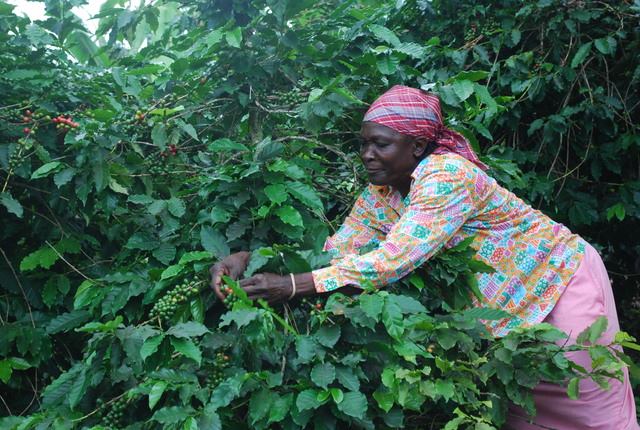
Jamaica Blue Mountain coffee typically enters its ripening period between June and November each year. Local female workers familiar with the terrain are assigned to harvest coffee cherries on the steep slopes. This process requires extensive experience, as the selection of fruits at just the right level of ripeness must be precise — underripe or overripe coffee cherries can directly affect the final quality of the coffee.
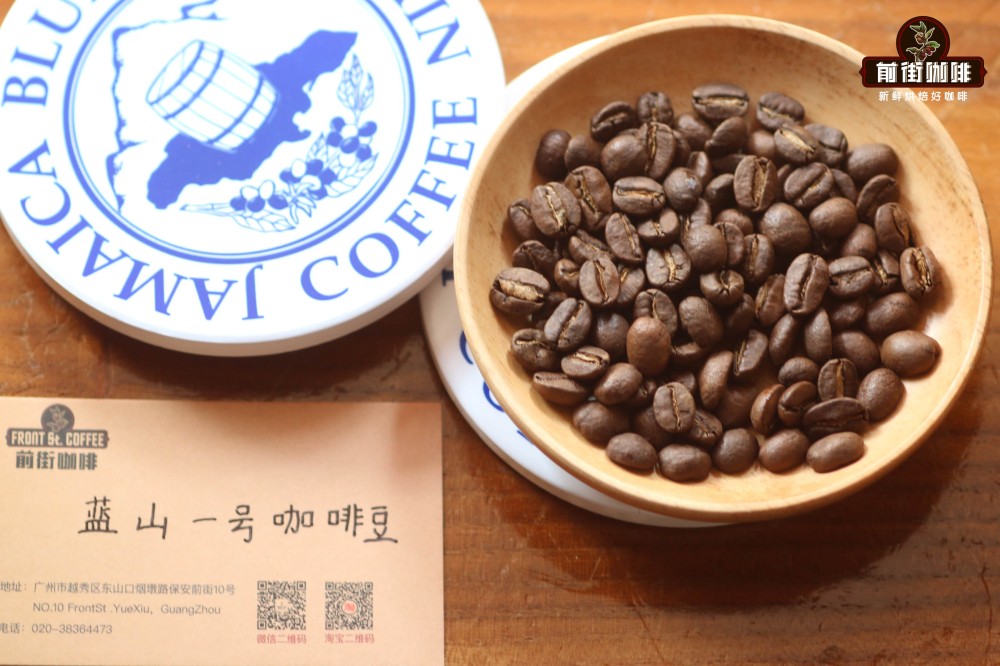
Prior to 2009, Japan had the exclusive right of first purchase for Blue Mountain coffee beans, once monopolizing over 80% of the supply. After 2009, the Jamaican government abolished this privilege. Due to rapidly growing demand in the Chinese market, Blue Mountain coffee has been regularly imported for many years, and in recent years, owners of Blue Mountain coffee farms have even visited China personally to enhance Chinese consumers’ awareness of Blue Mountain coffee. The Blue Mountain coffee on the market today is not entirely counterfeit as rumored — as long as you master the correct identification methods, authentic products can still be purchased. Additionally, the production area of Jamaica Blue Mountain has expanded compared to the past, and with weakening demand from the Japanese market, genuine Blue Mountain coffee from Jamaica has gradually entered the Chinese market.
The Wooden Barrel Packaging of Jamaica Blue Mountain Coffee
Among many coffee-producing regions, Jamaica Blue Mountain is one of the few that still uses wooden barrels to ship green beans, whereas other regions commonly use jute sacks. These wooden barrels bear the Rainforest Alliance frog logo, indicating that the Clifton Estate meets Sustainable Agriculture Network standards and is certified by the Rainforest Alliance.
The Grading Standards of Jamaica Blue Mountain Coffee
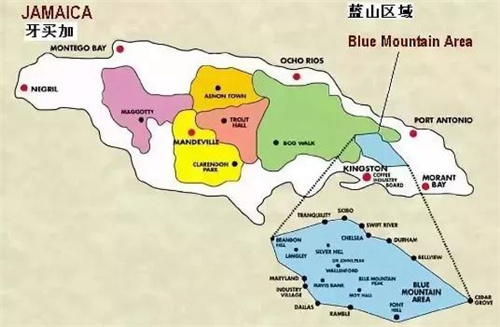
Coffee grading methods vary from country to country, but Blue Mountain coffee is mainly graded based on altitude and bean size. Based on planting elevation, Jamaican coffee can be divided into three major categories: Jamaica Blue Mountain coffee, Jamaica High Mountain coffee, and regular Jamaican coffee, with significant price differences among the grades.
1. Jamaica Blue Mountain Coffee
Both Blue Mountain and High Mountain coffees are further subdivided into four grades, ranked from highest to lowest quality: NO.1, NO.2, NO.3, and PB (Peaberry). According to CIB standards, only coffee grown between 1,000 and 1,700 meters above sea level can be called Jamaica Blue Mountain coffee. This production area has limited output, with large bean size and outstanding quality, featuring a harmonious flavor with moderate levels of acidity, bitterness, aroma, body, and sweetness. It is recognized as the world’s top-tier coffee, hence Blue Mountain No.1 commands the highest price among all Blue Mountain coffees.
(1) No.1 — Bean size of 17/18 mesh, with no more than 2% defect beans
(2) No.2 — Bean size of 16/17 mesh, with no more than 2% defect beans
(3) No.3 — Bean size of 15/16 mesh, with no more than 2% defect beans
(4) Peaberry (PB) — Bean size of 10MS, with no more than 2% defect beans
2. Jamaica High Mountain Coffee
Coffee grown between 500 and 1,000 meters above sea level in the Blue Mountain region is called High Mountain coffee, with quality only second to Blue Mountain coffee.
3. Jamaica Coffee
Coffee grown outside the Blue Mountain range, at elevations below 500 meters, is referred to as Jamaica coffee.
The Typica Variety of Blue Mountain Coffee
The uniqueness of Blue Mountain coffee is inseparable from the Typica variety used. Typica is a historic Arabica variety known for its pure flavor. The Typica variety grown in Blue Mountain carries a rich dark chocolate flavor (not milk chocolate), which is a typical characteristic of the pure Typica variety. It should be noted that the Typica variety has weaker resistance to coffee leaf rust and was once widely planted in Central and South America but has gradually been replaced by other varieties due to disease issues. However, thanks to Jamaica’s unique geographical environment, the Typica variety remains the main cultivated type to this day, with extremely low incidence of coffee leaf rust.
Typica trees are tall, with copper-colored top leaves, hence often referred to as “red-topped coffee.” This variety offers a pure and elegant flavor, but has weak growth vigor, poor disease resistance, and low individual plant yield — all reasons contributing to the gradual decline of the Typica variety. However, since being introduced to Blue Mountain in the 18th century, Typica has adapted to the local island climate and evolved stronger disease resistance, particularly better resistance to coffee berry disease compared to general Typica varieties.
The Evolution of Blue Mountain Coffee Processing Methods
Early Blue Mountain coffee was processed solely using the washed method. With the development of the specialty coffee trend, in 2019, the Clifton Estate first introduced a naturally processed Blue Mountain batch. Although naturally processed Blue Mountain is hard to come by, most professionals believe that the washed process better highlights the essential flavors of Blue Mountain coffee, so washed Blue Mountain remains the mainstream — although some enthusiasts do prefer the unique flavors of the natural version.
Pour Over Recommendations and Parameters for Blue Mountain Coffee
Whether green or roasted, Blue Mountain coffee beans are extremely beautiful in appearance, making it hard to bear wasting even a single bean. However, no matter the type of bean, freshness is a key factor affecting flavor performance. Freshly roasted coffee beans can showcase the most complete flavor characteristics. It is recommended to choose beans roasted within 5 days, and to consume them after the 4 to 7 day degassing period, which is usually when the coffee’s flavor is most balanced.
If you opt to buy pre-ground coffee, while it can be brewed immediately, be aware that once ground, oxidation speeds up significantly. It is best to consume it as soon as possible to enjoy the optimal flavor. In contrast, buying whole beans and grinding them fresh for brewing allows for a fuller experience of Blue Mountain coffee’s delicate layers.
Here are the recommended professional pour over parameters for Jamaica Blue Mountain coffee:
• Filter: Kono filter (suitable for dark roasts, slower flow rate, helps control extraction)
• Water temperature: 88°C (suitable for highlighting the rich and mellow characteristics of Blue Mountain coffee)
• Coffee-to-water ratio: 1:15
• Grind size: 75% passing through a standard #20 sieve (medium-fine grind, balanced extraction)
• Coffee dose: 15 grams
• Brewing method: Pulse pouring (three pours)
• Bloom: 30 grams of water, bloom for 30 seconds
• First pour: Slow circular pour to 125 grams, then pause
• Second pour: When the water level drops to just about to expose the coffee bed, continue pouring to 225 grams, completing total extraction time of approximately 2 minutes
This parameter setup is designed to emphasize thebalanced mouthfeel, rich body, and gentle fruit acidityof Blue Mountain coffee, using low water temperature and low flow rate to avoid over-extraction while fully showcasing its delicate flavors.
Flavor Profile of Blue Mountain Coffee
[Sun-Dried Blue Mountain Coffee Flavor]
Features a slight berry-like acidity, reminiscent of dark plum and mulberry, with excellent overall balance. Rich black chocolate and nutty aromas are accompanied by subtle fermentation notes.
[Washed Blue Mountain Coffee Flavor]
Centered around black chocolate and nutty aromas, with a creamy-smooth mouthfeel. The acidity, sweetness, and bitterness are well-balanced, showcasing the most classic balanced flavor of Blue Mountain coffee.
Different processing methods deliver distinctly unique flavor experiences. No matter which style you prefer, Blue Mountain coffee can exhibit ultimate quality and intricate details.
The above content is compiled by CoffeeHunters, a coffee news website.


