







Introduction:Renowned for its distinctive flavor and rigorous grading system, Jamaican Blue Mountain coffee has long held the throne among the world’s top specialty coffees. This article traces the origins of Blue Mountain coffee cultivation, delves into its over 200-year industrial evolution, explores the historical background of Japan’s exclusive purchasing rights, and examines the strict grading management by CIB. It also visits the production process at the Clifton Estate and shares expert medium-dark roast pour over brewing recommendations and extraction tips to help you fully appreciate the legendary charm of this coffee.
Why is Jamaican Blue Mountain coffee hailed as the world’s finest? Its impressive price tag is not just due to its origin and variety, but also rooted in deep historical background and institutionalized management. This article begins with the planting origins of Blue Mountain coffee, details its ups and downs over two centuries, interprets the critical roles of the CIB grading system and Japan’s priority purchasing rights, and takes you into the Clifton Estate to understand its production philosophy and refined processing techniques. Additionally, combining practical roasting and pour over practices, it provides detailed brewing parameters for medium-dark roasted Blue Mountain beans to help you deeply explore the flavor essence of this classic coffee.
Opening a map, Jamaica—a small island nation in the Caribbean—is home to one of the world’s most renowned specialty coffees—Jamaican Blue Mountain. What kind of terroir and systems have enabled Blue Mountain No. 1 coffee from this region to consistently maintain high standards and premium pricing? We will uncover its mystery step by step, from history, region, processing to roasting.
The Planting History of Jamaican Blue Mountain Coffee
The island of Jamaica is located in the Caribbean Sea, blessed with a naturally superior environment featuring fresh air and minimal pollution. The Blue Mountains in the eastern part of the island lie within the coffee “golden belt” between 25° north and south latitude. The soil here is volcanic ash formed after eruptions, rich in various mineral nutrients. With steep terrain, significant day-night temperature variations, and year-round cloud cover, it offers ideal microclimatic conditions that not only support the growth of coffee trees but also often intercrop with bananas, avocados, and other crops, forming a complex ecosystem.
Coffee cultivation in Jamaica dates back to the early 18th century. In 1728, then-Governor Sir Nicholas Lawes introduced coffee seedlings from Martinique, successfully cultivating them in the St. Andrew area. By the end of the 18th century, with the heavy input of slave labor, coffee production rapidly increased, and planting areas gradually expanded into premium regions such as the Blue Mountains. Records show that annual production once reached as high as 15,000 tons in 1814. However, after the abolition of slavery in the early 19th century, many farmers switched to other cash crops, leading to a rapid decline in the coffee industry.
To revive the coffee industry, the Jamaican government began promoting a quality improvement program in 1891 and provided technical guidance. In 1944, the Central Coffee Clearing House was established to handle the quality assessment and grading of exported coffee. In 1950, the more officially representative Jamaica Coffee Industry Board (CIB) was formally established to set standards, oversee production, and ensure the international reputation of Blue Mountain coffee.
According to Jamaican law, Blue Mountain coffee can only be grown in the four administrative regions of St. Andrew, St. Thomas, Portland, and St. Mary, and must be cultivated at elevations between 910 and 1700 meters. The variety is limited to Typica. Based on quality, Blue Mountain coffee is categorized into NO.1, NO.2, NO.3, and PB (peaberry), with NO.1 being the highest grade. Such stringent geographic and quality controls have made Blue Mountain coffee a globally recognized top-tier representative.
In the mid-20th century, Blue Mountain coffee was acclaimed as one of the finest coffees in the world. However, hurricanes in the 1960s severely damaged the local industry. At this critical juncture, Japan’s UCC company stepped in, introducing eco-friendly planting and management techniques. In 1972, Jamaica and Japan signed a 30-year exclusive purchasing agreement for Blue Mountain coffee, stipulating that 90% of the production would be supplied to the Japanese market, with the remaining 10% allocated to other countries. This explains one of the reasons for the coffee’s high price at the time.
What is authentic Blue Mountain coffee?
With the expiration of the agreement, the quotas for Blue Mountain coffee have gradually been distributed to global markets, including products that have entered the Chinese market in recent years. The Blue Mountain No. 1 coffee sold there is the highest-grade Blue Mountain bean, produced at the Clifton Estate, which is not only the largest producer in the Blue Mountain region but also the only coffee farm in the area certified by the Rainforest Alliance (RFA).
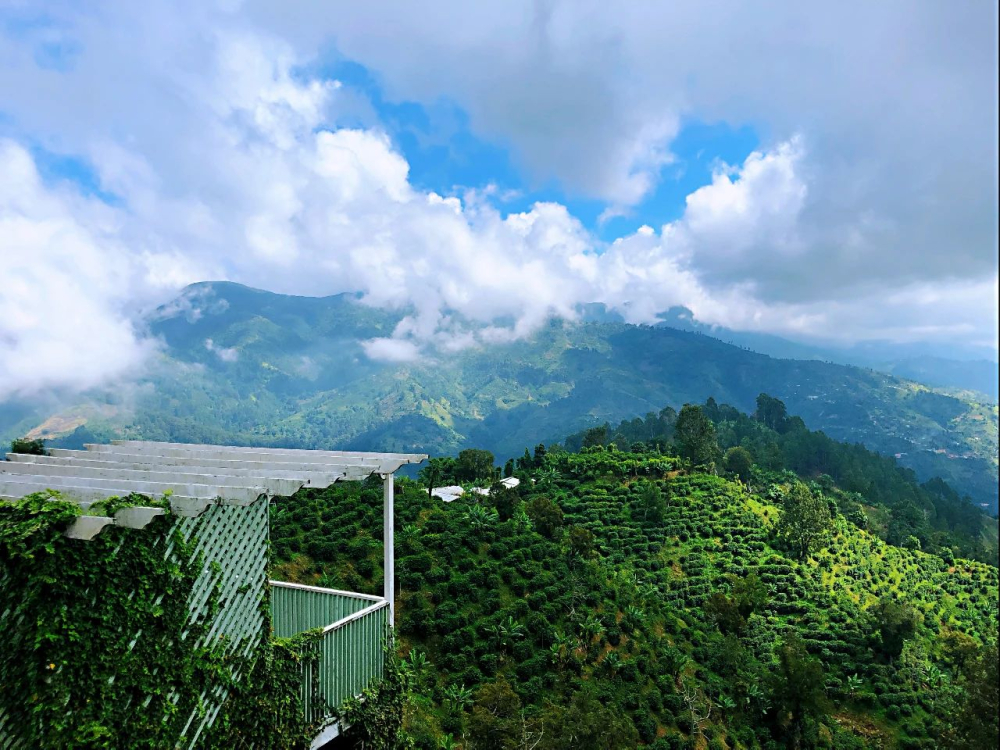
The Clifton Estate has been growing coffee since the mid-18th century and is now managed by the Sharp family. The estate is located in the Clifton Mountains at an altitude of about 1310 meters, featuring a cool and moist foggy climate along with mineral-rich volcanic soil, providing an ideal ripening environment for coffee cherries. After harvest, the coffee fruit undergoes traditional washed processing to effectively remove defects, creating a pure and bright flavor profile. Finally, the beans are graded according to strict criteria such as size, color, moisture content, and cupping results. The selected Blue Mountain No. 1 beans here have a defect rate below 3%, with uniformly plump and intact beans, making them an extremely rare top-tier batch.
Before export, Blue Mountain coffee must pass the cupping inspection conducted by CIB-certified professionals to ensure its acidity, sweetness, bitterness, richness, and aroma achieve balanced standards. Additionally, Blue Mountain beans are transported in handcrafted wooden barrels. Compared to regular burlap sacks, wooden barrels can better regulate humidity and preserve aroma, ensuring stability during roasting.
The Coffee Story of the Clifton Estate
The history of the Clifton Estate dates back to around 1750 and has been managed by the Sharp family since 1978. The estate is situated in the Blue Mountains, with an average elevation exceeding 4300 feet (about 1310 meters). It enjoys year-round cloud cover, abundant rainfall, and fertile soil, allowing coffee trees to grow slowly and accumulate flavor compounds. Moreover, due to the steep terrain, harvesting is challenging, and only skilled workers can manually pick ripe fruits at the right time.
After taking over, the Sharp family invested heavily in improving infrastructure, including building a solar power system, sewage treatment facilities, and a BMCP processing plant, while adhering to environmentally friendly principles. For example, water used in the processing is recycled for farmland irrigation, and fruit peels are fermented into organic fertilizer to give back to the ecosystem.
After harvest, the coffee cherries are first subjected to floatation to separate ripe and unripe beans, then the ripe fruits are sent to the depulping process via water flow. Subsequently, the beans coated with mucilage and parchment are fermented in water, followed by washing to remove residues. Finally, the beans with parchment are evenly sun-dried to a moisture content of 11–12% and left to rest for a month to stabilize their flavor and structure.
Flavor Characteristics of Clifton Estate Blue Mountain No. 1 Coffee
Roasting is a key step that determines the final flavor expression of coffee. Here, the focus is on presenting the classic characteristics of the region while highlighting the unique tonality of Blue Mountain coffee. For Blue Mountain No. 1, a medium-dark roast is employed to enhance the aromas of chocolate and nuts, while preserving the gentle acidity and rich sweetness, achieving an excellent balance of flavors.
Freshly roasted Blue Mountain No. 1 from this estate exhibits dry aromas of nuts, melon, and chocolate when cupped. After brewing, it releases a complex aroma of oolong tea, caramel, honey, and dark chocolate. Upon tasting, the flavors of dark chocolate, roasted hazelnut, cream, and black sugar are distinctly layered, offering a rich yet clean mouthfeel with lingering aromas. To ensure consumers enjoy the best flavor, all coffee beans are guaranteed to be shipped within five days of roasting to guarantee freshness.
Brewing Recommendations for Premium Blue Mountain Coffee
For medium-dark roasted Blue Mountain coffee, a KONO filter cone is recommended for pour over brewing. The smooth curved design of the upper part of the KONO cone allows the filter paper to adhere tightly, and the immersion-based extraction method helps enhance the coffee’s intensity and body. If you prefer other tools, the Kalita wave dripper or a flannel dripper are also suitable for the characteristics of medium-dark roast beans.
Considering that medium-dark roast beans have a relatively loose structure and high water absorption efficiency, it is recommended to use a medium-coarse grind (similar to coarse sugar) with a 20-number standard sieve passing rate of 75%, brewed with 88°C water, and extracted using a three-stage pouring method to control the extraction rhythm.
Pour over brewing parameters are suggested as follows: water temperature 88°C, grind size 20-number sieve passing rate 75% (similar to coarse sugar), coffee dosage 15 grams, coffee-to-water ratio 1:15, using a three-stage extraction method.
Detailed steps: First, pour 30 grams of water for a 30-second bloom; second, pour up to 125 grams while manually stirring evenly; when the water level drops by half, continue pouring up to 225 grams, with a total extraction time of approximately 2 minutes.
Flavor Profile: At high temperatures, Blue Mountain No. 1 showcases intense dark chocolate and almond aftertaste; as the temperature slightly cools, it reveals the silky texture of roasted hazelnuts and cream, accompanied by gentle acidity and caramel sweetness, with a richly layered flavor and long-lasting aftertaste.
The above content is compiled by CoffeeHunters, a coffee news website.


