







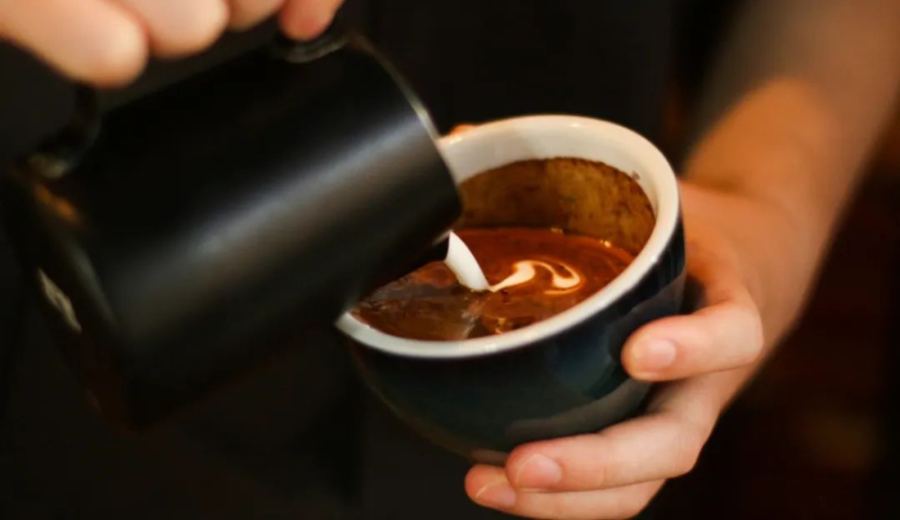
Introduction:Once a classic on the menu of Italian-style coffee shops, why has the mocha become increasingly rare today? This article delves into the origins of mocha coffee, starting with the coffee trade at Yemen’s Mocha Port in the 15th century, analyzing how it got its name, how it evolved in European drinking culture, and the background behind the addition of Italian chocolate flavors. It also explores how the second and third waves of coffee have influenced the fate of the mocha, along with a practical guide to making iced mocha so that fans of rich, chocolatey coffee can easily recreate it at home.
“Boss, give me a mocha.” “Sorry, we don’t have mocha here~”
Once a staple on the Italian coffee menu, alongside the latte and cappuccino, the mocha has gradually disappeared from the selection at many specialty coffee shops. Some have even completely removed this drink from their offerings, replacing it with more popular choices like dirty espresso or oat milk lattes. The mocha seems to be fading from the public eye.
So, when did mocha coffee become part of Italian-style coffee? Its name actually originates from Yemen’s Mocha Port.As early as the15th century,
this port was an important transit hub for shipping coffee beans to Europe. Coffee sacks labeled with the word “MOCHA” led Europeans to use the term to refer collectively to the coffee beans from this region, and for a time, “mocha” even became synonymous with coffee. Mocha beans themselves are distinctive—small in size, richly aromatic, and when dark roasted, they exhibit pronounced acidity, balanced sweetness, and a unique chocolatey finish.As for what we now know as “Italian-style mocha coffee,” its prototype can be traced back to18th-century Italy.
At that time, the Netherlands had introduced coffee to Southeast Asia, while France brought it to South America, ending the Mocha Port’s monopoly on coffee trade. Coupled with the influence of the Ottoman Empire, the supply of mocha beans decreased and prices rose, turning them into a luxury item in the European market. To recreate the distinctive chocolate flavor of mocha beans, some began mixing cocoa powder into their coffee. Later, with the widespread adoption of the espresso machine, this chocolate-infused milk coffee gradually evolved into a classic on Italian menus.The modern Italian mocha truly took shape during thesecond wave of coffee.During this period, chain coffee shops flourished, and the demand for coffee surged, though quality varied widely. Most businesses used blended beans from different origins, employingdark roasting (heavy roasting)
methods to bring out rich crema and roasted aromas. This approach not only reduced costs but also maintained a consistent flavor. However, such processing also left most people with the impression of coffee being “bitter” and “high in caffeine.” To balance the bitterness, syrups, chocolate sauce, caramel sauce, and cream became common additions in beverage development.

The traditional method of making Italian mocha involves using espresso and hot milk as the base, then adding cocoa powder, chocolate syrup, or chopped dark or milk chocolate. Whipped cream is often added on top, along with a drizzle of chocolate sauce, and sometimes cinnamon powder or marshmallows for decoration. These additions not only enhance the layers of flavor but also effectively soften the bitterness of the coffee, making it highly popular among consumers.So why is the mocha becoming less common now? This is closely related to the rise of thethird wave of coffee.
This coffee movement emphasizes the origin flavors of coffee, the characteristics of single-origin beans, and the subtle differences brought by cultivation and processing. With overall improvements in quality and the diversification of brewing techniques—such as the growing popularity of pour over—people have begun to pursue the true flavors of coffee itself, rather than those masked by heavy flavorings. In addition, with the rise of health-conscious eating trends in recent years, low-sugar and sugar-free drinks have become increasingly popular, while the high sugar and calorie content of mocha has gradually made it out of step with mainstream market demands, leading to its slow disappearance from the regular menus of many coffee shops.
Although the classic Italian-style mocha has declined in popularity, the love for the combination of rich chocolate and coffee has not faded. Many shops still offer chocolate-flavored coffee specials or choose single-origin beans with naturally dark chocolate notes, allowing coffee enthusiasts to continue enjoying that captivating taste. Especially in summer, iced mocha is a favorite for many.
It’s worth noting that due to the many ingredients used in mocha and the difficulty of preserving them, many coffee shops have removed it from their permanent menus. For example, some stores no longer regularly sell mocha but still offer homemade iced mocha as a seasonal or special option.
If you’d also like to try making a rich and sweet iced mocha at home, the required ingredients are simple and easy to prepare: double espresso, chocolate syrup, 200 grams of fresh milk, and some ice cubes.
The above content is compiled by CoffeeHunters, a coffee news website.


