







Introduction:Both Jamaican Blue Mountain No. 1 and Indonesian Golden Mandheling are globally renowned high-quality coffees, yet they differ greatly in terms of growing environment, processing methods, and flavor profiles. This article provides an in-depth comparison of these two classic coffees, covering their regional characteristics, grading systems, processing techniques, roasting strategies, and optimal brewing parameters to help you choose the specialty coffee that best suits your personal taste.
Although both Jamaican Blue Mountain No. 1 and Indonesian Golden Mandheling belong to the rich flavor profile characterized by nutty and chocolatey notes, the terroir, variety selection, and processing methods behind them are distinctly different. Blue Mountain No. 1 comes from the high-altitude Blue Mountains of Jamaica in the Caribbean, featuring the Typica variety processed through the washed method, resulting in a smooth, delicate, and well-layered cup; whereas Golden Mandheling originates from Aceh Province in Sumatra, Indonesia, and through its unique wet-hulled process, it delivers intense spicy and herbal aromas with a fuller, more robust body.
If you prefer a balanced, clean, and pure coffee experience, Jamaican Blue Mountain No. 1 is undoubtedly the top choice; but if you’re drawn to a bold flavor with deep herbal and exotic spice notes, Indonesian Golden Mandheling will be the more captivating option. This article will comprehensively analyze the differences between the two—from growing environment, grading standards, processing methods, roasting recommendations, to pour over extraction parameters—helping you make the best choice based on your personal taste preferences.
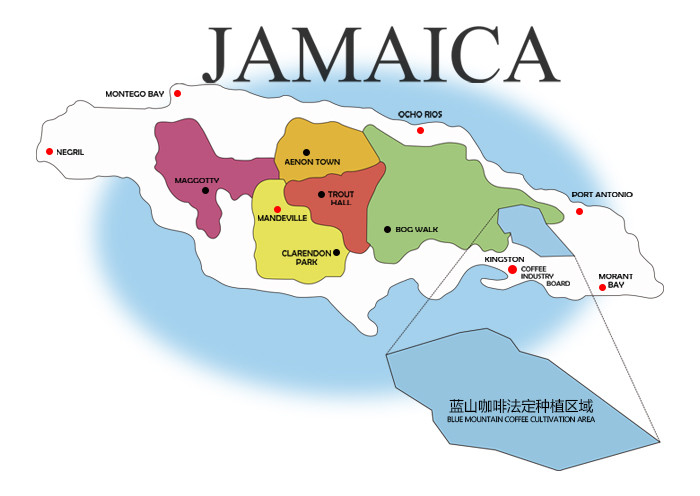
The Blue Mountains of Jamaica are one of the highest mountain ranges in the Caribbean region, boasting a typical tropical rainforest climate with annual rainfall reaching 1800 to 2000 millimeters. The steep terrain facilitates drainage, and the fertile volcanic soil nurtures coffee cherries that are plump and rich in flavor. The area is often shrouded in mist, providing natural shade that helps slow down the ripening process of the coffee cherries, allowing more complex flavor compounds to develop. Jamaican law explicitly stipulates that only Arabica coffee planted at altitudes between 910 and 1700 meters can be called 'Jamaica Blue Mountain Coffee (Jamaica Blue Mountain Coffee)', and it is further divided into four main regions: Saint Mary, Saint Thomas, Saint Andrew, and Portland, covering approximately one-third of the total Blue Mountain planting area.
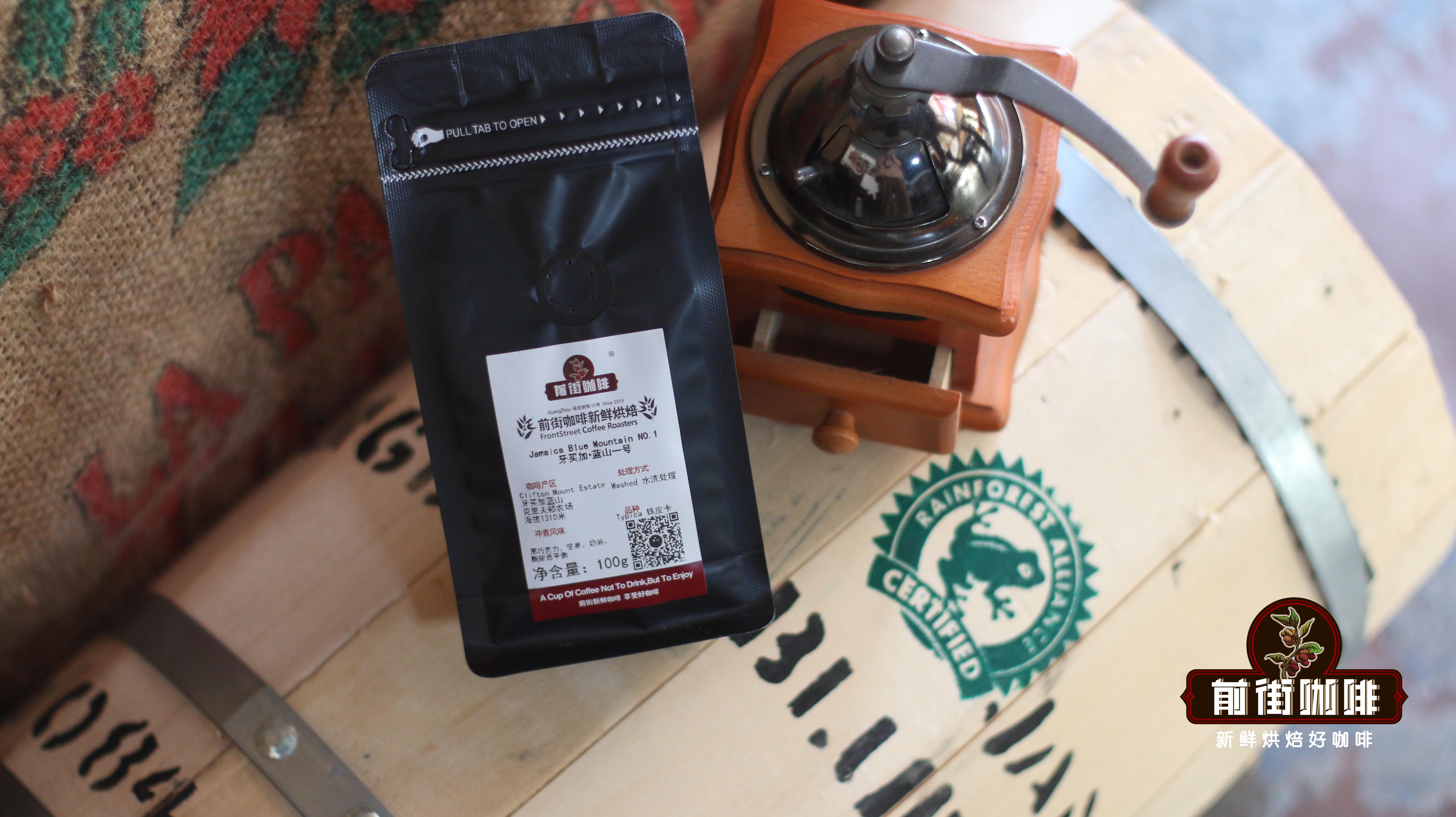
In terms of variety, while many coffee-growing regions have shifted to high-yield varieties in pursuit of quantity, Blue Mountain has consistently stuck to cultivating the ancient and premium Typica variety. This variety, having adapted to the local conditions for over three hundred years, not only perfectly harmonizes with the island’s microclimate but has also evolved outstanding disease resistance, particularly against coffee berry disease, surpassing that of standard Typica. A well-known brand sources its Blue Mountain No. 1 coffee from the historic Clifton Estate and employs the traditional washed processing method to ensure the purity and stability of the flavor.
During processing at the Clifton Estate, harvested coffee cherries are first placed in water tanks for flotation to remove unripe or defective beans, followed by a fermentation process to remove the mucilage layer. The fermentation typically lasts about 24 hours, after which the parchment-covered beans are naturally sun-dried until they reach the required moisture content, then packaged and undergo quality control inspections. The washed processing method results in a cleaner, brighter flavor for Blue Mountain coffee, with soft and well-defined acidity.
In contrast to the crisp refinement of Blue Mountain, Indonesian Golden Mandheling presents a distinctly different character. Mandheling coffee from Aceh Province in Sumatra is primarily grown around the volcanic regions of Lake Tawar and Lake Toba, especially in the Gayo Mountains, known for its organic cultivation and stable output. These areas, often covered in clouds and blessed with high-altitude conditions, provide an ideal growing environment for coffee trees. One of the most famous characteristics of Indonesian coffee is its unique 'wet-hulled processing method (Giling Basah)', which is also the key to the distinctive flavor of Golden Mandheling.
The steps of the wet-hulled process include first removing the skin and pulp of the coffee cherry, followed by a short fermentation period. The beans, still covered with mucilage, are then partially dried and the outer parchment layer is removed while the beans are still in a high-humidity state. The drying continues until the moisture content reaches about 12%. Because the beans are in a high-humidity environment during this process and the parchment layer is removed early, the green beans are more prone to absorbing impurities and odors from the air, resulting in unique woody, herbal, and spicy notes that have become the hallmark of Indonesian coffee flavors. The Golden Mandheling chosen by a well-known brand is produced by the renowned Indonesian green bean supplier PWN, which rigorously selects G1 grade green beans that are 18 mesh size or larger with extremely low defect rates, and undergoes multiple rounds of manual sorting to ensure the quality and consistency of each bean.
In terms of grading systems, Jamaican Blue Mountain coffee is subdivided into four grades based on green bean specifications, defect rates, and cupping performance. Among them, Blue Mountain No. 1 is the highest grade, requiring green beans to be 17 mesh size or larger, with moisture content controlled between 10% and 12.5%. After roasting, it can exhibit an excellent balance of sweet, sour, bitter, and umami flavors. To maintain the quality of Blue Mountain coffee during transportation, Jamaica specially produces handmade wooden barrels for green bean packaging. This is not only a protective measure but also has become a distinguishing hallmark of Blue Mountain coffee.
As for Indonesian Golden Mandheling, since the PWN company has registered the 'Golden Mandheling' trademark, only Mandheling produced by this company can bear this name. Its green beans must pass strict screening, with no more than 3 defective beans in a 300-gram sample, and undergo one machine sort and three rounds of manual selection to ensure uniformity in size, shape, and color. The final result is a clean, bright, and richly sweet flavor profile.
For brewing these two coffees, it is recommended to use a KONO filter to enhance the body and richness. The KONO filter features only a quarter-circle venting rib; when the water level exceeds this section, internal pressure gradually increases within the filter, and combined with its smaller outlet design, it extends the contact time between water and coffee grounds, effectively extracting more soluble flavor compounds and further enhancing the coffee’s fullness and smoothness. It is recommended to use freshly roasted coffee beans no more than five days old for optimal flavor expression.
A well-known brand recommends the following brewing parameters:
- Filter:KONO
- Water temperature:87°C
- Coffee dose:15 grams
- Coffee-to-water ratio:1:15
- Grind size:70% passing rate through a Chinese Standard No. 20 sieve (medium-coarse)
- Pouring method:Three-stage pouring
Steps are as follows: First, pour 30 grams of hot water for a 30-second bloom, then slowly circle from the center with a thin stream of water up to 125 grams. When the water level is about to expose the coffee bed, continue circling to pour up to 225 grams. The total extraction time is approximately 2 minutes. After brewing, it is recommended to gently swirl the coffee liquid to achieve a more even flavor experience.
The above content is compiled by CoffeeHunters, a coffee news website.


