







Introduction:Colombian Supremo-grade green coffee beans are renowned worldwide for their rich aroma and stable quality, underpinned by the unique terroir of the Andes Mountains, a rigorous grading system, and exquisite post-harvest processing. This article delves into its regional characteristics, FNC quality control mechanisms, bean size grading standards, and provides practical pour over parameters along with flavor profiles to help you fully understand the essence of this classic bean variety.
Colombian coffee has long maintained an important position in the international market thanks to its mild, delicate aroma and balanced taste, consistently ranking among the top in export volume. What factors contribute to the outstanding performance of Supremo-grade green coffee beans? We will comprehensively analyze the multiple charms of this classic coffee from four aspects: regional geographical conditions, national quality control organizations, green bean grading standards, and pour over extraction techniques, using the Huila region as an example to guide you through the actual brewing parameters and flavor characteristics.
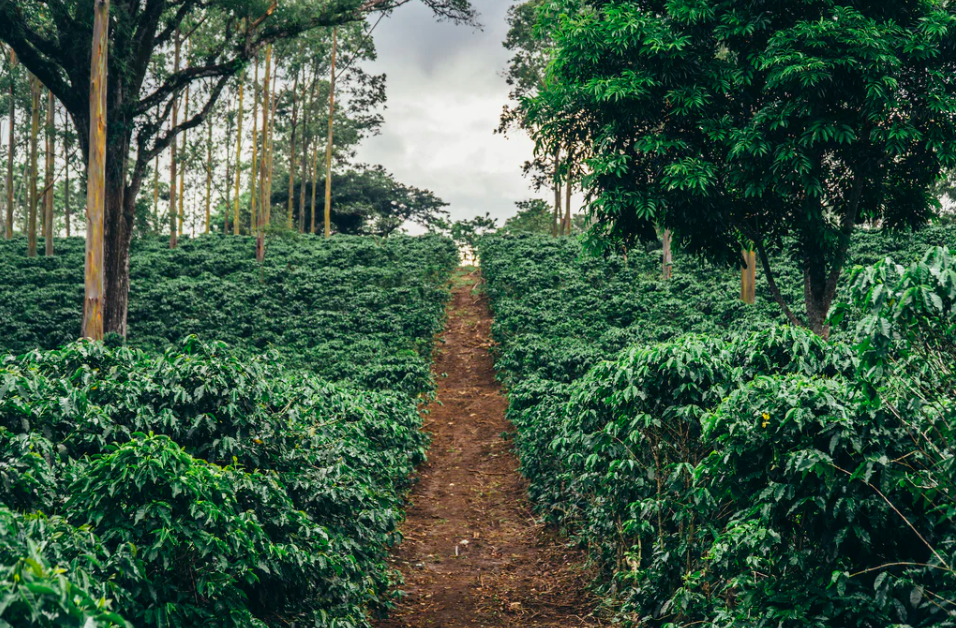
The reason Colombian coffee is so highly regarded lies in its uniquely favorable growing environment. Like many crops, coffee quality is greatly influenced by variety, altitude, climate, cultivation management, and post-harvest processing. High-altitude regions, with their lower temperatures and reduced oxygen levels, slow down the ripening process of coffee cherries, aiding in nutrient accumulation. This results in denser beans with richer flavors. The Andes Mountains of Colombia are a prime example of such an environment.
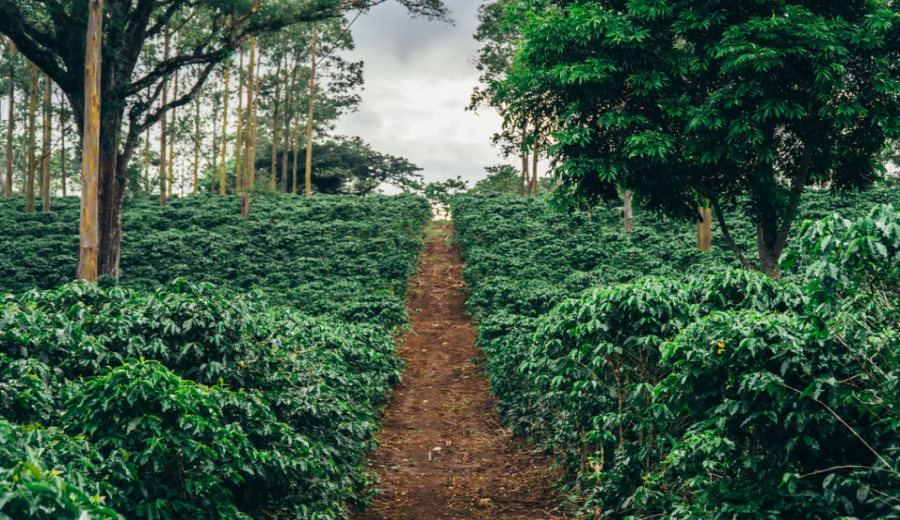
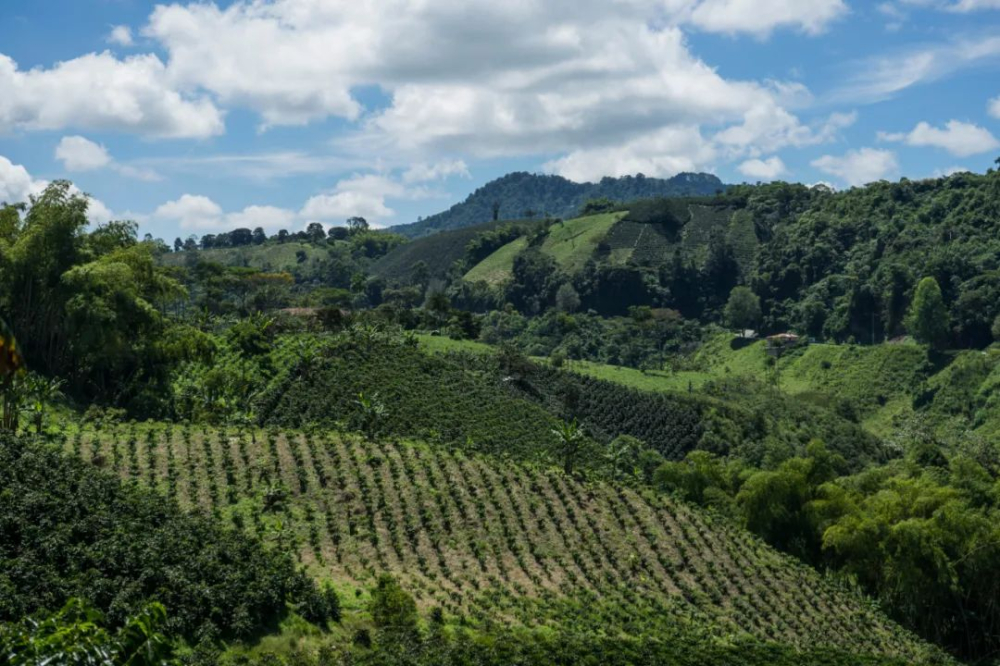
The Andes Mountains stretch across western Colombia, comprising three major north-south mountain ranges. The soil is rich in organic matter, making it highly suitable for coffee cultivation. Coffee trees are primarily planted on slopes at altitudes between 800 and 2300 meters, receiving ample sunlight while also benefiting from moderate shading by clouds. The region’s climate is highly variable, allowing for year-round harvesting with different varieties ripening in different seasons, hence the harvesting season spans the entire year. Local farmers often plant coffee trees under large, leafy shade trees such as bananas, and set up shade structures during the seedling stage to create a cool, humid microclimate. This helps the coffee ripen slowly, accumulate more sugars and aromatic compounds, thereby enhancing the final flavor profile.
Beyond natural conditions, the success of Colombian coffee is also due to the dedication of local farmers and the support of national organizations. FNC (Federación Nacional de Colombia, the Colombian Coffee Growers Federation), one of the world’s largest agricultural non-governmental organizations, represents over 560,000 coffee farmers. It is responsible for monitoring the quality of exported coffee and promoting the Colombian coffee brand globally. The organization also invests significant resources in planting techniques, green bean processing, and quality testing to ensure that every batch of exported coffee meets high standards.
With the support of the FNC, Colombia currently has 590 municipalities and 14 major coffee-growing regions, covering a cultivated area of 875,000 hectares. The vast majority are small farms, with an average farming area of just 2 to 3 mu per household. These coffees are usually sent to community processing stations for washed processing, or processed by farmers themselves before being graded. In terms of regional distribution, Colombia can be divided into three major areas from south to north: northern, central, and southern. The southern region, with altitudes generally exceeding 1500 meters, includes Huila, Cauca, Nariño, and Tolima provinces, and is the main source of specialty coffee. Coffees from these regions often exhibit bright acidity, berry aromas, and caramel sweetness, with rich layered mouthfeel.
The coffee varieties grown in Colombia are predominantly Arabica, including common ones such as Caturra, Bourbon, Typica, and Pacamara, as well as rare niche varieties like Gesha. Taking the Huila region as an example, Caturra is widely planted locally, mostly processed using the washed method, resulting in a balanced flavor with well-harmonized acidity, sweetness, and bitterness.
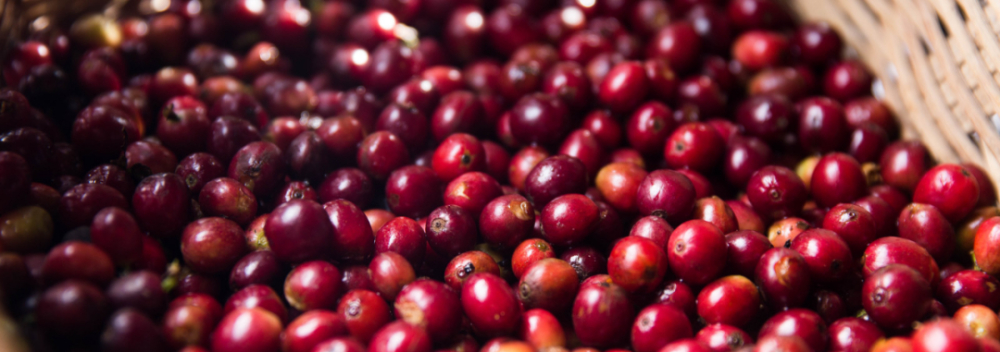
Is bigger better when it comes to Colombian coffee beans? The answer is closely related to its grading system. Before export, green beans are sorted by size using screens with specific mesh sizes. The larger the mesh, the smaller the beans that can pass through, so a higher screen number indicates larger bean size. Common export grades include UGQ, EP, and Supremo, with Supremo representing the largest and highest-quality beans.
It is worth noting that all exported Colombian green beans belong to the Excelso grade, which is the most widely used standard by the FNC, representing good quality and meeting international market demands. The Excelso grade screening criteria are as follows: in a 500g sample, at least 50% of the beans must be larger than 15 mesh, a maximum of 5% are allowed to be between 12 and 14 mesh, and the rest must be above 14 mesh. Additionally, the green beans must be free of pests, have uniform color, no off-odors, a moisture content not exceeding 12.5%, and a total defect score not exceeding 24 points. Each batch of green beans is meticulously recorded with a serial number and regional information to ensure traceability and quality control. Upon export, Colombian green beans are typically labeled as 'Country + Region + Grade + Other Information', for example, 'Colombia Huila Supremo SC17/18 FNC'.
How can you brew the best Colombian Supremo green beans? First and foremost, freshness is key. It is recommended to choose coffee beans roasted within 5 days to fully experience their aroma and flavor. Taking a medium-dark roast everyday drink bean from the Huila region as an example, its flavor is dominated by nuts and chocolate, with a denser texture, so it is suggested to use a medium-coarse grind (e.g., 75% passing through a 20-mesh screen) and slightly reduce the water temperature to around 90°C to minimize the risk of over-extraction.
In terms of equipment selection, the KONO filter cone, with its unique rib design, can extend the contact time between water and coffee grounds, helping to fully extract a rich and mellow taste. Specific parameters are recommended as follows: use the KONO filter cone, water temperature 90°C, coffee-to-water ratio 1:15, grind size 75% passing through a 20-mesh screen, coffee dosage 15 grams, using a three-stage pouring method.
The steps are as follows: first, place the coffee grounds into the filter cone, pour in water twice the weight of the grounds (about 30 grams) for a 30-second bloom; then pour with a small stream in circular motions from the inside out until reaching 125 grams for the first pour; once the coffee bed has settled to the middle of the filter cone, pour again with the same fine stream until reaching 225 grams, continuing until all the coffee liquid has dripped through, with a total extraction time of about 2 minutes. This method can fully bring out the layers of nuttiness, caramel, and soft acidity, resulting in a balanced flavor with a long-lasting aftertaste.
The above content is compiled by CoffeeHunters, a coffee news website.


