








Introduction:The Sidamo Huakui coffee beans, having won the 2017 TOH (Taste of Harvest) Natural Process Championship, have become the focus of attention for specialty coffee enthusiasts worldwide. This article delves into the flavor differences between the Sidamo and Yirgacheffe regions, traces the origins and unique processing methods of Huakui, and provides precise pour over and cold pour over brewing guidelines — including key parameters such as grind size, water temperature, and brew time — to help you brew fruity, layered Huakui coffee at home.
Luckin Coffee has once again launched a Sidamo Huakui SOE series, instantly sparking heated discussions in the coffee community and putting Ethiopia’s Sidamo region back in the spotlight. So, what makes this highly anticipated Huakui coffee so beloved by coffee fans? The answer lies in its origin — the Buku Albe washing station in the Guji Hambela sub-region of the Sidamo administrative zone. It also gained fame after winning the Natural Process category of the 2017 TOH (Taste of Harvest) competition.
Want to understand how Sidamo differs from its neighboring Yirgacheffe region? Sidamo is located in southern Ethiopia, bordering Kenya, with coffee cultivation generally taking place at altitudes between 1,400 and 2,000 meters. Situated around the East African Rift Valley, the area relies heavily on agriculture and serves as a major hub for coffee exports. Local coffee flavors are diverse, shaped by microclimates, soils, and native varieties, often showcasing rich fruitiness and bold body, akin to freshly squeezed juice. Although geographically part of Sidamo, Yirgacheffe benefits from unique soil and moisture conditions, producing bright citrus acidity and a tea-like mouthfeel, resulting in cleaner and more transparent flavors. These distinctions often lead to the two being treated as separate categories.

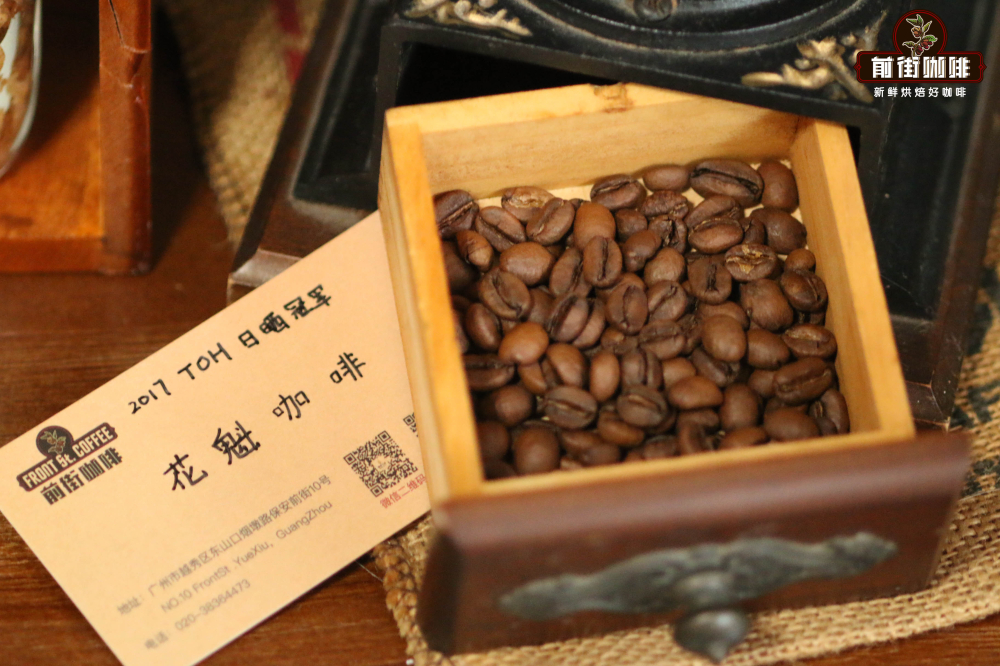
The rise of Huakui coffee beans began with the 2017 TOH competition. That year, the Buku Albe washing station submitted a lot of naturally processed beans with astonishingly vibrant flavors — intense strawberry notes, silky creaminess, moderate fermentation aromas, and prominent sweetness — which earned them the Natural Process Championship. These award-winning beans were later introduced to the Chinese market and given the striking name “Huakui.” Coincidentally, in 2017, Li Jianfei, the runner-up of the China Brewing Championship, used that same batch of Huakui beans to compete, defeating many contestants using Geisha beans, further boosting Huakui’s popularity and drawing industry attention to the Sidamo region.
The Sidamo region predominantly employs traditional natural processing methods: harvested coffee cherries are spread whole on raised mesh beds and manually turned by workers to ensure even sun exposure. Through sun drying, the sugars in the pulp and mucilage are concentrated and absorbed into the beans, enhancing the coffee’s sweetness and fermentation complexity. It’s important to note that only beans meeting all six criteria — “Sidamo administrative zone — Guji region — Hambela sub-region — Buku Albe washing station — natural process — Ethiopian native variety” — can be considered authentic “Huakui.” Those currently on the market that adhere to this strict definition still retain the unique essence of its distinctive flavors.

It should be noted that, as an agricultural product, coffee beans’ flavors subtly vary each year due to climate and terroir. While post-2017 Huakui may no longer exhibit the same intense strawberry-and-cream profile as the original, the classic style remains evident. Cupping observations suggest that recent Huakui profiles lean toward passion fruit, strawberry, fermentation aromas, and tea-like notes, with layers still rich and complex. To highlight its fruity character, medium-light roasting is recommended, paired with a medium-fine grind (approximately the coarseness of granulated sugar or 80% passing through a standard #20 sieve), using 91°C water and a V60 filter to enhance flavor complexity.
Practical Pour Over Recommendation: Use 15 grams of coffee grounds and pour 225 grams of water. Begin with a 30-second bloom using double the coffee weight (30 grams) to release CO₂ and ensure stable extraction. Then, pour in a small circular motion until the total water reaches 125 grams, pause briefly, then continue pouring up to 225 grams. Remove the filter once the dripping finishes, keeping the total brew time at precisely 2 minutes. This parameter set fully highlights Huakui’s fruity and sweet qualities, ideal for coffee lovers seeking nuanced flavors.

If you prefer iced coffee, Huakui is also an excellent choice. The key to cold pour over lies in balancing concentration and extraction efficiency: since adding ice dilutes the coffee liquid, some hot water must replace the volume of ice to maintain sufficient strength. However, less hot water also means a shorter brew time (usually reduced to about 1 minute 20 seconds), which can lead to under-extraction of later-stage flavor compounds. The solution is to adjust to a finer grind and extend brew time.
Recommended Three-Stage Iced Pour Over Method: Place ice in the server (either beforehand or afterward). Add 15 grams of coffee grounds. First, pour 30 grams of water in a slow circular motion for a 30-second bloom. Next, add 60 grams of water. Finally, as the flow slows, pour the remaining 60 grams of hot water, keeping total brew time between 1 minute 50 seconds and 2 minutes. After brewing, gently shake the server to accelerate ice melting and blend the coffee evenly. Coffee brewed this way often features citrus, blueberry, and cranberry aromas, with bright acidity, a cool mouthfeel, and is a perfect summer coffee choice.
The above content is compiled by CoffeeHunters, a coffee news website.


