







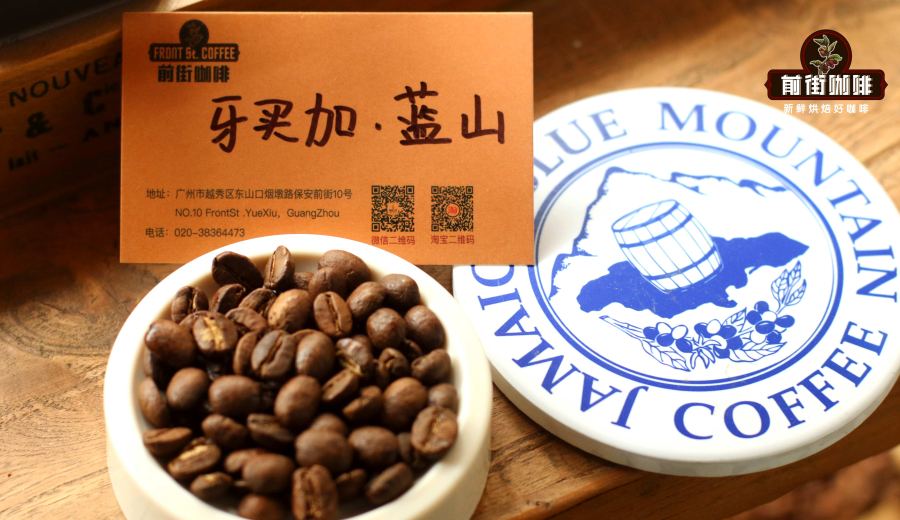
Introduction:Jamaica Blue Mountain No.1 coffee is renowned for its balanced and delicate flavor profile, making it a dream bean for many coffee enthusiasts. This article provides an in-depth exploration of the Blue Mountain No.1 from the Clifton Estate, covering the terroir of the growing region, the characteristics of the washed Typica variety, the strict grading system by CIB, as well as a three-stage pour over method with key parameters to help you achieve a stable and high-quality extraction, allowing you to savor the true charm of Blue Mountain.
Blue Mountain coffee has long been hailed as the “King of Coffees.” Its greatest appeal lies in its exceptionally balanced flavor, supported by a rigorous grading and origin management system. This article focuses on the Jamaica Blue Mountain No.1 beans from the Clifton Estate, taking you through the regional background, variety features, processing methods, as well as practical pour over parameters and three-stage pouring techniques, to comprehensively analyze how to brew a specialty coffee that closely resembles the authentic Blue Mountain experience.
The Blue Mountain No.1 used in this session comes from the Clifton Estate in the Jamaica Blue Mountain region, grown at an altitude of approximately 1310 meters. This high-altitude cultivation allows the coffee cherries to ripen slowly, accumulating richer flavor compounds. The beans are processed using the washed method, with the traditional and delicately flavored Typica variety, roasted to a medium-dark level. The flavor often presents notes of chocolate, nuts, and cream, with a well-balanced acidity, sweetness, and bitterness, smooth mouthfeel, and distinct layers.
Before brewing, it is recommended to use fresh, clean, and low-mineral water to avoid tap water or overly hard water sources, which may affect the extraction flavor. If filtered water is unavailable, you may opt for bottled water with stable quality, such as Nongfu Spring. Consistent water quality is the foundation for brewing great coffee.
The recommended pour over parameters are as follows: 15 grams of coffee grounds, a 1:15 coffee-to-water ratio, water temperature controlled at 88°C, and a medium-coarse grind size tested with a #20 standard sieve, yielding about 75% extraction. This combination helps preserve the delicate flavors of Blue Mountain while avoiding over-extraction or unpleasant astringency.
In practice, it is suggested to use a three-stage pouring technique. First is the blooming stage: pour about 30 grams of water and let it sit for 30 seconds. When pouring, start from the center and gently move in small circles from the inside out to evenly saturate the coffee grounds and release aroma. After blooming, proceed to the second pour: use a steady and fine stream to slowly circle from the center outward, raising the water level to 125 grams. In the final third stage, when the coffee bed has settled to about half its height, switch to a slightly larger stream and quickly pour up to a total of 225 grams, completing the 225 ml extraction at a 1:15 coffee-to-water ratio. Once the coffee has completely dripped through the filter, remove the filter to end the extraction.
Coffee brewed with these parameters typically exhibits a mild citrus-like acidity, with an overall balanced and refined flavor. The mid-palate reveals distinct nuttiness and subtle creaminess, while the finish leaves a smooth dark chocolate aftertaste. The mouthfeel is silky and layered throughout.
When tasting Blue Mountain coffee, start by appreciating its aroma—pay attention to the nutty and caramel notes—then move on to the rich texture and the excellent balance of acidity, sweetness, and bitterness upon tasting, and finally notice the lingering sweet aftertaste. This full sensory experience is precisely what makes Blue Mountain coffee so highly regarded.
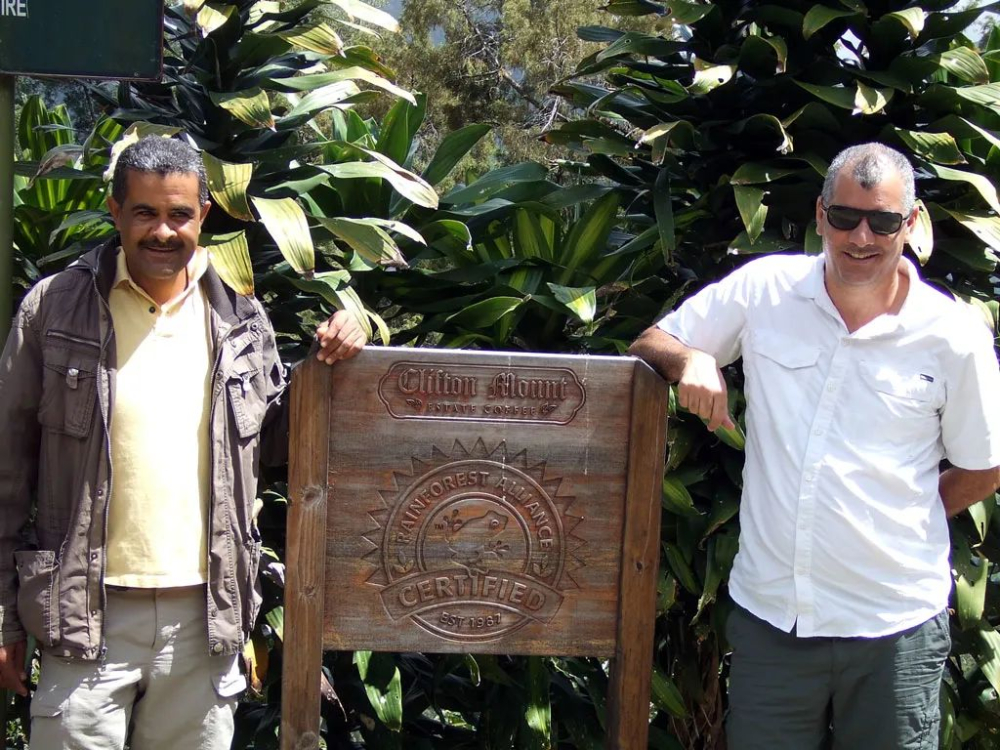
The history of Jamaica Blue Mountain coffee cultivation dates back to the early 18th century. In 1717, King Louis XV of France ordered the introduction of coffee cultivation to Jamaica. Then, in the 1720s, Sir Nicholas Lawes, then Governor of Jamaica, brought Arabica seeds from Martinique and promoted their cultivation in the Saint Andrew area, laying the foundation for today’s Blue Mountain coffee. Saint Andrew is also one of the three major Blue Mountain regions, alongside Portland and St. Thomas. After years of development, Jamaica established the Coffee Industry Board in 1950 to formulate and enforce strict quality standards, granting official certification to exported coffee to ensure the high quality of every batch of Blue Mountain coffee.
The Blue Mountain coffee-growing region is concentrated in the Blue Mountain range in eastern Jamaica. The name originates from the region's unique topography: under clear sunlight, the blue hues of the Caribbean Sea are reflected onto the mountains, creating a captivating bluish visual effect. The area enjoys moderate altitude, cool and foggy climate, with an annual rainfall of up to 1980 mm, along with fertile volcanic soil, providing an almost perfect environment for coffee trees.
Currently, the total area of the Blue Mountain region is only about 6,000 hectares, making it quite rare. As a result, many coffees marketed as “Blue Mountain” may not actually come from this region. Within the Blue Mountain range, only coffee grown at altitudes above 910 meters qualifies as “Jamaica Blue Mountain Coffee”; coffee grown between 460 and 910 meters is classified as “High Mountain Coffee,” and anything below 460 meters is considered general “Jamaica Prime Coffee.” For this reason, Blue Mountain No.1, as the highest grade, is all the more precious and exceptional in terms of rarity and quality.
In terms of grading, Blue Mountain coffee is divided into several grades, from highest to lowest: Blue Mountain No.1, Blue Mountain No.2, High Mountain No.1, High Mountain No.2, and Jamaica Coffee. The one selected for this session is the highest-grade Blue Mountain No.1, indicating the most stringent selection criteria, with uniform bean size and extremely low defect rates, representing the pinnacle of Blue Mountain coffee.
Finally, the reason Blue Mountain coffee can consistently maintain such a high standard of flavor lies not only in its exceptional terroir but also in the stability of the washed processing method and the delicate characteristics of the Typica variety. Washed processing, through precise steps such as flotation, pulping, and fermentation, effectively reduces impurities and defect rates, enhancing the coffee’s clarity and acidity. As one of the oldest Arabica varieties, Typica, though low-yielding and susceptible to pests and diseases, remains a top choice for many premium coffees due to its layered and refined flavor profile.
The above content is compiled by CoffeeHunters, a coffee news website.


