







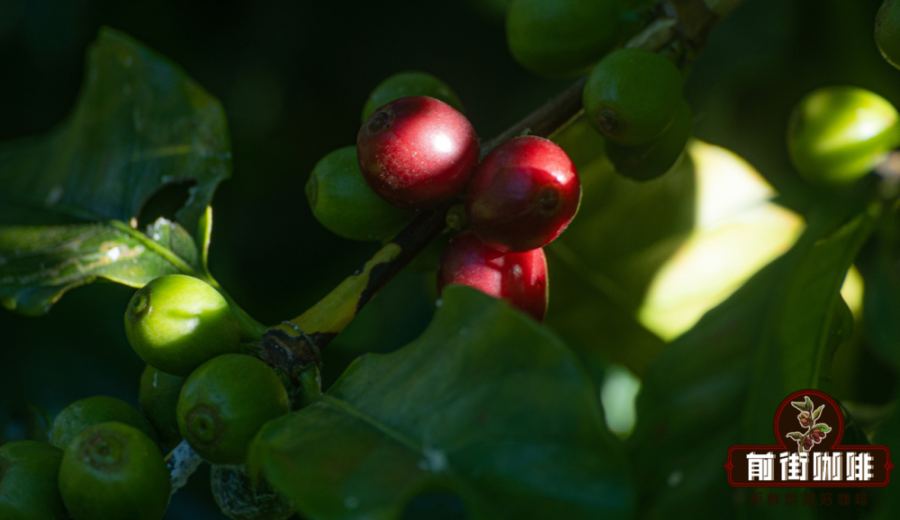
Introduction:Dive deep into the core variety characteristics of China’s Yunnan coffee-growing region, analyzing flavor profiles and cultivation differences from mainstream Catimor to classic Typica. Meanwhile, explore the geographical advantages of key production areas such as Baoshan and Pu’er, and provide practical pour over parameters and roasting recommendations to help coffee enthusiasts fully master the brewing essentials of Yunnan beans.
As an important origin for specialty coffee in China, Yunnan has gradually made its mark on the international stage in recent years thanks to its stable growing conditions and diverse processing techniques. This article will systematically break down the varietal structure and regional environmental features of Yunnan coffee, focusing on the performance differences between the two key varieties — Catimor and Typica — while sharing insights from actual production-side processing philosophies and consumer-side brewing references to offer a complete guide for readers eager to learn more about Yunnan coffee.
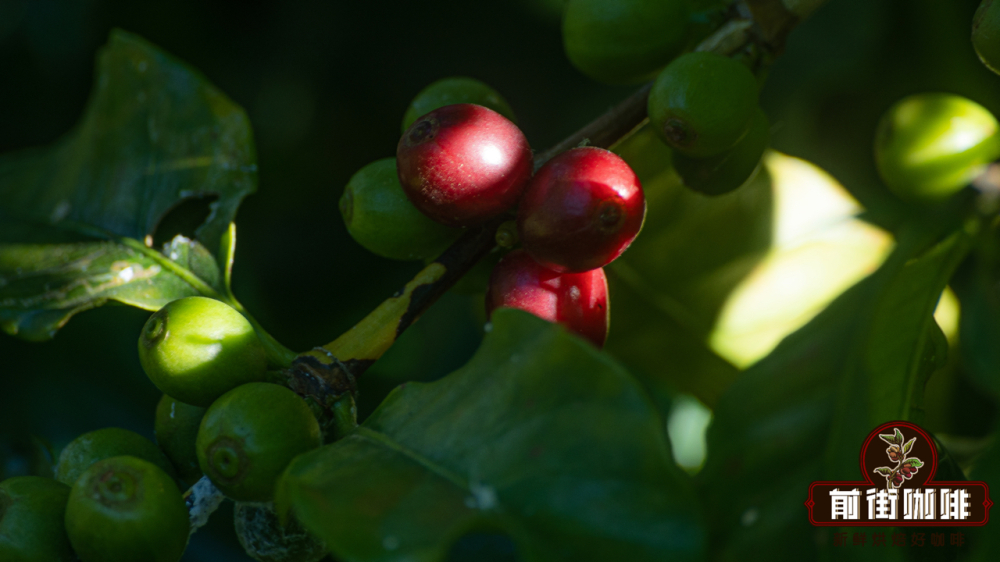
The current coffee varieties planted in Yunnan include Catimor, Typica, Bourbon, Caturra, and more, but the market-mainstream variety remains Catimor, also known as the commonly seen “Yunnan small-bean coffee.” This variety, when grown at elevations above 1500 meters, can exhibit more pronounced aromatic layers and a richer mouthfeel. With appropriate post-harvest processing, its flavor performance can even rival that of traditional old varieties. This trait has also been acknowledged by Ted Lingle, senior consultant at the Coffee Quality Institute (CQI), further confirming the potential of Yunnan coffee.
In contrast, Typica, as the oldest original variety of Arabica, though with lower yield and weaker disease resistance, possesses a more elegant foundational flavor. Some coffee brands have chosen to plant Typica in Baoshan and insist on using washed processing precisely to highlight its clean, balanced inherent characteristics, allowing consumers to experience the most authentic expression of coffee from the Yunnan region.
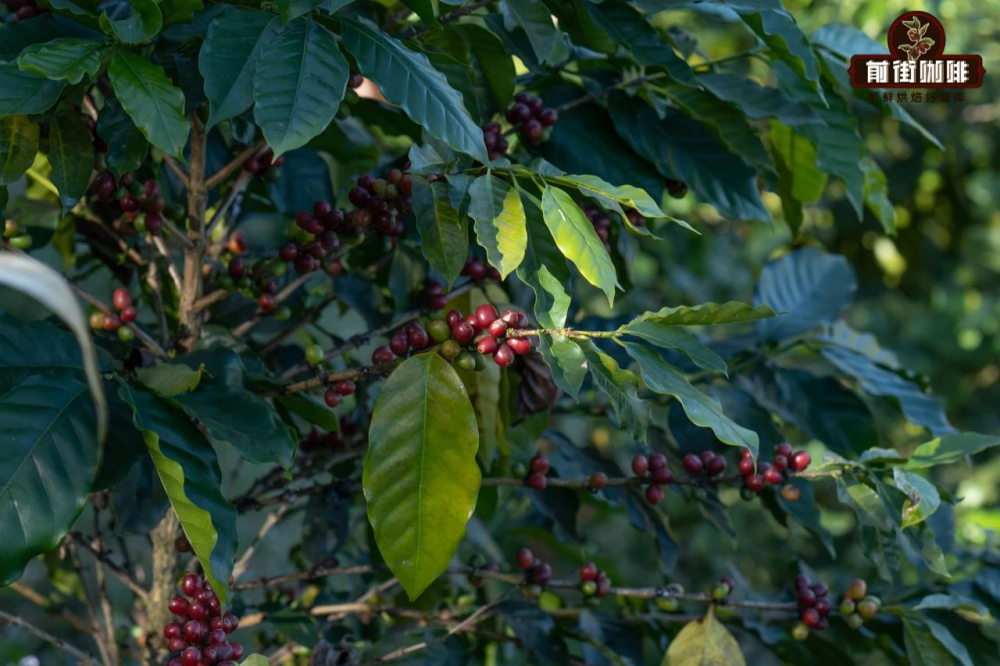
The history of Catimor dates back to 1959, when it was hybridized by the Portuguese through crossing Brazilian Caturra with Timor. Its greatest advantage lies in strong disease resistance, making it suitable for commercial cultivation. The flowering period of small-bean coffee (including Catimor) in Yunnan is concentrated between February and July, with the peak flowering season occurring from March to May, significantly influenced by rainfall and temperature. Coffee flowers bloom for only 2 to 3 days, usually opening around 3 to 5 a.m. in the early morning and reaching full bloom between 5 to 7 a.m. It takes 8 to 10 months from flowering to fruit ripening, with harvesting mostly taking place between October and December of the same year. Therefore, under normal circumstances, it fruits only once a year, and climatic conditions directly determine the final quality.
As the ancestor of modern Arabica varieties, Typica offers an elegant flavor profile but has a relatively fragile plant constitution, making it susceptible to leaf rust, which limits yield. However, its delicate, clean flavor outline and balanced acidity-sweetness profile make it an ideal choice for showcasing the characteristics of the Yunnan region. Some coffee brands choose Typica precisely because of its potential to clearly convey the terroir of the region.
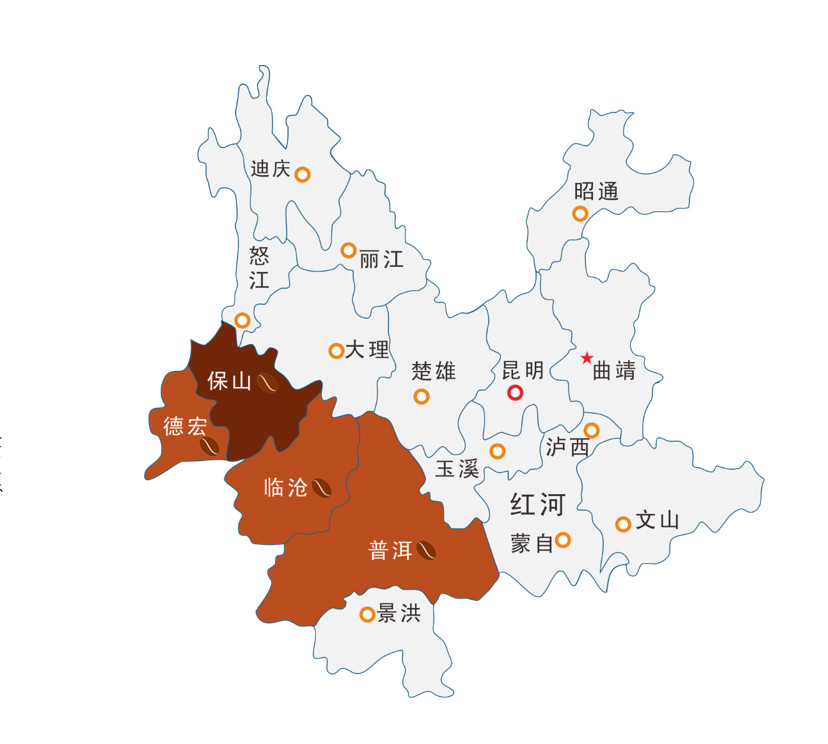
Yunnan’s geographical environment has a profound impact on coffee flavor. Approximately 90% of the province’s land lies in mid-elevation areas ranging from 1000 to 3500 meters, characterized by a subtropical plateau monsoon climate with large daily temperature variations and abundant rainfall — conditions that provide a foundation for the growth of high-altitude quality coffee. Major producing regions currently include Pu’er, Baoshan, Dehong, and Lincang, each presenting distinct flavor characteristics due to microclimatic differences.
Dehong Prefecture is known as the “Hometown of Chinese Coffee,” with planting elevations generally exceeding 1000 meters, including 30,000 mu situated in high-altitude mountainous areas above 1600 meters. The use of organic fertilizers and pesticides there has resulted in high-quality coffee beans. Pu’er introduced coffee in the mid-1950s, and the small-bean coffee from the Lujang Dam has received positive reviews in the international market. In 2010, it was certified as a “National Geographical Indication Product,” known for being strong yet not bitter, fragrant without being overpowering, and carrying fruity notes. Lincang has established nursery bases by leveraging its unique geographical conditions and promoted cultivation in multiple counties. Pu’er, as a tea-growing region, has a 150-year history of coffee cultivation and began prioritizing it as a key industry in the 1990s.
A certain brand’s “2013 Typica” comes from Baoshan at elevations between 1450-1550 meters, processed using the washed method, and exhibits flavors of citrus, nuts, plums, melon, brown sugar, and black tea, making it suitable for brewers who prefer bright acidity. The “Yunnan Small-Bean Coffee Beans (Everyday Bean)” is a Catimor variety, grown at 1200 meters and washed processed, with flavors mainly of herbs, nuts, chocolate, and caramel — ideal as a daily drinker. The “Yunnan Natural Sun-Dried Catimor” also originates from Baoshan, uses red cherry natural sun-dried processing, and is grown at elevations of 1450-1550 meters, showcasing flavors of caramel, dried fruit, cocoa, dark chocolate, and woody notes, suiting consumers who prefer intense flavors.
Yunnan coffee employs diverse processing techniques, but some brands stick to the two traditional methods — washed and natural — believing these best authentically present the essential characteristics of both the variety and the region. The natural processing method requires continuous sunny days of sun-drying for 27 to 30 days. Though simple to operate, it may result in less attractive appearance; washed processing, on the other hand, removes pulp-derived flavors, highlighting the coffee bean’s original clean taste and is regarded as an entry pathway to understanding regional flavor profiles.
For the “2013 Typica,” it is recommended to start roasting at 200°C, using high heat and a small air vent to accelerate dehydration before switching to medium heat and medium air vent to allow the Maillard reaction to develop steadily, then exit the roast at 196°C after one crack for three minutes. For pour over, it is recommended to use a V60 dripper, with a water temperature of 90-92°C, a powder-to-water ratio of 1:15, and a medium-fine grind (about 57% extraction through a #20 sieve). Use a step extraction method: 30 grams of water for a 30-second bloom, then pour in small streams up to 124 grams for the first pour, followed by pouring up to 227 grams before removing the dripper. Total extraction time is about two minutes, yielding a balanced flavor of floral notes, melon sweetness, and black tea finish.
The above content is compiled by CoffeeHunters, a coffee news website.


