







Introduction:Jamaican Blue Mountain No. 1 and Indonesian Golden Mandheling, both world-renowned specialty coffees, showcase distinctly different flavor profiles. The former is esteemed for its balanced body, smoothness, and cleanliness, while the latter exudes rich spices and herbal notes. This article delves into a comparative analysis of their growing regions, varietal characteristics, processing methods, and cupping profiles, and provides professional-grade KONO filter pour-over recommendations to help coffee enthusiasts make choices based on their taste preferences.
Although both Jamaican Blue Mountain No. 1 and Indonesian Golden Mandheling belong to the category of bold, nutty, and chocolatey coffees, their unique and captivating flavor traits emerge from differences in geography, varietals, and processing methods. This article will systematically compare these two top-tier coffees—from their regional backgrounds and varietal selections, to processing techniques, green bean grades, and actual cupping flavors—along with KONO filter three-stage pour-over parameters designed to highlight their distinctive features, allowing you to gain a deeper understanding of their allure.
If you prefer a coffee with a clean mouthfeel, distinct layers, and a well-balanced acidity and sweetness, Jamaican Blue Mountain No. 1 is an excellent choice. On the other hand, if you’re drawn to a bold, deep-bodied flavor with herbal and spicy undertones, Indonesian Golden Mandheling better suits your palate. Next, we’ll start with their growing regions and gradually uncover the unique qualities of these two coffees.
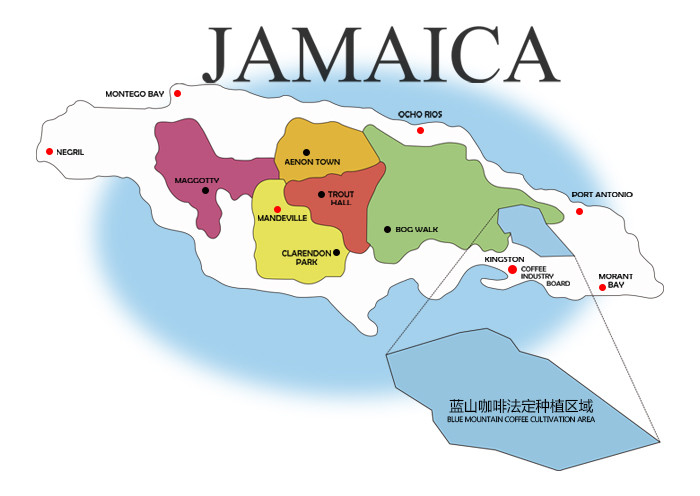
Jamaican Blue Mountain No. 1 coffee is grown in the Blue Mountains of the Caribbean, an area of extremely high elevation. Not only is this region the highest-altitude part of Jamaica, but it also enjoys a classic tropical rainforest climate, with annual rainfall during the rainy season reaching 1,800 to 2,000 millimeters—providing ample moisture for coffee trees. The steep terrain ensures excellent drainage, and the fertile volcanic soil allows coffee cherries to accumulate rich flavor compounds. Local farmers often intercrop coffee trees with fruit trees such as bananas and avocados, creating a natural shade system and nutrient cycle. The Blue Mountain region is perennially shrouded in mist, which not only moderates temperatures but also offers natural shading for the coffee trees. It’s worth noting that, according to Jamaican law, only Arabica coffee grown at elevations between 910 and 1,700 meters qualifies as “Jamaican Blue Mountain Coffee,” and it is further subdivided into four main growing regions: Saint Mary, Saint Thomas, Saint Andrew, and Portland, covering only one-third of the total arable land in the Blue Mountains.
In terms of varietals, the Blue Mountain region has consistently stuck to cultivating the traditional and high-quality Typica variety, rather than switching to other high-yield varieties for increased production. These Typica varieties have adapted over nearly three hundred years and are perfectly suited to the island’s microclimate, having evolved stronger disease resistance—especially against coffee berry disease—compared to typical Typica. The Blue Mountain No. 1 beans offered come from the historic Clifton Estate and are processed using the washed method to ensure pure and consistent flavors. During washing, harvested coffee cherries first undergo flotation to remove unripe beans, followed by fermentation to remove the mucilage, and finally drying in the sun until they reach the appropriate moisture content. The overall flavor profile is clean and bright, with stable quality.
The other star—Indonesian Golden Mandheling—comes from the mysterious and foggy island of Sumatra. The entire island of Sumatra is divided into eight provinces, but the main Arabica coffee-growing areas are concentrated in the high-altitude regions of Aceh and North Sumatra. The local climate is tropical rainforest-type, with mountainous areas often covered in mist, adding to the region’s mystique. Coffee is primarily grown around Lake Tawar and Lake Toba, with the Gayo Mountains being a significant source of premium coffee due to its fertile volcanic soil, widespread organic farming practices, and long history of cultivation. The supplied Golden Mandheling is produced by the renowned Indonesian green bean supplier PWN Company, and is processed using the region’s unique wet-hulled (Giling Basah) method.
The so-called wet-hulled process involves a short fermentation and initial drying after removing the skin and pulp. When the beans reach a semi-dry state, the parchment layer is removed, and the drying process is then completed. Since this entire process mostly occurs in high-humidity environments (70%–90%), and the parchment layer is removed early, the green beans are more prone to absorbing environmental impurities and odors, thereby imparting the coffee with unique woody, herbal, and spicy undertones—distinctive characteristics that set Sumatran coffee apart from other origins.
In terms of green bean grading, both Jamaican Blue Mountain and Indonesian Golden Mandheling are considered the highest grades locally. Blue Mountain coffee is categorized into No. 1, No. 2, No. 3, and Peaberry based on bean size, defect rate, and cupping performance, with No. 1 being the highest grade. The beans must have a screen size of 17 or above, with moisture content controlled between 10%–12.5%. After roasting, it exhibits an exceptional balance of acidity, sweetness, bitterness, body, and aroma, making it extremely precious. To maintain quality during transport, Jamaican authorities insist on using handmade wooden barrels to ship Blue Mountain green beans, which has also become one of the symbols of Blue Mountain coffee.
As for Indonesian Golden Mandheling, it is an exclusive brand of the PWN Company—only Mandheling produced by this company can be called “Golden Mandheling.” Its green bean selection is extremely strict, using only beans sized 18 or above, and undergoing at least one machine sort and three manual hand-pickings to ensure fewer than three defects per 300 grams (i.e., G1 grade). The final product consists of high-quality green beans that are highly uniform in color, size, and shape. This rigorous selection process results in a cleaner, brighter cup, with more pronounced body and sweetness.
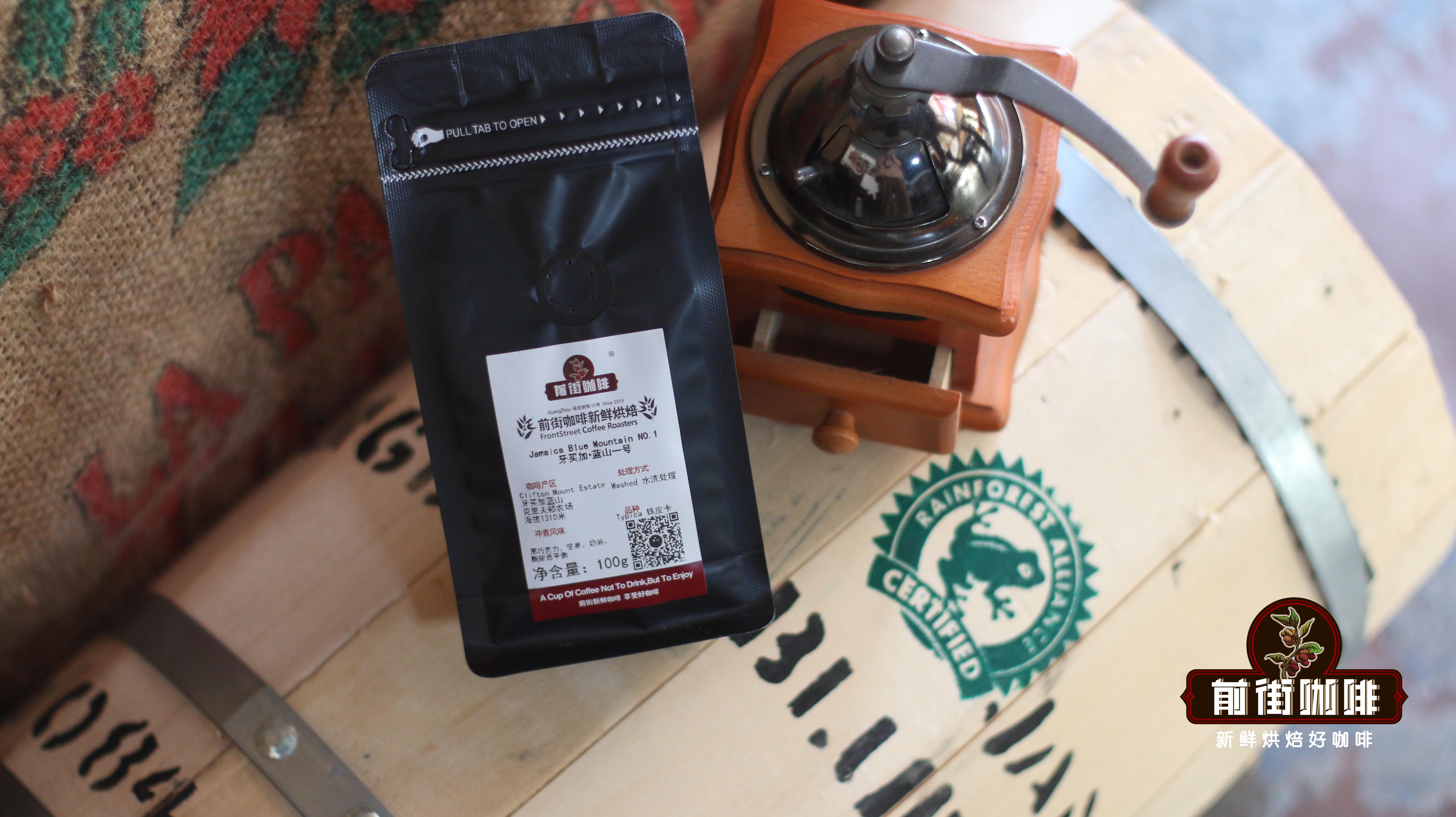
To help consumers more intuitively understand coffee quality, both of these coffees come with relevant certification documents, and the wooden barrels and sacks used for shipping the green beans can also be seen in physical stores, helping consumers further appreciate their unique characteristics.
In terms of cupping flavors, since both coffees possess strong nutty profiles, medium-to-dark roasts are used to preserve moderate acidity. For the more body-forward Golden Mandheling, the roast level is slightly darker. According to cupping results, Golden Mandheling exhibits aromas of dark chocolate, nuts, and caramel, accompanied by unique herbal and pine wood notes in the finish. It has a pronounced aftertaste and a long-lasting finish, with soft fruity acidity emerging as the temperature drops.
As for Blue Mountain No. 1, the green beans are plump and uniform in size, with a shiny blue-green appearance. In the cupping after roasting, its dry fragrance carries soft notes of nuts, melon, and chocolate. After pouring water, it releases a complex aroma of oolong tea, caramel, honey, and dark chocolate. Upon tasting, flavors of dark chocolate, roasted hazelnuts, butter, and brown sugar unfold layer by layer. The overall flavor is clean and clear, with a full body and lingering aroma—it is a classic coffee with exceptional balance.
For these two bold and full-bodied coffees, it is recommended to use the KONO filter for pour-over brewing. The design of the KONO filter features exhaust ribs only at the one-quarter mark. When the water level exceeds this point, internal pressure within the filter increases, and the smaller outlet prolongs the contact time between water and coffee grounds, extracting more desirable compounds and thus enhancing the rich and bold mouthfeel.
Recommended pour-over parameters are as follows: Use the KONO filter, set water temperature to 87°C, use 15 grams of coffee grounds, with a 1:15 coffee-to-water ratio. Grind size is recommended to be 70% passing through a Chinese standard No. 20 sieve (approximately medium-fine grind). The pouring method suggests a three-stage approach: First, pour 30 grams of hot water for a 30-second bloom. Then, pour in a small circular motion from the center up to 125 grams. When the water level is about to expose the coffee bed, continue pouring in circles up to 225 grams. Total extraction time should be controlled to around 2 minutes. Before drinking, it is recommended to gently swirl the coffee to achieve a more balanced flavor experience. Additionally, for optimal flavor, it is advised to brew only with freshly roasted coffee beans within 5 days of roasting.
The above content is compiled by CoffeeHunters, a coffee news website.


