







Introduction:Rwandan coffee, nurtured by high-altitude volcanic soils, develops distinctive flavors. From post-conflict industry rebuilding to the refinement of washed processing techniques, it has gradually claimed its place on the specialty coffee stage. This article details its historical background, the characteristics of major producing regions, the advantages of the Bourbon variety, and the key craftsmanship of washed processing—helping you master the essentials for appreciating this inland African coffee bean.
Located in Central Africa, Rwanda shares a border with Ethiopia, the birthplace of coffee, yet its industry has followed a vastly different and more turbulent path. The dual blows of the 1994 genocide and the global coffee price collapse once brought this landlocked country to the brink of industrial collapse. However, thanks to its exceptional geographical conditions and subsequent quality reforms, Rwanda has gradually secured a foothold in the international specialty market with its washed-process Bourbon coffees.
Rwanda’s coffee cultivation roots can be traced back to the colonial period in the early 20th century. German missionaries first introduced coffee to the Kivu region, and while the subsequent Belgian colonial government expanded cultivation, it tightly controlled export quality—keeping the region trapped in a low-price raw material export model for years. It wasn’t until after independence, with the establishment of the official coffee organization OCIR, that a turning point toward quality improvement emerged. The country’s high altitudes (typically 1700–2000 meters), fertile volcanic soils, and abundant sunshine create an ideal environment for Arabica growth, earning it the nickname “Land of a Thousand Hills.”
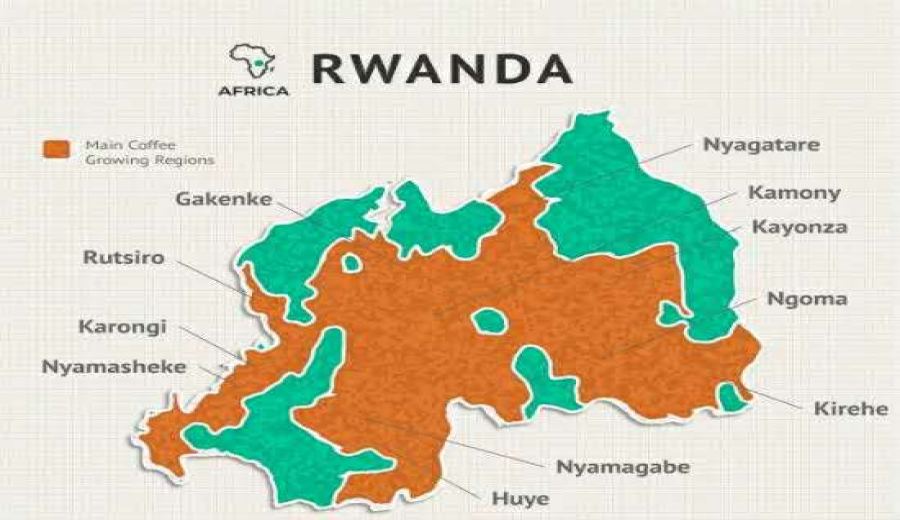
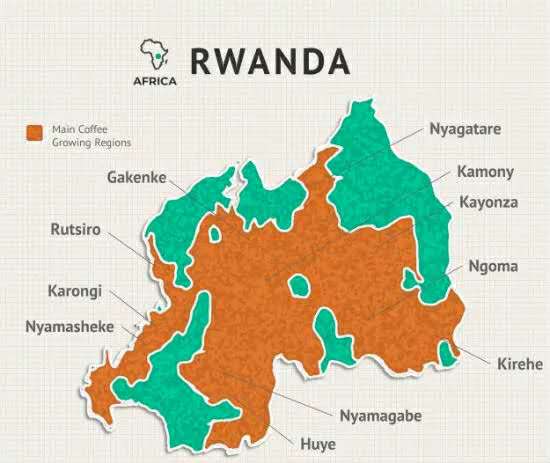
The southern Huye Mountains and the western shores of Lake Kivu are two core producing regions:HuyeOwing to altitude advantages, coffees here often exhibit pronounced floral notes and citrus acidity;Nyamasheke(along Lake Kivu) is known for its rich fruitiness and juicy mouthfeel. Other areas, such as the Ngoma Lake region, showcase chocolate and fruity profiles, while northern regions tend toward nutty and caramel flavors. These variations stem from subtle differences in microclimates and soil compositions, reflecting the terroir characteristics of Rwandan coffee.
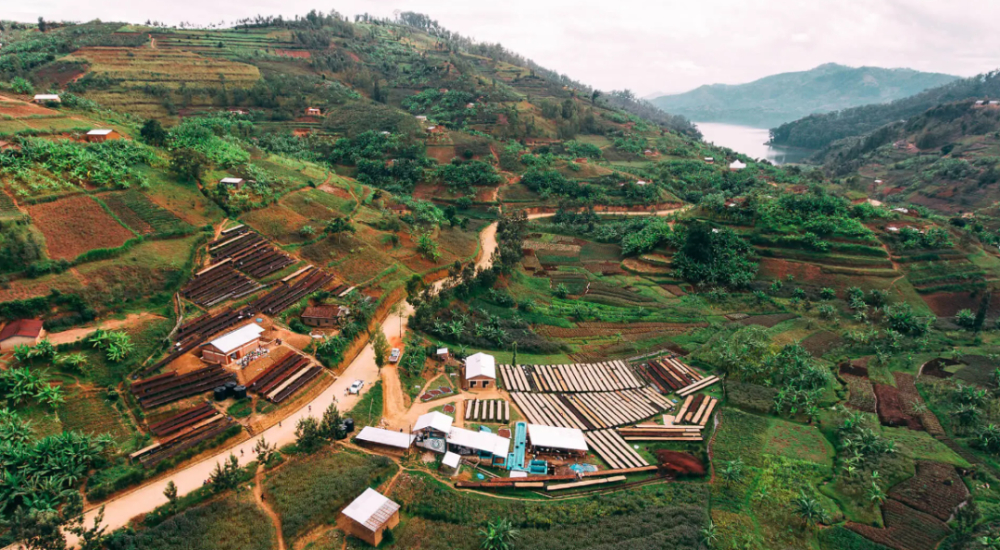
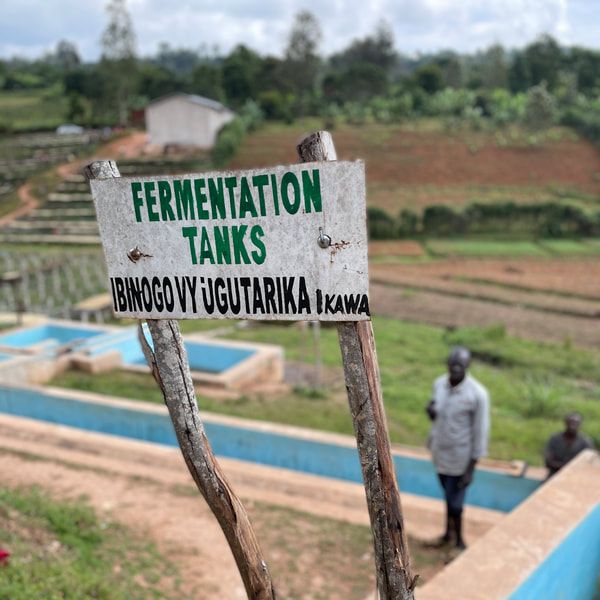
In terms of varieties, over 90% are disease-resistant Bourbon-type cultivars (including hybrid varieties like Catuai and Caturra), which adapt more stably to the local environment compared to other African regions. For processing methods, Rwanda primarily employswashed processing: fully ripe red cherries are selected, then subjected to floatation to remove defective beans. After depulping and mucilage removal via water tank fermentation, the beans are rinsed with clean water and dried on raised beds for 15–22 days, with moisture content strictly controlled at 11%–13%. This process highlights a clean, bright acidity and intricate flavor layers.
The 2010 Cup of Excellence competition marked a milestone for Rwandan coffee. As Africa’s first specialty coffee auction event, it successfully brought top-tier lots to the attention of international buyers and accelerated the region’s pursuit of quality. Notably, washed processing played a crucial role—its consistent performance clearly reflects regional flavor profiles, forming an essential foundation for evaluation and promotion.
In actual cupping, medium-light roasts best optimize the potential of Rwandan coffee. Moderate roasting preserves bright acidity notes like citrus and berries, while also developing honey sweetness and nutty aftertastes. For example, coffee from the Gesheke washing station in the Nyamasheke region—primarily featuring Bourbon and Catuai hybrids—displays lemon and apple aromas paired with mid-palate honey sweetness; Red Bourbon varieties, meanwhile, often exhibit delicate notes of berries, green tea, and apricot, making them ideal for pour over enthusiasts who favor fruity profiles.
In summary, the rise of Rwandan coffee is the result of the interplay between geography, variety selection, and processing techniques. From the ruins of war to a rising star in specialty coffee, these beans from the Land of a Thousand Hills are telling the world another possible story of African coffee through their unique terroir character.
The above content is compiled by CoffeeHunters, a coffee news website.


