








Introduction:Colombian coffee is renowned for its washed processing method and balanced flavor profile, earning it the title of "green gold." This article delves into the unique flavor characteristics of high-altitude regions such as Huila, analyzing its varietal evolution, processing techniques, and harvest seasons, while also providing practical pour over recommendations and roasting references to help you fully grasp the essence of this South American coffee kingdom.
Colombia is the world’s second-largest coffee producer and the largest exporter of washed Arabica beans. Its coffee is celebrated for its rich body, smooth mouthfeel, and well-balanced layers, often referred to as "green gold." From the volcanic soils of the Andes Mountains to family-run meticulous farming practices, and distinctive washed processing methods, all contribute to the exceptional quality of Colombian coffee. This article will focus on premium regions like Huila, exploring their flavor profiles, regional distributions, and processing details, along with professional pour over suggestions to help you deeply appreciate the charm of this major South American coffee-producing nation.
 Located in the northwest of South America and bordering Panama, Colombia's territory features three main branches of the Andes Mountains extending from north to south, creating an exceptionally favorable coffee-growing belt. These mountainous areas boast fertile volcanic soils and ideal altitudes, providing the perfect environment for coffee cultivation. As early as 1808, coffee was introduced to Colombia by missionaries from Venezuela, and it has since become a vital pillar of the country’s agriculture.
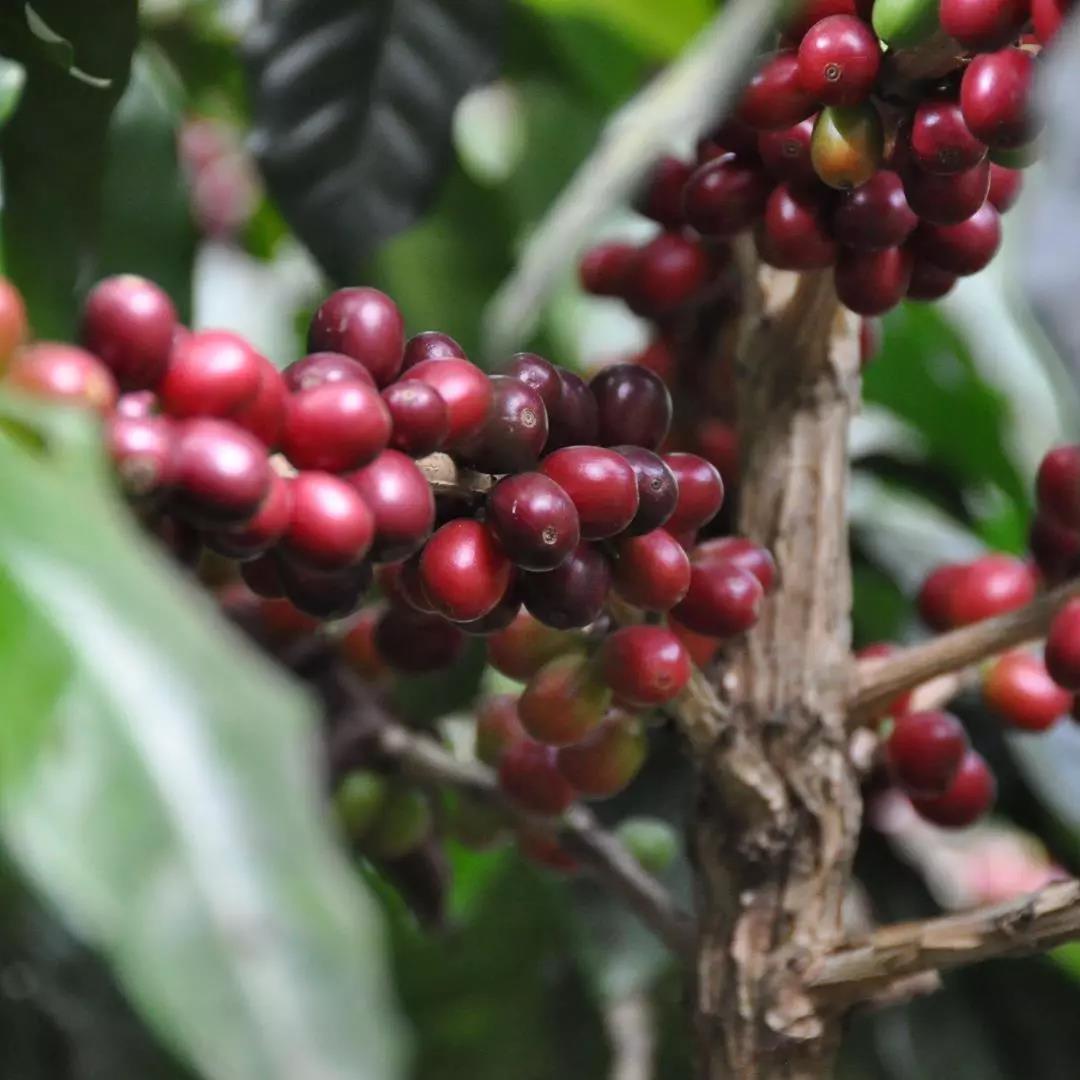
The reason Colombian coffee is so highly regarded lies in its unique production model. Local coffee farmers insist on handpicking only fully ripe coffee cherries to avoid underripe beans affecting the flavor. In addition, many farms are surrounded by shade trees such as banana or tall hardwoods, which not only provide moderate shade for the coffee trees but also create a humid and stable microclimate. This environment slows down the ripening process of the coffee cherries, aiding in the accumulation of flavor compounds. It is also worth mentioning that Colombian coffee production relies on family-run operations, without depending on large machinery. Hand harvesting ensures consistent fruit quality, resulting in its uniquely smooth and silky taste.
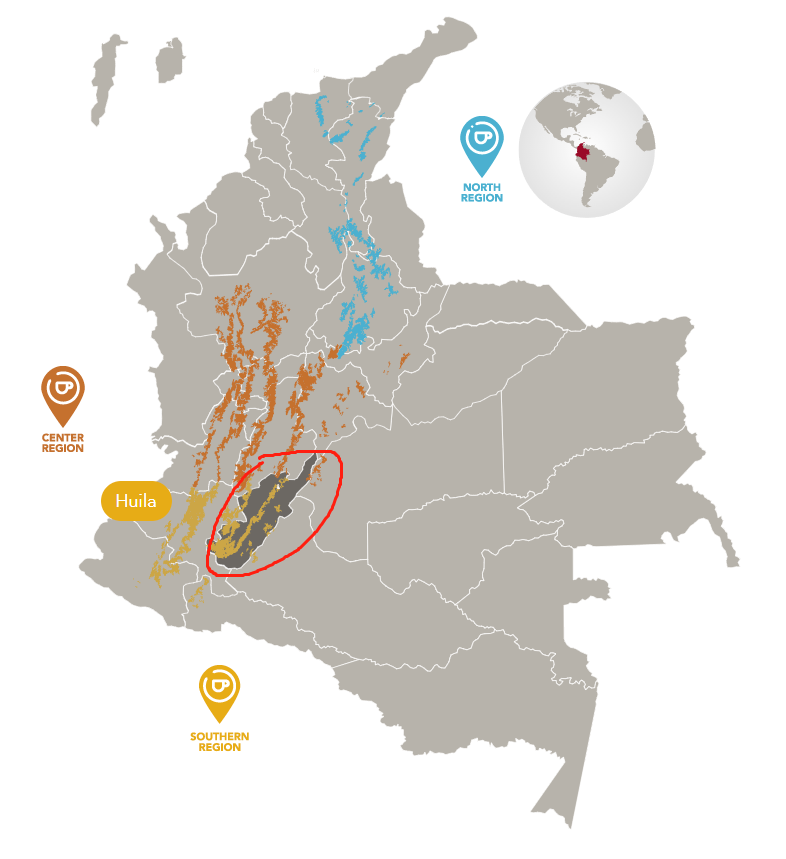
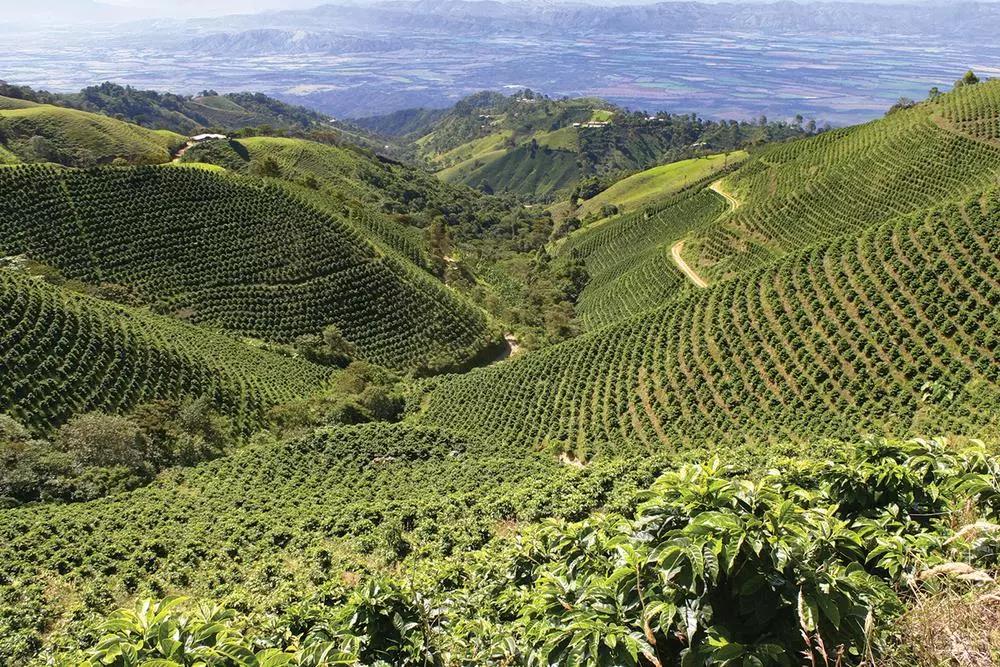 Colombian coffee-growing regions can be divided into three major areas: northern, central, and southern, each with varying altitudes and climates that lead to different harvest schedules. The southern and northern regions have more distinct harvest seasons, while the central area is subdivided into primary and secondary seasons based on geographic location. Generally, the main harvest season runs from October to January of the following year, and the secondary season occurs from April to July. Southern regions like Huila, due to their higher altitudes and unique climatic conditions, typically produce coffee beans with larger bean sizes (often reaching 17+ screen size), and thanks to the nourishment of volcanic soils, their flavor profiles are often more complex and pronounced.
Southern-region coffees are known for their delicate berry acidity, nutty undertones, and caramel sweetness. Their acidity is mild yet perfectly balanced with a rich mouthfeel. Cupping data shows that highland coffees from regions like Huila excel in aromatic complexity and aftertaste persistence, making them ideal for coffee enthusiasts who appreciate multi-layered flavors. Different regions, due to variations in altitude, microclimates, and processing methods, present distinct flavor profiles—this is also part of the charm of Colombian coffee’s diversity.
 Colombian coffee features a wide variety of cultivars. In addition to common ones like Caturra, Bourbon, Typica, and Pacas, several disease-resistant varieties have also been developed, such as Castillo, Tabi, and the renowned Colombian variety. These varieties maintain desirable flavors while enhancing resistance to coffee leaf rust. Early plantings were dominated by Typica and Bourbon, but Caturra gained popularity in the 1970s due to its high yield and compact tree structure. Starting in the 1980s, CENICAFE successfully developed the more disease-resistant Catimor series, including varieties like Castillo, which became the mainstream planting choice in the region.
In terms of processing methods, Colombia primarily uses washed processing. Smallholder farmers typically employ specialized small-scale processing machines (such as Ecomill or Eco-Pulper) to first remove the skin, pulp, and most of the mucilage, then ferment the parchment beans overnight in cement tanks or stainless steel buckets to loosen residual mucilage, finally rinsing them clean with water to complete the process. The drying phase is adjusted according to weather conditions—on sunny days, raised beds or ground drying are commonly used, while on rainy or cloudy days, temperature-controlled dryers (around 50°C) are employed to ensure stable quality.
Colombia’s main specialty coffee regions are concentrated in the southern high-altitude areas, including the departments of Huila, Cauca, Narino, and Tolima, typically at elevations above 1,500 meters. As one of the most representative regions, Huila’s coffee is known for its pronounced berry aroma, nutty tones, and caramel sweetness. The region operates on a micro-lot production model consisting of dozens of smallholder farmers, with strict cupping selection ensuring consistency and high quality. Compared to traditional grading by bean size, there is now greater emphasis on the characteristics of micro-regions and the performance of micro-lots.
 Regarding harvest seasons, due to Colombia’s proximity to the equator and complex terrain, coffee can be harvested year-round. Southern regions typically harvest from March to June, while the northern regions focus on the September to December period. Central areas, due to geographic differences, have some regions with clear primary and secondary harvest seasons. After harvesting, coffee beans require a 2 to 3 month post-harvest maturation period before reaching consumers, a crucial phase for flavor development.
In terms of coffee grading, Colombia categorizes beans by size into three grades: Supremo (largest), Excelso, and Extra. Supremo beans are plump and uniform, usually offering better extraction performance. For brewing, it is recommended to use freshly roasted beans within 5 days post-roast, with a medium-light to medium roast level (such as the medium roast commonly used for beans grown at 1,500–1,800 meters). The grind size can be set to 75% passing through a Chinese No. 20 sieve (similar to coarse granulated sugar), paired with a 90°C water temperature for pour over. It is recommended to use a V60 dripper, employing a three-stage extraction: the first stage with 30g water for a 30-second bloom, followed by pouring 95g in the second stage and 100g in the third stage. Maintain a steady, small stream of water throughout to fully highlight the delicate flavors of Huila coffee.
The above content is compiled by CoffeeHunters, a coffee news website.


