







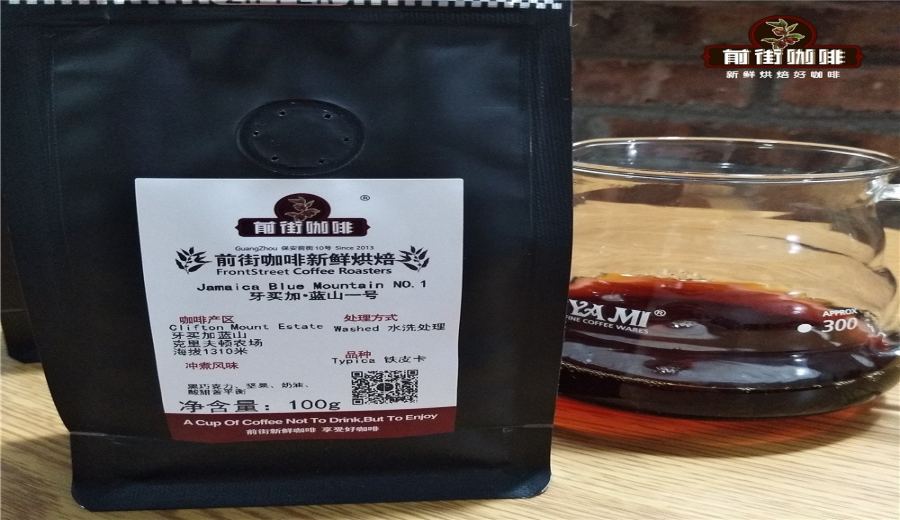
Introduction:Jamaica Blue Mountain coffee is hailed as one of the world’s top-tier coffees, renowned for its delicate balance of acidity, sweetness, and bitterness, its rich yet smooth mouthfeel, and its long-lasting aftertaste. This article will delve into the grading system of Blue Mountain coffee, the official CIB certification standards, the characteristics of barrel packaging, and introduce the medium-dark roast level and in-store standard pour over brewing process used. From the flavor profile of Blue Mountain No.1 to the tasting experience at each stage, it will help you fully grasp the charm and key points of identifying this legendary coffee.
For a long time, Blue Mountain coffee has been regarded as a premium gem in the coffee world, boasting intense aroma, silky texture, well-balanced acidity, sweetness, and bitterness, with an exceptionally long finish. In the era when specialty coffee was not yet widely known, its status could be compared to that of a Rolls-Royce in the automotive world or a Rolex among watches. Due to its fame, counterfeit products once flooded the market, and prices were driven to astonishing levels. However, nowadays, as long as you choose the right source, enjoying authentic Jamaica Blue Mountain coffee is no longer difficult—for example, the Blue Mountain No.1 offered is a high-grade coffee bean from Jamaica’s official top tier.
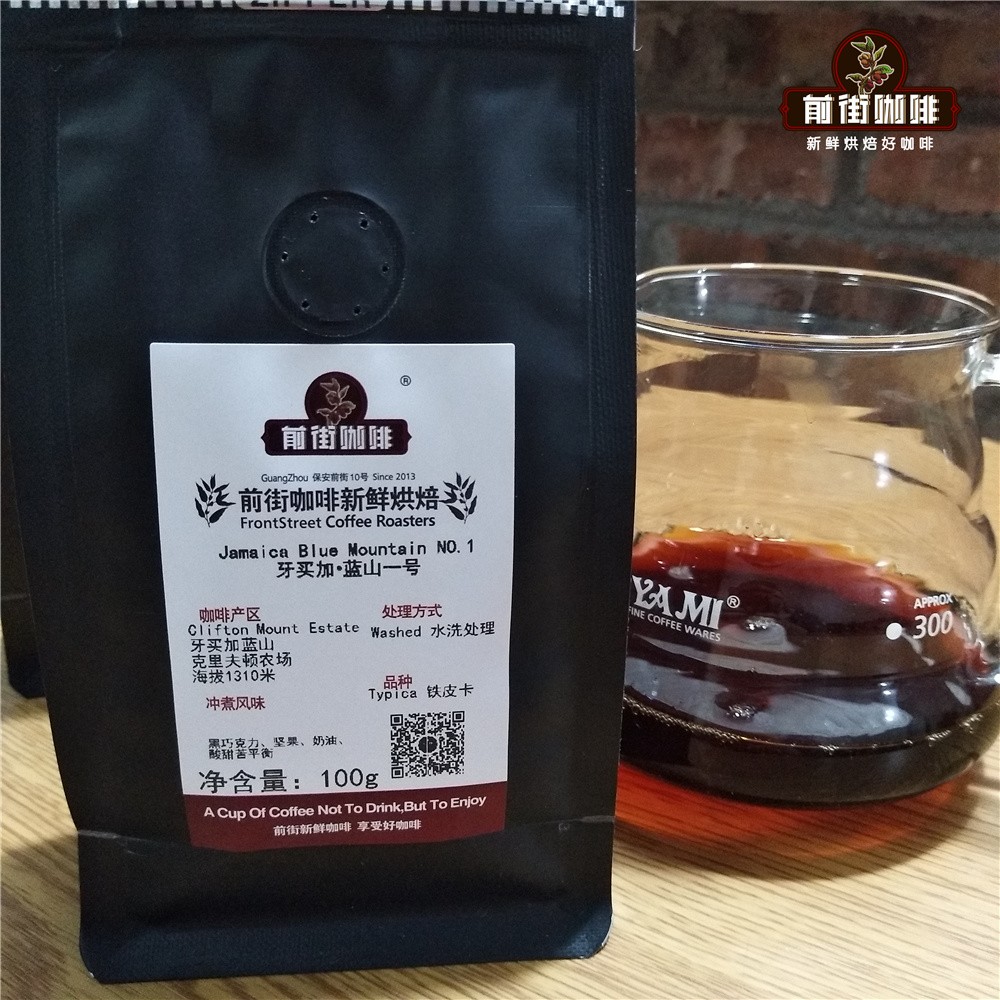
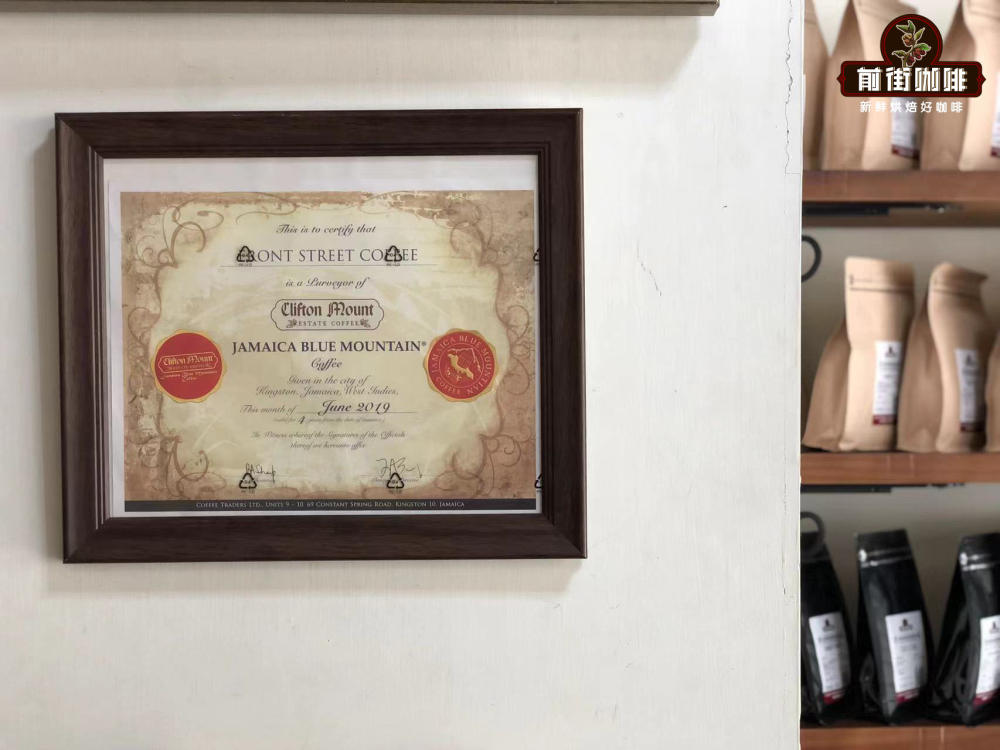
When purchasing Blue Mountain coffee, consumers should not only focus on whether it is genuine but also on its grade, as the grade often directly affects the richness and refinement of the flavors. As early as 1952, the Jamaican government established the Coffee Industry Board (CIB), which strictly regulates the cultivation, harvesting, production, and sales of coffee grown in the Blue Mountain region. Through the regulations and certifications by the CIB, not only has the overall quality of Blue Mountain coffee been elevated, but it also ensures that every batch of Blue Mountain coffee exported worldwide meets official standards. The Blue Mountain No.1 sold here comes from the renowned Clifton Estate in the Blue Mountains. All green beans are CIB certified and come with an official label, along with a quality certificate, authorized sales documentation, and a certificate of origin issued by the Jamaica Coffee Industry Board, ensuring reliable and authentic sourcing.
Jamaica can be considered one of the first coffee-growing regions to emphasize the concept of "terroir." The evaluation criteria for Blue Mountain green beans cover multiple aspects, including bean size specifications, defect ratios, external color and uniformity, as well as cupping performance after roasting, such as dry fragrance, wet aroma, acidity, flavor profile, body, and cleanliness. Among these, the size of green beans is screened using sieves with different mesh sizes—those that cannot pass through specific mesh sizes are classified according to those specifications. As for color judgment, it combines visual assessment with data from colorimeters, where a bluish-green hue is often regarded as a symbol of the highest grade.
Based on the above comprehensive evaluations, Blue Mountain coffee is subdivided into four main grades, from highest to lowest: NO.1, NO.2, NO.3, and PB, commonly referred to in Chinese as Blue Mountain No.1, Blue Mountain No.2, Blue Mountain No.3, and Blue Mountain Peaberry. Among them, the green beans of Blue Mountain No.1 must meet a sieve specification of 17 mesh (approximately 8 mm or larger), with a defect rate no higher than 3%, and a moisture content of around 13%. During cupping, it exhibits rich and balanced aromas, a smooth mouthfeel, gentle acidity, and a long-lasting, layered aftertaste, making it the pinnacle of Blue Mountain coffees.
Blue Mountain coffee beans that pass quality inspections are transported in different types of packaging according to their grades. Blue Mountain No.1, No.2, and No.3 are among the very few coffees in the world that are exported in wooden barrels, with packaging specifications of 70 kg, 30 kg, and 15 kg respectively. In contrast, other grades of Jamaican coffee are mostly shipped in 60 kg jute sacks. The advantage of wooden barrel packaging lies in its ability to regulate internal and external humidity, effectively preventing the volatilization of coffee aroma and helping maintain the stability of the beans’ moisture content, thereby improving the consistency of roasting. Today, wooden barrel packaging has also become one of the key identifiers of genuine Blue Mountain coffee, and many specialty shops even display the actual transport barrels for customer viewing.
Roasting is the key step that determines the final flavor expression of coffee, much like heat control in cooking, as it fully unlocks the potential of high-quality green beans. When roasting Blue Mountain coffee, adhering to the philosophy of showcasing the classic flavor characteristics of the growing region, there is an emphasis on preserving the unique tonal qualities of Blue Mountain coffee, such as its rich chocolate, nutty notes, and soft sweetness. Therefore, a medium-dark roast is chosen. This roast level can fully highlight the chocolate and nut aromas of Blue Mountain coffee while also balancing soft acidity and natural sweetness, resulting in a more rounded and balanced overall mouthfeel.
To ensure that consumers enjoy the freshest and best-performing Blue Mountain coffee, cupping is conducted immediately after roasting. The cupping results show that the dry fragrance carries notes of nuts, melon, and chocolate, and after hot water is poured, it releases a complex aroma of oolong tea, caramel, honey, and dark chocolate. Upon tasting, the first sensations are intense dark chocolate, roasted hazelnuts, and a creamy body, paired with the sweetness of brown sugar. The overall flavor is clean and clear, with a rich mouthfeel and long-lasting aroma. To ensure customers receive the coffee while it is still at its optimal flavor stage, all shipped coffee beans are guaranteed to be from fresh batches roasted within five days.
In terms of brewing, the in-store team typically uses a KONO filter cone to extract medium-dark roasted Blue Mountain coffee beans. The upper part of this filter cone features a smooth curved surface design, allowing the filter paper to adhere more tightly. Compared to the V60 filter cone, the KONO leans more toward immersion-style extraction, which helps enhance overall concentration and body. If you don’t have a KONO, you might also consider using a Kalita wave filter cone or a fabric dripper—both of which have slower flow rates—and they can also bring out the delicate characteristics of Blue Mountain coffee.
Additionally, because the internal structure of medium-dark roasted coffee beans is looser compared to light roasts, they have better water absorption. To avoid over-extraction that could lead to overly sharp flavors, it is recommended to use a 20-number standard grind size with about 75% throughput, set the water temperature to 88°C, and employ the classic three-pour brewing method.
Recommended pour over parameters:
Water temperature: 88°C
Grind size: Fine like coarse sugar (20-number filter, 75% throughput)
Coffee dosage: 15 grams
Coffee-to-water ratio: 1:15
Brewing method: Three-pour technique
Step details:
First pour: Slowly pour 30 grams of water for the bloom, for about 30 seconds;
Second pour: Continue pouring until about 125 grams, using a steady circular motion;
Third pour: Once the water level drops to half, pour again until the total reaches 225 grams. Wait for the coffee to fully drip through. Total brew time is approximately 2 minutes.
Blue Mountain No.1 coffee exhibits diverse flavor variations at different temperatures. At high temperatures, the dominant note upon entry is deep dark chocolate, with a rich mouthfeel and a distinct almond aftertaste. As the temperature lowers, the flavors gradually shift to roasted hazelnuts and creamy silky sweetness, accompanied by a touch of soft acidity and caramel sweetness. The overall aroma lingers in the mouth for a long time, leaving a memorable and delightful impression.
The above content is compiled by CoffeeHunters, a coffee news website.


