







Introduction:Jamaican Blue Mountain coffee is world-renowned for its delicate and well-balanced flavor, yet the market is flooded with imitations. This article delves into the official three-tier grading system of Blue Mountain beans, retraces its history from its introduction in 1728, revival with assistance from Japan’s UCC, to its market opening in 2008, and offers expert brewing recommendations and authentication tips to help you fully appreciate the essence of this premium coffee.
When it comes to the world’s top-tier coffees, Jamaican Blue Mountain is undoubtedly the dream choice for many coffee enthusiasts. With its balanced, full-bodied taste and exceptional rarity, it has long been highly regarded in global markets. However, precisely because of its prestigious reputation, the market is saturated with products claiming to have a “Blue Mountain flavor,” while genuine beans grown in the Jamaican Blue Mountains and certified by the government are extremely rare and thus come with a high price tag. This article will provide a detailed introduction to the grading system, origin background, and historical development of Blue Mountain coffee beans, along with an analysis of professional brewing parameters and flavor characteristics, equipping you with solid references when selecting or evaluating this coffee.
First, it’s essential to clarify a common misconception: not all coffee labeled as “Blue Mountain” is authentic. Only coffee beans grown in the Jamaican Blue Mountains and certified through strict government standards can be called “Jamaican Blue Mountain coffee.” Due to its limited production, the actual quantity of Blue Mountain coffee entering the market each year is small, making it relatively expensive. If you wish to enjoy authentic and consistently high-quality Blue Mountain coffee, it’s recommended to choose beans from reputable regions and certified farms—such as the Clifton Estate, which holds Rainforest Alliance certification. Its offerings not only deliver outstanding flavor but also represent a commitment to environmental sustainability and ethical farming.
The history of Jamaican Blue Mountain coffee dates back to 1728, when coffee plants were first introduced to the island. The Blue Mountains, with their unique geography—fertile volcanic soil, cool and moist climate, along with excellent drainage—create ideal conditions for coffee cultivation. During its golden era, annual Blue Mountain coffee production once reached over 15,000 tons, but a natural disaster in 1969 led to a decline in the industry. To salvage the reputation and quality of Blue Mountain coffee, Japan’s UCC corporation provided financial and technical support in the 1970s, aiding in the promotion of eco-friendly farming practices and industry revitalization. In return, the Jamaican government signed an agreement with Japan to prioritize selling the majority of Blue Mountain coffee production (reportedly 80–90%) to the Japanese market each year, with only the remaining portion entering the international market. This explains why Blue Mountain coffee has long been in short supply and commands such high prices.
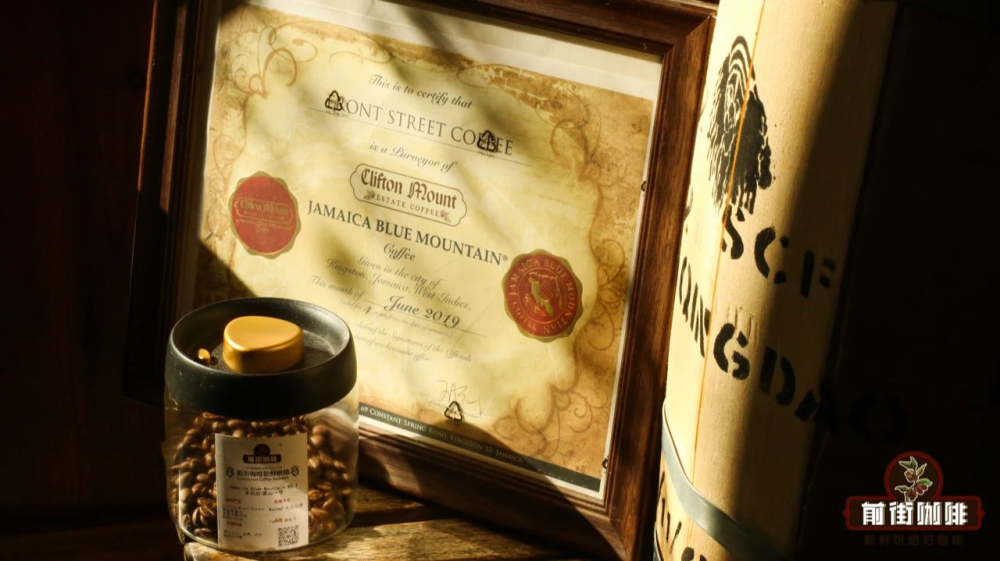
The year 2008 marked a turning point in the Blue Mountain coffee market. As production gradually recovered, the Jamaican government decided to abolish Japan’s exclusive purchasing rights, allowing Blue Mountain coffee to enter the global market more fairly. This move not only increased purchasing opportunities for international consumers but also made the coffee’s price less prohibitively high than in the past. Even today, though prices are more accessible than before, the limited supply means that many merchants still mislead consumers with terms like “Blue Mountain flavor” or “Blue Mountain blends.” Therefore, the key to identifying authentic beans lies in looking for certification from the Jamaican government and barrel packaging—in fact, Jamaica is the only country in the world that still ships green coffee beans in wooden barrels.
According to official standards, Jamaican Blue Mountain coffee beans are divided into three grades:
Grade 1 Blue Mountain (Blue Mountain No. 1): Considered the top tier, these beans are the largest in size, requiringover 96% of the beans to be of 17 mesh size, with a maximum defect rate of2%, making it the most expensive grade and the one widely recognized as the finest quality available.
Grade 2 Blue Mountain (Blue Mountain No. 2): Also of high standard,requiring over 96% of beans to be 16 mesh, with the same maximum defect limit of2%, suitable for consumers seeking premium quality at a slightly lower budget.
Grade 3 Blue Mountain (Blue Mountain No. 3): The lowest officially certified grade of Blue Mountain beans,requiring over 96% of beans to be 15 mesh, and also maintaining a defect rate of no more than2%, while still retaining the fundamental flavor characteristics of Blue Mountain coffee.
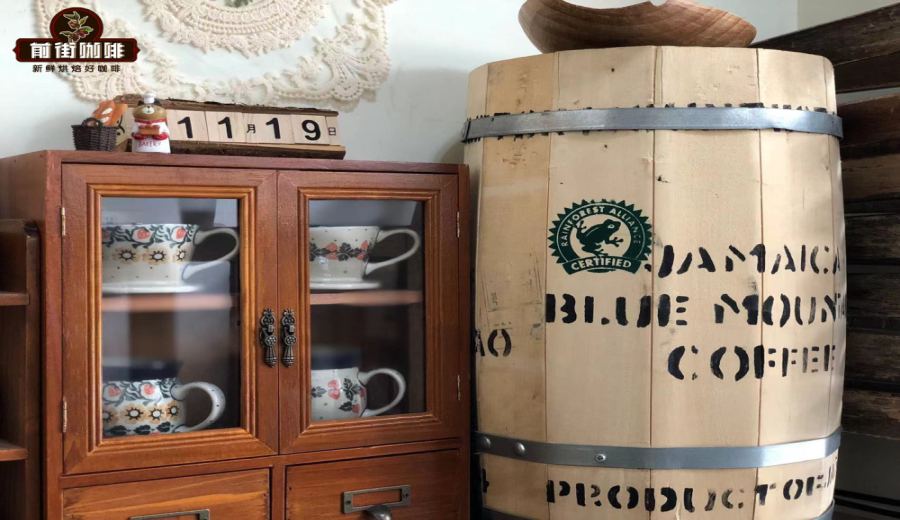
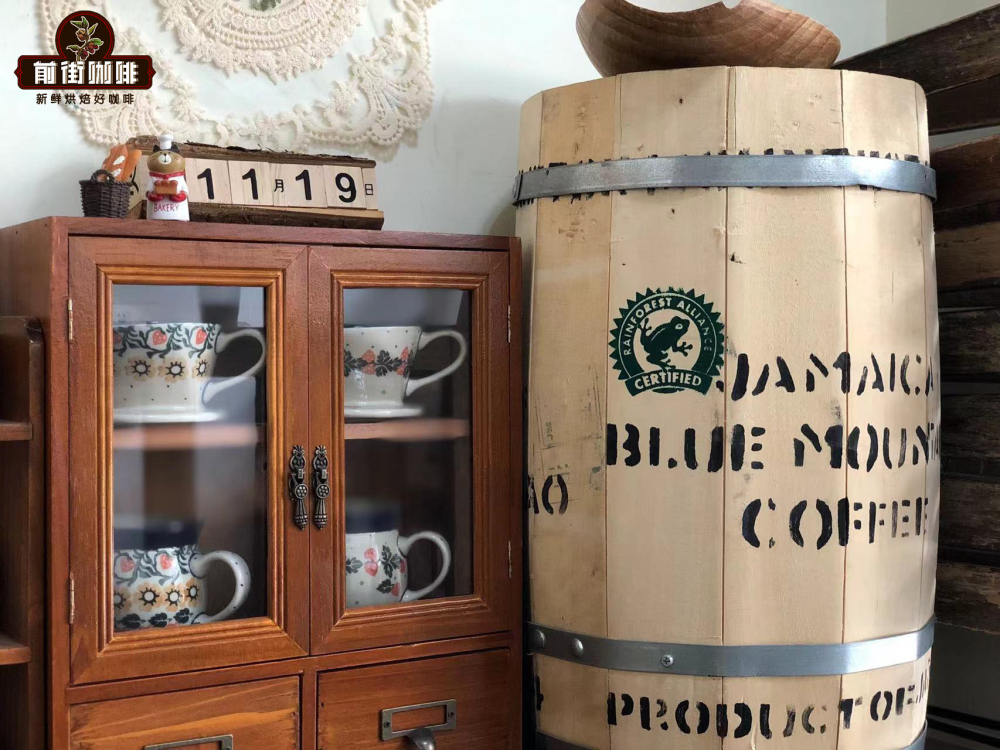
Although international supply of Blue Mountain coffee has increased and prices become more reasonable since 2008, the market still sees plenty of commercial hype using the “Blue Mountain” name. When shopping, aside from verifying government certification and wooden barrel packaging, consumers can also look for beans sourced from well-known, sustainably certified estates—such as the Clifton Estate, which has Rainforest Alliance certification. Its barrels feature a green frog logo, indicating the product meets high standards of environmental protection and social responsibility.
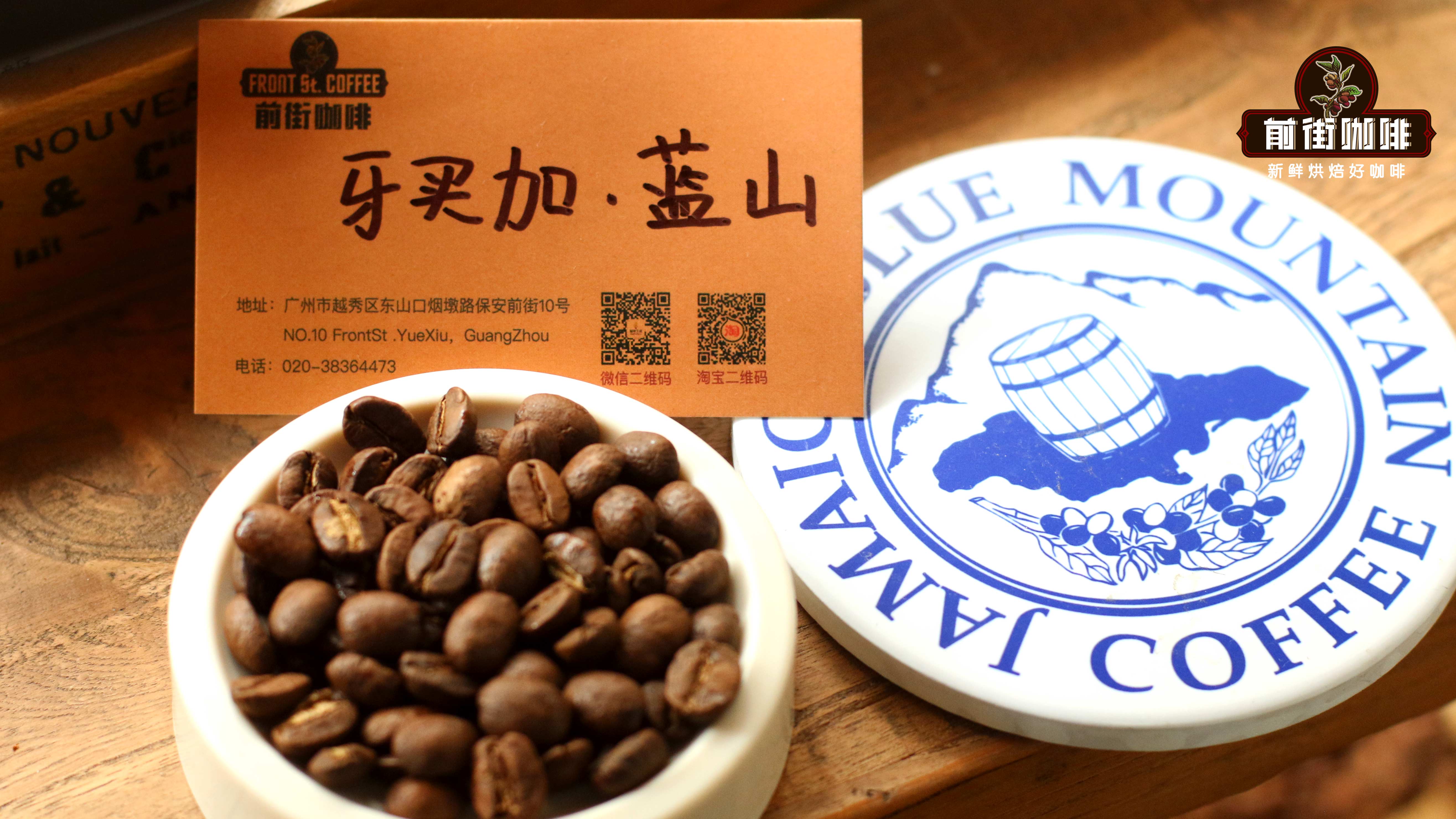
To fully highlight the nuanced flavors of Blue Mountain coffee, it’s recommended to use a medium-dark roast and pay attention to brewing details. A water temperature of 88–89°C is advised, with a grind size roughly akin to coarse sugar (approximately 70% passing through a Chinese 20-mesh sieve), and a brew ratio of 1:15. In practice, a Kono dripper with shorter ribs can be used to extend extraction time and enhance flavor completeness. For specific brewing, a three-stage pouring method is recommended: the first pour adds 30 grams of water for a 30-second bloom; the second pours water up to around 125 grams, then continues once the water level drops halfway to reach a total of 225 grams; finally, allow the dripping to complete, with the entire extraction process taking approximately 2 minutes and 10 seconds. This approach effectively brings out the black chocolate and nutty aromas of Blue Mountain coffee, as well as its creamy-smooth texture and exquisitely balanced sweet, sour, and bitter notes.
The above content is compiled by CoffeeHunters, a coffee news website.


