







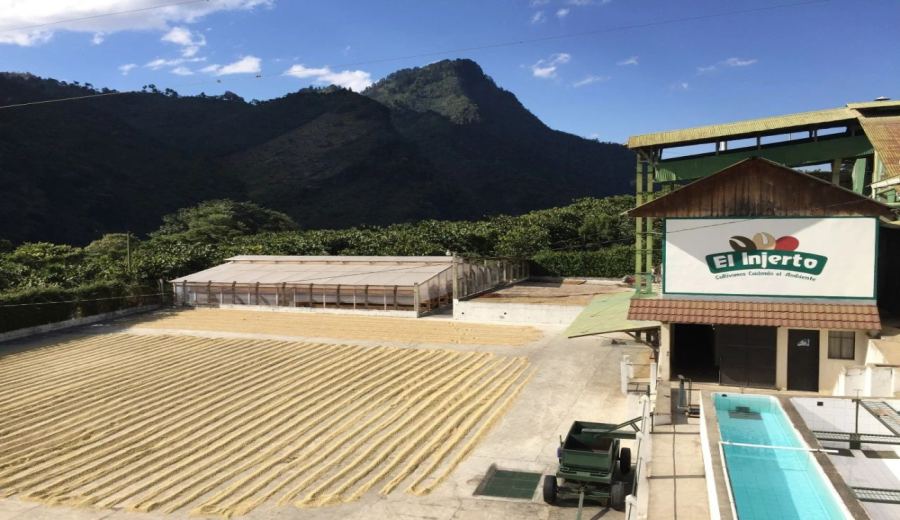
Introduction:Delve into the Red Ruby Gesha and Pacamara coffee beans from Guatemala’s El Injerto Estate, exploring everything from variety origins and growing environments to cupping flavors and auction histories. This article provides a detailed introduction to the unique characteristics of these two specialty coffees, along with practical V60 pour over recommendations and extraction parameters to help you fully experience the layered flavors and aromatic charm of high-altitude Central American coffee.
Located in Central America, Guatemala is renowned for its active volcanic terrain and diverse microclimates, giving rise to numerous specialty coffees with distinctive flavors. Among the many high-quality regions, the El Injerto Estate (EI Injerto Estate) on the highlands of Huehuetenango stands out as a highly representative pioneer. It has not only won numerous international awards but also garnered global attention for its unique varieties and exquisite post-harvest processing techniques.
This article focuses on two highly acclaimed coffee beans from El Injerto Estate—the Red Ruby Gesha (GESHA RUBY DRY PROCESS EI02-02) and Pacamara—taking you through their variety origins, growing environments, cupping flavors, auction systems, and post-harvest processing methods to deeply explore their appeal. It also includes practical V60 pour over suggestions and three-stage extraction parameters, allowing you to enjoy a professional-level coffee experience at home.
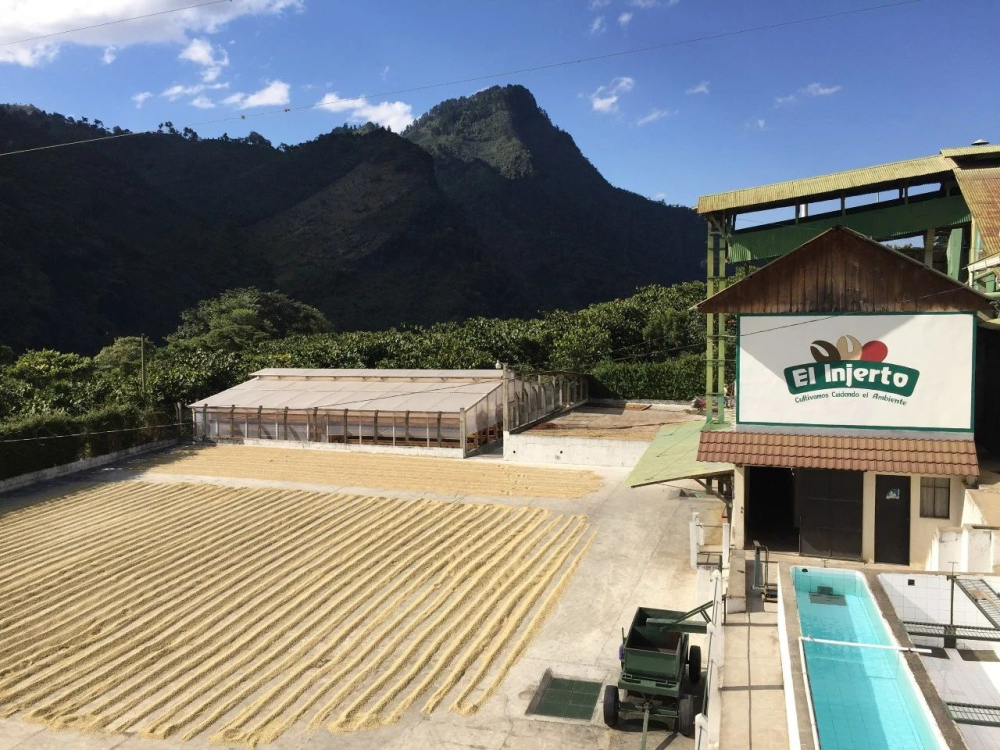
Red Ruby Gesha: A Rare Gift from Malawi
The Red Ruby Gesha coffee (Batch EI02-02) comes from El Injerto Estate and is processed using the natural (dry) method. It is an exceptionally visually and flavorfully striking coffee. The harvest period for this batch was from January to March 2018, grown at an altitude of 1,710 meters on the plateau, with an average annual temperature of about 13°C to 26°C and an annual rainfall of approximately 1,500 mm. This Gesha variety is actually the Malawi Gesha, with seeds originally gifted by a friend from Malawi and preserved in a traditional manner by burying them in soil and ash to extend their viability.
The coffee beans are relatively small in size, turning a captivating deep red when ripe, crystal clear like rubies, hence the name. The plants are also slightly smaller than traditional Gesha, yet they exhibit extraordinary flavor potential. During cupping, its dry and wet aromas release notes of blueberry, raspberry, cherry, floral scents, accompanied by subtle spicy and fermented wine-like notes. Upon tasting, jasmine flower, sweet fruit tones, and rich winey depth intertwine, followed by a velvety chocolate-like texture, with a refreshing minty aftertaste. As the temperature drops, one can also detect a delicate transition between orange and chocolate, with distinct layers and a long-lasting finish.
The Legendary Journey of the Gesha Variety
Gesha (also transliterated as Geisha) is an extremely rare and uniquely flavored coffee variety, first discovered in Ethiopia’s Kaffa Forest and gaining initial attention near the village of Gesha in the 1930s. Initially, Gesha was not valued and was even used merely as a windbreak. It wasn’t until 1931 when it was brought to the Kenya Coffee Research Institute, later spreading to Uganda and Tanzania in 1936, Costa Rica in 1953, and Panama in 1970. It wasn’t until 2004, when Panama’s Hacienda La Esmeralda entered Gesha into the Best of Panama (BOP) competition and won the championship, that the variety shot to fame, becoming a star in the specialty coffee world.
Compared to many Ethiopian landraces, Gesha offers a more pronounced juiciness, often characterized by bright citrus, tropical fruit, and honey-like sweetness, with a smooth mouthfeel frequently described as akin to a refreshing fruit tea. Gesha from different regions exhibits unique flavors due to variations in microclimates and soils, not limited to Panama—Gesha from Costa Rica, Colombia, and Guatemala have also shown remarkable potential.
Guatemala’s Huehuetenango: A Coffee Paradise of High Altitude and Ecological Diversity
Guatemala has eight major coffee-growing regions, with terrain encompassing volcanoes, plateaus, and tropical rainforests, resulting in a diverse range of coffee flavor profiles. Among them, the Huehuetenango region is not only the highest non-volcanic growing area but also one of the driest, with an average altitude exceeding 1,500 meters, an average annual temperature of about 18–22°C, annual rainfall of 1,800–2,000 mm, relative humidity of around 75%, coupled with deep volcanic soils and excellent drainage, providing ideal conditions for coffee cultivation.
Managed by the Aguirre family since 1900, El Injerto Estate is one of the pioneers in the region, covering 447 hectares, most of which is planted at altitudes between 1,500 and 2,000 meters, with the rest preserved as virgin forest to maintain biodiversity. The estate boasts abundant vegetation providing excellent shade, along with mountain spring irrigation and stable climatic conditions, resulting in coffee beans with a compact structure and rich flavors. In addition, El Injerto Estate has been certified by the Rainforest Alliance and has been a multiple-time winner of the COE (Cup of Excellence) competition, with its quality internationally recognized.
Pacamara: An Extraordinary Combination of Maragogype and Pacas
Pacamara is a premium variety resulting from a cross between Maragogype (elephant bean) and Pacas, with its name derived from the first four letters of each parent variety. Originating from El Salvador, its coffee beans are notably large, measuring approximately 21–22 mesh size, approaching the grade of elephant beans, making it one of the most notable specialty varieties in Central and South America.
The Pacamara produced by El Injerto Estate once set a record sky-high price of $80.2 per pound for green beans in 2008, showcasing its exceptional reputation and rarity. This variety often features intense floral aromas, tropical fruits, and nutty undertones, with bright acidity and rich layers, making it a frequent winning formula in many coffee competitions. However, due to its scarce production and mostly auction-only batches, prices are generally high, making it an unmissable premium choice for coffee enthusiasts.
Self-hosted Auctions and Refined Processing: El Injerto’s Philosophy of Quality
Since 2011, El Injerto Estate has hosted its own online auctions, standing alongside Panama’s Hacienda La Esmeralda as one of the most sought-after events among global green coffee buyers. Every coffee bean in the auction batches undergoes strict control and meticulous care—from variety selection, cultivation management, harvesting timing, to post-harvest processing—to ensure the presentation of top-tier quality.
In terms of processing methods, El Injerto employs high-standard green bean processing procedures, hiring skilled workers paid twice the local average wage to hand-pick only fully ripe red cherries. Its processing facility is equipped with an independent water treatment system. After depulping, the coffee cherries are sorted twice by bean size and cleaned with clean mountain spring water. They then undergo two days of fermentation, seven days of sun drying, followed by at least 45 days of resting in the warehouse, before finally undergoing professional cupping to ensure every batch achieves peak flavor expression.
Pour Over Recommendations and V60 Extraction Parameters
For medium-light roasted beans such as Guatemala’s Red Ruby Gesha and Flower God, it is recommended to use a V60 filter cone with a three-stage brewing method to fully highlight their bright acidity and complex floral and fruity aromas. The recommended grind size is medium-fine (such as 80% passing rate through a Chinese No. 20 sieve), roughly equivalent to the coarseness of fine sugar, with a brew ratio of 1:15, water temperature controlled at about 91°C, and a coffee dosage of 15 grams recommended.
Step 1: Pour approximately 30 grams of water for blooming, for about 30 seconds, to help release carbon dioxide and improve subsequent extraction stability.
Step 2: Use a small, circular water flow to pour up to 125 grams for the first pour,
Step 3: Continue pouring until reaching 225 grams, then stop and allow the V60 to drip naturally before removing the filter. The total extraction time is approximately 2 minutes. Finally, gently swirl the coffee and pour it into your cup to enjoy its full range of flavor layers.
Guatemalan coffee beans typically exhibit a bright acidity of citrus and berries, with aftertastes of lemon peel, nuts, and tea, or a blend of berries, citrus, and soft chocolate. They offer a smooth mouthfeel and rich flavors, making them an excellent entry point for exploring specialty coffees from Central America.
The above content is compiled by CoffeeHunters, a coffee news website.


