







Introduction:The moka pot is an essential tool in the homes of many coffee enthusiasts, but do you know the origin of its name and how it works? This article delves into the historical background, three-part structure, and pressure extraction mechanism of the moka pot, compares single-valve and double-valve designs, and analyzes how it differs from standard espresso in terms of pressure and flavor profile. It also provides practical brewing steps and parameter recommendations, including water temperature, grind size, and heating techniques, to help you brew richer coffee with your moka pot.
The moka pot is one of the most common tools among households and coffee beginners, but beyond knowing that it can brew strong coffee, do you understand its name origin and design principles? This article will start with the historical origins of the moka pot, introduce its basic structure and operation, compare the specific differences between single-valve and double-valve designs, and explore how it differs from regular espresso in terms of pressure and taste. Additionally, it will demonstrate in detail how to use the moka pot for actual brewing, including key details such as water temperature control, coffee grind size, handling the coffee chamber, and heating rhythm, giving you a more comprehensive grasp of this classic tool’s usage tips.
Many people who are new to coffee often have numerous questions about various tools and bean varieties, and the moka pot is frequently mentioned among them. How exactly does the moka pot work? What makes it special? Let’s dive in and find out together.

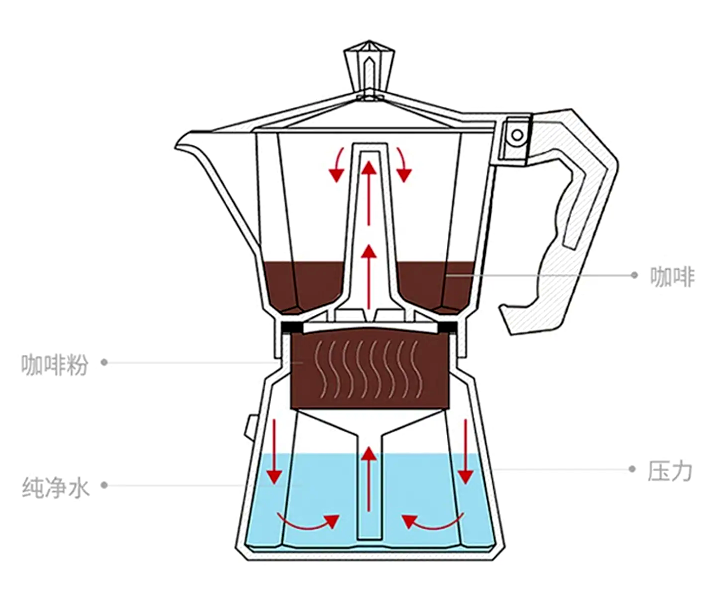
The appearance and structure of the moka pot are quite simple, consisting mainly of three parts: the upper chamber holds the brewed coffee, the middle filter basket is where the coffee grounds go, and the lower chamber is used to hold water and is heated. When the water in the lower chamber is heated, it gradually turns into steam, creating a certain amount of pressure that pushes the hot water upward through the coffee grounds, ultimately extracting a rich coffee liquid into the upper chamber.
This extraction principle is similar to that of common commercial espresso machines, both using pressure to force water through coffee grounds and release flavor compounds. However, the pressure produced by a moka pot is around 1.2 to 3 atmospheres, which, while not reaching the over 9 atmospheres of commercial espresso machines, is still sufficient to extract a relatively strong coffee liquid with crema, making it suitable for enjoying espresso-style coffee at home.
Currently, moka pots on the market are mainly divided into single-valve and double-valve types. The single-valve design is more basic and suitable for general use, while the double-valve moka pot has an additional pressure-collecting valve that further increases pressure during extraction, resulting in higher coffee concentration and more crema, delivering a richer flavor. Although the pressure is not as high as professional machines, it can meet most home users’ needs for strong coffee.
Using a moka pot has obvious advantages, such as simple operation, no need for complex equipment, and relatively affordable pricing, making it very suitable for beginners. However, there are also several points to note. For example, the water temperature when heating a moka pot usually reaches the boiling point of 100°C, which is higher than the 90–94°C used in standard espresso machines, easily extracting excessive bitter substances and resulting in overly intense or even burnt flavors.
Moreover, although the coffee made by a moka pot is strong, it still falls short compared to standard espresso. True espresso requires extraction under high pressure (above 9 atmospheres) to produce a delicate, rich, and layered taste. The moka pot’s pressure maxes out at around 2 atmospheres, so the extracted coffee liquid is relatively thinner and has slightly less complex flavor layers. But for quickly enjoying a strong cup of coffee at home, the moka pot remains a convenient and practical choice.
Brewing a good cup of coffee with a moka pot isn’t difficult, but it does require attention to some details. First, before starting, you can fill the lower chamber with warm water, which reduces heating time and prevents over-extraction or burnt flavors caused by the coffee grounds being exposed to sudden high heat.
When adding water, the water level should be kept below the safety valve (pressure relief valve) line. This is to prevent excessive pressure caused by overly fine coffee grounds or blocked channels, which could lead to danger. The safety valve is designed to prevent explosions from overpressure, but if the water level covers the valve, the risk significantly increases, so be sure to pay attention.
In terms of grind size, the coffee for a moka pot should be finer than that for pour over but slightly coarser than what’s used in professional espresso machines. A medium-fine grind is recommended, but not too fine, as it may lead to over-extraction, poor water flow, or splattering. For example, when using an EK-43s grinder, set the grind size to 0.5 for a balanced extraction. If you’re using freshly roasted beans, such as the “Sunflower Warm Blend,” this grind size is also suitable for testing and adjustments.
After grinding the coffee, pour it into the filter basket, level it, and gently tamp it—but don’t press too hard, as over-tamping can obstruct water flow and affect extraction efficiency. If the coffee grounds are not filled enough, the steam pressure generated after heating may fail to effectively push the water through, leading to splattering or uneven extraction.
Once the filter basket is filled, securely attach the upper and lower chambers to ensure there are no air leaks, then place it on the heat source. It’s recommended to use low to medium heat, especially with an open flame, where the flame should not extend beyond the base of the pot to avoid localized overheating. When the moka pot starts heating, you’ll soon hear a hissing sound—this is when you should reduce the heat to stabilize the extraction process and help release the flavors.
When you see about half of the coffee liquid has flowed into the upper chamber, you can turn off the heat and let the remaining heat and pressure finish the extraction. At this point, carefully move the moka pot to a table surface; using a damp towel to cool it down can help avoid burns. Finally, pour the coffee into a cup and enjoy.

A cup of coffee brewed with a moka pot typically has a rich aroma, which may include notes of whiskey, vanilla, cream, mild berry acidity, and roasted nuts. Depending on personal preference, you can also add hot water to adjust the strength into a lighter Americano; when paired with milk, it can bring out chocolatey sweetness, making it an excellent base for lattes or cappuccinos.
The above content is compiled by CoffeeHunters, a coffee news website.


