







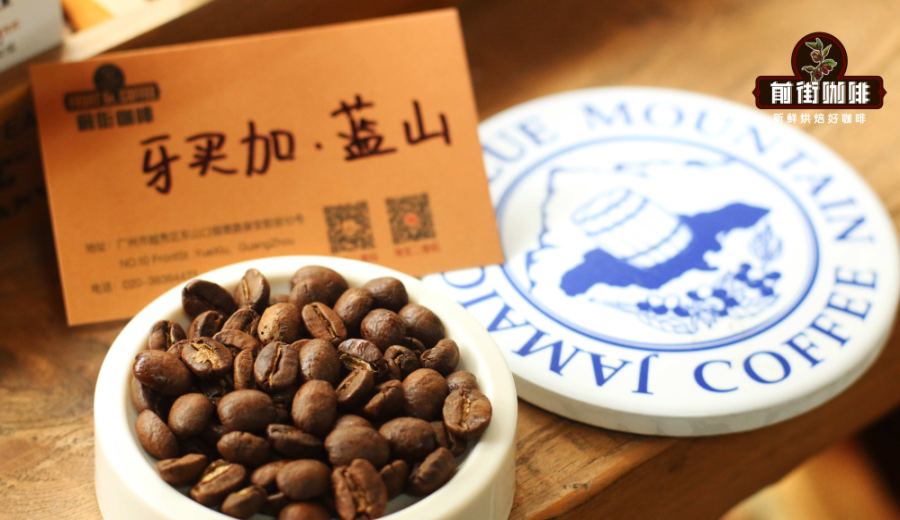
Introduction:Jamaican Blue Mountain coffee is renowned for its exquisite balance of sweetness, acidity, and body, with the produce from the Clifton Estate being especially highly regarded. This article delves deep into the region’s background, historical origins, washed processing method, green bean grading, and roasting essentials of this world-class coffee. It also provides detailed pour over parameters for filters like the V60 and KONO, and finally offers practical tips for identifying authentic Blue Mountain—from appearance to flavor—to help you better appreciate the unique charm of this classic coffee.
Jamaican Blue Mountain coffee has long been famous for its perfect balance among acidity, body, and aroma. Among them, the Clifton Estate in the Blue Mountains is not only one of the oldest coffee-growing regions on the island but also benefits from its high-altitude environment, fertile volcanic soil, and masterful washed processing technique, yielding a coffee that is smooth and mellow with subtle floral notes. This article will take you through the region’s history, processing technology, green bean grades, as well as roasting profiles and optimal brewing methods, and includes comprehensive tips on how to distinguish real from fake Blue Mountain, allowing you to deeply understand the unique value of this top-tier coffee.
The Blue Mountain range is located on the eastern coast of Jamaica, surrounded by sea, featuring a cool and moist climate with year-round cloud cover and an average annual rainfall of about 1980 mm, with temperatures consistently around 27°C. Such unique geographical and climatic conditions, combined with altitudes exceeding 1300 meters, create the irreplaceable premium characteristics of Blue Mountain coffee. The Clifton Estate, situated at an altitude of about 1310 meters, is one of the most representative producers in the area—not only is it the only coffee farm in Jamaica to be certified as a “Rainforest Alliance,” but it also continues to produce what is widely recognized as the world’s finest Blue Mountain coffee.
The Clifton Estate can be traced back to the mid-18th century, with coffee cultivation beginning around 1750. According to records from the Jamaica Institute in 1810, the owner of the estate at that time was Robert Hamilton, with planting areas spread across the mountaintop and foothills, covering hundreds of acres. It is now managed by the Sharp family, who continue traditional craftsmanship while preserving the region’s unique terroir. The Newcastle area where the estate is located boasts clean air, mineral-rich soil, and gentle afternoon sunlight—ideal conditions for coffee cherries that allow for a more gradual maturation process, resulting in a more concentrated flavor.
What makes Blue Mountain coffee so precious lies not only in the growing conditions but also in its strict grading and certification system. Currently, Blue Mountain coffee is divided into four grades based on quality: NO.1, NO.2, NO.3, and PB (peaberry), with NO.1 being the highest grade. It must meet stringent criteria such as beans sized 17 or above, a defect rate below 3%, and a moisture content of around 13%. Only coffee grown at elevations above 666 meters qualifies as “Jamaica High Mountain Coffee,” and only those produced within the Blue Mountain range can be labeled as “Blue Mountain.” Additionally, all exported Blue Mountain coffee must be rigorously inspected by the Jamaica Coffee Industry Board (CIB) to ensure 100% authenticity.
In terms of processing, Blue Mountain coffee adheres to the traditional washed method. This technique involves multiple steps including pulping, fermentation, washing, drying, and storage, requiring a stable source of clean water and skilled handling. Generally, after the fruit skin and pulp are removed, the coffee cherries undergo fermentation for 12 to 18 hours, then the mucilage is washed away, leaving the beans in optimal condition for drying. The final moisture content should be controlled between 12% and 14%, and beans must be finely sorted before they can be stored and exported. Moreover, the Clifton Estate is the only farm in Jamaica to have earned Rainforest Alliance Certification, signifying that it meets international standards in sustainable agriculture and environmental protection.
Blue Mountain coffee is primarily cultivated with the Typica variety, known for its stable flavor profile and adaptability to high-altitude environments. In terms of roasting, a medium to dark roast is recommended to fully bring out its intrinsic sweetness and complex aromas, while maintaining the ideal balance between acidity and body. A general roasting curve suggests starting at 170°C, gradually increasing the temperature and monitoring first crack timing, with the ideal drop temperature around 201.3°C to highlight the delicate floral notes, citrus tones, and soft chocolatey finish of Blue Mountain coffee.
When it comes to brewing, filters such as the V60 and KONO are both well-suited for pour over brewing of Blue Mountain coffee. Taking the KONO filter as an example, it is recommended to use 15 grams of coffee, with a water temperature of about 89°C and a grind size of around 4 (medium-fine), keeping the coffee-to-water ratio at approximately 1:15, with a total extraction time of about 2 minutes. Begin with a 30-second bloom using 25 to 30 grams of water, then proceed with two pours: the first to 120 grams, then pause; the second to 225 grams. Pay attention to water flow and swirling speed to avoid over-extraction or channeling. For French press, use a coarse sugar-like grind with water at around 86–88°C; for siphon or AeroPress, a white sugar-like grind with water at 88–89°C is advised to achieve the best flavor expression.
Finally, to distinguish real from fake Blue Mountain coffee, consider several aspects: First is appearance—the genuine green beans are tightly formed, vivid green in color, uniformly sized, and slightly curved; roasted beans are plump and uniformly colored. Second is the feel during grinding—Blue Mountain beans grown at high altitudes have a looser cell structure, feeling smooth and unobstructed when ground by hand. Third is aroma—the dry and wet aromas of true Blue Mountain coffee are rich and layered, far beyond the reach of ordinary blends. As for taste, the genuine product offers a balanced combination of sweetness and acidity, with distinct layers and a long-lasting finish, never dominated by a single overpowering note. Cheap “Blue Mountain blends” or products marketed at extremely low prices are mostly unrelated to real Blue Mountain—consumers should be vigilant to avoid purchasing counterfeits.
The above content is compiled by CoffeeHunters, a coffee news website.


